Published: Tuesday, July 28, 2026 · 11:43 AM | Updated: Tuesday, July 28, 2026 · 11:43 AM
📊 204 views




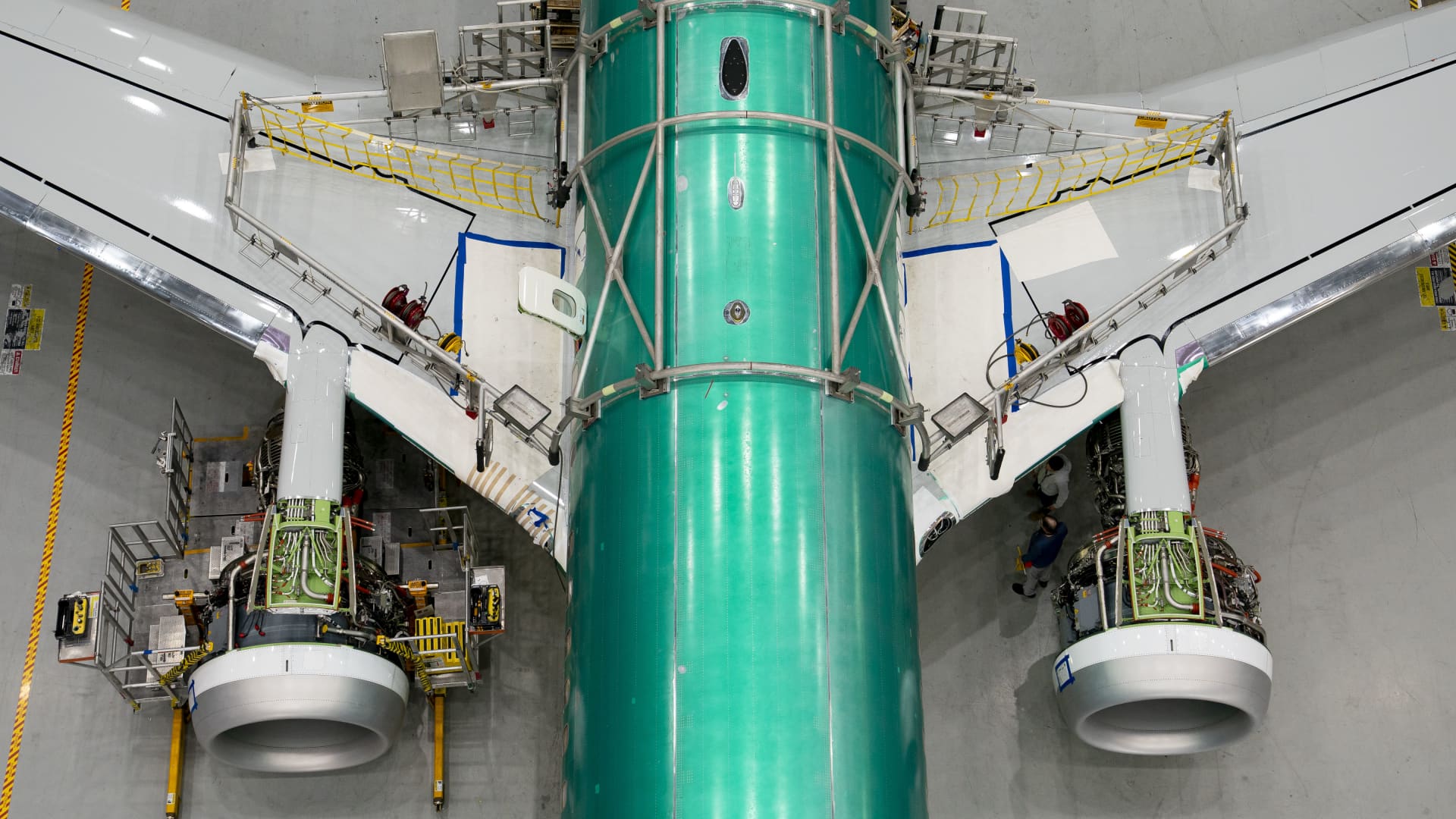
Boeing (BA) reported a significantly wider loss than anticipated in its second-quarter earnings, primarily driven by substantial overruns on its Air Force One program. This unexpected financial hit casts a shadow over the aerospace giant’s ongoing efforts to stabilize production and regain investor confidence amidst persistent development challenges.
🗝️ Corporate Strategy Insights
- Program Cost Overruns. The $280 million charge on the Air Force One program highlights challenges in managing fixed-price defense contracts and complex development projects.
- Commercial Resilience. Despite the overall loss, an 8% revenue increase and 14% rise in commercial aircraft deliveries signal underlying strength in core aerospace manufacturing.
- Cash Flow Outperformance. Positive free cash flow of $631 million, significantly above analyst expectations, indicates improved operational efficiency in managing working capital and production ramp-ups.
The aerospace giant, Boeing, disclosed a Q2 adjusted loss of $0.76 per share, substantially wider than the $0.30 loss analysts had forecast, largely due to a $280 million charge related to its fixed-price contract for the next-generation Air Force One aircraft. This unexpected drag on profitability underscores the inherent risks associated with complex government projects, particularly those involving highly customized airframes and stringent security requirements. Despite the significant Boeing loss, the company’s revenue demonstrated an 8% year-over-year increase, reaching $24.56 billion, slightly surpassing the $24.25 billion consensus. This top-line growth was primarily fueled by a 14% surge in commercial aircraft deliveries, totaling 171 planes compared to 150 a year prior, as the company continues to ramp up production of its highly sought-after 737 Max series to 47 units per month.
The contrast between robust commercial performance and the defense program’s struggles paints a complex picture for the aerospace powerhouse. While the defense segment often provides a stable revenue base, cost overruns like those seen with Air Force One can severely impact the bottom line and divert critical resources. CEO Kelly Ortberg acknowledged these challenges in a note to staff, stating, ‘While we\’re making progress on our development programs, you\’re never done until you\’re done.’ This sentiment highlights the ongoing execution risks that Boeing faces across its diverse portfolio.
Key operational metrics presented a mixed but generally improving scenario:
- Adjusted Loss Per Share: $0.76, significantly missing analyst expectations of a $0.30 loss.
- Total Revenue: $24.56 billion, exceeding the $24.25 billion forecast, demonstrating strong demand.
- Free Cash Flow: A positive $631 million, a substantial beat against the projected $177 million cash burn, signaling improved liquidity.
- Commercial Deliveries: 171 aircraft, up 14% year-over-year, indicating production momentum.
The positive free cash flow is particularly noteworthy, suggesting that despite program-specific losses, Boeing is effectively managing its operational cash cycle, a critical indicator for investors assessing the company’s financial health and its ability to fund future investments and reduce debt. The ability to generate cash amidst a quarterly loss points to a disciplined approach to working capital and supply chain management.
Strategic Ripple Effect: Beyond Boeing’s Bottom Line
The financial repercussions of the Air Force One program on Boeing’s Q2 results send a strategic ripple across both its defense and commercial divisions, and the broader aerospace industry. The significant $280 million charge signals heightened scrutiny on fixed-price contracts within the defense sector. This could lead to more conservative bidding from defense contractors or demands for greater flexibility in future government procurement, potentially affecting competitors like Lockheed Martin or Northrop Grumman if they undertake similar high-complexity, low-margin projects. For Boeing, it forces a re-evaluation of its defense contract negotiation and execution strategies, emphasizing risk mitigation over aggressive pricing, as seen in this financial stumble reported by global business news.
In the commercial sphere, Boeing’s continued ramp-up of 737 Max production and increased deliveries represent a critical push to capture market share and fulfill backlogs. This operational efficiency puts pressure on Airbus, its primary rival, to maintain its own production rates and supply chain stability. The positive free cash flow, despite the overall Boeing loss, indicates an improving ability to self-fund operations and invest in future programs, potentially narrowing the competitive gap with its European counterpart. The successful certification of delayed aircraft, starting with the 737 Max 7, will be crucial for market expansion and unlocking further revenue potential. A delay in these certifications could slow down market penetration and give Airbus more room to expand its customer base.
“Boeing’s strategic challenge remains balancing the inherent long-term risks of defense development programs with the critical need for operational excellence and timely delivery in its high-volume commercial aircraft segment. The Air Force One hit underscores the delicate balance required to manage diverse business lines effectively.”
| Metric | Reported (Q2) | Expected (LSEG) | Significance |
|---|---|---|---|
| Adjusted Loss Per Share | -$0.76 | -$0.30 | Wider loss than anticipated, primarily due to Air Force One costs. |
| Total Revenue | $24.56 billion | $24.25 billion | Exceeded expectations, driven by commercial aircraft deliveries. |
| Air Force One Program Loss | $280 million | N/A | Specific charge impacting overall profitability and highlighting defense contract risks. |
| Commercial Aircraft Deliveries | 171 planes | N/A | 14% increase year-over-year, indicating production ramp-up success. |
| Free Cash Flow | $631 million | -$177 million burn expected | Strong positive surprise, reflecting improved operational liquidity and working capital management. |
These metrics are crucial for assessing Boeing’s financial performance. While the higher-than-expected revenue and positive free cash flow signal operational improvements, the significant Air Force One charge underscores persistent program management challenges, impacting the overall Boeing loss figure.
Boeing Strategic Analysis: Navigating Program Execution Risks
Boeing’s current strategy appears to be a dual focus on production stabilization in its commercial aircraft division and rigorous risk management within its defense and development programs. The company is aggressively pushing to increase 737 Max production to 47 aircraft per month, a move critical for leveraging its extensive order backlog and recapturing market share lost during previous disruptions. This operational ramp-up is a core tenet of its strategy to boost free cash flow and reduce working capital strain. However, the Air Force One program’s financial hit highlights a vulnerability in its defense contracting approach, particularly with fixed-price agreements that absorb cost overruns directly. Future strategic moves will likely involve more cautious engagement in such contracts or seeking clearer terms that mitigate financial exposure, as discussed in various company strategy analyses.
Boeing Industry Benchmarking: Commercial Prowess vs. Defense Pitfalls
When benchmarking Boeing against its peers, particularly Airbus in the commercial sector, a nuanced picture emerges. Airbus has generally maintained a more consistent delivery schedule and avoided some of the high-profile program delays that have plagued Boeing in recent years. Boeing’s 14% increase in commercial deliveries is a strong indicator of its efforts to close this gap and capitalize on robust global demand for new aircraft. Its positive free cash flow generation is a significant operational achievement, demonstrating an improved financial discipline in its commercial segment that rivals should note. However, the defense program overruns, while specific to a single contract, contrast with the relatively smoother execution often seen by defense-focused firms like Lockheed Martin, which tends to manage development risks more tightly or negotiate more favorable contract structures. This divergence suggests Boeing needs to enhance its program management rigor and contract negotiation skills in its defense division to align with the operational efficiency demonstrated in its commercial segments and maintain strong standing in global financial trends.
Boeing’s Path Forward: Commercial Tailwinds Against Program Headwinds
Despite the disappointing Q2 Boeing loss, largely attributable to the Air Force One program, the underlying operational metrics show glimmers of strengthening commercial performance. The company’s ability to exceed revenue expectations and generate substantial free cash flow suggests a two-speed business where core commercial manufacturing is improving while legacy defense projects pose significant financial risks. Investors will be keenly watching the timely certification of new aircraft models to gauge future growth trajectory.
- The $280 million Air Force One charge reveals critical challenges in defense contract management.
- Commercial aircraft deliveries and rising 737 Max production rates signal a robust demand environment.
- Positive free cash flow is a vital indicator of improved operational efficiency and liquidity.
Can Boeing successfully de-risk its complex development programs while simultaneously accelerating its commercial aircraft deliveries to solidify its market leadership and enhance investment analysis?
📊 StockXpo Analyst’s View
Market Impact: The market’s reaction to Boeing’s Q2 results will likely be mixed. While the headline Boeing loss is negative, the strong free cash flow and commercial delivery increases offer a silver lining, potentially preventing a severe sell-off. Investor sentiment will hinge on the company’s ability to articulate clear strategies for mitigating future program overruns and accelerating new aircraft certifications.
Sector To Watch: The broader aerospace manufacturing sector will continue to be a focus. Suppliers and component manufacturers stand to gain from Boeing’s increased production rates. However, companies heavily reliant on defense contracts could see increased scrutiny on their project management capabilities, given the challenges highlighted by the Air Force One program.
Financial Disclaimer:
StockXpo.com is a financial news aggregator and educational portal, not a registered investment advisor or broker-dealer. All information, news, and analysis provided herein are strictly for educational purposes and do not constitute investment, financial, legal, or tax advice. Investing in the stock market involves high risks, and past performance is not indicative of future results. StockXpo will not be liable for any financial losses or investment damages. Always consult a certified financial advisor before making market decisions.
MORE IN INSIDE BUSINESS

Young Airplane Scrapping: A $17 Million Engine Crisis Reshaping Aviation
Published: Saturday, October 24, 2026 · 8:26 AM

American Express Workforce Cuts: A Strategic AI Preparation
Published: Friday, October 23, 2026 · 9:50 AM