Published: Tuesday, July 28, 2026 · 1:15 PM | Updated: Tuesday, July 28, 2026 · 1:15 PM
📊 286 views




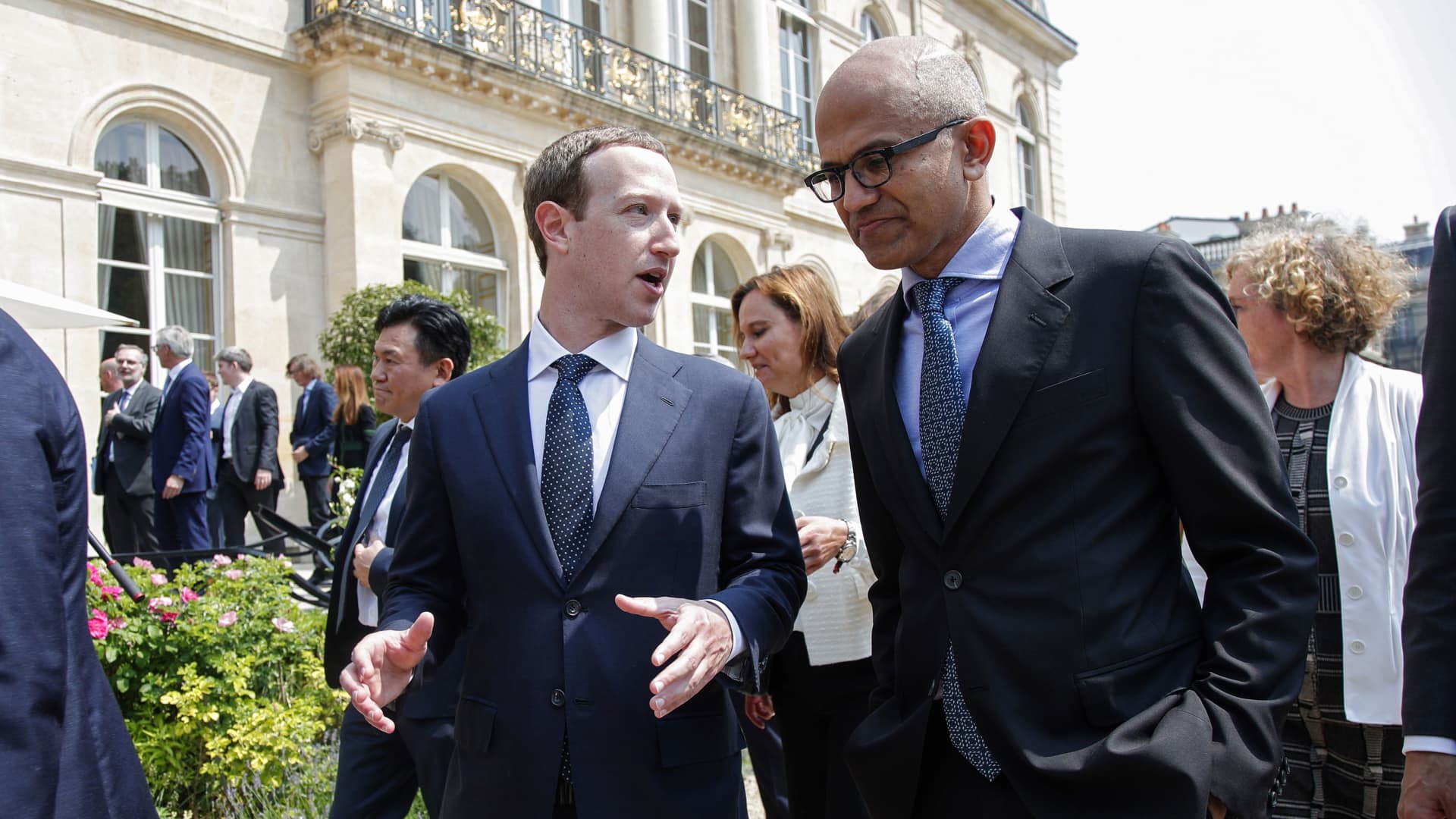
Investor confidence in Big Tech’s aggressive artificial intelligence (AI) capital expenditure (capex) strategy is showing cracks, as Alphabet’s latest earnings report and boosted spending forecasts triggered a market wide sell-off.
Amazon, Meta, and Microsoft now face heightened scrutiny this week as they prepare to release their own quarterly results, with markets questioning the immediate returns on massive infrastructure investments and the implications for free cash flow.
💎 Strategic Investment & Portfolio Insights
- Rising Capex Concerns. Heightened capital expenditures by hyperscalers for AI infrastructure are raising investor alarms about immediate profitability and cash flow, shifting market sentiment from growth optimism to return-on-investment scrutiny.
- Cash Flow Under Pressure. Alphabet’s recent negative free cash flow, alongside Amazon’s and Microsoft’s projected declines, signals a potential industry-wide trend where aggressive AI spending temporarily erodes traditional profit metrics.
- Long-Term AI Alpha Potential. Despite short-term pain, analysts like Tiffany Wade of Columbia Threadneedle suggest patience, viewing these companies as long-term AI winners, implying current valuations may present opportunities for those with a multi-year horizon.
The landscape for mega-cap technology stocks has shifted dramatically following Alphabet’s second-quarter earnings, which revealed plans to significantly increase its 2026 capital expenditure forecast to $205 billion for new AI data centers. This announcement, coming from a company long lauded for its efficient conversion of capex to revenue, immediately sent its shares down 7% and initiated a broader market re-evaluation of infrastructure spending across the tech sector.
The resulting tremors spread quickly, impacting Amazon, Meta, and Microsoft, all of whom experienced stock declines. This collective downturn underscores a growing AI Capex Skepticism among investors, who are now more critically examining the trade-off between massive infrastructure investments and their uncertain short-term returns. While previous spending hikes were often met with enthusiasm, seen as indicators of robust demand and future revenue, the mood has palpably soured. Mark Mahaney, head of internet research at Evercore ISI, warned that Alphabet’s capex boost ‘increases the odds of similar behavior’ from its peers.
Microsoft, expected to report earnings soon, had previously projected $190 billion in capex and finance leases for the year, a figure that includes a $25 billion increase due to higher AI chip demand. Cowen analyst Derrick Wood noted to CNBC that ‘If they raise capex again, based on what we saw in the reaction of Google [last week], it’s probably going to lead to selling pressure in the stock.’ Amazon, which initially guided for $200 billion in 2026 capex, has seen its consensus forecast creep up to $207.4 billion following Alphabet’s report, with analysts expecting a formal lift due to increased AI, custom chip, and satellite internet investments.
This aggressive spending spree is not without consequence for liquidity. Alphabet, traditionally a cash-printing machine, reported negative cash flow in the second quarter for the first time. Similarly, Amazon’s free cash flow turned negative in Q1 and is projected to remain so for the full year, reminiscent of its 2021-2022 period during warehouse expansion. Microsoft’s free cash flow is also forecast to turn negative in Q4 for the first time since 2001, according to FactSet analysts. These shifts highlight a critical challenge: funding the intense AI arms race through debt, with Amazon’s long-term debt rising 81% to $119 billion and Alphabet’s surging 111% to $98 billion during the first half of 2026.
Despite these concerns, the demand for cloud services, driven by AI, remains robust. Google’s cloud business, for instance, recorded an impressive 82% expansion in Q2, its fastest growth since at least 2020. AWS revenue rose 28% in Q1, with an anticipated 32% for Q2, while Microsoft’s Azure saw 40% growth in Q1, projected at 39% for Q2. This strong underlying demand suggests that while the spending is high, it is responding to a genuine market need. Investors looking for a broader perspective on current market analysis should explore StockXpo’s insights.
- Alphabet (GOOGL): Q2 cash flow negative for the first time, long-term debt up 111% to $98 billion.
- Amazon (AMZN): Q1 free cash flow negative, long-term debt up 81% to $119 billion.
- Microsoft (MSFT): Q4 free cash flow expected negative, first time since 2001.
Meta, the outlier without an established cloud business, is also eyeing a pivot. The company, which is expected to spend $138.9 billion in capex this year, is reportedly exploring selling computing power to third parties, a move that could diversify its revenue streams but also introduce new operational complexities. This strategic shift points to a broader industry trend where every major tech player is seeking to monetize their AI infrastructure, even if it means initially sacrificing traditional financial metrics. For insights into adapting investment strategies to these shifts, explore current analysis on StockXpo.
The discernible shift in investor sentiment – from embracing growth at any cost to demanding clearer pathways to profitability – directly impacts portfolio positioning. This dynamic creates a classic Policy Change (aggressive AI capex) → Asset Revaluation (negative sentiment on high spending, stock pullbacks) → Portfolio Rebalancing (investors reviewing allocations to tech giants and potentially favoring more cash-generative businesses) cycle. Allocations might lean towards companies demonstrating clearer short-to-medium term returns on AI investments or those with more resilient free cash flows, re-evaluating the risk premium associated with long-duration growth bets.
‘Patience is required for these names because I do think that these will be AI winners over sort of the medium and longer term,’ observed Tiffany Wade, a fund manager at Columbia Threadneedle, emphasizing the long-term alpha generation potential despite near-term volatility. ‘You don’t want to be turning away customers because you don’t have capacity.’
| Company | 2026 Capex Forecast (Billions) | Long-Term Debt Growth (Q1/H1 2026) | Q1/Q2 2026 Free Cash Flow Status |
|---|---|---|---|
| Alphabet (GOOGL) | $205 (Revised Up) | +111% to $98B (H1) | Negative in Q2 |
| Amazon (AMZN) | $207.4 (Consensus, est. lift) | +81% to $119B (Q1) | Negative in Q1, forecast negative full year |
| Microsoft (MSFT) | $190 (Projected) | Not specified in article | Expected negative in Q4 |
| Meta (META) | $138.9 – $145 (Expected) | Not specified in article | Still generating cash |
Note: These metrics highlight the significant capital deployment and financial shifts associated with the current AI infrastructure build-out, influencing investor perception of short-term profitability versus long-term growth.
Amazon’s Competitive Benchmarking Amid AI Push
Amazon Web Services (AWS) continues to hold its leadership in the global cloud infrastructure market, a critical battleground for AI deployment, despite fierce competition. While Google’s cloud division has shown impressive acceleration, growing 82% in Q2 compared to AWS’s 28% in Q1 (with 32% expected for Q2), Amazon’s sheer scale and established ecosystem offer a robust platform for future AI innovation. Wedbush analysts, recommending Amazon stock, view a potential capex boost as ‘worthwhile’ given AWS’s re-acceleration and expanding platform advantages across Bedrock, Alexa, and its logistics network. This suggests that while all hyperscalers are spending aggressively, the market’s assessment of that spend varies based on existing market share, ecosystem strength, and perceived efficiency of capital deployment. Read more about similar developments in our latest blog posts.
Microsoft Expert Commentary on Azure’s Trajectory
Microsoft’s Azure, the second-largest cloud provider, is navigating the AI spending wave with a strong position, reporting 40% growth in its cloud services in Q1, with a 39% consensus for Q2. The company’s integrated strategy, weaving AI capabilities into its enterprise software suite, positions it as a formidable player. However, as Cowen analyst Derrick Wood highlighted, any further increase in Microsoft’s $190 billion capex projection for the year, particularly concerning AI chip demand and higher component prices, would likely be met with selling pressure, mirroring Google’s recent experience. This indicates that even a company with Microsoft’s track record and diversified revenue streams is not immune to investor concerns regarding the balance between growth investments and immediate financial health. Analysts are keen to see if Microsoft can articulate a clear return on its AI investments to alleviate ‘AI Capex Skepticism’.
Navigating Big Tech’s AI Capex Crossroads: The Investor Imperative
The recent market reaction underscores a critical inflection point for Big Tech: investors are now demanding greater clarity and faster returns on the immense capital being poured into AI infrastructure. While the long-term potential of AI remains undeniable, the immediate impact on cash flows and debt levels is causing significant market recalibration. Companies must now skillfully articulate how their aggressive spending translates into tangible, near-term value creation beyond mere capacity expansion.
- Companies like Alphabet and Amazon are experiencing unprecedented negative free cash flows and rising debt, signaling a new financial reality.
- The market is increasingly discerning between justified AI investments and speculative spending with unclear ROI horizons.
- This period demands enhanced transparency from tech giants regarding the profitability timeline for their AI-driven data center expansions.
How will Amazon, Meta, and Microsoft convince a skeptical market that their multi-billion-dollar AI bets will pay off before investor patience runs out?
📊 StockXpo Analyst’s View
Market Impact: The rising AI Capex Skepticism is clearly weighing on investor sentiment, shifting capital away from aggressive growth narratives towards established profitability. This could lead to increased volatility in mega-cap tech stocks, prompting a flight to quality or assets with lower capital intensity. The focus will be less on top-line growth and more on margin preservation and efficient capital deployment.
Sector To Watch: Cloud infrastructure providers will remain central, but the market will differentiate between those effectively monetizing their AI build-out and those merely accumulating capacity. Companies in specialized AI software, particularly those with subscription models and lower hardware dependency, may see renewed interest as investors seek higher-margin exposure to the AI theme. Investors should also observe how companies like Microsoft and Amazon address this during their upcoming earnings calls, as their messaging could set the tone for the broader tech market. For more in-depth reporting and insights, refer to reputable financial news sources like Reuters Business or Bloomberg Markets.
Financial Disclaimer:
StockXpo.com is a financial news aggregator and educational portal, not a registered investment advisor or broker-dealer. All information, news, and analysis provided herein are strictly for educational purposes and do not constitute investment, financial, legal, or tax advice. Investing in the stock market involves high risks, and past performance is not indicative of future results. StockXpo will not be liable for any financial losses or investment damages. Always consult a certified financial advisor before making market decisions.
MORE IN INSIDE INVESTMENT NEWS

AI Funding Fears Rattle Wall Street: Adjusting for Alpha and Preservation
Published: Saturday, October 24, 2026 · 12:28 PM

Volvo Cars Plunge: Alpha Warning as China Sales Slump Hits Earnings
Published: Friday, October 23, 2026 · 6:18 AM