Published: Tuesday, July 21, 2026 · 3:13 PM | Updated: Tuesday, July 21, 2026 · 3:13 PM
📊 234 views




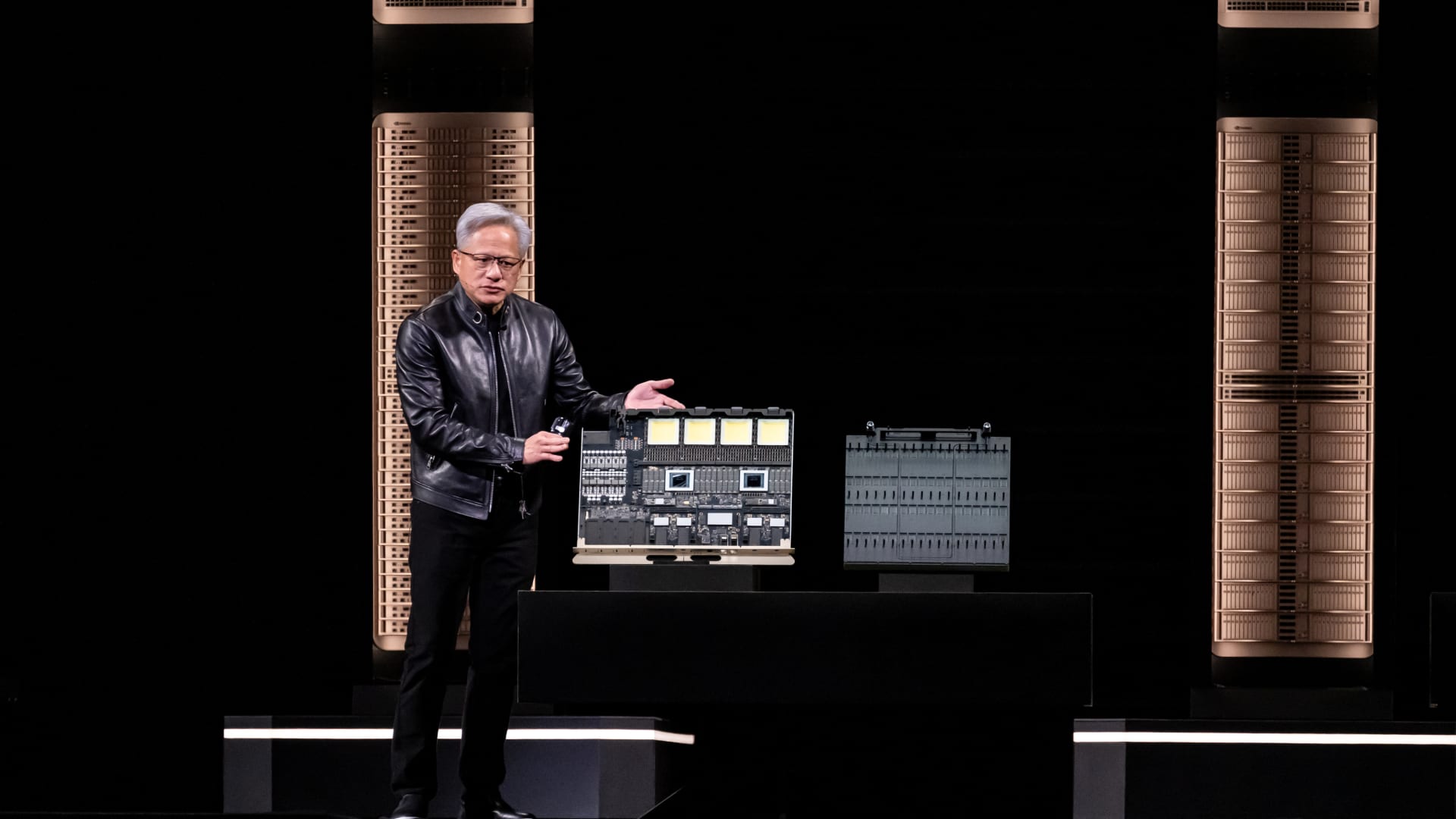
Nvidia, the dominant force in AI GPUs, is now directly entering the CPU market with its next-generation Nvidia Vera CPU. This move signifies a strategic pivot, positioning the company to challenge established giants AMD and Intel in the critical AI server segment. The Vera CPU, designed from the ground up, targets the burgeoning demands of agentic AI, promising enhanced performance and a vertically integrated solution for cloud providers and AI labs.
🚀 Tech Strategy & Market Disruptions
- Vertical Integration Push. Nvidia aims to sell complete AI computing racks, moving beyond standalone GPU sales to offer an entire system, including its new Vera CPU.
- AI Agent Optimization. The Vera CPU is custom-designed for agentic AI workloads, focusing on single-core performance, high memory bandwidth, and low latency to efficiently ‘babysit’ and feed data to GPUs.
- Direct Competition. Nvidia’s entry directly challenges AMD and Intel’s long-standing dominance in the server CPU market, particularly as the importance of CPUs in complex AI systems grows.
Nvidia’s unveiling of detailed specifications for its Vera CPU marks a significant escalation in the AI hardware arms race. Historically, Nvidia has leveraged its GPUs to become the most valuable company globally, with its chips forming the backbone of modern AI infrastructure. However, the company is now making a definitive play for the central processing unit market, a domain traditionally held by Intel and AMD. Cloud providers, AI research labs like OpenAI and Anthropic, and even aerospace innovators such as SpaceX, have already received initial shipments of Vera chips, signaling a serious push into deployment.
This strategic expansion is rooted in Nvidia’s broader vision for vertical integration. Instead of merely supplying GPUs, the company is moving towards offering entire computing systems, or ‘full racks’ of power. This approach, exemplified by offerings like the Vera Rubin system, is intended to optimize GPU performance by eliminating bottlenecks often associated with third-party CPUs. The company believes this tight integration will secure its position as the preferred hardware provider for leading AI development, particularly as competition from rivals like AMD’s Helios systems and custom chips intensifies.
The resurgence of the CPU’s importance, driven by the rise of agentic AI, is a key factor behind Nvidia’s move. While GPUs led the initial AI boom, independent AI agents require robust CPUs to manage data flow and operational oversight. Nvidia’s Vera is engineered with a focus on single-core speed and low latency, a departure from the core-count emphasis of traditional x86 server CPUs from Intel and AMD. This design philosophy, according to Nvidia’s VP of Hyperscale Ian Buck, makes CPUs ‘much more integral’ to how quickly an AI agent can respond. Industry analysts like Karl Freund of Cambrian AI Research suggest the Vera CPU creates a new category, specifically targeting intensive AI tasks rather than general server operations. This is a critical development for those monitoring technology market trends.
- The Vera CPU is the first server CPU designed by Nvidia from the core, not an off-the-shelf Arm design.
- It boasts 50% better performance for AI agents compared to x86 chips.
- The chip supports up to 1.5 terabytes of low-power memory per chip, and consumes between 250 and 450 watts.
Nvidia’s introduction of the Vera CPU initiates a profound disruption in the server hardware ecosystem. The development of a specialized AI CPU, optimized for agentic workloads and designed for seamless integration with Nvidia’s powerful GPUs, directly challenges the established duopoly of Intel and AMD. This new architectural paradigm (cause) promises to unlock greater efficiency and performance in complex AI deployments (effect), potentially leading to a shift in procurement strategies among hyperscalers and cloud providers. The move towards vertically integrated systems (cause) could compel competitors to accelerate their own full-stack solutions (effect), fostering a more intense innovation cycle within the emerging technologies sector. This could reshape how AI infrastructure is designed, built, and deployed globally, driving a push for specialized hardware tailored to specific AI paradigms.
“Nvidia’s Vera CPU isn’t just another chip; it represents a strategic gambit to capture the entire AI infrastructure stack. By tightly coupling CPU and GPU development, they’re aiming to create a highly optimized, high-performance ‘AI factory’ that could redefine the benchmarks for AI training and inference. This move forces competitors to re-evaluate their own vertical integration strategies.”
Key Server CPU Market & Vera Specifications
| Metric | Value / Source |
|---|---|
| Estimated 2025 Server CPU Market Value | $37 billion (Bernstein) |
| Nvidia’s Server CPU Market Potential Estimate | $200 billion |
| AMD Server CPU Market Share | ~33% |
| Intel Server CPU Market Share | ~66.8% |
| Estimated Vera CPU Average Selling Price | $5,000 (Wolfe Research) |
| Estimated Vera CPU Shipments (2026) | 1.3 million units (Wolfe Research) |
| Vera CPU Power Consumption | 250-450 watts |
| Vera CPU Memory Support | Up to 1.5 terabytes (LPDDR) |
Nvidia Vera CPU Market Adoption Challenges
Despite Nvidia’s immense influence and technical prowess, securing widespread adoption for the Vera CPU presents significant hurdles. Intel and AMD possess decades-long, deeply entrenched relationships with hyperscalers and cloud giants, having built robust ecosystems around their x86 architectures. Shifting these foundational allegiances requires not only superior performance but also compelling cost-benefit analyses, extensive software ecosystem support, and seamless integration pathways for existing data center infrastructure. Gartner analyst Kevin Knox highlights AMD’s strong ecosystem, which has contributed to its growing server CPU market share. While early adoption by AI leaders like OpenAI is a strong endorsement, convincing a broader spectrum of enterprise and cloud clients to transition from established platforms to a new CPU architecture, even one backed by Nvidia, will be a protracted effort.
Nvidia Ecosystem Expansion Potential
The Vera CPU’s introduction significantly bolsters Nvidia’s ambition to become the holistic provider of AI computing solutions. By offering both leading GPUs and a purpose-built CPU, Nvidia can present a unified, optimized stack that potentially offers unparalleled performance and simplified deployment for AI-centric workloads. This vertical integration strategy, as detailed in reports by Bloomberg Technology, extends Nvidia’s influence from merely components to entire system architectures. The potential to combine Vera CPUs with their advanced GPUs in systems like Vera Rubin allows Nvidia to dictate more of the design and performance characteristics, fostering a tighter ecosystem. This could lead to innovative software and hardware co-design, opening new avenues for developer tools, AI frameworks, and specialized data center services that are optimized exclusively for Nvidia’s full-stack offering, creating a compelling value proposition for businesses investing in cutting-edge AI, as discussed in educational tech insights.
The Nvidia Vera CPU: A New Chapter in AI Computing
The launch of the Nvidia Vera CPU signals a strategic and aggressive expansion by Nvidia into the core computing elements of the data center, moving beyond its GPU dominance. This move is less about competing on every traditional CPU workload and more about cementing its position as the indispensable architect of AI infrastructure, particularly for the demanding needs of agentic AI. The company is betting on vertical integration and specialized performance to carve out a significant share in a market long dominated by x86 incumbents.
- The Vera CPU is a specialized solution for AI agent workloads, prioritizing single-core speed and low latency.
- Nvidia’s vertical integration strategy aims to deliver complete AI computing systems, optimizing GPU performance.
- Early adoption by key AI labs like OpenAI suggests a strong initial market fit, despite challenges in dislodging established players.
Can Nvidia’s full-stack AI approach fundamentally redefine the competitive dynamics of the server CPU market?
📊 StockXpo Analyst’s View
Market Impact: Nvidia’s entry into the CPU market with Vera could initially trigger investor concern for AMD and Intel, potentially leading to short-term volatility for these incumbents. However, the long-term impact hinges on Vera’s broader market penetration beyond specialized AI. For Nvidia, this signifies a potential new revenue stream, diversifying its hardware portfolio and strengthening its ecosystem lock-in, which could be viewed positively by investors seeking diversified growth. The move also underscores the escalating capital intensity of the AI race, driving further R&D investments across the semiconductor industry.
Sector To Watch: The cloud computing and data center infrastructure sectors will be critical to observe. As major hyperscalers evaluate and potentially adopt Vera, their spending patterns and architectural choices will directly influence market share shifts. Companies focused on AI model development and deployment, particularly those working with agentic AI, stand to gain from performance optimizations offered by a vertically integrated Nvidia stack, potentially accelerating their innovation cycles, as recently reported by Reuters.
Financial Disclaimer:
StockXpo.com is a financial news aggregator and educational portal, not a registered investment advisor or broker-dealer. All information, news, and analysis provided herein are strictly for educational purposes and do not constitute investment, financial, legal, or tax advice. Investing in the stock market involves high risks, and past performance is not indicative of future results. StockXpo will not be liable for any financial losses or investment damages. Always consult a certified financial advisor before making market decisions.
MORE IN INSIDE TECHNOLOGY

SK Hynix Shares Rebound: A Strategic Shift in Semiconductor Funding
Published: Friday, October 23, 2026 · 1:46 AM

AI Innovation Fuels Southeast Asia’s Digital Growth
Published: Thursday, October 22, 2026 · 12:36 AM