Published: Wednesday, July 15, 2026 · 2:19 PM | Updated: Wednesday, July 15, 2026 · 2:19 PM
📊 272 views




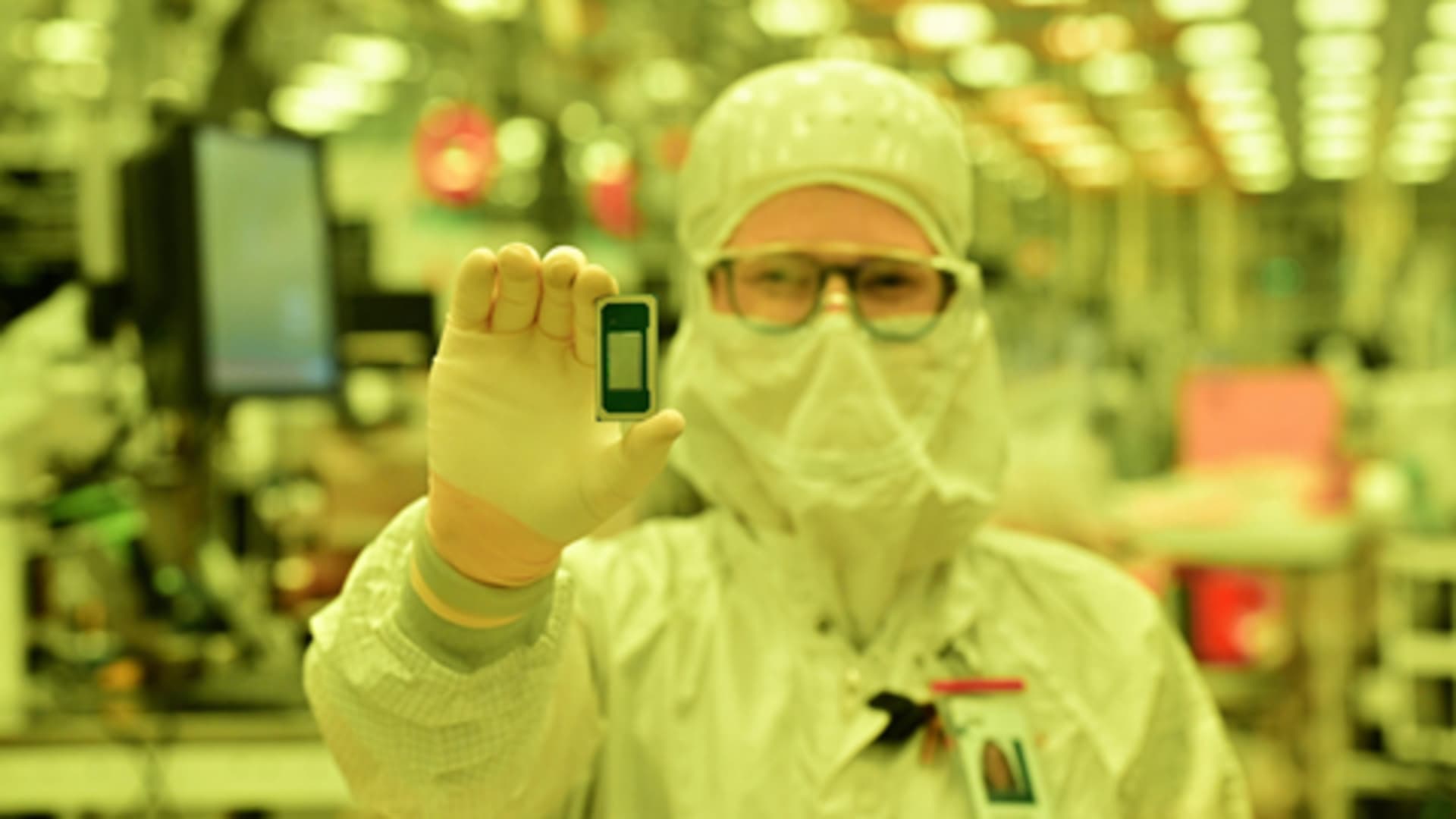
Intel (INTC) is attracting significant investor attention this week, propelled by strong signals indicating a robust surge in artificial intelligence (AI) spending and a strategic expansion of its foundry capabilities. The semiconductor giant’s recent moves, including substantial investments and technological adoptions, underscore its determined push to regain leadership in advanced chip manufacturing.
🚀 Tech Strategy & Market Disruptions
- High NA EUV Adoption. Intel Foundry is deploying ASML’s cutting-edge High NA EUV lithography for its 18A processing node, signaling a commitment to leading-edge chip production for AI PCs.
- Global Foundry Expansion. A $5.7 billion investment in Intel’s Ireland plant aims to boost Xeon server processor production, directly addressing rising demand for AI infrastructure.
- Robust AI Spending Indicators. Strong earnings from ASML and Taiwan Semiconductor Manufacturing Company (TSMC), alongside shifts in IBM’s capital expenditure, affirm sustained growth in AI-driven hardware demand.
The surge in investor confidence around Intel Stock is underpinned by several key industry developments signaling a robust and expanding market for AI-centric hardware. Notably, Jim Cramer’s Charitable Trust has increased its position in Intel, citing the company’s significant opportunity in the evolving semiconductor landscape. This bullish sentiment follows news of Intel Foundry’s strategic adoption of ASML Holding’s advanced High NA EUV lithography machines. These sophisticated tools are critical for fabricating the next generation of microchips, specifically for Intel’s latest 18A processing node, targeting the burgeoning market of artificial intelligence personal computers (AI PCs).
ASML, the Dutch semiconductor manufacturing equipment giant, recently reported strong earnings and announced plans to significantly increase its capacity by 2028 to meet burgeoning demand. This commitment by Intel to acquire such expensive, cutting-edge equipment from ASML is a clear indication that its foundry operations are not only expanding but are also making substantial progress in improving yields for leading-edge chips, crucial for high-performance computing and AI applications.
Broader market signals also reinforce this optimistic outlook. Taiwan Semiconductor Manufacturing Company (TSMC), a key industry bellwether, reported a substantial 68% year-over-year increase in June sales, hinting at strong overall technology market trends. Furthermore, IBM’s pre-announced quarterly warning highlighted a distinct customer prioritization of capital expenditure towards servers, storage, and memory—components vital for AI infrastructure—over traditional mainframe hardware. These shifts collectively paint a picture of an industry rapidly reorienting towards AI-driven growth.
Intel’s proactive investment strategy extends beyond technology adoption. The company announced a significant $5.7 billion investment in its Ireland plant, aimed at expanding the production of its Xeon server processors and other essential products. This capital injection is designed to enhance manufacturing capacity and efficiency, positioning Intel to better compete in the high-stakes server market where performance for AI workloads is paramount.
These developments provide a clear narrative: Intel is not merely participating but actively investing to reshape its competitive standing in emerging technologies. The consistent positive news from suppliers and competitors, coupled with Intel’s own strategic actions, suggests a concerted effort to capitalize on the AI boom.
- Strategic Capital Deployment: Intel’s willingness to invest $5.7 billion in expanding its Ireland plant for Xeon processors and procuring ASML’s High NA EUV machines underscores a clear capital allocation strategy aimed at future-proofing its manufacturing capabilities.
- Industry-Wide AI Tailwinds: Strong performances from ASML and TSMC, alongside IBM’s capex reallocation, indicate a broad and sustained increase in demand for semiconductor components essential for AI computing.
- Competitive Re-positioning: By focusing on its foundry and advanced nodes like 18A for AI PCs, Intel is making a deliberate move to challenge established leaders and reclaim market share in high-growth segments.
Disruption Flow: From Lithography to AI PC Dominance
The integration of ASML’s High NA EUV lithography represents a critical disruption flow in Intel’s manufacturing pipeline. This advanced technology enables the printing of denser, more complex circuit patterns onto microchips, directly translating to enhanced performance and efficiency for future processors. This capability, in turn, allows Intel to produce more powerful 18A processing node chips for AI PCs, creating a ripple effect across the digital transformation landscape. Faster, more capable AI PCs will drive innovation in software applications, accelerate data processing at the edge, and ultimately fuel demand for an even more sophisticated semiconductor ecosystem. This cause-and-effect chain—from advanced manufacturing tools to powerful end-user devices—is fundamental to how technological leaps translate into market shifts.
‘Intel’s aggressive investment in High NA EUV and foundry expansion is a definitive statement of intent. For a CTO, this signifies a crucial inflection point in semiconductor innovation, where the ability to control and scale leading-edge manufacturing directly translates to competitive advantage in the AI era. It’s about owning the fabrication layer to dictate the pace of future hardware and software convergence.’
Key Financial Signals in Semiconductor Sector
Recent market movements and financial commitments highlight the significant activity around Intel and the broader semiconductor sector, as reported by Reuters reports:
- Intel’s Portfolio Weight: Jim Cramer’s Charitable Trust increased its Intel (INTC) holdings to 1,100 shares, bringing its portfolio weight to approximately 3% from 2.7%.
- Intel Ireland Investment: The company announced a $5.7 billion investment to expand its Ireland plant, focusing on Xeon server processors and other key products.
- ASML Capacity Expansion: ASML plans to increase its manufacturing capacity for 2028, responding to robust demand for its lithography equipment.
- TSMC Sales Growth: Taiwan Semiconductor Manufacturing Company reported a significant 68% year-over-year increase in June sales.
- IBM Capex Shift: IBM’s quarterly warning indicated a customer shift towards capital expenditure on servers, storage, and memory, critical components for AI infrastructure, a trend also noted by Bloomberg’s technology coverage.
Intel Platform Architecture: Powering the AI PC Era
Intel’s pivot towards the 18A processing node for AI personal computers represents a strategic evolution in its platform architecture. This advanced node, coupled with High NA EUV technology, is designed to integrate AI acceleration capabilities directly into the processor, moving beyond discrete AI accelerators. The goal is to create a more efficient, powerful, and seamless AI experience at the device level, optimizing performance for on-device AI workloads and ensuring data privacy. This architectural shift is not just about raw computational power but about optimizing the entire stack—from silicon to software—to unlock new possibilities for productivity, creativity, and user interaction within the AI PC ecosystem. This emphasis on foundational architectural strength is vital for long-term growth and competitiveness.
Intel Ecosystem Expansion Potential
The ramifications of Intel’s current strategic moves extend far beyond its internal manufacturing lines, signaling considerable Intel ecosystem expansion potential. By solidifying its foundry capabilities and investing heavily in advanced nodes for AI, Intel is positioning itself as a more reliable and technologically advanced partner for a wider array of customers. This includes not only traditional PC and server clients but also emerging players in specialized AI hardware, edge computing, and automotive sectors. A robust foundry service, capable of producing leading-edge chips, could attract diverse fabless semiconductor companies, thereby expanding Intel’s influence and revenue streams across the broader technology landscape. The success of this expansion hinges on consistent execution and the ability to meet demanding production schedules for next-generation silicon, offering educational tech insights to the broader industry.
Intel’s Foundry Ambitions: Charting the AI Future
Intel’s aggressive investments in foundry technology and manufacturing capacity, particularly for AI-focused processors, signal a critical juncture in the company’s long-term strategy. The convergence of advanced lithography and substantial capital deployment positions Intel to potentially reclaim significant market share in the high-growth AI and server segments. The broader market’s shift towards AI infrastructure further validates this strategic direction.
- Intel’s 18A node and High NA EUV adoption are crucial for AI PC and server market competitiveness.
- Increased capital expenditure on manufacturing directly supports future revenue growth in advanced semiconductors.
- The sustained industry demand for AI hardware provides a strong tailwind for Intel’s strategic initiatives.
Can Intel successfully execute its ambitious foundry roadmap and leverage this momentum to truly redefine its leadership in the AI era?
📊 StockXpo Analyst’s View
Market Impact: Intel’s renewed focus on advanced manufacturing for AI chips, supported by significant capital injections and cutting-edge equipment, is likely to bolster investor sentiment, driving positive movement in Intel Stock. This strategic clarity on foundry expansion and AI relevance can attract institutional investment and improve market liquidity, especially as broader economic indicators show robust technology spending.
Sector To Watch: The semiconductor equipment sector, exemplified by ASML, will continue to gain as foundries worldwide upgrade their capabilities. Additionally, companies specializing in AI infrastructure, data centers, and advanced PC components are poised for growth, benefiting from the increased demand for high-performance processors.
Financial Disclaimer:
StockXpo.com is a financial news aggregator and educational portal, not a registered investment advisor or broker-dealer. All information, news, and analysis provided herein are strictly for educational purposes and do not constitute investment, financial, legal, or tax advice. Investing in the stock market involves high risks, and past performance is not indicative of future results. StockXpo will not be liable for any financial losses or investment damages. Always consult a certified financial advisor before making market decisions.
MORE IN INSIDE TECHNOLOGY

Starlink Launch: India’s Digital Transformation Faces Regulatory Risk
Published: Thursday, October 8, 2026 · 1:51 AM

AI’s Dual Edge: Innovation-Driven Growth Meets Global Economic Hazard
Published: Wednesday, October 7, 2026 · 3:12 AM