Published: Tuesday, July 14, 2026 · 6:25 PM | Updated: Tuesday, July 14, 2026 · 6:25 PM
📊 233 views




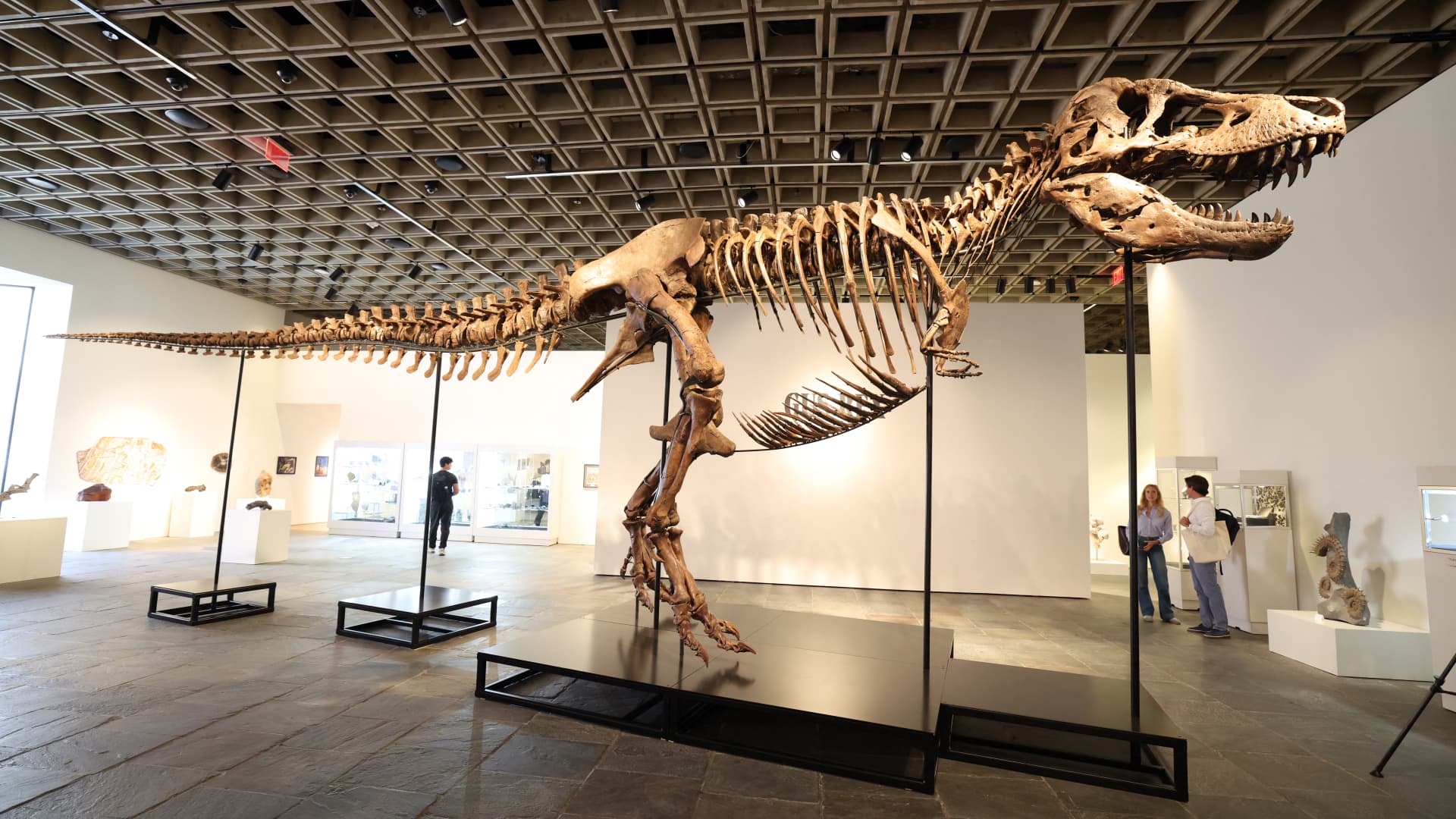
The high-stakes world of luxury collectibles witnessed a monumental shift as a Tyrannosaurus rex specimen, ‘Gus,’ commanded an astonishing $50.1 million at Sotheby’s. This landmark T. rex auction sale not only set a new global record for any dinosaur fossil but also underscored the rapidly escalating value of rare natural history artifacts within the ultra-wealthy investment landscape.
🗝️ Corporate Strategy Insights
- Diversification of High-Value Assets. Auction houses are strategically expanding beyond traditional art, identifying natural history specimens as a new frontier for high-net-worth investors seeking unique stores of value.
- Market Leadership through Exclusivity. Sotheby’s reinforced its position in the rapidly growing rare collectibles market by securing and expertly marketing ‘Gus,’ demonstrating capacity to handle and valorize unparalleled scientific treasures.
- Optimizing Liquidity in Elite Collectibles. The intense 10-minute bidding war highlights robust demand and significant liquidity among a select group of buyers, a crucial factor for sustained market growth in this niche.
The sale of ‘Gus,’ a remarkably complete Tyrannosaurus rex skeleton discovered in South Dakota and boasting 183 fossil bone elements, dramatically exceeded its initial $20 million to $30 million estimate. This recent triumph by Sotheby’s, following the 2024 sale of a Stegosaurus skeleton for $44.6 million to billionaire Ken Griffin, solidifies the auction house’s expertise in a burgeoning segment of the luxury market. The increasing frequency of such high-profile sales indicates a maturing asset class where scarcity and provenance command premium prices.
The sheer scale and completeness of ‘Gus’ – measuring 38 feet long and 12.5 feet tall with a 54-inch skull, and approximately 61% complete by bone count – played a pivotal role in its record-breaking valuation. Cassandra Hatton, Sotheby’s vice chairman, highlighted the exceptional excavation, documentation, and care ‘Gus’ received, attesting to the rigorous standards expected in this specialized field. However, alongside the booming prices, experts including paleontologists have raised concerns regarding the lack of universal safeguards for authenticity and verification within the broader industry, an important consideration for buyers and the integrity of the market.
- The record-setting prices for dinosaur fossils like ‘Gus’ and ‘Apex’ reflect a broader trend among the ultra-wealthy to diversify portfolios with tangible, rare assets that offer both status and potential long-term value appreciation, distinct from traditional financial market investments or even high-end art.
Strategic Ripple Effect: How Gus’s Sale Reshapes Luxury Collectibles
The unprecedented success of the ‘Gus’ T. rex auction will likely trigger a strategic ripple effect across the luxury collectibles industry. This monumental sale signals to other auction houses and private collectors that significant capital is available for natural history specimens, potentially driving more previously unlisted fossils into the market. This heightened supply, met with robust demand, could further inflate prices for exceptionally rare and well-preserved examples. Competitors like Christie’s, which previously sold the T. rex ‘Stan’ for $31.8 million in 2020, will undoubtedly re-evaluate their strategies for sourcing and marketing such unique treasures. The heightened visibility and perceived value could also attract new institutional investors or even inspire museums to compete more aggressively in private markets, affecting the accessibility of scientific specimens for public display and research. The dynamic interplay between scientific rarity and speculative investment offers a fascinating case study in how niche markets can impact broader global stock markets.
The strategic shift by leading auction houses to aggressively court high-net-worth individuals for natural history artifacts represents a calculated expansion of their market leadership, moving beyond established art and jewelry segments to capitalize on emerging luxury asset classes with substantial untapped potential.
Key Market Indicators Driving Fossil Valuations
While specific financial metrics beyond sale price are proprietary to Sotheby’s, several indicators underscore the robust growth in this unique market segment:
- Record-Breaking Sale Price: ‘Gus’ sold for $50.1 million, surpassing the previous record by 12% in just two years, signaling accelerating market appreciation.
- Over-Estimated Performance: The final sale price was nearly double the low-end estimate of $20 million, demonstrating unexpected market fervor and demand.
- Increased Bidding Intensity: A 10-minute bidding war involving seven bidders indicates significant competitive interest and market depth.
These metrics highlight the growing confidence and liquidity among elite collectors in natural history specimens as a high-value asset class.
Sotheby’s Strategic Analysis: Dominating Niche Luxury Markets
Sotheby’s has demonstrated a clear strategic intent to dominate emerging luxury asset categories. By meticulously curating and bringing to market specimens like ‘Gus’ and ‘Apex,’ the auction house is actively shaping and expanding the very definition of ‘collectible.’ This approach requires not only deep expertise in provenance and scientific preparation but also unparalleled access to the world’s wealthiest buyers. Their success validates a strategy focused on offering unique, irreplaceable assets that appeal to a desire for exclusivity and tangible wealth preservation, especially as global economic uncertainties persist. This pivot highlights broader trends in how auctioneers are diversifying their portfolios, a move tracked by financial news outlets like major business publications.
Luxury Collectibles Market Leadership: A New Frontier
The luxury collectibles market is experiencing a significant evolution, with natural history items now standing shoulder-to-shoulder with fine art and rare jewels. This new frontier is driven by a confluence of factors: the finite nature of such discoveries, the inherent wonder and scientific value, and the status conferred upon owners of truly unique artifacts. Market leaders in this space are those capable of navigating complex scientific authentication, global logistics, and high-stakes marketing, ensuring maximum visibility and competitive bidding. As wealthy individuals increasingly seek assets that offer both aesthetic appeal and perceived intrinsic value, this segment is poised for continued growth, albeit with persistent questions around ethical sourcing and market transparency. Understanding the dynamics of such specialized markets is crucial for analysts tracking corporate growth in the luxury sector.
The T. rex Auction Phenomenon: What’s Next for Collectibles?
The record-breaking sale of ‘Gus’ marks a significant inflection point for the natural history collectibles market, signaling strong demand and increasing valuations for rare specimens. Auction houses are strategically expanding their offerings, recognizing the growing appetite among the ultra-wealthy for unique, tangible assets that transcend traditional investment categories.
- The market for rare fossils is experiencing unprecedented growth, driven by scarcity and high-net-worth investor demand.
- Auctioneers are actively diversifying portfolios, positioning natural history items as prime luxury assets.
- Challenges remain regarding industry-wide authenticity standards and the potential impact on scientific research.
How will this escalate the competition among auctioneers and the accessibility of these scientific marvels?
📊 StockXpo Analyst’s View
Market Impact: The ‘Gus’ sale underscores the robust liquidity present at the very top echelon of the wealth spectrum, demonstrating a flight to tangible, unique assets. This trend could exert subtle upward pressure on other rare collectibles, from high-end art to classic cars, as investors seek alternative stores of value and status.
Sector To Watch: Keep a close eye on the luxury goods and services sector, particularly high-end auction houses and specialized asset management firms. Their strategic ability to source, authenticate, and market these ultra-rare items will be a key differentiator, indicating potential for sustained revenue growth from ultra-high-net-worth clientele. For more educational insights into market trends, visit our blog. Experts at Forbes Business often cover how the elite invest in such unique assets.
Financial Disclaimer:
StockXpo.com is a financial news aggregator and educational portal, not a registered investment advisor or broker-dealer. All information, news, and analysis provided herein are strictly for educational purposes and do not constitute investment, financial, legal, or tax advice. Investing in the stock market involves high risks, and past performance is not indicative of future results. StockXpo will not be liable for any financial losses or investment damages. Always consult a certified financial advisor before making market decisions.
MORE IN INSIDE BUSINESS

Saudi Arabia Flight Decision: Delta Weighs Safety Amid Regional Tensions
Published: Friday, October 9, 2026 · 7:21 AM
Skydance Vertical Win: Ellison’s Bold Strategy for Media Dominance
Published: Thursday, October 8, 2026 · 12:44 PM