Published: Tuesday, July 14, 2026 · 5:53 PM | Updated: Tuesday, July 14, 2026 · 5:53 PM
📊 196 views




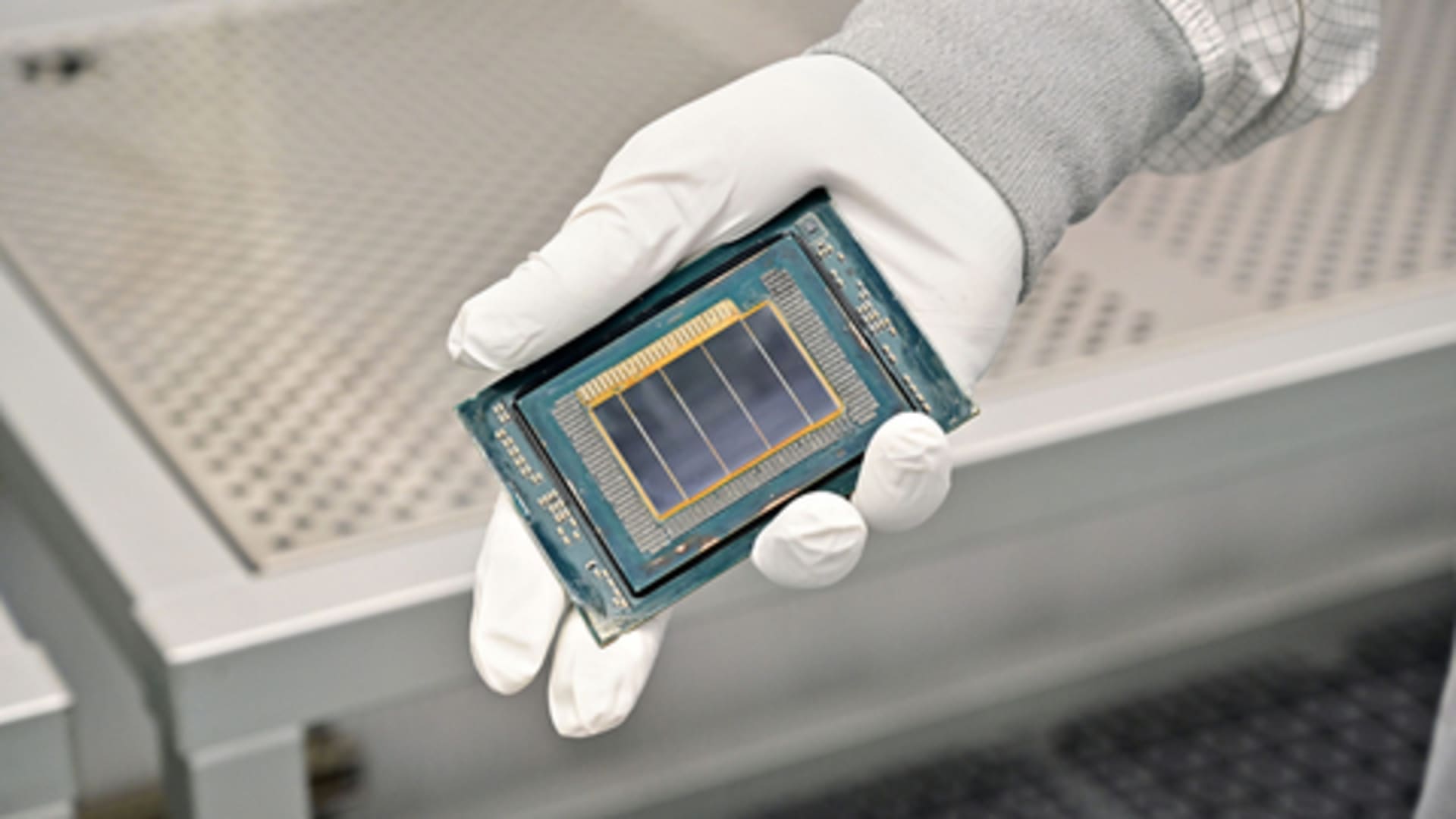
The technology sector is witnessing significant shifts, driven by evolving spending priorities and supply chain dynamics. Recent market movements underscore a growing divergence in how investors and analysts perceive the long-term viability of different tech business models, particularly within the crucial semiconductor industry. This context sets the stage for why a renewed emphasis on vertical integration and domestic manufacturing capacity is becoming a key differentiator, influencing even seasoned market commentators like Jim Cramer to highlight an **Intel buy**.
🚀 Tech Strategy & Market Disruptions
- AI-Driven Spending Shift. Enterprises are reallocating IT budgets from traditional software towards infrastructure and cybersecurity, fueling demand for server, storage, and memory hardware essential for AI workloads.
- Supply Chain Resilience Prioritized. Dependencies on third-party foundries, as seen with Arm, are prompting a re-evaluation of integrated manufacturing capabilities, positioning companies like Intel with proprietary fabs at an advantage.
- Consumer Device Market Volatility. Declining wireless carrier subsidies and potential price sensitivities for premium devices like Apple’s iPhones, Macs, and iPads introduce uncertainty to unit demand and service revenue projections.
Recent market data illustrates a critical reallocation of enterprise spending, signaling a broader digital transformation trend where foundational infrastructure takes precedence. IBM’s preannounced weaker quarter, attributed to softness in its software business and customers shifting capital towards servers, storage, and memory, highlights this dynamic. Jim Cramer noted this underscores a migration of AI-related spending toward infrastructure and cybersecurity. This shift directly impacts software vendors, while benefiting those focused on underlying hardware capabilities. Meanwhile, Apple faced a downgrade from KeyBanc, citing potential slowdowns in iPhone upgrade cycles due to reduced U.S. wireless carrier device subsidies and concerns over recent price increases on Macs and iPads affecting unit demand and, subsequently, its high-margin services business. Cramer, however, dismissed these as “conjecture,” maintaining his positive outlook on Apple.
Simultaneously, the semiconductor landscape is seeing its own reordering. Arm Holdings experienced a downgrade by HSBC due to near-term foundry capacity constraints that could limit earnings growth. This development strengthens the argument for an **Intel buy**, particularly as the company actively expands its own manufacturing footprint. Unlike Arm, which relies heavily on third-party foundries, Intel’s integrated device manufacturing (IDM) model, with significant investments in its Intel Foundry Services, positions it for greater control over production and supply chain resilience—a crucial factor for future growth in a tight market. The ongoing global technology market trends continue to emphasize the importance of robust manufacturing.
The disruption flow is clear: Increased AI investment (Cause) → Shift in enterprise spending from software to infrastructure (Effect) → Pressure on traditional software vendors like IBM (Impact) while boosting demand for chips and data center hardware (Opportunity) → Heightened importance of manufacturing control (Cause) → Challenges for fabless companies dependent on external foundries like Arm (Impact) → Strategic advantage for integrated manufacturers like Intel (Opportunity).
“The architectural shift towards AI-centric compute necessitates not just advanced chip design, but also resilient, scalable manufacturing. Companies controlling their fabrication are poised to capture significant market share, mitigating the supply chain vulnerabilities that plague the broader industry.”
While specific technical metrics for all companies weren’t provided in depth, the qualitative shifts are profound:
- IBM: Software business facing headwinds, customers prioritizing server, storage, and memory.
- Apple: Potential deceleration in iPhone upgrade cycles due to reduced carrier subsidies; price increases on Macs/iPads could impact unit demand.
- Arm: Facing near-term foundry capacity constraints, impacting earnings growth potential.
- Intel: Expanding its own manufacturing footprint, offering greater control and resilience.
Intel’s Foundry Expansion Strategy
Intel’s aggressive investment in its manufacturing capabilities, including its IDM 2.0 strategy and Intel Foundry Services, represents a calculated move to re-establish its dominance in chip production. This strategy aims to both serve Intel’s internal needs and become a major foundry provider for external customers, directly challenging Taiwan Semiconductor Manufacturing Company (TSMC) and Samsung Foundry. By vertically integrating, Intel aims to reduce reliance on external suppliers, enhance supply chain security, and leverage advanced process technologies to drive innovation. This includes significant capital expenditure in new fabs in Arizona, Ohio, and Germany, underpinning a long-term vision for chip sovereignty and advanced manufacturing capacity for the global market, an important aspect of emerging technologies.
Apple’s Services Ecosystem: Enduring or Vulnerable?
Apple’s services business has been a key driver of its profitability and valuation, recognized for its high margins and recurring revenue. However, the KeyBanc downgrade raises questions about the interconnectedness of hardware sales and services growth. If iPhone, Mac, and iPad unit demand softens due to macroeconomic pressures, subsidy reductions, or price sensitivity, it could indirectly impact the growth trajectory of services like Apple Music, iCloud, and the App Store. While Apple’s ecosystem boasts strong customer loyalty, any slowdown in device adoption or upgrade cycles presents a potential headwind for the continued expansion of its lucrative services revenue, urging careful monitoring of consumer spending habits and broader market dynamics.
Navigating Chip Sector Dynamics: The Case for an Intel Buy
The current market narrative strongly suggests a bifurcation where companies with robust, integrated infrastructure and manufacturing capabilities are gaining favor. The ongoing shifts underline the strategic advantage of controlling the entire value chain, particularly in critical sectors like semiconductors. An **Intel buy**, as advocated by some, reflects this evolving preference for self-reliance and manufacturing depth.
- Shift to infrastructure spending is a long-term tailwind for hardware.
- Vertical integration mitigates supply chain risks inherent in fabless models.
- Consumer device markets face new pressures, potentially impacting ecosystem growth.
Will this emphasis on manufacturing resilience truly reshape the competitive landscape for chipmakers in the next decade?
📊 StockXpo Analyst’s View
Market Impact: The market is clearly re-prioritizing capital towards tangible infrastructure and supply chain control, reflecting a maturation of the AI investment cycle. This shifts investor sentiment away from pure software plays or fabless models susceptible to capacity constraints, towards integrated hardware providers. Liquidity may flow from more speculative tech segments into established players with solid manufacturing foundations.
Sector To Watch: The semiconductor manufacturing sector is poised for a resurgence. Companies like Intel, investing heavily in foundry capacity, stand to gain. Conversely, the consumer electronics and traditional enterprise software sectors might face sustained pressure as spending recalibrates. Investors should also closely watch global policy decisions regarding chip independence, as these could further accelerate manufacturing investments.
Financial Disclaimer:
StockXpo.com is a financial news aggregator and educational portal, not a registered investment advisor or broker-dealer. All information, news, and analysis provided herein are strictly for educational purposes and do not constitute investment, financial, legal, or tax advice. Investing in the stock market involves high risks, and past performance is not indicative of future results. StockXpo will not be liable for any financial losses or investment damages. Always consult a certified financial advisor before making market decisions.
MORE IN INSIDE TECHNOLOGY

AI Adoption: Germany’s $10 Billion Breakthrough in Industrial AI
Published: Tuesday, October 20, 2026 · 12:39 AM
CXMT Shares: A Volatile Turn Amidst DRAM Market Surge
Published: Monday, October 19, 2026 · 4:28 AM