Published: Tuesday, July 14, 2026 · 1:29 AM | Updated: Tuesday, July 14, 2026 · 1:29 AM
📊 206 views




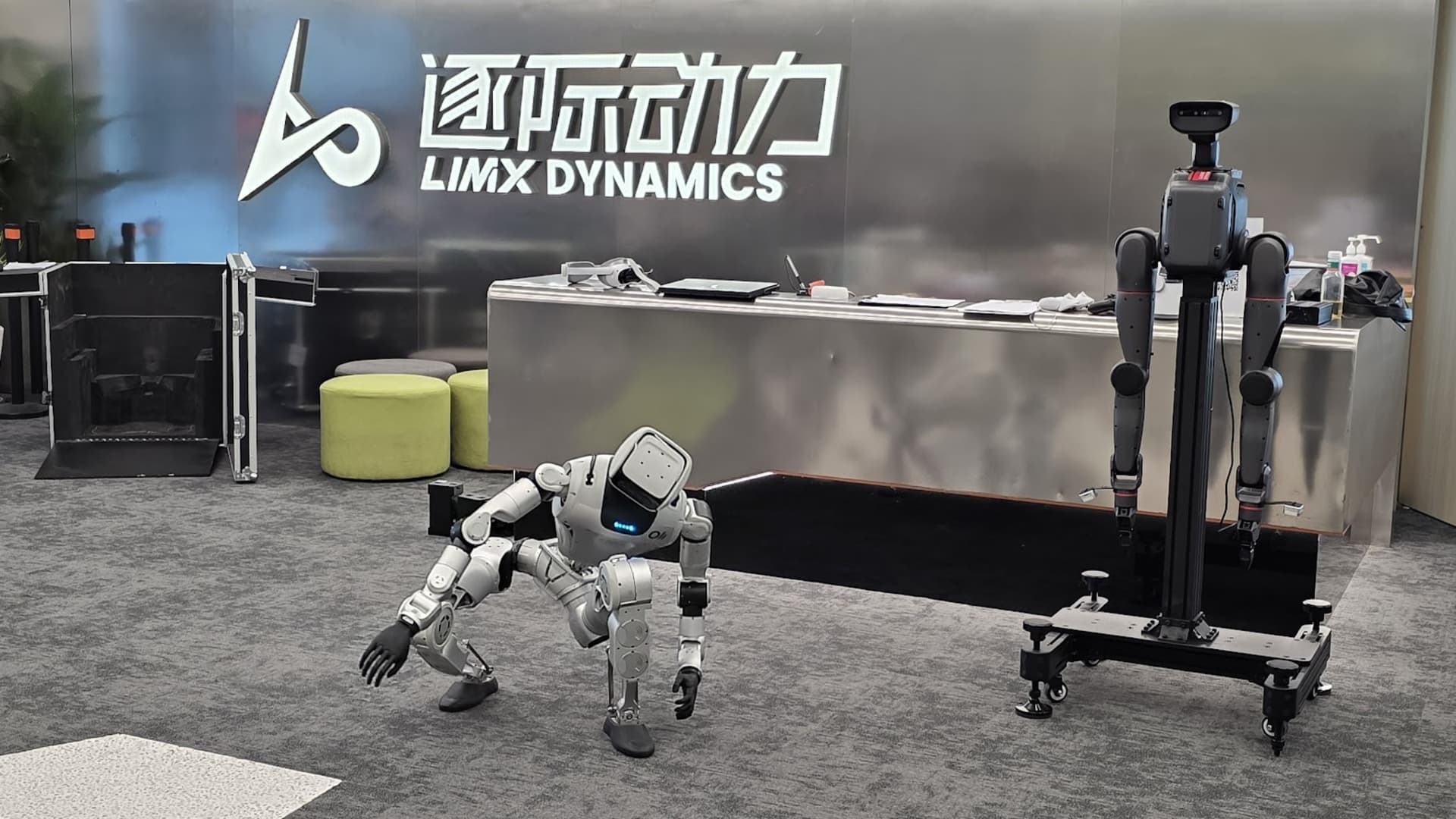
Beijing’s burgeoning humanoid robot sector is experiencing a significant rush toward public listings, mirroring the early days of China’s electric vehicle industry. Startups like LimX Dynamics are prioritizing initial public offerings to secure vital capital, transforming the landscape for investment and market liquidity in the ’embodied AI’ space. This strategic move highlights the intense competition and ambitious growth trajectories defining this nascent yet rapidly expanding market.
💰 Financial Strategy & Market Insights
- IPO Rush Intensifies. Chinese humanoid startups, exemplified by LimX Dynamics, view public listings as critical for survival and scalability, drawing parallels to the early financing strategies of EV giants like Nio and Xpeng.
- Venture Capital Inflows Accelerate. The sector witnessed a dramatic surge in investment, with Q2 inflows reaching 47.09 billion yuan ($6.95 billion), more than doubling Q1 figures and increasing sixfold year-over-year, underscoring robust investor confidence.
- Embodied AI: National Priority. The push for Chinese Humanoid IPOs is bolstered by a national strategic emphasis on ’embodied AI,’ positioning China at the forefront of this technological frontier.
The competitive fervor within China’s humanoid robot sector is driving a swift pivot towards public markets. LimX Dynamics, a startup founded merely four years ago, recently secured a pre-IPO round of $200 million, valuing the company at 15 billion yuan ($2.21 billion). Founder Will Zhang articulated the critical need for listing, warning that companies failing to secure public capital, much like WM Motor in the electric vehicle space, risk dissolution. This sentiment echoes the strategic playbook adopted by early Chinese EV makers such as navigating complex markets by listing in the U.S. between 2018 and 2020. LimX is reportedly preparing for an IPO, most likely in Hong Kong, and is currently in a confidential review phase.
China’s landscape now boasts over 100 humanoid companies, all operating under a broader national directive to advance ’embodied AI.’ This strategic imperative has catalyzed a substantial influx of capital into the sector. Industry data provider Xiniu reported a staggering 47.09 billion yuan ($6.95 billion) in investment for the second quarter, marking a more than twofold increase from the first quarter and a sixfold jump compared to the same period last year. This rapid acceleration of funding signals a maturing ecosystem, albeit one still grappling with the foundational challenges of commercialization.
Regulatory bodies are also facilitating this transition. Unitree, another prominent humanoid company, has received fast-tracked approval for a listing in Shanghai, while Hong Kong’s exchange reviews hundreds of applications across various sectors. Morgan Stanley analysts recently highlighted the persistent competitive pressure expected as more industrial and collaborative robot companies, including DeepRobot and Leju, prepare for public debuts. The investment firm projects an 18% growth in China’s industrial robots market this year, alongside an estimated shipment of 50,000 humanoids, underlining the significant scale of the ambition.
LimX Dynamics is focused on developing fully autonomous commercial service robots. The company has announced plans to ship thousands of humanoids to the Middle East and is already delivering its entertainment-focused Luna humanoid to customers in South Korea. According to founder Zhang, the core technology for humanoid robots has moved past the initial ‘0 to 1’ innovation phase, with the current challenge being the development of market-ready products that genuinely meet user demands.
- Investor Confidence: Overseas investors like UAE-based Stone Venture and Germany-based Redstone VC, alongside Chinese heavyweights such as Lens Technology and Nio Capital, underscore global confidence in China’s humanoid robot potential.
- Market Dynamics: The rush to IPO is a direct response to intense competition and the need for significant capital to scale manufacturing and R&D in a capital-intensive industry.
- Technological Maturation: While core innovation is established, the focus has shifted to product development and commercial viability, demanding substantial ongoing investment.
Investors weighing opportunities in Chinese Humanoid IPOs face a complex risk-reward calculus:
- Upside Potential:
- Early Market Entry: Investing in foundational technologies of ’embodied AI’ offers exposure to potentially exponential growth in a nascent market.
- Strong Government Support: National strategic focus on AI provides a supportive regulatory and funding environment.
- High Growth Projections: Forecasts for rapid market expansion and humanoid shipments suggest significant revenue opportunities.
- Diversified Applications: Humanoids are poised for use in manufacturing, logistics, healthcare, and consumer services, offering broad market reach.
- Downside Risks:
- High Capital Burn: R&D and manufacturing for advanced robotics are incredibly expensive, leading to prolonged periods of unprofitability.
- Intense Competition: Over 100 companies vying for market share could lead to price wars and consolidation, impacting profitability and sustainability.
- Regulatory Uncertainty: Evolving regulations around AI, data privacy, and robotics deployment could introduce unforeseen operational hurdles.
- Execution Risk: Successfully transitioning from prototype to mass commercialization with reliable, user-friendly products remains a significant challenge.
- Valuation Concerns: Rapid investment surges may lead to inflated valuations, posing risks for later-stage investors if commercialization timelines are extended or fall short.
The current wave of Chinese humanoid robot IPOs signifies a critical inflection point for asset valuation in the tech sector. Unlike traditional software, hardware-intensive robotics demand immense upfront capital for R&D, manufacturing, and scaling production. Valuations will increasingly hinge on demonstrable progress towards commercial deployment and clear pathways to profitability, moving beyond speculative ‘potential’ to tangible market penetration and revenue generation. This shift requires investors to scrutinize cash burn rates and strategic partnerships more rigorously, as explored in financial sector analysis.
Key financial and industry data points:
- LimX Dynamics Pre-IPO Valuation: 15 billion yuan ($2.21 billion)
- LimX Dynamics Pre-IPO Funding Round: $200 million
- Q2 Humanoid Sector Investment (2026): 47.09 billion yuan ($6.95 billion)
- YoY Q2 Investment Growth: Over six times compared to same period last year
- China’s Industrial Robots Market Growth Forecast (2026, Morgan Stanley): 18%
- Projected Humanoid Shipments (2026, Morgan Stanley): 50,000 units
Humanoid Robot Sector Liquidity Analysis: Capitalizing on the AI Rush
The surge in Chinese Humanoid IPOs is fundamentally altering market liquidity for nascent AI ventures. With over 100 companies now crowding the space, the demand for public capital reflects both the ambitious scaling required and the intense competition for venture funding. The substantial Q2 investment figures—more than double Q1 and six times year-over-year—underscore a robust appetite from private investors, indicating ample liquidity flowing into the embodied AI segment. However, this private capital has a finite runway, necessitating public listings to sustain long-term growth and enable earlier investors an exit. The move to exchanges in Hong Kong and Shanghai provides crucial secondary market liquidity, allowing for greater investor participation and potentially more realistic valuations as public scrutiny increases. This dynamic is vital for the sector’s long-term health, as detailed in broader educational financial insights.
LimX Dynamics Historical Benchmarking: Lessons from the EV Pioneers
LimX Dynamics’ trajectory draws striking parallels to the formative years of China’s electric vehicle industry, particularly the IPOs of Nio, Xpeng, and Li Auto between 2018 and 2020. These EV pioneers leveraged public markets to fund aggressive R&D, expand manufacturing capabilities, and establish brand presence, often operating at significant losses in their initial years. LimX founder Will Zhang explicitly referenced the cautionary tale of WM Motor, an EV startup that struggled and potentially disappeared after failing to list, highlighting the ‘list or perish’ mentality now pervasive among humanoid firms. While the technological complexity and market readiness differ, the capital-intensive nature and the need for scale echo the EV experience. Investors are likely to benchmark LimX and its peers against the growth rates, market penetration, and ultimately, the profitability paths carved by these earlier disruptors, as discussed on global market analysis platforms.
LimX Dynamics’ IPO Path: Navigating the Embodied AI Frontier
The imminent public offering of LimX Dynamics signals a pivotal moment for China’s humanoid robot industry, transforming speculative ventures into publicly scrutinized assets. This capital-raising imperative, driven by fierce competition and the demands of scaling ’embodied AI,’ sets the stage for a new phase of development where market liquidity and investor confidence will be paramount.
- The IPO rush reflects a strategic necessity for survival and growth in a capital-intensive sector.
- Rapid investment acceleration indicates strong, albeit potentially overheated, investor interest.
- Success will hinge on the ability to transition from technological innovation to mass commercialization and profitability.
Can the wave of Chinese humanoid IPOs translate technological prowess into sustainable shareholder value, or will the competitive pressures lead to market consolidation and unfulfilled promises?
📊 StockXpo Analyst’s View
Market Impact: The accelerated push for Chinese Humanoid IPOs is poised to inject significant volatility and liquidity into the broader technology market. While offering new avenues for high-growth capital, it also raises questions about market saturation and the long-term viability of so many emerging players. Investors should brace for intensified competition for investor dollars and potential valuation corrections as the market matures and commercial realities set in.
Sector To Watch: The ‘Embodied AI’ and advanced robotics sector is undoubtedly the area to monitor closely. Beyond direct robot manufacturers, companies providing AI training data, specialized components (sensors, actuators), and industrial automation solutions stand to benefit from this expansion, creating an ecosystem of growth that extends beyond the IPO-bound startups themselves. We monitor these trends on leading financial news sites.
Financial Disclaimer:
StockXpo.com is a financial news aggregator and educational portal, not a registered investment advisor or broker-dealer. All information, news, and analysis provided herein are strictly for educational purposes and do not constitute investment, financial, legal, or tax advice. Investing in the stock market involves high risks, and past performance is not indicative of future results. StockXpo will not be liable for any financial losses or investment damages. Always consult a certified financial advisor before making market decisions.
MORE IN INSIDE FINANCE

China’s Exports Surge: Unpacking Global Trade Growth and Asset Implications
Published: Wednesday, October 14, 2026 · 2:14 AM

Singapore Haven: Stability Yields Opportunity Amid Global Volatility
Published: Tuesday, October 13, 2026 · 12:19 AM