Published: Thursday, July 2, 2026 · 7:59 PM | Updated: Thursday, July 2, 2026 · 7:59 PM
📊 211 views




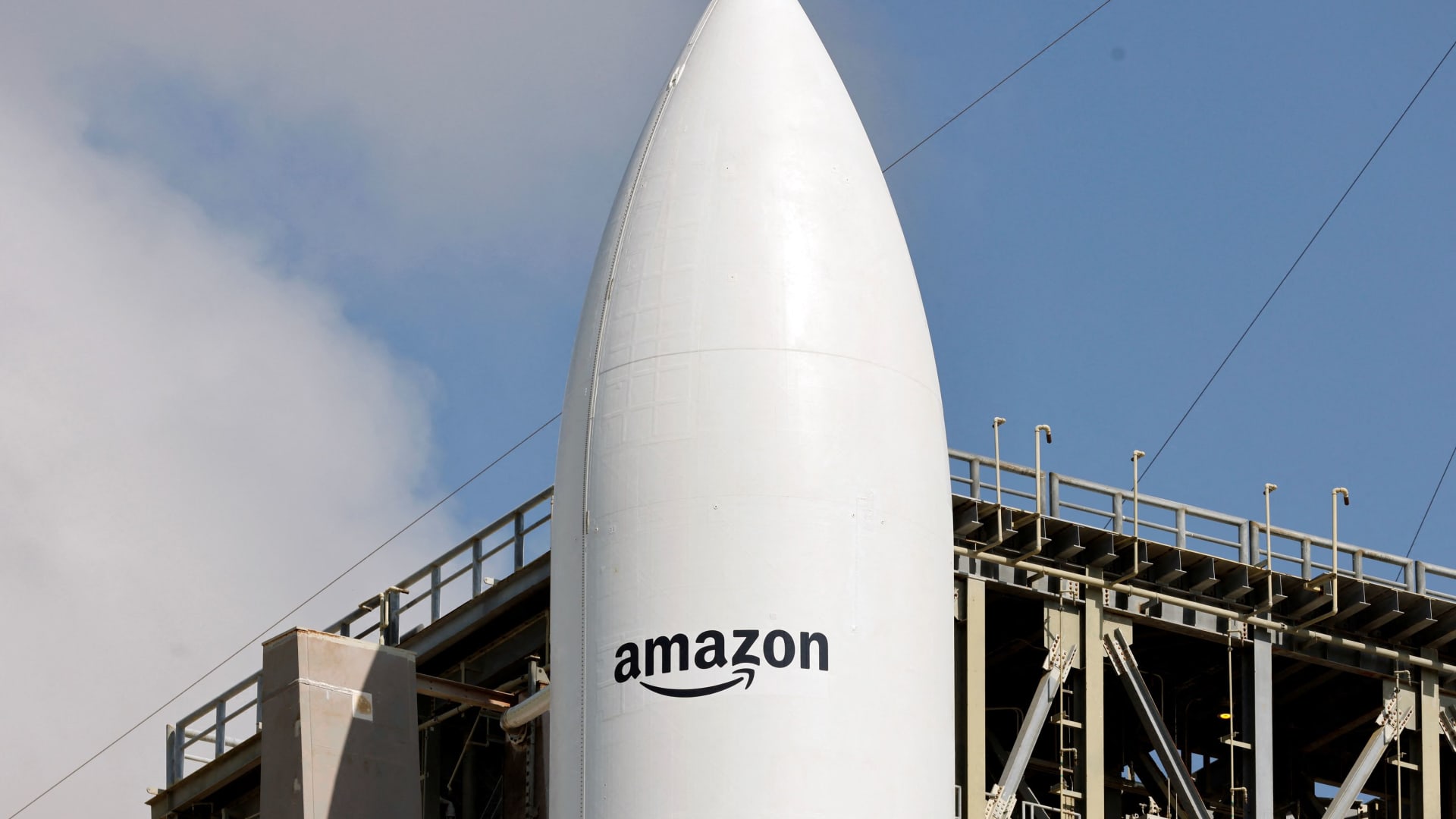
Amazon has announced a critical operational milestone for its Project Kuiper, now known as the Amazon Leo service, confirming enough satellites are in orbit to initiate initial broadband services later this year. This development significantly advances Amazon’s competitive posture in the burgeoning low Earth orbit (LEO) satellite internet market, directly challenging incumbents like SpaceX’s Starlink.
🚀 Tech Strategy & Market Disruptions
- Accelerated Deployment. Amazon has achieved a critical mass of over 390 satellites, enabling the launch of its initial Leo service, a foundational step in its strategy to deliver global high-speed internet.
- Competitive Pressure. The impending commercial launch of the Amazon Leo service intensifies competition within the LEO broadband sector, forcing rivals to innovate faster and potentially adjust pricing models.
- Vertical Integration & Resilience. Despite launch vehicle setbacks, Amazon’s diversified launch agreements and in-house capabilities (Blue Origin) highlight a long-term strategy to mitigate risks and ensure constellation expansion for the Amazon Leo service.
Amazon’s recent deployment of 29 satellites aboard a United Launch Alliance (ULA) Atlas V rocket brings its total LEO constellation to over 390 units. This number is deemed sufficient to provide continuous service across initial target latitudes, as stated by Chris Weber, Vice President of Business and Product for Amazon Leo. The company had previously offered an ‘enterprise preview’ of its Leo service to select businesses in November and is now poised to extend this to consumer and government segments.
While Amazon has made considerable strides since announcing Project Kuiper in 2019, it trails SpaceX, which launched its Starlink service in 2015 and has since amassed roughly 10,000 satellites and over 10 million subscribers. Amazon aims for a significantly larger constellation of approximately 7,700 satellites, a goal that has faced delays due to a global shortage in rocket launch capacity. The company secured deals with ULA, Arianespace, and Jeff Bezos’ Blue Origin in 2022, later adding SpaceX launches to its manifest. These partnerships underline the immense logistical and technological challenges inherent in establishing a global satellite internet network, a key trend in global tech news.
“The strategic imperative for the Amazon Leo service is not just about satellite count, but about developing a resilient, scalable ground infrastructure and integrating it seamlessly with Amazon’s vast cloud ecosystem. True disruption emerges from a holistic, end-to-end service offering that leverages global reach with localized data processing and low-latency access, transforming how remote communities and enterprises connect to the digital world.”
The Ripple Effect of Satellite Internet on Global Connectivity
The activation of the Amazon Leo service represents a significant step towards democratizing internet access globally. The immediate impact lies in offering a viable alternative to traditional broadband, particularly in underserved rural and remote areas where terrestrial infrastructure is cost-prohibitive. This increased competition is expected to drive down costs and improve service quality across the board. From a disruption perspective, the sequence of events is clear:
- Satellite Deployment → Achieved critical mass for initial service.
- Service Launch → Provides an alternative to existing broadband, particularly in remote areas.
- Increased Competition → Forces market players to innovate, potentially lowering prices and improving service quality.
- Market Disruption → Accelerates digital transformation in sectors reliant on ubiquitous, high-speed connectivity, from logistics to remote education.
Looking ahead, Amazon’s reliance on diversified launch providers highlights both the ambition and the inherent risks in such large-scale space infrastructure projects. The explosion of a Blue Origin New Glenn rocket during a test in May underscores the technical complexities and potential setbacks that can occur, even with substantial investment. However, Amazon’s rapid response and shift to ULA’s Vulcan heavy-lift rocket for future Leo service missions demonstrates an agile strategy to maintain deployment cadence and accelerate network expansion.
Amazon Leo Service Market Adoption Challenges
Despite the significant technical milestones, the Amazon Leo service faces several market adoption challenges. The initial rollout will likely be geographically limited, requiring future missions to expand coverage and capacity. This staggered approach means widespread consumer and government adoption will take time, as opposed to the more established Starlink network. Furthermore, while Amazon’s brand recognition is immense, converting this into subscriber loyalty in a specialized market like satellite internet requires robust customer service, competitive pricing, and seamless hardware installation. The cost of ground terminals, while not explicitly mentioned, will be a crucial factor in consumer uptake, especially in price-sensitive markets. Understanding technology market trends will be vital for Amazon here.
Amazon Leo Service Ecosystem Expansion Potential
The potential for ecosystem expansion with the Amazon Leo service is vast. Beyond direct internet access, the service can be integrated with Amazon Web Services (AWS) to offer edge computing capabilities, enabling data processing closer to the source and reducing latency for enterprise applications. This synergy could provide a unique selling proposition, particularly for industries requiring resilient and ubiquitous connectivity for IoT, autonomous systems, and remote operations. Further expansion could involve partnerships with mobile network operators to backhaul cellular traffic in remote regions, leveraging the satellite backbone to extend 5G reach. Such integrations are critical for future emerging technologies and are often discussed in comprehensive educational tech insights.
Amazon Leo Service: Navigating the Next Era of Connectivity
The activation of Amazon’s Leo service marks a pivotal moment for the company, solidifying its position as a serious contender in the LEO satellite internet arena. This initial operational capability, achieved through persistent launches despite logistical hurdles, sets the stage for a new phase of intense competition and innovation in global telecommunications. For investors watching emerging technologies, this is a significant development.
- Market Entry: Amazon’s initial Leo service launch will bring a formidable new player into the LEO broadband market, potentially increasing competition and driving innovation.
- Scalability Challenges: The path to Amazon’s target of 7,700 satellites is long, subject to launch availability and regulatory approvals, necessitating agile supply chain and mission planning.
- Ecosystem Advantage: Integration with AWS and other Amazon services could offer unique enterprise value propositions, differentiating it from competitors focusing solely on connectivity.
How will Amazon’s multi-pronged strategy for Leo service—combining satellite deployment, diversified launch partnerships, and AWS integration—redefine the future landscape of global connectivity and digital inclusion?
📊 StockXpo Analyst’s View
Market Impact: The nearing commercial launch of the Amazon Leo service will likely inject significant competitive energy into the satellite broadband sector, currently dominated by Starlink. This could pressure pricing models and accelerate service feature innovation, potentially benefiting end-users. Investors will be keenly watching Amazon’s subscriber growth rates and the profitability of its LEO division as it scales, impacting AMZN’s long-term valuation trajectory and potentially influencing the broader communications sector. The ability of Amazon to leverage its vast cloud infrastructure with the Leo service will be a key differentiator and a focus for market analysis as reported by Reuters’ global tech news.
Sector To Watch: The telecommunications sector, particularly companies involved in satellite manufacturing, launch services, and ground equipment, will be directly impacted. Additionally, enterprises in logistics, agriculture, and remote operations, which stand to gain from enhanced global connectivity, should be closely monitored. The escalating competition and investment in LEO infrastructure signifies a robust expansion phase in telecommunications innovation.
Financial Disclaimer:
StockXpo.com is a financial news aggregator and educational portal, not a registered investment advisor or broker-dealer. All information, news, and analysis provided herein are strictly for educational purposes and do not constitute investment, financial, legal, or tax advice. Investing in the stock market involves high risks, and past performance is not indicative of future results. StockXpo will not be liable for any financial losses or investment damages. Always consult a certified financial advisor before making market decisions.
MORE IN INSIDE TECHNOLOGY

Starlink India: Regulatory Hurdles and Innovation-Driven Growth Risks
Published: Friday, October 9, 2026 · 12:48 AM
Starlink Launch: India’s Digital Transformation Faces Regulatory Risk
Published: Thursday, October 8, 2026 · 1:51 AM