Published: Tuesday, June 30, 2026 · 11:47 PM | Updated: Tuesday, June 30, 2026 · 11:47 PM
📊 236 views




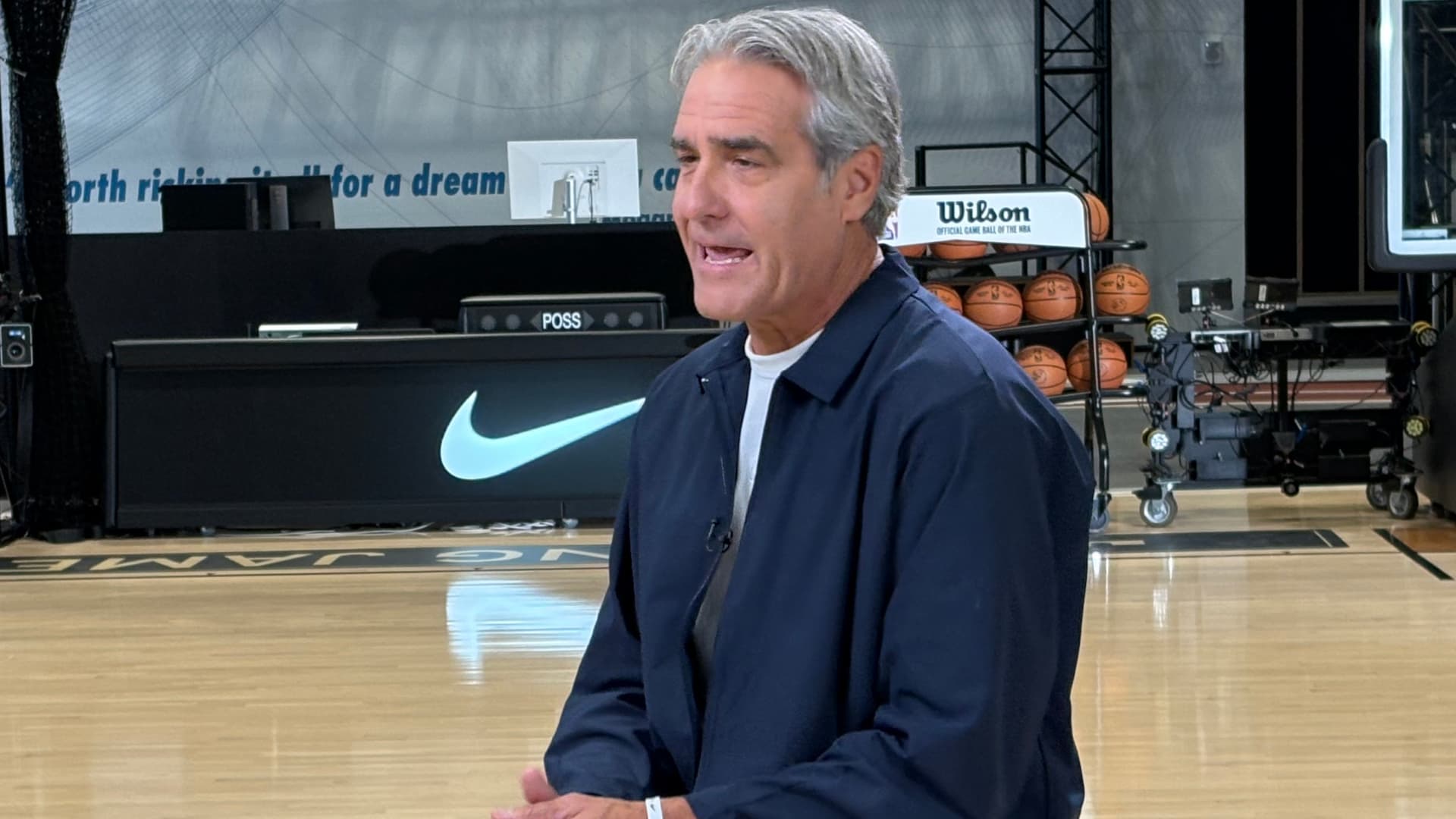
Despite narrowly beating analyst estimates for its fiscal Q4 2026, Nike shares experienced an after-hours slide, sending the Nike stock further into a year-to-date slump. This latest report underscores ongoing challenges in the sportswear giant’s turnaround efforts, prompting a reevaluation of its strategic fit within diversified portfolios aiming for alpha generation and long-term capital preservation.
💎 Strategic Investment & Portfolio Insights
- Turnaround Fatigue. Nike’s “Win now” strategy is proving slower than anticipated, testing investor patience amidst persistent structural issues.
- Margin Focus Over Growth. Management’s pivot to gross margin improvement, even at the expense of near-term revenue, could stabilize profitability but delays growth inflection.
- Opportunity Cost Assessment. The prolonged uncertainty around Nike’s recovery prompts a critical review of capital allocation, suggesting potentially superior opportunities elsewhere for superior returns.
Nike Inc. (NKE) reported fiscal fourth-quarter results that, on the surface, surpassed Wall Street’s tempered expectations, yet the market reacted negatively with shares dipping approximately 2% after-hours. Total revenue for the quarter reached $10.97 billion, a 1% year-over-year decline, but still ahead of the $10.86 billion consensus from LSEG. Earnings per share (EPS) saw a significant 42% increase to 20 cents, comfortably beating the 13-cent analyst forecast, though this figure excludes a 52-cent benefit from IEEPA tariff recoveries. The post-market movement pushed the stock down to roughly $40 per share, deepening its year-to-date decline to about 35%.
The underlying narrative, however, reveals a company still grappling with fundamental challenges. The “Win now” turnaround strategy, initiated by management, has shown glimmers of progress in segments like running, but the overall revitalization is proceeding at a much slower pace than investors had anticipated. Key structural issues continue to weigh on performance. China remains a significant headwind, with revenue declining 12% year-over-year and EBIT falling 20%, indicating persistent difficulties in a crucial market. Product innovation has also been cited as lacking, while competition in the sportswear sector has intensified considerably over recent years, as noted by Bloomberg market reports.
Furthermore, a challenging macro environment has exacerbated Nike’s operational struggles. Outgoing CFO Matthew Friend highlighted a deceleration in retail sales by mid-April, particularly in North America, which was otherwise off to a strong start. This consumer pressure could be linked to external factors such as the Iran war-related spike in gas prices observed last month, impacting discretionary spending. While North America sales grew nearly 3% year-over-year, operating income (EBIT) for the region declined to $1.014 billion from $1.045 billion in the prior year, signaling margin erosion despite top-line growth. The challenges facing Nike are multifaceted and require aggressive intervention:
- Inventory Management: Despite some progress, rightsizing excess inventory remains a concern, impacting promotional activity and gross margins.
- China Market Weakness: The double-digit revenue decline and EBIT drop in Greater China highlight a persistent, unresolved regional issue.
- Product Innovation Lag: Perceived lack of groundbreaking new products allows competitors to gain traction, eroding Nike’s historical edge.
- Intensifying Competition: The sportswear landscape is more crowded and dynamic than ever, requiring Nike to innovate faster and more effectively.
One positive thing to call out from the quarter is that it sounds like management is finally taking aggressive actions to reduce promotions and improve gross margins. Also, management reiterated its expectation that earnings per share will be flattish year over year starting from this reported quarter through the first two quarters of fiscal 2027 — a three-quarter period. While analyst earnings estimates are still a little bit better than flattish, this guide does not reflect management significantly cutting numbers and resetting expectations once again. That explains why the stock went from being down roughly 9% early in the post-earnings conference call to only down modestly. Management’s decision to prioritize gross margin improvement is a positive development and could earn Nike more patience from Wall Street ahead of its Investor Day in November, which will also feature the company’s new CFO. We believe Nike will eventually regain its footing and return to consistent revenue and earnings per share growth. What remains uncertain is whether that inflection will be as sharp as the market expects. After all, the competitive landscape isn’t getting any easier.
The ongoing narrative around Nike’s protracted turnaround and a competitive, challenging macro landscape has a direct impact on portfolio positioning. Prolonged Uncertainty → Increased Risk Premium → Reduced Allocation. As the recovery timeline stretches and competitors gain traction, the opportunity cost of holding significant NKE exposure rises. This necessitates a critical re-evaluation for portfolio strategists, potentially leading to a reallocation of capital towards higher-conviction opportunities that offer clearer growth pathways or more favorable risk-reward profiles within broader investment strategies.
“The market’s tepid response to Nike’s earnings, despite beating headline numbers, is a clear signal that investors are weary of promises without tangible, accelerated execution. As CIO, I view this as a strategic inflection point: either Nike’s Investor Day in November provides a truly compelling, actionable roadmap for renewed growth and margin expansion, or capital will inevitably flow to more dynamic players in the consumer discretionary space.”
Understanding the recent financial performance requires a look at key metrics, which shed light on the operational challenges and strategic shifts.
| Metric | Reported Value | Analyst Consensus (LSEG) | Significance |
|---|---|---|---|
| Total Revenue (YoY change) | $10.97 billion (-1%) | $10.86 billion | Revenue slightly beat expectations but declined YoY, reflecting ongoing top-line pressure. |
| Earnings Per Share (EPS) | 20 cents (+42%) | 13 cents | EPS significantly surpassed estimates, primarily driven by operational efficiencies, though tariff recovery benefit was excluded. |
| China Revenue (YoY change) | -12% | (Feared worse) | Despite beating low expectations, a double-digit decline indicates persistent challenges in a critical growth market. |
Nike’s Risk-Reward Matrix: The Balancing Act
Investing in Nike at this juncture presents a complex risk-reward profile. The primary risk lies in the prolonged execution of its turnaround strategy. Slow innovation cycles, intensifying competition from agile direct-to-consumer brands and established rivals, and the persistent softness in key markets like China could further erode market share and profitability. Furthermore, the reliance on a discretionary consumer in a potentially tightening economic environment adds another layer of macro risk, as highlighted by recent Reuters business insights. The reward, however, hinges on management’s ability to truly recalibrate its product pipeline, rationalize inventory effectively, and reignite brand desirability. If the upcoming Investor Day in November delivers a credible plan and management executes decisively, there is significant upside potential for multiple expansion from current depressed levels. The commitment to gross margin improvement is a positive first step, indicating a focus on profitability fundamentals, which could stabilize the downside.
Nike’s Competitive Benchmarking: A Shifting Landscape
Nike traditionally held a commanding lead in the global sportswear market, but the competitive landscape is undeniably tougher today. Brands like Adidas, Puma, and Under Armour continue to vie for market share, while newer players and specialized performance brands carve out niches. More critically, the rise of athleisure and direct-to-consumer models has diversified consumer choices and intensified pricing pressure. Nike’s digital direct-to-consumer channels, which saw a 12% decline, indicate it’s losing ground in an area it once dominated. Competitors, by contrast, are often lauded for faster product cycles and more agile market responses. For Nike to regain its competitive edge, a rapid acceleration in product innovation and a re-energized brand narrative are paramount. Its historical brand power and distribution network are formidable assets, but they are being tested by a more fragmented and dynamic market.
Nike’s Path Ahead: Recalibrating Expectations
Nike’s latest earnings report confirms a challenging period of transition, where strategic adjustments are underway, but the desired inflection point remains elusive. While some operational positives emerged, the overall progress of the “Win now” turnaround is slower than the market demands, prompting a critical reevaluation of its portfolio role.
- The immediate focus on gross margin improvement is a prudent tactical move, but long-term growth acceleration hinges on reignited product innovation and a robust China strategy.
- Investor patience is visibly wearing thin, and the upcoming Investor Day in November will be crucial for management to present a clear, compelling vision for a return to consistent, profitable growth.
- The current risk-reward profile suggests that capital might be more efficiently deployed in opportunities with clearer catalysts and less execution uncertainty.
Can Nike redefine its value proposition sufficiently to reclaim its premium valuation in a fiercely competitive market?
📊 StockXpo Analyst’s View
Market Impact: The sustained underperformance of a bellwether like Nike injects a cautionary tone into the broader consumer discretionary sector. It reflects genuine concerns about consumer spending resilience and the intense competitive pressures facing established brands. This can lead to a more discerning market, favoring companies with demonstrable innovation and robust international growth engines, while potentially increasing volatility for those in turnaround phases, reassessing fundamental equity valuations across broader market analysis and gaining deeper perspectives through educational market insights.
Sector To Watch: Investors should keep a close eye on the broader retail and apparel sector, particularly those players demonstrating agility in supply chain management and digital engagement. Companies successfully navigating consumer shifts and supply chain complexities, especially in emerging markets or with strong e-commerce platforms, could present attractive long-term growth opportunities as capital rotates from underperforming giants. The luxury and high-performance segments might also show more resilience.
Financial Disclaimer:
StockXpo.com is a financial news aggregator and educational portal, not a registered investment advisor or broker-dealer. All information, news, and analysis provided herein are strictly for educational purposes and do not constitute investment, financial, legal, or tax advice. Investing in the stock market involves high risks, and past performance is not indicative of future results. StockXpo will not be liable for any financial losses or investment damages. Always consult a certified financial advisor before making market decisions.
MORE IN INSIDE INVESTMENT NEWS

Micron: A Bullish Outlook Driven by AI Demand
Published: Wednesday, September 30, 2026 · 9:07 PM

Costco’s Membership Momentum: A Bullish Signal for Portfolios
Published: Thursday, September 24, 2026 · 10:26 PM