
Published: Friday, July 24, 2026 · 8:08 AM | Updated: Friday, July 24, 2026 · 8:08 AM
📊 309 views





Europe’s largest automaker, Volkswagen, recently revealed a stark financial outlook, reporting second-quarter profits significantly below market expectations and abandoning its 2026 sales revenue growth forecasts. This downturn signals a pivotal moment for the German giant, grappling with immense cost pressures, fierce competition from Chinese electric vehicle brands, and the broader macroeconomic headwinds impacting the automotive sector.
💎 Strategic Investment & Portfolio Insights
- Profit Miss Signals Deep Structural Issues. Volkswagen’s inability to meet Q2 profit targets, coupled with revised revenue forecasts, highlights entrenched cost inefficiencies and intense market pressures that demand a rigorous re-evaluation of its intrinsic value.
- Restructuring Risks and Opportunities. The announcement of up to 100,000 potential job cuts and plant closure threats, while disruptive, could pave the way for a leaner, more competitive Volkswagen, influencing its long-term capital preservation strategies.
- Competitive Headwinds Intensifying. The explicit mention of rising tariff costs and aggressive Chinese EV competition underscores a shifting landscape that could erode market share and profitability, requiring investors to reassess risk-reward ratios in the auto sector.
Driving Down Volkswagen Profits: The Costly Reality
Volkswagen’s recent earnings report painted a grim picture for investors, with second-quarter operating profits plummeting to 3.5 billion euros ($3.98 billion). This figure fell nearly 10% from the previous year and missed LSEG-compiled consensus estimates of 4.3 billion euros, confirming that Volkswagen profits are under severe pressure. The company further dimmed its outlook by predicting a sales revenue decline of up to 3% for 2026, a stark reversal from its earlier forecast of up to 3% growth. This significant downgrade is a direct reflection of escalating challenges within the global automotive industry.
Adding to the concern, Volkswagen CEO Oliver Blume reportedly emphasized that the group’s operational costs are 20% higher than those of comparable businesses. This structural disadvantage is driving a radical overhaul plan, which includes a potential reduction of up to 100,000 jobs – double the previously stated figure. The company is actively exploring alternatives for four German factories (Hanover, Zwickau, Emden, and the Audi facility in Neckarsulm) that face closure, despite a 2024 agreement with unions to avoid compulsory redundancies until 2030.
CFO Arno Antlitz articulated the pressures, citing substantial tariff costs, the rapid expansion of China’s domestic premium car market, and increasing car exports from Beijing to Europe as primary culprits. “This leads to this weight on our margin, a margin of roughly 4% is clearly a wake-up call that we have to do a second step of restructuring,” Antlitz told CNBC. The automaker had also previously ceased production of its ID.4 electric SUV at its Tennessee plant, indicating challenges in the U.S. EV market. The cumulative effect of these headwinds has already seen Volkswagen shares drop nearly 30% year-to-date.
- **Operational Inefficiencies:** Volkswagen’s cost structure is noted to be 20% higher than industry peers, directly impacting its profitability and competitive edge.
- **Market Headwinds:** The company faces dual pressure from rising tariff costs and intense competition from rapidly expanding Chinese EV manufacturers.
- **Strategic Restructuring:** Plans for significant job cuts and potential plant closures signal a painful but necessary path toward operational efficiency and margin improvement.
Shifting Gears: Portfolio Rebalancing Amid Volkswagen’s Decline
The immediate impact of Volkswagen’s revised outlook on investor portfolios is significant. The substantial reduction in profit and revenue forecasts suggests a re-evaluation of the company’s growth trajectory and, consequently, its valuation. For a diversified portfolio, this news necessitates a careful review of exposure to traditional automotive manufacturers, particularly those heavily invested in the European market.
**Policy Change → Asset Revaluation → Portfolio Rebalancing.** The shifting regulatory landscape, including tariff imposition and EV subsidy adjustments, directly influences the profitability of global automakers. This translates into a re-rating of assets like Volkswagen, potentially leading to downward revisions in analyst price targets and a recalibration of intrinsic value. Consequently, investors may consider trimming positions in underperforming legacy auto stocks or reallocating capital towards segments demonstrating stronger growth and lower operational risk, aligning with broader market analysis.
“Volkswagen’s current struggles underscore the perils of lagging in innovation and cost efficiency amidst an aggressive market shift. For sophisticated investors, this isn’t just a signal to divest, but an opportunity to identify companies with superior unit economics and a clear roadmap for electrification that can sustain long-term capital preservation strategies.”
Volkswagen’s Financial Metrics: A Closer Look
The following metrics highlight the immediate financial challenges facing Volkswagen:
| Metric | Value / Change | Significance for Investors |
|---|---|---|
| Q2 2026 Operating Profit | €3.5 Billion | Missed LSEG consensus of €4.3B, indicating weaker-than-expected operational performance. |
| Q2 Operating Profit (YoY Change) | Down Nearly 10% | Demonstrates a clear decline in profitability compared to the previous year, highlighting fundamental pressures. |
| 2026 Sales Revenue Forecast (New) | Decline up to 3% | A significant downgrade from previous growth forecasts, signaling broader demand and market share issues. |
| 2026 Sales Revenue Forecast (Old) | Growth up to 3% | The complete reversal underscores management’s lowered expectations for the current fiscal year. |
| Planned Job Cuts | Up to 100,000 | Indicates a massive cost-cutting initiative aimed at improving efficiency, but carries execution risk. |
| Share Price (YTD) | Down Nearly 30% | Reflects significant investor concern and negative market sentiment towards the company’s prospects. |
Volkswagen Competitive Benchmarking: Navigating a Shifting Landscape
Volkswagen’s challenges are not isolated but indicative of broader shifts within the global automotive industry. The company explicitly points to intensifying competition from Chinese car brands, a dynamic that is reshaping market share, particularly in the burgeoning electric vehicle segment. Chinese manufacturers often benefit from lower production costs, extensive domestic supply chains, and aggressive pricing strategies, which exert immense pressure on established players like Volkswagen, especially with rising tariff costs that further strain margins.
Compared to rivals like Toyota, which has maintained strong hybrid sales and diversified its global manufacturing footprint, or Tesla, which continues to dominate the premium EV segment despite some market fluctuations, Volkswagen faces a more complex transition. Its vast legacy infrastructure and union agreements, while providing stability, can also impede the agility required to respond swiftly to rapid technological changes and market demands. This structural rigidity, coupled with the capital intensity of EV transformation, puts Volkswagen at a distinct disadvantage in certain competitive arenas, as highlighted by industry reports.
Volkswagen Risk-Reward Matrix: Weighing Future Opportunities
The current risk-reward profile for Volkswagen is complex, balancing significant restructuring risks against potential long-term transformation benefits. On the risk side, substantial job cuts and plant closures carry execution risks, potential labor unrest, and short-term operational disruptions. The heavy investment required for electrification, coupled with intense price competition and geopolitical trade tensions, presents a formidable headwind. A failure to execute this ‘second step of restructuring’ effectively could lead to further margin erosion and market share loss, impacting investor returns.
However, the reward proposition lies in Volkswagen’s ambitious overhaul, which, if successful, could significantly improve its cost structure and productivity. A leaner, more efficient Volkswagen, with a compelling EV product lineup, could regain market momentum. The company’s sheer scale, brand recognition across multiple segments (Audi, Porsche, Skoda, etc.), and engineering prowess provide a strong foundation. For long-term investors, the current depressed share price, down nearly 30% YTD, might present a contrarian opportunity if the restructuring plan delivers concrete results and the company effectively navigates the competitive challenges, warranting a deeper dive into current growth opportunities.
Volkswagen’s Path Forward: Restructuring Amid Headwinds
Volkswagen’s latest earnings report and strategic announcements signal a critical juncture for the automotive behemoth. The company is actively confronting deep-seated structural inefficiencies and an evolving competitive landscape, undertaking radical measures to restore profitability. While these efforts promise a leaner organization, the immediate future holds significant execution risks and continued market volatility for its shares.
- **Operational Overhaul:** The extensive job cuts and plant closure considerations are aimed at addressing Volkswagen’s 20% cost disadvantage relative to peers.
- **Geopolitical & Competitive Pressures:** Rising tariffs and aggressive Chinese EV market expansion are forcing a strategic re-evaluation of its global footprint.
- **Transformation vs. Legacy:** The balance between transforming into an agile EV powerhouse and managing its vast legacy combustion engine operations remains precarious.
Can Volkswagen’s aggressive restructuring truly re-establish its competitive edge in a rapidly transforming global auto industry?
📊 StockXpo Analyst’s View
Market Impact: Volkswagen’s weak Q2 results and dampened outlook are likely to reverberate across the broader automotive sector, particularly for legacy European manufacturers facing similar cost and competitive pressures. This performance could prompt a defensive shift among investors, favoring auto companies with diversified geographical exposure, robust EV transitions, or more agile cost structures. Investor sentiment may remain cautious on the sector as a whole, affecting market liquidity for traditional automotive stocks.
Sector To Watch: The electric vehicle (EV) supply chain, particularly battery technology and charging infrastructure providers, remains resilient, though the competitive landscape for EV *manufacturers* is intensifying. Investors should closely monitor Chinese EV players and their global expansion strategies, as their aggressive pricing and rapid innovation cycles are clearly impacting traditional automakers. The luxury EV segment, where margins are stronger, may also warrant attention compared to the mass-market challenges cited by Volkswagen.
Financial Disclaimer:
StockXpo.com is a financial news aggregator and educational portal, not a registered investment advisor or broker-dealer. All information, news, and analysis provided herein are strictly for educational purposes and do not constitute investment, financial, legal, or tax advice. Investing in the stock market involves high risks, and past performance is not indicative of future results. StockXpo will not be liable for any financial losses or investment damages. Always consult a certified financial advisor before making market decisions.
MORE IN INSIDE INVESTMENT NEWS

AI Funding Fears Rattle Wall Street: Adjusting for Alpha and Preservation
Published: Saturday, October 24, 2026 · 12:28 PM
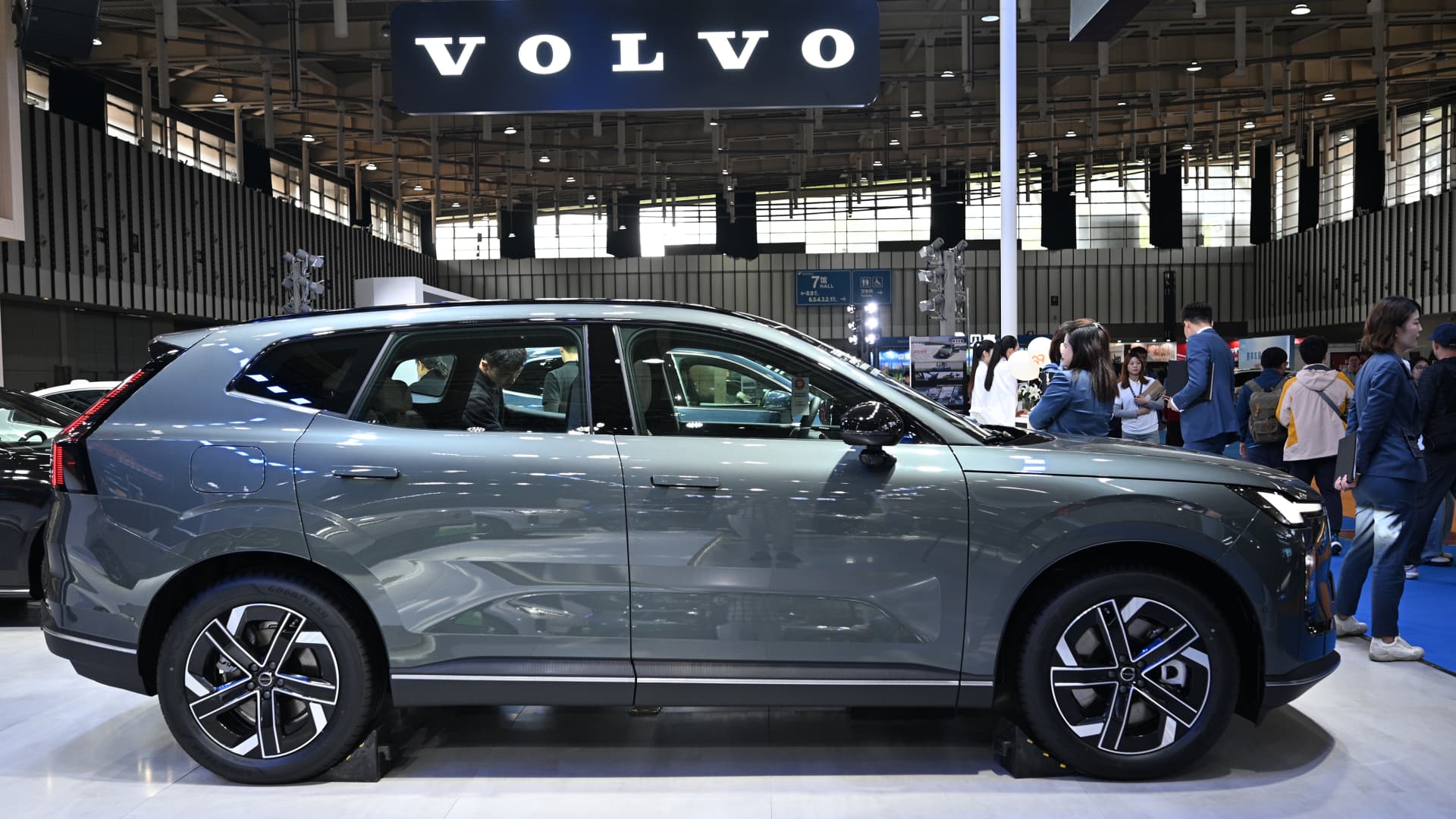
Volvo Cars Plunge: Alpha Warning as China Sales Slump Hits Earnings
Published: Friday, October 23, 2026 · 6:18 AM


