Published: Sunday, June 21, 2026 · 12:33 PM | Updated: Sunday, June 21, 2026 · 12:33 PM
📊 221 views




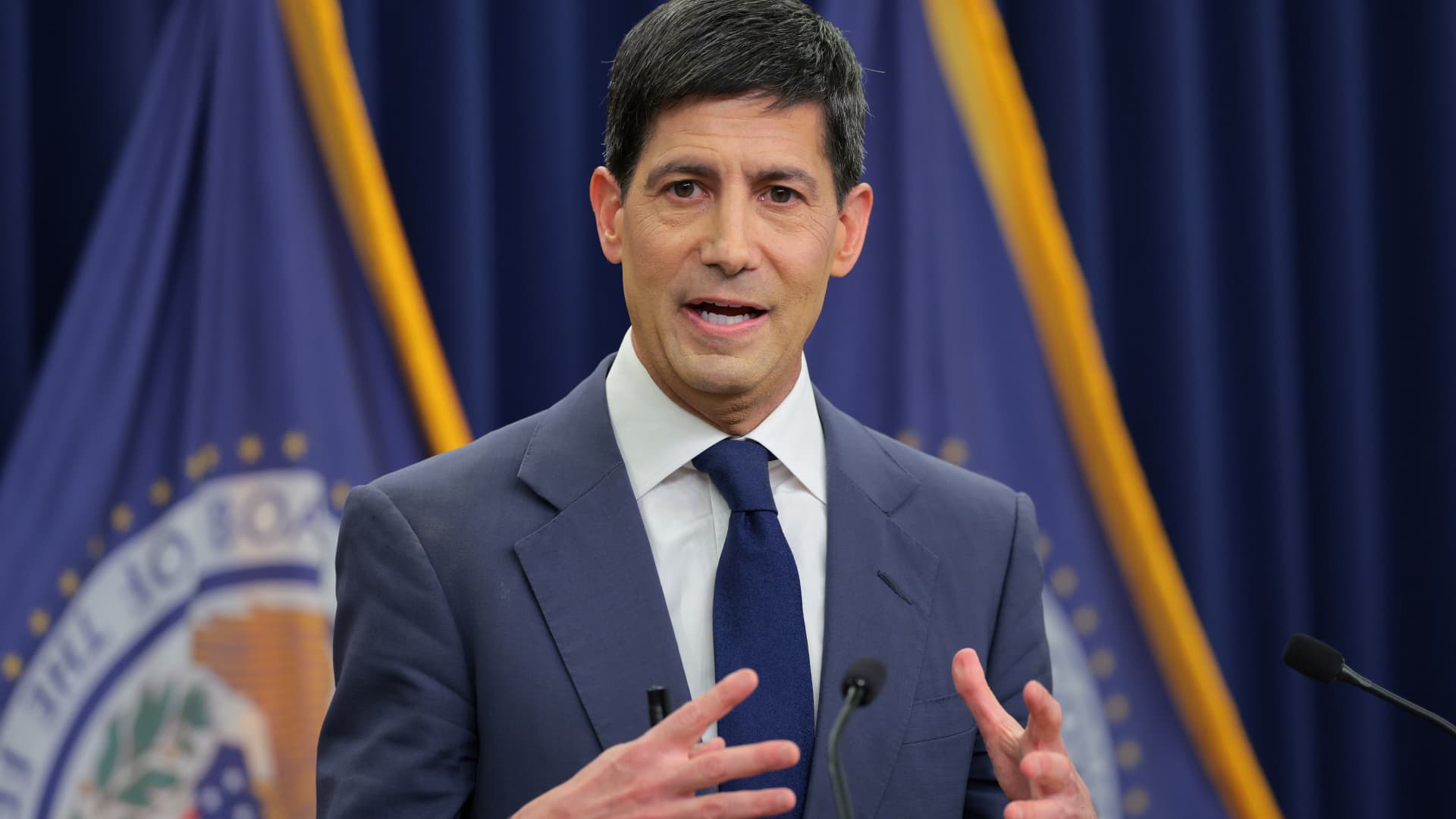
Federal Reserve Chairman Kevin Warsh has initiated a comprehensive ‘regime change’ at the central bank, launching five ambitious task forces to redefine modern monetary policy. This quiet revolution aims to scrutinize everything from communication strategies to the Fed’s formidable $6.7 trillion balance sheet, signaling a potentially transformative era for financial markets.
💰 Financial Strategy & Market Insights
- Broad Policy Review. Chairman Warsh has launched five task forces to re-examine all aspects of Fed policy, from communications to the balance sheet.
- Shift in Tone. Despite previous harsh criticisms, Warsh has adopted a collegial approach, emphasizing consensus-building within the Fed.
- Market Implications. The review of inflation frameworks, data metrics, and the balance sheet composition could have significant repercussions for asset valuation and market liquidity.
Kevin Warsh, in his initial weeks as Federal Reserve Chairman, is orchestrating a profound Fed Regime Change within the institution, albeit delivered with what one strategist described as ‘a velvet glove.’ His ambitious plan involves establishing five task forces, drawing on both internal and external expertise, to undertake an exhaustive re-evaluation of current monetary policy practices. This initiative marks the most comprehensive examination of its kind in recent Fed history, moving beyond incremental adjustments to question foundational principles.
The scope of these task forces is extensive, touching upon critical areas that define the Fed’s operational framework and market influence. Key areas under scrutiny include:
- The Fed’s communication strategies, potentially altering how policy intentions are conveyed.
- The economic data and metrics utilized to gauge the economy’s health.
- The prevailing view on inflation, its underlying causes, and the Fed’s framework for achieving its targets, especially after the ‘transitory’ misstep of 2021-2022.
- The impact of emerging technologies like artificial intelligence on the economy and monetary policy.
- The size and composition of the Fed’s massive $6.7 trillion balance sheet and outlining a path for its potential reduction.
Warsh’s approach contrasts sharply with his prior rhetoric, where he advocated for a ‘regime change’ and cited a ‘credibility deficit’ during his campaign for the chairmanship. Now, he emphasizes a ‘clear-eyed mission’ and praises the Fed’s traditions, signaling a strategic pivot towards internal consensus-building, as noted by former central bank Vice Chair Roger Ferguson. This shift is seen as crucial for implementing deep-seated reforms without internal friction, affecting how investors perceive future policy direction and its impact on the financial sector.
Initial changes have already manifested in the post-meeting statement, which Warsh has streamlined by removing much of the traditional ‘boilerplate’ language. The statement now begins with the rate action, harkening back to a pre-2009 format, a move supported by former Cleveland Fed President Loretta Mester, who described it as a ‘needed sort of purging.’ However, the removal of forward guidance language raises questions about how the Fed will articulate its ‘reaction function,’ or its policy response to economic developments, a crucial element for market stability and transparent market analysis. Further reforms could include eliminating the ‘dot plot’ forecasts and adjusting the format of news conferences, all contributing to a new policy ethos that BlackRock’s Rick Rieder characterized as ‘a new era of monetary policy in the United States.’
Understanding the Investment Implications of Fed Reforms
Warsh’s decision to take a positive view and work collegially with the Federal Open Market Committee (FOMC) has been welcomed by Fed veterans. Former Cleveland Fed President Loretta Mester, familiar with previous Fed efforts to enact change, noted that Warsh is ‘organizing the work, and I think he’s putting it on a faster than typical timeframe.’ This accelerated pace implies that the market may see policy recommendations and potential changes emerge more rapidly than in past review cycles.
Key changes already observed or anticipated include the revised post-meeting statement, which now prioritizes the actual rate action. While simplifying communication, the deletion of forward guidance language has sparked discussion among experts like Mester, who suggests that the Fed may need to provide more explicit information about its ‘reaction function’ to maintain clarity for market participants. The aim is to move away from overly complex or repetitive phrasing that had become difficult to alter, creating a ‘Hotel California problem’ where phrases checked in but never left. Other proposed reforms, such as reconsidering the ‘dot plot’ rate forecasts and potentially adjusting the format of news conferences, underscore the breadth of this reform effort. Such foundational shifts will inevitably impact how investors model future interest rates and, by extension, how they assess the risk-reward profiles of various asset classes.
Navigating the Balance Sheet and Inflation Framework Review
Beyond communication, the task forces will scrutinize core Fed operations, notably the balance sheet and inflation framework. Warsh has consistently voiced objections to the Fed’s expansive bond holdings, which ballooned after the 2008 financial crisis and the 2020 pandemic. The task force dedicated to the balance sheet will examine its size, composition, and potential paths for reduction, which could significantly alter market liquidity and long-term interest rates. Simultaneously, the review of how the Fed gauges inflation is critical, especially after the ‘transitory’ mischaracterization of 2021-2022 led to prolonged periods of inflation above target. This comprehensive examination, alongside studies on artificial intelligence’s economic impact and the overall data metrics used, aims to forge a ‘fit for purpose’ central bank for the future, as Warsh stated.
BlackRock fixed income chief Rick Rieder, a finalist for the Fed chairmanship, described Warsh’s approach as ushering in ‘a new era of monetary policy.’ He believes that building confidence in achieving monetary policy targets will be ‘enhanced by an impressive consideration of complex subject matter.’ This sentiment aligns with the need for clear articulation of what will drive monetary policy moving forward, rather than a ‘trust me’ approach, which Mester highlighted as insufficient for effective central banking.
**RISK vs REWARD:**
- Upside: Enhanced Clarity & Efficacy: A streamlined Fed with clearer communication, a more robust inflation framework, and a well-defined balance sheet strategy could boost market confidence, reduce volatility, and improve the central bank’s overall effectiveness in managing the economy, potentially leading to more predictable asset valuations.
- Downside Risks: Policy Uncertainty & Market Volatility: The comprehensive nature of the review creates a period of policy uncertainty. Unforeseen changes, disagreements among task forces, or a perception of inconsistent policy shifts could lead to increased market volatility, complicate risk management, and impact capital shifts as investors adjust to new paradigms.
**EXPERT IMPACT:**
The concept of the Fed’s ‘reaction function’ refers to the implicit or explicit rules that guide the central bank’s policy responses to changes in economic conditions, such as inflation, unemployment, or GDP growth. A clearly articulated reaction function provides markets with predictability, allowing investors to better anticipate future interest rate adjustments and manage portfolio risks. Conversely, an ambiguous reaction function can introduce uncertainty, making asset valuation more challenging.
**STRICT DATA TABLES:**
Key Areas Under Fed’s Reform Task Forces:
- Monetary Communications: Rethinking how the Fed conveys its policy stance and economic outlook.
- Economic Data & Analytics: Examining the data used to measure economic health and guide policy decisions, with a focus on leveraging advanced analytics.
- Inflation Framework: Comprehensive review of inflation causes, measurement, and the Fed’s strategy to achieve its price stability mandate.
- Technology Impact: Assessing the influence of artificial intelligence and other technological advancements on the economy and monetary policy.
- Balance Sheet Strategy: Scrutinizing the size and composition of the Fed’s $6.7 trillion balance sheet and developing a clear path for potential reduction.
Unpacking Market Liquidity Analysis Amidst Fed Shifts
The ongoing review of the Fed’s balance sheet, particularly its $6.7 trillion holdings, will be central to future market liquidity. Historically, quantitative easing (QE) expanded the balance sheet, injecting liquidity into the financial system by purchasing government bonds and mortgage-backed securities. A planned reduction, or quantitative tightening (QT), would withdraw liquidity. The task force’s recommendations on this front will directly influence bond yields, corporate borrowing costs, and the availability of credit, thereby shaping capital shifts. Investors will keenly watch for any indications of a more aggressive or prolonged QT, which could tighten financial conditions and affect various asset classes, from equities to real estate. The shift from a passive, long-term balance sheet reduction to a more active, strategic one could significantly alter liquidity dynamics, impacting short-term funding markets and overall market stability.
Asset Valuation Dynamics Under a New Policy Ethos
The potential for a profound Fed Regime Change extends directly to asset valuation dynamics. A re-evaluation of the inflation framework, coupled with potential changes to forward guidance and communication, will inevitably recalibrate how investors price risk and discount future cash flows. If the Fed adopts a new, more stringent approach to inflation targeting or revises its understanding of ‘full employment,’ this could lead to a repricing of interest rate expectations. Higher-for-longer interest rate scenarios, or even just greater clarity on the Fed’s long-term policy path, will likely pressure growth stocks and highly leveraged assets, while value stocks and shorter-duration assets might find more favorable ground. Furthermore, any changes to the ‘dot plot’ or the format of news conferences will affect how market participants form expectations, demanding a more nuanced understanding of central bank signals for effective portfolio management and educational financial insights.
The Ramifications of Fed Regime Change on Future Policy
Chairman Kevin Warsh’s ambitious undertaking represents a pivotal moment for the Federal Reserve, poised to reshape its operational philosophy and long-term market influence. The comprehensive review by five task forces signals a genuine intent to address past criticisms and prepare the institution for future economic challenges, which could include anything from evolving inflation pressures to the disruptive potential of AI, as extensively covered by leading financial news outlets.
- The restructuring of Fed communication aims for greater clarity and effectiveness, moving away from ‘boilerplate’ language.
- A thorough reassessment of the balance sheet, currently at $6.7 trillion, will dictate future liquidity conditions and yield curve dynamics.
- The new approach is intended to build consensus internally, fostering a more unified and credible central bank for the next decade.
How will these fundamental shifts ultimately redefine the Fed’s mandate and its relationship with global financial markets?
### 📊 StockXpo Analyst’s View
Market Impact: The prospect of a sweeping Fed Regime Change introduces both potential for greater clarity and an initial period of market re-evaluation. While the long-term goal is stability, the process itself could lead to increased volatility as investors digest changes to communication, inflation frameworks, and balance sheet strategy. Asset classes sensitive to interest rate expectations and liquidity conditions will be particularly impacted, requiring a renewed focus on risk management. This foundational review, as noted by global financial wires, is likely to shift capital allocations towards more resilient and strategically positioned assets.
Sector To Watch: Given the focus on artificial intelligence’s economic impact and the review of the balance sheet, the technology sector (particularly AI infrastructure and applications) and financial services are key. Technology stocks could see heightened scrutiny regarding their valuations if discount rates shift significantly. Simultaneously, the financial sector will be directly affected by changes in interest rate policy and market liquidity, potentially influencing lending margins and trading volumes. Investors should monitor how these task force recommendations translate into tangible policy, particularly its effect on long-term bond yields and the cost of capital.
Financial Disclaimer:
StockXpo.com is a financial news aggregator and educational portal, not a registered investment advisor or broker-dealer. All information, news, and analysis provided herein are strictly for educational purposes and do not constitute investment, financial, legal, or tax advice. Investing in the stock market involves high risks, and past performance is not indicative of future results. StockXpo will not be liable for any financial losses or investment damages. Always consult a certified financial advisor before making market decisions.
MORE IN INSIDE FINANCE

Singapore Haven: Stability Yields Opportunity Amid Global Volatility
Published: Tuesday, October 13, 2026 · 12:19 AM

Inflation Peak for 2026: Sticky Prices to Challenge Asset Valuations
Published: Monday, October 12, 2026 · 11:45 AM