
Published: Monday, June 15, 2026 · 3:08 PM | Updated: Monday, June 15, 2026 · 3:08 PM
📊 244 views




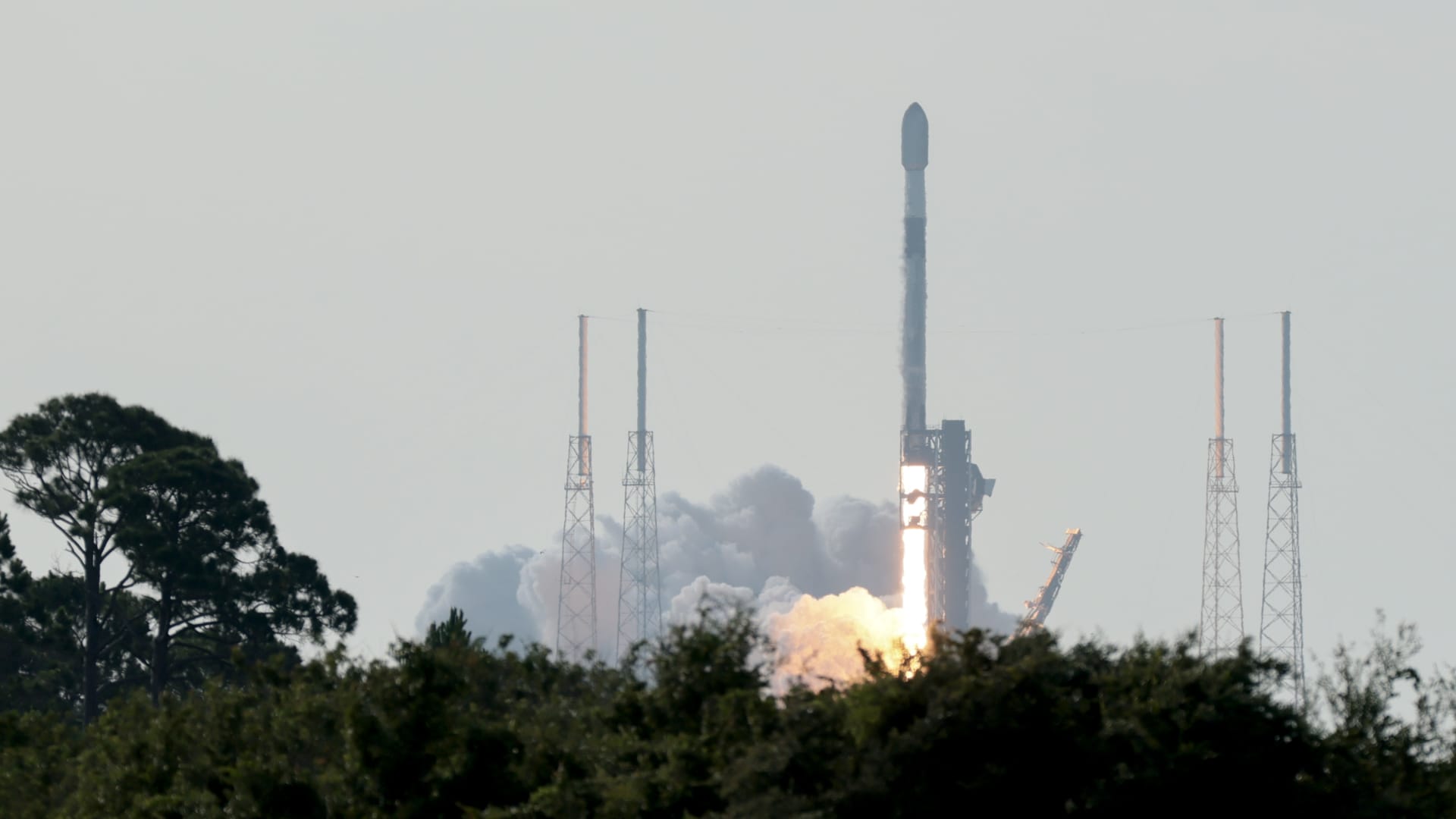
SpaceX recently made a significant entry onto Nasdaq, achieving a $2 trillion valuation on its debut. While its public market presence is cemented, the company’s ambitious long-term plans, particularly for human missions to Mars, face considerable skepticism from prediction markets. This disparity between market enthusiasm for current operations and long-range goals highlights a nuanced investment landscape.
💰 Financial Strategy & Market Insights
- Valuation Paradox. SpaceX’s $2T market cap on Nasdaq debut reflects strong confidence in current ventures, but long-term speculative goals like Mars missions are valued cautiously by prediction markets.
- Timeline Uncertainty. The company’s prospectus acknowledges ‘significant technical complexity’ for Mars, mirroring prediction market sentiment that a human mission by 2030 is highly improbable.
- Risk Assessment. Investors must balance SpaceX’s proven capabilities in space transport and satellite internet against the substantial, unquantified risks associated with its aspirational interplanetary colonization objectives.
Elon Musk’s aerospace venture, SpaceX, entered the public market with a robust performance, seeing its shares climb over 19% on its Nasdaq debut, pushing its market valuation past $2 trillion. This strong initial reception underscores investor confidence in the company’s existing business lines, such as satellite internet and launch services. However, the path to achieving its stated ‘Moon, Mars and beyond’ ambitions remains significantly less clear, particularly concerning human missions to Mars.
According to the prediction market platform Kalshi, traders assign merely an 18% probability to SpaceX successfully launching a human mission to Mars by the end of 2029. This low probability, which has consistently remained below 25% since the contract’s inception in March 2024, stands in stark contrast to the company’s public rhetoric and its founder’s personal incentives. Musk, for instance, has a bonus structure tied to establishing a Martian colony with over a million inhabitants, an incredibly distant goal by current estimations. The skepticism surrounding SpaceX Mars Missions timelines is not unfounded. For further insights into such complex market behaviors, a deeper dive into market analysis is often crucial.
- SpaceX’s IPO prospectus explicitly states that many of its initiatives ‘involve significant technical complexity, unproven technologies or technologies that do not exist,’ making their timelines ‘difficult or impossible to determine.’
This transparency from the company itself reinforces the cautious outlook prevalent in prediction markets, highlighting the immense technological and logistical hurdles yet to be overcome. Despite the lack of a concrete timeline, the vision for Mars is central to SpaceX’s identity, with the planet mentioned 63 times in its prospectus. This dichotomy – immense long-term aspiration coupled with near-term uncertainty – defines a unique investment profile for the newly public entity.
Investors weighing SpaceX’s prospects must consider a distinct risk-reward dynamic:
- Upside Potential:
- Continued dominance in commercial space launch and satellite internet (Starlink).
- Breakthroughs in reusable rocket technology reducing mission costs.
- Successful execution of lunar and, eventually, uncrewed Martian missions paving the way for human ventures.
- Diversification into other space-related industries, expanding its market reach.
- Downside Risks:
- Significant capital expenditure required for Mars development with unproven returns.
- Regulatory hurdles and international competition in space exploration.
- Technical failures or delays in developing the necessary Mars transportation and life-support systems.
- Public and investor sentiment shifts if timelines for ambitious goals repeatedly slip, affecting long-term asset valuation.
In the context of asset valuation, the market often applies a discount rate to future cash flows based on their perceived risk and certainty. For highly speculative, long-dated projects like human Mars missions, this discount rate can be exceptionally high, effectively rendering those future prospects with little present value, regardless of how aspirational they are. This aligns with the cautious stance taken by traders on prediction markets, who are pricing in significant uncertainty.
- Kalshi traders estimate an 18% chance of a human Mars mission by December 31, 2029.
- Odds have never exceeded 25% since the contract’s launch in March 2024.
- SpaceX’s prospectus mentions Mars 63 times, emphasizing its strategic importance despite technical uncertainty.
SpaceX Market Sentiment Tracker: Decoding Investor Patience
The market’s immediate embrace of SpaceX at its Nasdaq debut suggests a strong belief in its current operational successes and near-term growth trajectory in satellite services and commercial launches. However, the long-term vision, particularly for interplanetary colonization, demands a different type of investor patience. The low odds on Kalshi for a near-decade human Mars mission reveal a disconnect: while investors buy into the ‘SpaceX’ brand and its terrestrial-adjacent innovations, the truly audacious goals are seen as deeply speculative, pushing their realization far into the future. This implies that the current valuation is likely anchored more to Starlink and launch services than to hypothetical Martian settlements. Savvy investors might consult sources like Bloomberg for market trends.
SpaceX Historical Benchmarking: Beyond Earth’s Orbit
When benchmarking SpaceX’s ambitions, traditional aerospace and defense comparisons fall short. Its nearest peer might be a blend of a high-growth tech startup, a utility provider (via Starlink), and a pioneering exploration firm. Historically, projects of such magnitude, like the Apollo program, were government-funded and driven by geopolitical imperatives, not commercial returns. SpaceX’s unique position, combining private capital with unprecedented goals, creates a novel challenge for asset valuation models. Its long-term success is less about incremental market share and more about revolutionary technological breakthroughs and patient capital, drawing parallels to foundational shifts observed in the broader financial sector.
SpaceX’s Martian Horizon: An Investor’s Long View
The market’s initial enthusiasm for SpaceX on Nasdaq highlights confidence in its established ventures, yet a clear divergence emerges regarding its profound interplanetary ambitions. While the company’s vision for Mars is undoubtedly bold, the current timelines and technical challenges render near-term human missions a highly speculative endeavor, as reflected by prediction market sentiment. This positions investors at a crossroads, balancing present-day performance against futuristic, high-risk, high-reward opportunities.
- SpaceX’s valuation is currently driven more by its proven launch and Starlink capabilities than its Mars colonization dreams.
- The company’s own transparency about technical complexities confirms the lengthy timeline expected by prediction markets.
- Long-term investors must adopt a multi-decade horizon, acknowledging that significant value from Martian ventures is likely deferred.
How will the market reconcile SpaceX’s immediate commercial success with its distant, audacious, and inherently uncertain interplanetary aspirations?
📊 StockXpo Analyst’s View
Market Impact: The market’s reception to SpaceX’s public listing is a testament to its current technological prowess and commercial traction. However, the cautious stance on its Mars timeline suggests that this valuation is largely decoupled from its deepest aspirations. This could lead to a ‘wait-and-see’ approach for institutional investors regarding future capital allocations for its deep-space projects, with a focus on observable milestones rather than aspirational statements. Investors should monitor future capital shifts, often reported by major financial news outlets such as Reuters finance reports or access valuable educational financial insights from dedicated platforms.
Sector To Watch: The aerospace and defense sector, particularly those involved in satellite technology and advanced manufacturing, stands to gain from SpaceX’s operational expansion. However, the true beneficiaries of Martian endeavors are likely a future category of deep-tech, specialized infrastructure, and advanced life-support companies, indicating a long-tail investment horizon for pure-play interplanetary exposure.
Financial Disclaimer:
StockXpo.com is a financial news aggregator and educational portal, not a registered investment advisor or broker-dealer. All information, news, and analysis provided herein are strictly for educational purposes and do not constitute investment, financial, legal, or tax advice. Investing in the stock market involves high risks, and past performance is not indicative of future results. StockXpo will not be liable for any financial losses or investment damages. Always consult a certified financial advisor before making market decisions.
MORE IN INSIDE FINANCE

Brazil Election: Market Volatility Ahead Amidst Political Divide
Published: Saturday, October 3, 2026 · 11:30 AM

Bitget Hack: $388 Million Volatility Reshapes Crypto Exchange Risk
Published: Friday, October 2, 2026 · 2:49 AM


