Published: Friday, June 12, 2026 · 11:43 AM | Updated: Friday, June 12, 2026 · 11:43 AM
📊 280 views




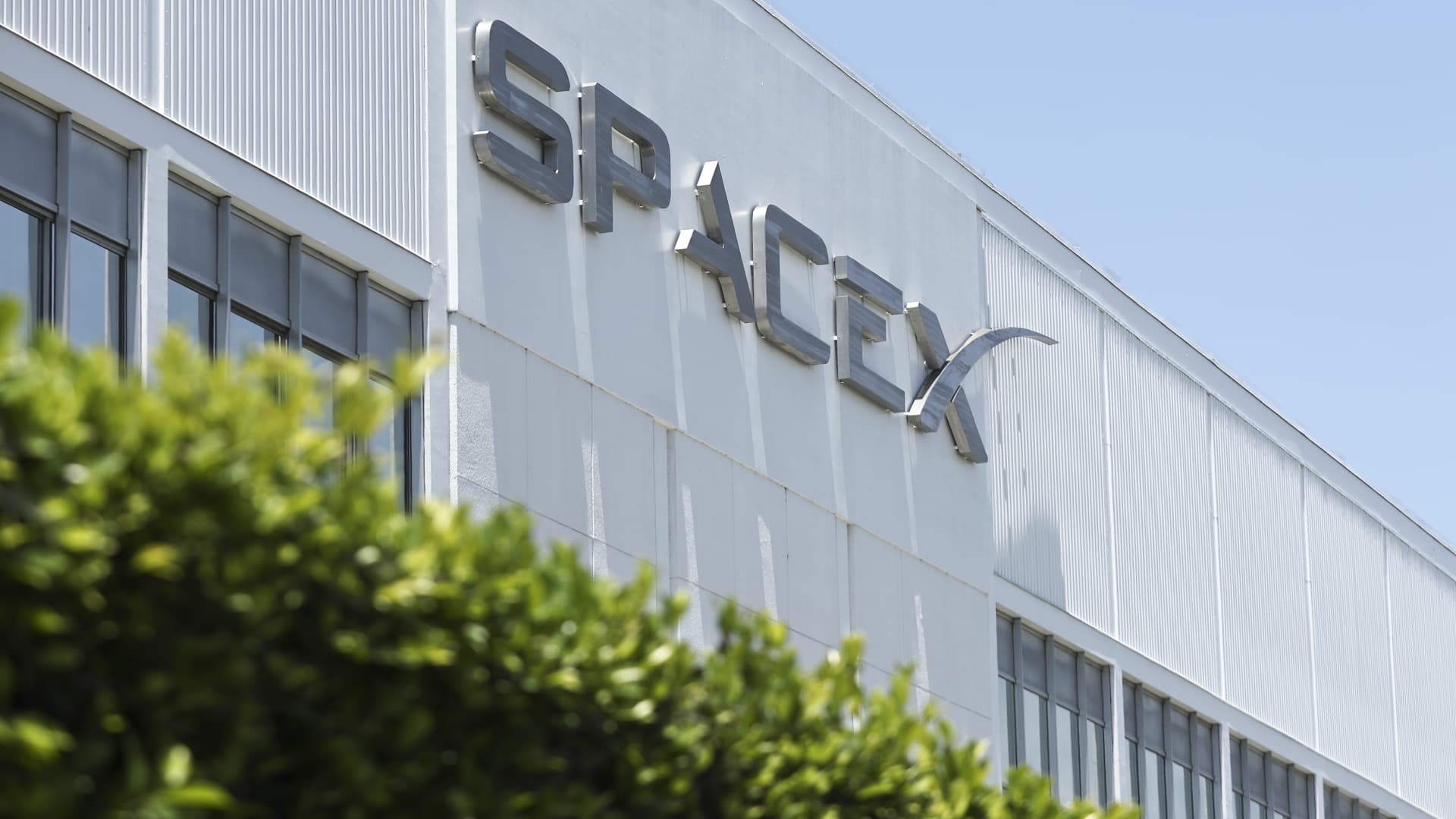
The S&P 500 Index Committee has made a significant decision regarding the inclusion of SpaceX stock, the largest IPO in market history, choosing to uphold its traditional waiting period and profitability test. This move, contrasting with faster inclusion by Nasdaq and Russell benchmarks, sets the stage for potential performance divergence among major index funds and raises questions for millions of passive investors. It underscores a growing tension between established index methodologies and the rapid emergence of mega-cap, high-growth, yet unprofitable companies.
💰 Financial Strategy & Market Insights
- Index Divergence Ahead. The S&P 500’s retention of a 12-month waiting period and profitability rule for new mega-cap IPOs like SpaceX will likely cause performance disparities with the Nasdaq and Russell benchmarks, which are fast-tracking inclusion.
- Passive Investor Exposure Shift. Investors primarily holding S&P 500 index funds (e.g., VOO, SPY) will lack immediate exposure to significant growth stories, potentially prompting a re-evaluation of core portfolio allocations or consideration of complementary thematic ETFs.
- New Risk-Reward Dynamics. The emergence of leveraged ETFs tracking SpaceX offers aggressive upside but carries substantial compounding losses and higher expense ratios, making them suitable only for sophisticated day traders, not long-term investors.
Millions of Americans rely on passive S&P 500 index funds for retirement savings, with Vanguard’s VOO and BlackRock’s IVV alone managing nearly $2 trillion in assets. Yet, these funds will not include SpaceX stock in the near future, following the S&P 500 Index Committee’s decision to block its early entry. This stance means index fund investors will wait until at least mid-2027 for exposure to the space exploration giant, despite its staggering $1.75 trillion valuation at IPO.
The core of the S&P 500’s decision lies in its strict adherence to existing rules, including a standard 12-month waiting period for new listings and a profitability test. This contrasts sharply with the Nasdaq and Russell benchmarks, which have announced updates to their inclusion rules to accommodate mega-cap IPOs like SpaceX. Strategas Securities chief ETF strategist Todd Sohn highlighted this divergence, stating, ‘If you want SpaceX, you’re not buying the S&P 500. You’re going to buy the NASDAQ 100 or the Russell 1000,’ a point often debated in market structure discussions. This creates a clear fork in the road for passive investors, compelling them to look beyond traditional S&P 500 vehicles if they seek immediate access to these nascent growth drivers.
The controversy extends beyond SpaceX. Experts like Peter Haynes, TD Securities’ head of index and market structure research, expressed disagreement with the S&P’s decision, calling it a ‘controversial discussion.’ Haynes pointed to precedents set by global benchmarks, such as FTSE and MSCI, which fast-tracked Saudi Aramco’s inclusion within days of its 2019 IPO, which was then the largest in history. He argued that U.S. benchmarks traditionally followed this lead for substantial ‘Made in the USA’ stocks. The S&P 500’s decision is now seen as a precedent, indicating that future mega-cap, high-growth companies like OpenAI and Anthropic, both expected to follow with significant IPOs, will likely face similar hurdles for early inclusion. This could ignite an ‘index war’ resulting in notable performance discrepancies among the major U.S. benchmarks, according to Sohn.
- The S&P 500’s commitment to its 12-month waiting period and profitability criteria positions it uniquely against other major indices embracing faster integration for large-scale IPOs. This strategic choice by the S&P 500 committee could lead to a significant re-evaluation of index fund allocations among investors.
While SpaceX debuts with an impressive valuation, its reported net loss of $4.28 billion in its latest quarter presents a challenge to the S&P 500’s profitability requirement. This financial reality mirrors that of other highly anticipated tech IPOs, such as OpenAI and Anthropic, which are currently prioritizing growth and market penetration over immediate profitability. For investors keen on early exposure to the burgeoning space and AI sectors, alternative investment vehicles have already emerged. Thematic ETFs, particularly those focused on space and tech innovation, have actively acquired pre-IPO stakes in SpaceX. Tema ETFs’ Space Innovators ETF (NASA), launched on May 30, rapidly accumulated $2.6 billion in assets, providing direct access to the company well before its public debut. Furthermore, the market is set to see a new wave of leveraged ETFs, like ProShares’ Ultra SpaceX ETF (SPCF) and GraniteShares’ 2x Long (SPAL) and 2x Short (SNK) SpaceX Daily ETFs, offering amplified bullish or bearish bets. These products, however, come with inherent volatility and are generally recommended for active traders rather than long-term strategic investments, as losses can compound rapidly and expense ratios are higher.
- Upside Potential
- Diversified High-Growth Access: For sophisticated investors, thematic and leveraged ETFs offer immediate, albeit risky, exposure to innovative sectors like space and AI, bypassing traditional index limitations.
- Performance Alpha Potential: Active management or selective index exposure (Nasdaq, Russell) might yield alpha by capturing early growth of mega-cap disruptors excluded by the S&P 500.
- Market Innovation: The ETF industry’s creativity is likely to spawn new products combining S&P 500 components with excluded high-growth assets, offering novel investment paths.
- Downside Risks
- S&P 500 Underperformance: If excluded mega-caps like SpaceX significantly outperform, S&P 500 index funds could lag, affecting broad market returns for passive investors.
- Amplified Volatility: Leveraged ETFs designed for day trading carry substantial risk, with rapid compounding losses, high expense ratios, and significant volatility, making them unsuitable for most long-term portfolios.
- Profitability Concerns: SpaceX’s current net losses and the similar cash burn of upcoming IPOs like OpenAI and Anthropic highlight the fundamental business risks associated with these high-valuation, high-growth companies.
Index Arbitrage: The divergence in inclusion policies between the S&P 500 and other major indices (Nasdaq, Russell) presents a rare opportunity for institutional investors and sophisticated traders to engage in index arbitrage. This strategy involves simultaneously buying and selling related assets across different indices to profit from pricing inefficiencies caused by varying inclusion timelines and criteria, reflecting a nuanced shift in market liquidity dynamics as capital flows respond to these rule discrepancies.
| Company/Fund | Key Metric | Value |
|---|---|---|
| SpaceX | IPO Valuation (Projected) | $1.75 Trillion |
| SpaceX | Latest Quarterly Net Loss | $4.28 Billion |
| Vanguard S&P 500 ETF (VOO) | Assets Under Management (AUM) | Over $1 Trillion |
| Tema Space Innovators ETF (NASA) | Assets Under Management (AUM) (Post-Launch) | $2.6 Billion |
The Hidden Dynamics of SpaceX Liquidity
“The market’s initial reaction to SpaceX’s IPO will be a critical test of demand for high-valuation, pre-profitability assets. Despite its massive valuation, the immediate exclusion from the S&P 500 means a significant pool of passive institutional capital, nearly $2 trillion from Vanguard and BlackRock S&P 500 ETFs alone, will not flow into SpaceX stock. This could lead to a more concentrated ownership structure among active managers and retail investors, potentially amplifying price volatility in its early trading days. The liquidity profile will be defined by conviction investors and speculative capital rather than broad market index flows, making its initial market movements a fascinating case study in asset valuation decoupled from traditional benchmark inclusion. For broader financial sector insights, consider exploring relevant financial market analysis.”
Reading the Pulse of SpaceX Market Sentiment
“Market sentiment surrounding SpaceX stock is likely to be bifurcated: extreme optimism from disruptive tech proponents versus cautious skepticism from value-oriented investors. The rapid rise of thematic space ETFs like Tema’s NASA, attracting $2.6 billion, signals strong retail and specialized institutional interest. However, the S&P 500’s decision, rooted in profitability concerns, highlights a fundamental valuation debate. This clash of investment philosophies, coupled with the upcoming launch of leveraged ETFs, indicates a highly speculative trading environment. Understanding these underlying currents is crucial for any investor navigating the initial public trading phase, as they reflect broader investment trends.”
SpaceX Stock and the Future of Index Investing
“The S&P 500’s deliberate decision to delay SpaceX stock inclusion marks a pivotal moment for index investing, potentially redefining how passive funds interact with groundbreaking, yet unprofitable, mega-cap companies. This policy divergence from Nasdaq and Russell indexes forces investors to reconsider what truly constitutes ‘broad market’ exposure.
- The ruling emphasizes the S&P 500’s commitment to traditional financial metrics, specifically profitability, which will also impact future IPOs like OpenAI and Anthropic.
- It highlights a growing fragmentation in index strategies, creating opportunities for active management and specialized ETFs to capture immediate exposure to excluded assets.
- This shift will necessitate more nuanced portfolio construction for investors seeking balanced exposure to both established market leaders and emerging, high-growth innovators.
How will this ‘index war’ ultimately reshape the landscape of passive investing and capital allocation for the next generation of market disruptors?”
📊 StockXpo Analyst’s View
Market Impact: The S&P 500’s steadfastness on its inclusion criteria, particularly concerning profitability for SpaceX stock and future mega-IPOs like OpenAI, introduces a fascinating dynamic in market liquidity. While traditional S&P 500 funds might initially miss out on potential rapid gains from these innovators, this also protects passive investors from the immediate volatility and unproven profitability of such ventures. This creates a clear distinction in risk profiles across benchmarks, potentially drawing capital into non-S&P 500 indices and specialized ETFs seeking immediate growth exposure. For deeper insights into market movements, regularly consult trusted market analysis.
Sector To Watch: The space and AI sectors are unequivocally the ones to watch. With SpaceX’s IPO and the anticipated public offerings of OpenAI and Anthropic, these industries are attracting immense investor interest and capital. The rapid growth of thematic ETFs explicitly targeting these areas suggests a strong appetite for innovation. However, the high-risk, high-reward nature of these sectors, coupled with significant cash burn, demands rigorous due diligence and careful risk management from investors, a trend often highlighted in the evolving finance landscape. For broader educational insights, explore financial concepts on the StockXpo blog.
Financial Disclaimer:
StockXpo.com is a financial news aggregator and educational portal, not a registered investment advisor or broker-dealer. All information, news, and analysis provided herein are strictly for educational purposes and do not constitute investment, financial, legal, or tax advice. Investing in the stock market involves high risks, and past performance is not indicative of future results. StockXpo will not be liable for any financial losses or investment damages. Always consult a certified financial advisor before making market decisions.
MORE IN INSIDE FINANCE

Singapore Haven: Stability Yields Opportunity Amid Global Volatility
Published: Tuesday, October 13, 2026 · 12:19 AM

Inflation Peak for 2026: Sticky Prices to Challenge Asset Valuations
Published: Monday, October 12, 2026 · 11:45 AM