Published: Friday, June 12, 2026 · 10:12 AM | Updated: Friday, June 12, 2026 · 10:12 AM
📊 260 views




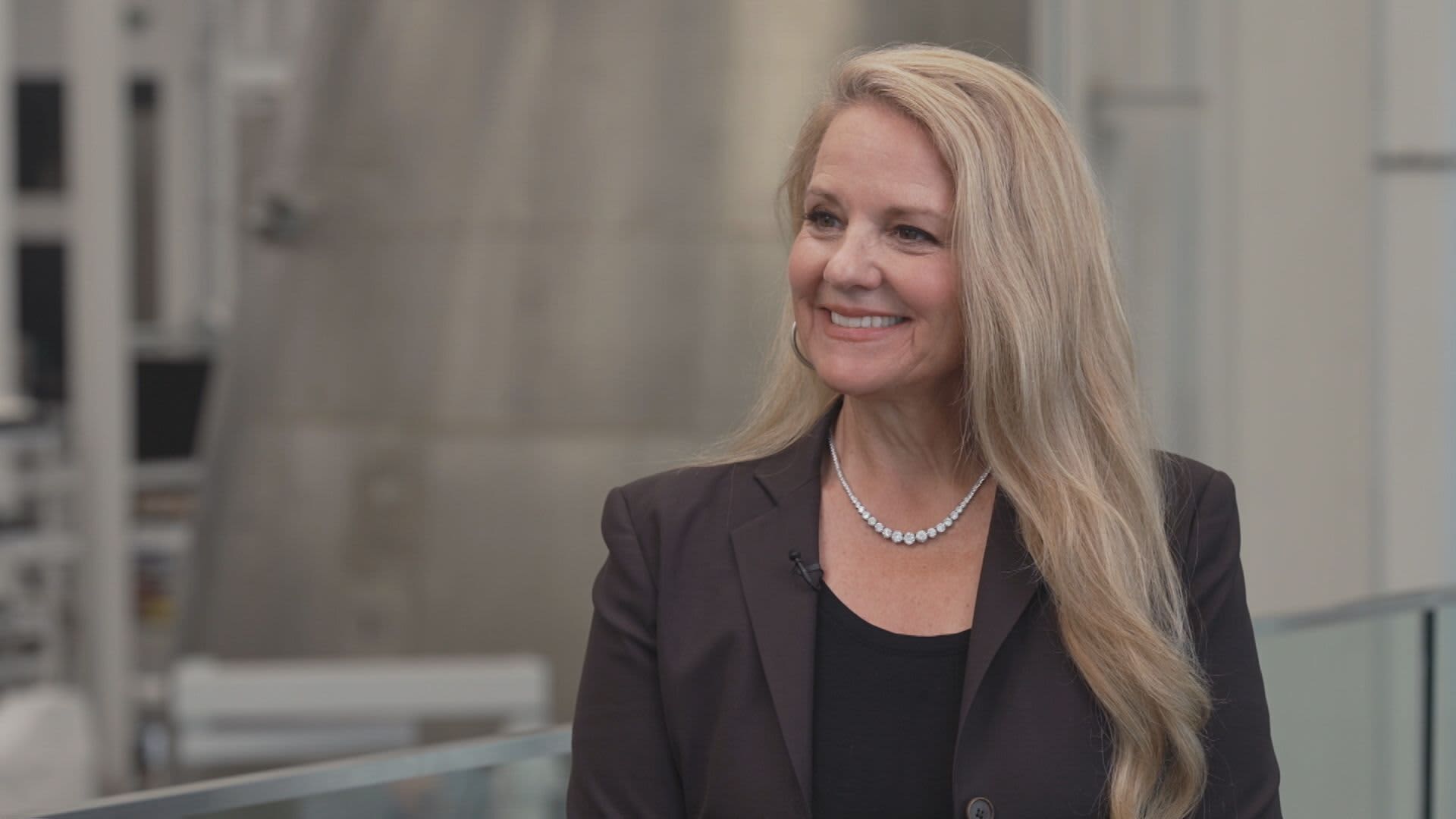
SpaceX is poised to launch one of history’s largest public offerings, marking a pivotal moment not just for the aerospace giant but for the burgeoning space economy it helped forge. After years of prioritizing ambitious, long-term goals over Wall Street’s quarterly demands, COO Gwynne Shotwell affirms the timing is now right for the company’s highly anticipated SpaceX IPO.
🚀 Tech Strategy & Market Disruptions
- Strategic Public Offering. Gwynne Shotwell signals SpaceX’s readiness for public markets after years of prioritizing long-term, multiplanetary goals over immediate financial reporting.
- Integrated Tech Stack Evolution. The company is building a vertically integrated infrastructure spanning advanced rocketry, Starlink connectivity, AI development (xAI, Grok), semiconductor manufacturing (Terafab), and global data centers.
- Starship’s Transformative Role. Future growth, particularly the economics of space-based compute, hinges on Starship’s full reusability and dramatic cost reductions, with production targets aiming for two ships produced per week.
The aerospace company, led by Elon Musk, has fundamentally reshaped launch services through reusable rockets, drastically driving down costs and enabling a new era of space commercialization. Shotwell, an early employee who oversees day-to-day operations and a 22,000-person workforce, highlighted in an interview with CNBC in an exclusive interview, that the firm’s diverse businesses—from Falcon launches and Starlink broadband to cutting-edge AI via xAI—are now mature enough to justify a public listing. This strategic move aims to provide access for ‘everyday Americans’ to invest in a company dedicated to ‘very futuristic’ endeavors, extending beyond traditional aerospace boundaries.
SpaceX’s business model is evolving from a pure-play launch provider to a vertically integrated technology powerhouse. Starlink, with over 10 million subscribers and approximately 9,600 satellites, serves as a significant profit driver, funding ambitious capital expenditures in other segments. This connectivity platform also includes Starlink Mobile and Starshield, which military experts note is rapidly redefining modern warfare capabilities. The acquisition of xAI and its Grok large language model, coupled with an option to acquire AI coding firm Cursor, underscores SpaceX’s deep foray into artificial intelligence. This push extends to hardware, with joint development of the Terafab semiconductor facility with Tesla, now partnered with Intel, and the establishment of Colossus data centers in Memphis. These data centers are already securing substantial compute capacity deals with entities like Anthropic and Google, generating revenue streams to offset colossal development costs.
SpaceX’s trajectory exemplifies a disruptive innovation flow, moving from core aerospace competence into broader digital infrastructure. The ability to dramatically reduce launch costs through reusable Falcon rockets paved the way for the economical deployment of the Starlink constellation. This dense, low Earth orbit network then provides the foundation for decentralized, high-speed global connectivity. Building on this, the vision for fully reusable Starship rockets promises to further slash launch expenses, making space-based data centers and AI compute viable. This complete vertical integration, from orbital mechanics to silicon, facilitates an unparalleled expansion into space-based AI applications, which could revolutionize how computing resources are managed and distributed globally. The ongoing development of Starship, projected to lower launch costs by 95% compared to Falcon 9, is central to realizing this grand architectural vision.
The convergence of space launch capabilities with advanced AI and compute infrastructure represents a significant digital transformation. SpaceX isn’t merely a transport company; it’s architecting a new paradigm where cloud services, data processing, and intelligence can transcend terrestrial limitations, introducing unprecedented scalability and resilience.
While the analyzing technology market trends and industry landscape suggest a promising future, the financial community has raised questions regarding SpaceX’s eye-watering $1.77 trillion valuation, which implies a 2026 revenue multiple of 40 and an adjusted earnings multiple of 175. This valuation places it ahead of established giants like Meta and Tesla, and even the entire S&P 500 aerospace and defense group. However, the company’s track record of achieving ‘impossible’ feats suggests a unique investment profile driven by moonshot ambitions.
Here’s a snapshot of key metrics driving the emerging technologies and financial outlook:
| Metric Category | Key Metric | Value |
|---|---|---|
| Valuation | IPO Market Cap | ~$1.77 Trillion |
| Financial Performance | Estimated 2026 Revenue Multiple | 40x |
| Financial Performance | Estimated 2026 Adj. Earnings Multiple | 175x |
| Launch Dominance | Global Mass Launched to Orbit (since 2023) | ~80% |
| Starlink Scale | Subscribers | >10 Million |
| AI Investment | Capital Expenditures (AI, 2025) | $12.7 Billion |
| Starship Development | Total Cost To Date | $15 Billion |
| Starship Production Target | Fully Assembled Starships | 2 per week (from 1 per month) |
SpaceX’s Vertical Integration & Platform Architecture
SpaceX’s strategy is uniquely characterized by its aggressive vertical integration, a stark contrast to typical aerospace outsourcing models. This approach extends from designing and manufacturing rocket engines (Raptor) and spacecraft (Starship, Dragon) to deploying and operating a global satellite internet constellation (Starlink). Critically, this verticality is now expanding into high-performance computing, semiconductor fabrication with Terafab, and large-scale data center operations (Colossus). This integrated platform allows SpaceX unparalleled control over its entire tech stack, from fundamental physics to final application. It mitigates supply chain dependencies, accelerates iteration cycles (evidenced by ‘productive failure’ in Starship tests), and ensures end-to-end optimization for its audacious goals, including a multiplanetary future. This architectural choice is a competitive advantage, enabling innovations like AI compute satellites by 2028, where SpaceX is both the builder and a potential provider of orbital compute capacity.
SpaceX’s Market Adoption Challenges Ahead
Despite its technical prowess, SpaceX faces significant hurdles in market adoption and scaling. While its Falcon fleet dominates launch, expanding Starlink faces increasing competition from other satellite broadband providers and evolving terrestrial networks. The ambition to deploy AI compute in space, while technologically feasible, still needs to prove its economic viability against earthbound hyperscale cloud providers, especially given the ongoing need for dramatic reductions in launch costs and the complexity of orbital operations. Regulatory environments, particularly for Starship and future space-based infrastructure, remain a variable and could impact timelines. Furthermore, integrating xAI and scaling Grok in a highly competitive AI landscape demands substantial ongoing investment and continuous innovation. Gwynne Shotwell acknowledged the challenge of scaling chip manufacturing to meet their vision, noting that current manufacturers ‘don’t believe us’ or aren’t thinking on the same scale.
SpaceX IPO: Navigating the Orbital Growth Trajectory
The educational tech insights surrounding the SpaceX IPO represent a critical inflection point for both the company and the broader space industry. It signifies a maturation of the new space economy, transitioning from private venture capital funding to public market scrutiny, demanding a balance between long-term vision and investor returns.
- Visionary Bet: The IPO is a public validation of Musk’s long-term, multiplanetary vision, asking investors to buy into a future decades in the making.
- Integrated Ecosystem: SpaceX is building a foundational technology stack—from space infrastructure to AI—that could unlock entirely new markets and applications.
- Execution Risks: Significant capital expenditures, regulatory complexities, and the inherent challenges of pioneering advanced technologies mean the path to profitability will be closely watched.
Will SpaceX successfully convince public markets that its integrated space and AI ecosystem can deliver on its stratospheric valuation while pursuing a multiplanetary future?
📊 StockXpo Analyst’s View
Market Impact: The SpaceX IPO is set to be a watershed moment, potentially re-rating the entire space and advanced technology sector. Its sheer scale and the ambition of its integrated tech stack could draw significant capital, potentially diverting investment from traditional tech or even other aerospace firms, impacting market liquidity and investor sentiment towards high-risk, high-reward ventures. Skepticism around its valuation suggests volatility post-debut.
Sector To Watch: Investors should closely monitor the broader space economy, including satellite communications and launch services, as SpaceX’s market entry could prompt consolidation or increased innovation from competitors. Additionally, the AI infrastructure and semiconductor sectors will feel ripple effects as SpaceX’s vertically integrated approach reshapes demand for compute and fabrication capabilities, as detailed in recent industry research.
Financial Disclaimer:
StockXpo.com is a financial news aggregator and educational portal, not a registered investment advisor or broker-dealer. All information, news, and analysis provided herein are strictly for educational purposes and do not constitute investment, financial, legal, or tax advice. Investing in the stock market involves high risks, and past performance is not indicative of future results. StockXpo will not be liable for any financial losses or investment damages. Always consult a certified financial advisor before making market decisions.
MORE IN INSIDE TECHNOLOGY

Anthropic Pentagon Blacklisting: A Major Risk for AI’s Public Sector Role
Published: Wednesday, October 14, 2026 · 12:03 AM

Bond Yields Under Pressure: IMF Warns of ‘Disorderly’ Spike Driven by AI Debt and Inflation
Published: Tuesday, October 13, 2026 · 1:21 AM