Published: Friday, June 12, 2026 · 12:47 PM | Updated: Friday, June 12, 2026 · 12:47 PM
📊 214 views




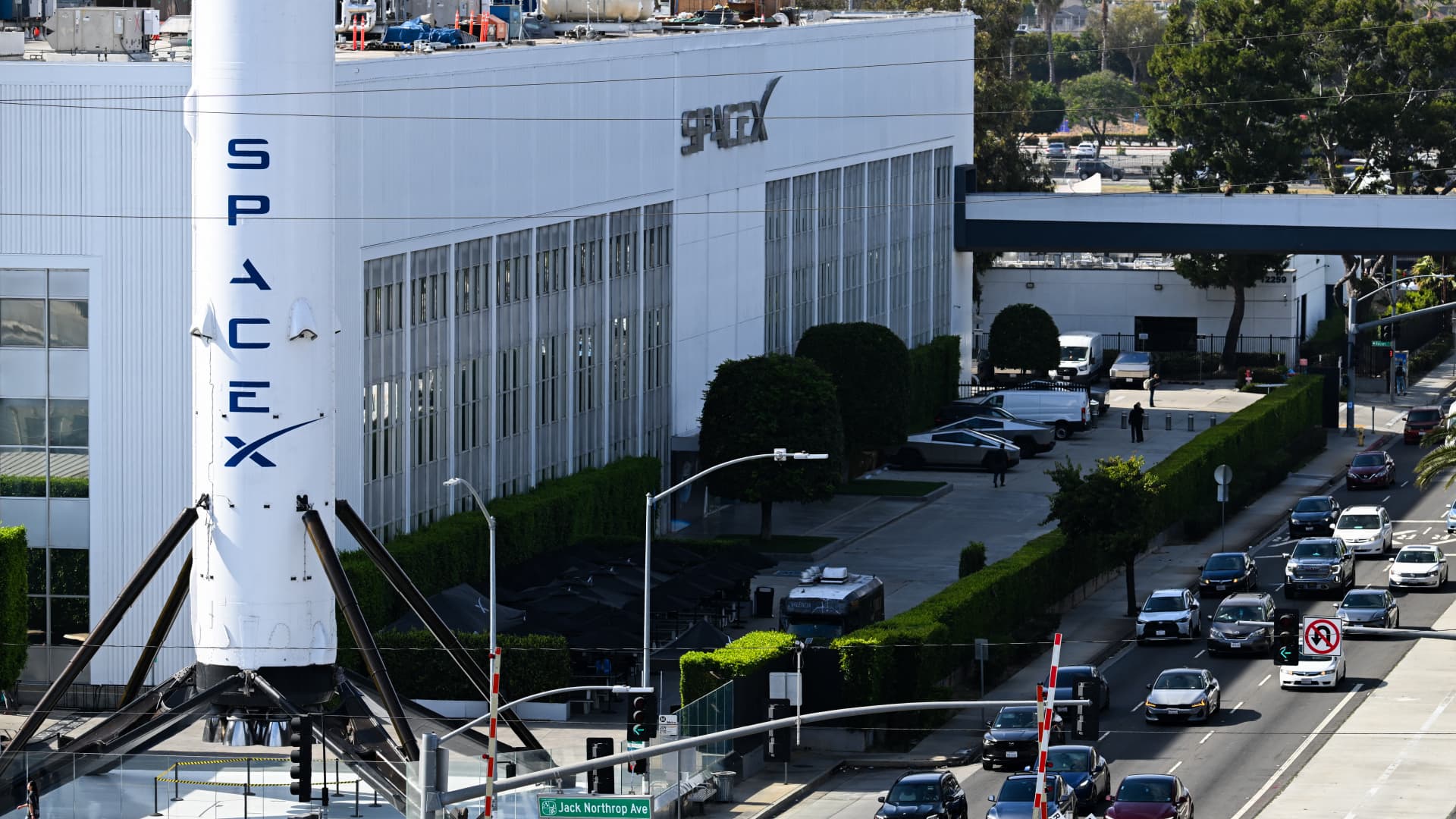
The highly anticipated SpaceX IPO has captivated both institutional and retail investors, with intense demand driving a valuation described by some as ‘outrageous’ yet undeniable. This public debut positions Elon Musk’s multifaceted enterprise, encompassing reusable rockets, Starlink, and xAI, as a potential trillion-dollar entity poised to redefine several key sectors. The market’s eagerness to participate underscores a prevailing sentiment that betting against Musk’s visionary execution comes with significant risk.
🚀 Tech Strategy & Market Disruptions
- Aggressive Valuation Stance. SpaceX’s $1.77 trillion IPO valuation, surpassing even Tesla’s, highlights a market conviction in future growth beyond traditional metrics, fueled by Elon Musk’s track record of rapid innovation.
- Democratizing IPO Access. An unusually high retail allocation (low 20% range) and a significantly lowered brokerage account minimum (e.g., Fidelity’s $2,000 vs. typical $100k-$500k) broadens participation, reflecting a shift in IPO accessibility for individual investors.
- Multi-Sectoral Disruption. Beyond aerospace, SpaceX’s integration of Starlink for global internet and xAI for compute capacity positions it at the nexus of telecommunications, AI infrastructure, and future space resource industries, attracting diverse technology market trends.
Individual investors, many from the meme-stock era, actively sought allocations for the SpaceX IPO, driven by expectations of a robust first-day pop. Figures like Marvin Jung, a 51-year-old regional director, expressed skepticism about the ‘aggressive’ valuation but still requested shares through platforms like Robinhood, aiming for short-term gains rather than long-term holding. This sentiment is echoed by others, who view the offering as a ‘Super Bowl of IPOs’ and are wary of missing out, drawing parallels to the early days of Tesla’s dramatic ascent.
SpaceX, founded by Elon Musk in 2002, has diversified significantly from its reusable rocket origins into a complex conglomerate. Its expansive operations now cover:
- Reusable rocket technology, enabling frequent and cost-effective space access.
- Starlink, a global satellite internet service for broadband connectivity.
- xAI, an artificial intelligence initiative leveraging advanced compute infrastructure.
This rapid scaling and strategic partnerships, including recent compute deals with Anthropic and Google, underpin the company’s colossal valuation, making traditional financial modeling challenging. The firm’s ability to execute on its ambitious projects will be key, and these developments can often be tracked via emerging technologies.
“Valuing a company like SpaceX with conventional frameworks is akin to trying to map a new galaxy with old instruments. Its true disruptive potential lies in its integrated ecosystem spanning space launch, global communication, and AI infrastructure, demanding a future-forward lens that traditional finance often struggles to apply.” – StockXpo CTO Insight
The market disruption generated by SpaceX flows directly from its technological prowess. The development of cost-effective, reusable rockets has drastically lowered the barrier to space, fostering a new era of commercial and scientific exploration. This, in turn, fuels the expansion of Starlink, making high-speed internet accessible globally and empowering digital transformation in previously underserved regions. The synergy with xAI, leveraging SpaceX’s infrastructure for advanced compute capabilities, creates a self-reinforcing innovation cycle, accelerating AI development and potentially leading to novel data center paradigms in space. This holistic strategy is a subject of intense analysis in leading tech publications.
Several key financial indicators underpin the current market excitement and valuation discussions surrounding SpaceX:
| Metric | Detail |
|---|---|
| IPO Fixed Price | $135 per share |
| IPO Valuation | $1.77 trillion (making it 7th largest U.S. company) |
| Retail Share Allocation | Low 20% range (vs. typical 5-10%) |
| Fidelity IPO Minimum | $2,000 (vs. typical $100k-$500k) |
| Anthropic Compute Deal | $1.25 billion per month through May 2029 |
| Google Compute Deal | $920 million per month for 32 months |
| Projected 2030 Revenue | $200 billion (conservative estimate by Founder ETFs) |
SpaceX Platform Architecture: Beyond Earth’s Orbit
SpaceX’s architectural strength lies in its vertically integrated approach, which contrasts sharply with traditional aerospace contractors. By designing and manufacturing nearly all components in-house, from engines to satellite constellations, SpaceX maintains unparalleled control over its innovation lifecycle and cost structures. The Falcon rocket family, particularly the Falcon 9 and the upcoming Starship, represents a modular, scalable platform capable of diverse missions, from LEO satellite deployments to deep space human exploration. This intrinsic design philosophy prioritizes reusability and rapid iteration, essentially creating a ‘software-defined’ hardware ecosystem in space. The integration with Starlink’s global network, built on thousands of interconnected satellites, further extends this architecture, creating a resilient and low-latency digital backbone crucial for future space-based applications. This holistic control allows for rapid deployment cycles and efficient resource utilization, a critical advantage in the competitive space race, offering significant educational tech insights.
SpaceX Ecosystem Expansion Potential: Unlocking New Frontiers
The long-term investment thesis for SpaceX extends far beyond its immediate revenue streams from launches and Starlink subscriptions. Visionary investors like Helaine Markham highlight opportunities in nascent ‘space-related industries that aren’t even yet in existence,’ such as mineral extraction from asteroids or lunar resources. Furthermore, the immense computational power demanded by advanced AI models, as evidenced by the xAI initiative and significant compute deals, could drive the need for AI data centers in space. These orbital data centers could leverage the vacuum and cold temperatures for efficiency while offering unparalleled security and reduced latency for global data processing. This future-gazing perspective suggests a vast technology market trends that could reshape entire industries, attracting significant capital inflows into space infrastructure and related services. Companies with strong architectural foundations, like SpaceX, are uniquely positioned to capitalize on these emerging sectors, driving unprecedented growth.
The SpaceX IPO: Charting a Course Through Market Excitement
The SpaceX IPO marks a watershed moment, not just for the company, but for the broader investment landscape, balancing palpable enthusiasm with substantial valuation risks. While some investors like Marvin Jung seek to capitalize on short-term rallies, the long-term potential envisioned by others, such as Helaine Markham, focuses on deep space resource utilization and orbital AI data centers.
- The IPO valuation of $1.77 trillion places immense pressure on SpaceX to maintain its aggressive growth trajectory and operational efficiency.
- The high retail allocation signifies a democratization of access, yet also introduces volatility from short-term trading strategies.
- Future growth hinges on the successful execution of ambitious projects like Starship, Starlink’s continued expansion, and the build-out of xAI’s infrastructure.
Will SpaceX’s innovative spirit and diversified portfolio redefine valuation benchmarks for the next generation of disruptive tech companies, or will its lofty price tag prove a formidable hurdle for sustained long-term appreciation?
📊 StockXpo Analyst’s View
Market Impact: The SpaceX IPO injects a significant dose of high-growth, high-risk capital into the market, likely drawing liquidity from other speculative tech assets. The sheer scale of its valuation and the retail investor frenzy could set a new precedent for how ‘visionary’ companies are priced, influencing IPO strategies for future disruptors like Anthropic and OpenAI. This event also reaffirms the market’s appetite for transformational technology, even amidst economic uncertainties, as reported by Bloomberg Technology.
Sector To Watch: The space economy, including satellite communications, advanced manufacturing for aerospace, and even terrestrial infrastructure supporting space launches, is primed for accelerated growth. Furthermore, the intersection of space technology and AI infrastructure, particularly in compute capacity, positions this cross-sectoral collaboration as a critical area for investors tracking global technology developments.
Financial Disclaimer:
StockXpo.com is a financial news aggregator and educational portal, not a registered investment advisor or broker-dealer. All information, news, and analysis provided herein are strictly for educational purposes and do not constitute investment, financial, legal, or tax advice. Investing in the stock market involves high risks, and past performance is not indicative of future results. StockXpo will not be liable for any financial losses or investment damages. Always consult a certified financial advisor before making market decisions.
MORE IN INSIDE TECHNOLOGY
Starlink Launch: India’s Digital Transformation Faces Regulatory Risk
Published: Thursday, October 8, 2026 · 1:51 AM

AI’s Dual Edge: Innovation-Driven Growth Meets Global Economic Hazard
Published: Wednesday, October 7, 2026 · 3:12 AM