Published: Friday, June 12, 2026 · 12:48 PM | Updated: Friday, June 12, 2026 · 12:48 PM
📊 245 views




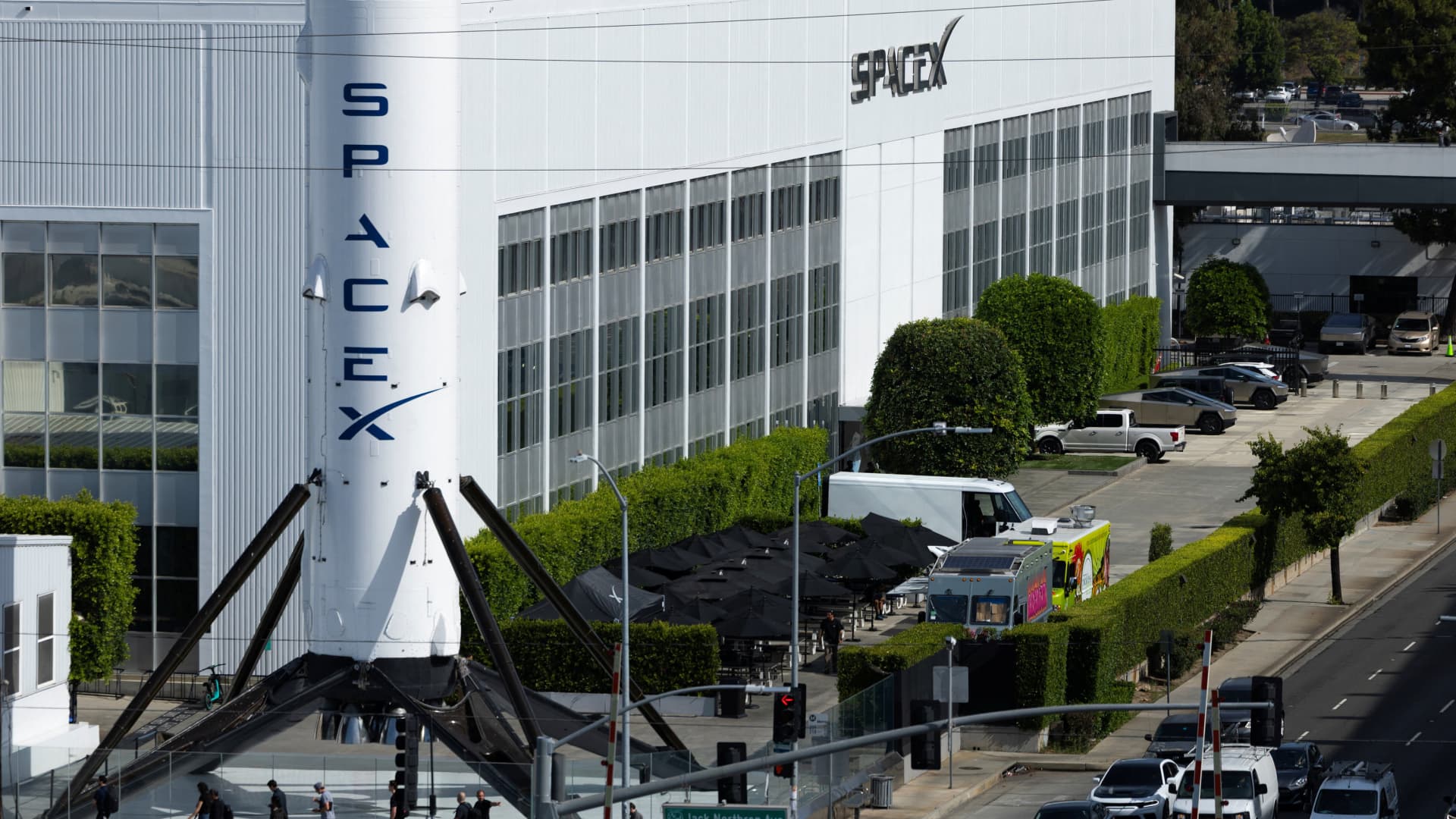
SpaceX’s monumental initial public offering (IPO) has captivated global markets, underscoring a staggering $1.77 trillion valuation. This formidable figure, placing the company ahead of its sibling Tesla, hinges on the successful realization of at least two of its three ambitious ‘moonshot’ endeavors, according to venture capitalist and former Tesla board member Steve Westly.
Westly’s observations, shared with CNBC, highlight the complex interplay of diverse, high-risk ventures underlying this valuation. The IPO represents not just a financial milestone but a profound challenge in innovation-driven growth, setting a new benchmark for private market success transitioning to public scrutiny.
🚀 Tech Strategy & Market Disruptions
- Valuation Under Scrutiny. SpaceX’s $1.77 trillion valuation requires validation through the success of multiple core ‘moonshot’ businesses.
- Diversified Tech Portfolio. The company uniquely bundles reusable rockets, the profitable Starlink internet service, and the xAI artificial intelligence venture, each a significant endeavor in its own right.
- Potential Tesla Integration. Rumors of a merger with Tesla introduce a layer of strategic complexity and potential governance challenges, further impacting future market positioning.
SpaceX’s public debut, marked by the sale of 555.6 million shares at $135 apiece, cements its status as the largest IPO on record. This unprecedented offering forces a closer look at the underlying components that justify such an colossal `SpaceX valuation`. At its core, the company operates three distinctly ambitious projects: its traditional space launch business, the Starlink satellite internet service, and the recently integrated xAI, Elon Musk’s artificial intelligence venture. According to CNBC, Starlink remains the sole profitable unit within this sprawling conglomerate.
Former Tesla board member Steve Westly underscored the challenge during an interview, noting the “completely disparate” nature of these core businesses. The expectation is clear: for the `SpaceX valuation` to be sustained, at least two of these ventures must achieve significant success. This diversification, while offering multiple avenues for growth, also introduces complexities in market perception and operational synergy. Integrating these ventures, particularly the recent merger of xAI with SpaceX in February, reshapes its strategic footprint across space, connectivity, and advanced computing. Insights into these global technology market trends are vital for understanding such large-scale plays.
Beyond these current ventures, speculation about a potential merger with Tesla continues to circulate. CNBC reported in May, citing sources, that discussions about folding Tesla into SpaceX have occurred, driven by existing shared resources and Musk’s vision. Westly believes such a move is “absolutely likely,” despite potential governance issues and stakeholder complaints, highlighting the company’s unconventional approach to corporate structure and innovation.
This convergence of highly ambitious, capital-intensive projects — from orbital mechanics and global internet infrastructure to advanced AI development — creates a unique disruption flow. Cutting-edge space technology drives unprecedented internet accessibility globally, which in turn fuels data streams for advanced AI models. This interconnected innovation strategy promises not only market disruption in individual sectors but aims to create a deeply integrated ecosystem, enabling a self-reinforcing cycle of technological advancement and potentially reshaping several industries simultaneously. For a broader view on this, you might explore emerging technologies..
As CTO, I see SpaceX’s strategy as a formidable challenge in managing a highly diversified, yet technically interconnected, innovation portfolio. The success hinges not just on individual ‘moonshots’ but on the seamless integration of their technological platforms to create synergistic value and unlock new market paradigms. It’s a high-stakes bet on multi-domain mastery.
SpaceX’s financial standing, while impressive, reveals the inherent costs of its ambition:
- IPO Valuation: $1.77 trillion
- Shares Offered: 555.6 million
- Price Per Share: $135
- Accumulated Deficit: $41.3 billion (since its founding in 2002), indicating significant investment in R&D and infrastructure.
SpaceX Ecosystem Expansion Potential
The strategic potential for SpaceX to expand its ecosystem is immense, especially with the integration of Starlink and xAI. Starlink’s vast satellite network provides a global backbone for connectivity, which could serve as critical infrastructure for distributed computing and data centers in space, as envisioned by Elon Musk. This infrastructure could then feed real-time data to xAI’s Grok models, creating a closed-loop system for AI development and deployment that is unparalleled. Furthermore, the rumored merger with Tesla would bring terrestrial AI capabilities, autonomous driving data, and advanced manufacturing expertise into the fold, creating a self-sustaining tech conglomerate with unique competitive advantages across multiple high-growth sectors. This synergistic approach could unlock new revenue streams and applications from space-based internet to AI-driven insights for electric vehicles.
SpaceX Market Adoption Challenges
Despite its groundbreaking potential, SpaceX faces considerable market adoption challenges across its diverse portfolio. The space launch business, while dominant, is capital-intensive and subject to regulatory complexities and the inherent risks of rocket science. Starlink, while profitable, navigates a competitive and evolving landscape of global internet providers, requiring continuous investment in satellite deployment and ground infrastructure. xAI operates in a highly competitive AI market dominated by tech giants, demanding rapid innovation and significant computing resources. Furthermore, a potential merger with Tesla, while synergistic, would introduce substantial governance hurdles, shareholder concerns, and the integration complexities of two large, distinct corporate cultures. Managing public perception and navigating regulatory landscapes across multiple high-tech domains will be critical for the sustained `SpaceX valuation` and its long-term market acceptance. For further reading, Reuters reported on the challenges of managing such an expansive portfolio.
SpaceX’s Future: Navigating the Multi-Trillion Dollar Orbit
SpaceX’s IPO marks a pivotal moment, affirming its position as a transformative force but also subjecting its ambitious, multi-faceted strategy to intense public market scrutiny. The company’s ability to successfully execute on its distinct “moonshots”—space, satellite internet, and AI—will be the ultimate determinant of its sustained `SpaceX valuation` and market leadership.
- The profitability of Starlink and the successful monetization of xAI’s AI models are critical for validating the current market capitalization.
- Potential integration with Tesla could create unprecedented synergies but must be carefully managed to address complex governance and operational challenges.
- SpaceX’s long-term trajectory hinges on its ability to transcend traditional industry boundaries and deliver disruptive innovations across space, AI, and global connectivity.
Can a single entity effectively manage and innovate across such disparate, high-stakes technological frontiers to truly redefine market paradigms?
📊 StockXpo Analyst’s View
Market Impact: The SpaceX IPO will inject significant capital and volatility into the market, as investors weigh its immense growth potential against the execution risks inherent in its multi-sector strategy. Its `SpaceX valuation` could influence broader tech sector valuations, fostering a renewed appetite for moonshot investments. Liquidity will be high, attracting both growth-focused institutional and retail investors seeking exposure to next-generation space and AI technologies. For deeper insights on advanced technology, consider consulting resources like Bloomberg Technology.
Sector To Watch: The aerospace and satellite communications sectors will experience direct and immediate impacts, driving increased competition and innovation. The artificial intelligence and autonomous systems sectors will also see ripple effects, particularly if xAI delivers on its ambitious roadmap. Indirectly, industries reliant on global connectivity and advanced data processing, from logistics to defense, should watch this development closely for its potential to reshape digital infrastructure and operational capabilities. Keep an eye on our educational tech insights .
Financial Disclaimer:
StockXpo.com is a financial news aggregator and educational portal, not a registered investment advisor or broker-dealer. All information, news, and analysis provided herein are strictly for educational purposes and do not constitute investment, financial, legal, or tax advice. Investing in the stock market involves high risks, and past performance is not indicative of future results. StockXpo will not be liable for any financial losses or investment damages. Always consult a certified financial advisor before making market decisions.
MORE IN INSIDE TECHNOLOGY
AI Innovation Fuels Southeast Asia’s Digital Growth
Published: Thursday, October 22, 2026 · 12:36 AM
NextDC Shares Plunge: Power Delays Threaten Australia’s Data Center Growth
Published: Wednesday, October 21, 2026 · 1:50 AM