Published: Thursday, June 11, 2026 · 1:41 PM | Updated: Thursday, June 11, 2026 · 1:41 PM
📊 238 views




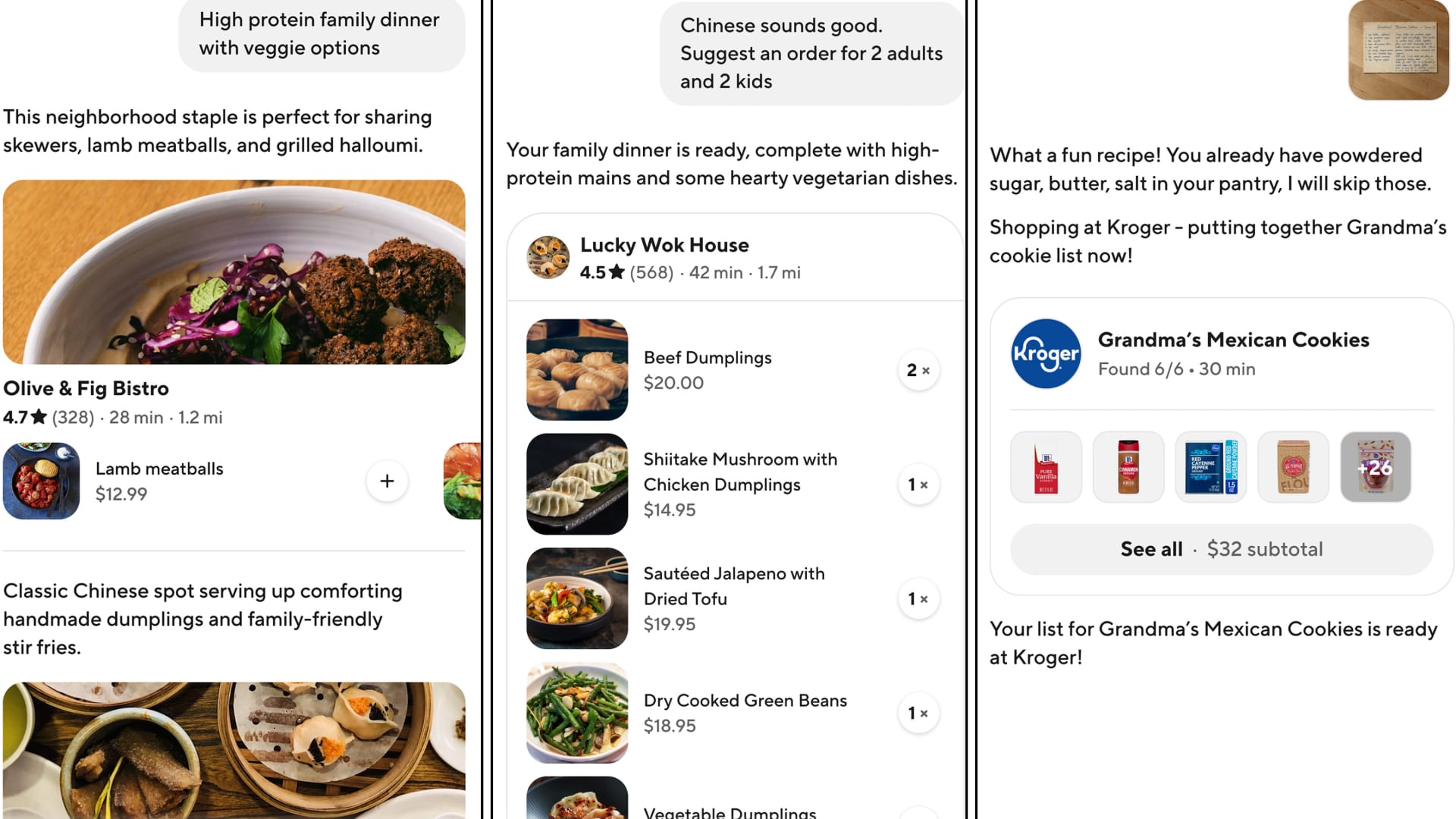
DoorDash, a leader in the gig economy, is significantly enhancing its user experience by integrating advanced artificial intelligence. The introduction of ‘Ask DoorDash’ marks a pivotal moment, enabling customers to order food and book reservations using intuitive photo and prompt-based interactions. This latest DoorDash AI push aims to redefine digital convenience and sharpen its competitive edge in a rapidly evolving market.
🚀 Tech Strategy & Market Disruptions
- Conversational AI Integration. DoorDash’s ‘Ask DoorDash’ chatbot allows users to interact via photos and natural language prompts, simplifying order placement and reservations significantly.
- Unified Platform Investment. The company is undergoing a multi-hundred-million-dollar tech stack overhaul to integrate recent acquisitions like SevenRooms and Deliveroo onto a single, cohesive platform.
- Competitive AI Race. DoorDash’s move is part of a broader trend among gig economy giants, including Uber and Instacart, to leverage AI agents for enhanced customer and merchant experiences, driving innovation-driven growth.
The recent unveiling of ‘Ask DoorDash’ represents a critical escalation in the race among gig economy platforms to harness artificial intelligence. Initially rolling out in select markets for grocery and food delivery, the conversational AI tool, allowing orders via photos and prompts, is set to expand to reservations and more U.S. cities in the coming weeks. This strategic move by DoorDash follows similar initiatives from rivals like Uber, which launched its AI cart assistant earlier this year, and Instacart, which introduced AI tools for grocers in late 2025.
DoorDash’s aggressive posture in AI is not an isolated effort. The company previously deployed AI-powered tools for merchants in May and has made significant commitments to autonomous delivery technologies, including robots. These investments signal a broader commitment to integrating AI across its entire ecosystem, from consumer-facing applications to logistical backend operations.
However, this ambitious technology push comes at a substantial financial cost. DoorDash is currently navigating a significant investment cycle aimed at consolidating its acquired brands, such as the restaurant booking platform SevenRooms (a $1.2 billion deal) and the UK food delivery firm Deliveroo (nearly $4 billion), onto a unified tech platform. This overhaul, described by finance chief Ravi Inukonda on a recent earnings call, is expected to incur several hundred million dollars in spending primarily this year. The market’s reaction to this investment has been notable, with DoorDash’s stock experiencing a significant downturn, dropping 33% year-to-date while the Nasdaq has gained approximately 8%. This downdraft began late last year following the announcement of substantial technology spending plans for 2026, leading to the company’s worst single-day stock performance on record.
To understand the broader context of this shift, consider:
- The move from traditional menu browsing to AI-driven conversational commerce promises a more intuitive and personalized user experience.
- Enhanced efficiency in order processing and personalized recommendations could drive higher user engagement and order frequency.
- The integration of disparate platforms under a unified AI-powered architecture is crucial for realizing synergies from recent large-scale acquisitions.
This extensive investment underscores the company’s belief that advanced technological capabilities, particularly in AI, are indispensable for long-term market leadership and sustained growth, despite short-term market pressures.
The introduction of ‘Ask DoorDash’ initiates a clear disruption flow within the delivery sector. New conversational AI capabilities and multimodal input (photos, prompts) lead to a faster and more intuitive customer ordering process. This improved user experience, in turn, drives increased customer engagement and loyalty. The enhanced user data collected through these AI interactions then fuels more precise personalization and recommendation engines. Ultimately, this cycle culminates in a heightened competitive barrier for market entrants and a potentially larger market share for early AI adopters, transforming traditional ordering paradigms into agent-driven commerce experiences.
As CTOs, we understand that integrating multimodal AI into consumer-facing applications isn’t merely a feature enhancement; it’s a fundamental shift in interface design and data utilization. The real value lies in how these agentic tools learn from diverse inputs—text, images, user behavior—to create truly predictive and personalized experiences, moving beyond simple automation to genuine digital agency.
Inside the DoorDash Platform Architecture Evolution
DoorDash’s foundational platform is undergoing a significant architectural transformation to support its expanded service offerings and AI initiatives. The goal is to migrate disparate systems, inherited from acquisitions like SevenRooms and Deliveroo, onto a single, scalable technology stack. This unification is crucial for leveraging AI capabilities uniformly across food delivery, grocery, and reservations.
Architecturally, this likely involves a shift towards a more modular, microservices-based approach, enabling independent deployment and scaling of AI components like natural language processing (NLP) models, image recognition systems, and recommendation engines. A robust data pipeline capable of handling high-volume, real-time multimodal data—text, images, location data—is indispensable. Furthermore, security and privacy by design are paramount in handling sensitive user and transaction data across an expanded global footprint, requiring advanced encryption, access controls, and compliance frameworks. Such an undertaking requires substantial engineering resources and a clear long-term vision for a unified user experience across all consumer touchpoints, a key aspect discussed on leading technology news platforms.
DoorDash Market Adoption Challenges and Opportunities
While the DoorDash AI push promises innovation, its market adoption faces several challenges. User familiarity with traditional menu interfaces might create an initial hurdle for widespread embrace of conversational AI, requiring substantial user education and intuitive design. There’s also the inherent complexity of accurately interpreting diverse user prompts and images, especially in localized contexts or with specific dietary restrictions, which could lead to frustrating experiences if not finely tuned. Compounding this, the intense competition in the gig economy means that any AI misstep could quickly drive users to alternative platforms.
However, the opportunities for DoorDash are equally compelling. A truly seamless, AI-driven ordering experience could significantly enhance customer loyalty and differentiate DoorDash from its rivals. By integrating reservations, the platform expands its value proposition beyond delivery into a broader lifestyle service, capturing more of the consumer’s spending. Successful execution of this strategy could not only reverse recent stock performance but also position DoorDash as a leader in applying emerging technologies to everyday consumer needs, driving growth insights for the wider technology market trends.
DoorDash’s AI Investment: A Crucial Turning Point
DoorDash’s aggressive investment in AI, epitomized by ‘Ask DoorDash,’ represents a critical inflection point for the company. While the immediate financial impact has pressured its stock, the long-term vision points towards a more integrated, efficient, and user-centric platform. This strategy is essential for sustaining growth and leveraging synergies from recent acquisitions.
- The strategic deployment of AI aims to streamline user interaction, reducing friction in the ordering and booking process.
- Massive tech stack consolidation is underway to create a unified platform, crucial for enterprise scalability and data leverage.
- Market competition necessitates continuous innovation in AI to retain and expand customer base against well-funded rivals.
Will this calculated gamble on advanced AI and platform unification pay off, ultimately transforming DoorDash into an even more dominant force in the global delivery and reservations market?
📊 StockXpo Analyst’s View
Market Impact: The market’s initial apprehension regarding DoorDash’s significant investment cycle is understandable, yet the long-term strategic value of this DoorDash AI push is substantial. Successful AI integration could unlock new efficiencies and revenue streams, potentially leading to a re-rating as the market recognizes the long-term growth potential over short-term earnings pressure. Investors should monitor adoption rates and the realized synergies from platform unification. For more educational tech insights, visit our blog regularly.
Sector To Watch: The broader gig economy and on-demand services sector, along with the underlying AI infrastructure providers, will be profoundly impacted. Companies demonstrating effective AI agent deployment will likely gain a competitive advantage, attracting both users and investor capital. Pay close attention to rivals’ advanced AI offerings, as this indicates the future of consumer engagement.
Financial Disclaimer:
StockXpo.com is a financial news aggregator and educational portal, not a registered investment advisor or broker-dealer. All information, news, and analysis provided herein are strictly for educational purposes and do not constitute investment, financial, legal, or tax advice. Investing in the stock market involves high risks, and past performance is not indicative of future results. StockXpo will not be liable for any financial losses or investment damages. Always consult a certified financial advisor before making market decisions.
MORE IN INSIDE TECHNOLOGY

Anduril Navy Contract: A $2.9 Billion Breakthrough in Submarine Production
Published: Tuesday, October 6, 2026 · 9:36 AM
AI Era Innovation: Nadella’s Bold Microsoft Re-Invention
Published: Monday, October 5, 2026 · 7:16 AM