Published: Tuesday, August 18, 2026 · 7:50 AM | Updated: Tuesday, August 18, 2026 · 7:50 AM
📊 115 views




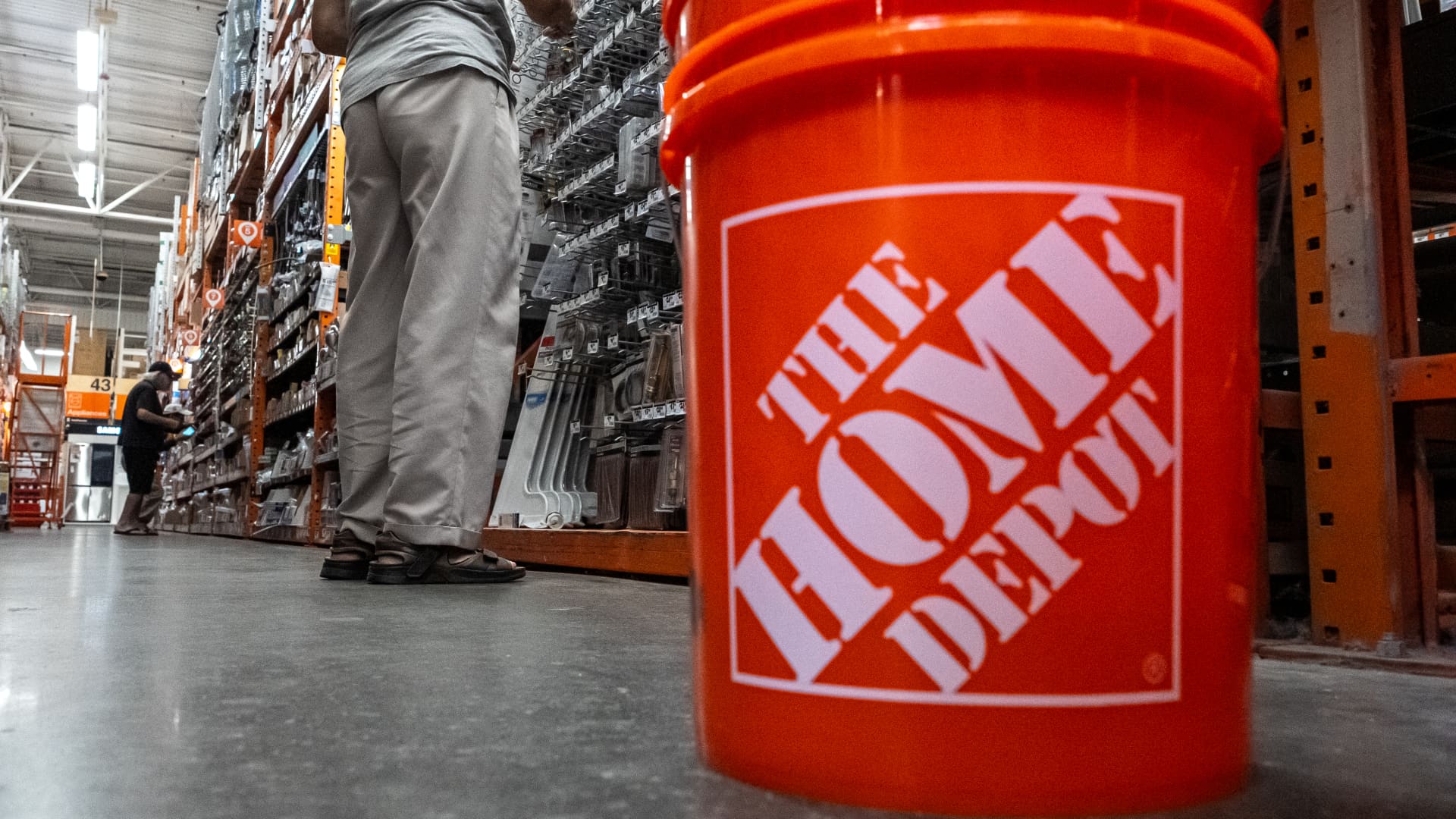
Home Depot defied a ‘frozen housing market’ in its fiscal second quarter, reporting results that surpassed Wall Street’s expectations on both revenue and earnings, while reaffirming its full fiscal-year guidance. This robust performance signals the retail giant’s operational resilience and strategic agility even as broader macroeconomic headwinds persist, offering crucial insights for broader market analysis.
💎 Strategic Investment & Portfolio Insights
- Guidance Stability Amidst Headwinds. Home Depot’s reaffirmation of its fiscal 2026 guidance, despite persistent market uncertainty, underscores management’s strong confidence in the efficacy of its ongoing strategic investments and market position.
- Market Share Aggression. The company is actively gaining market share across both its professional (pro) and do-it-yourself (DIY) customer segments, demonstrating successful execution of its targeted growth initiatives and operational excellence.
- Defensive Growth Mechanics. High mortgage rates and inflationary pressures continue to suppress large-scale consumer projects; Home Depot’s focus on operational efficiency and the more resilient pro segment provides a defensive growth mechanism for long-term capital preservation.
Home Depot’s Q2 fiscal 2026 results presented a picture of strategic execution against a challenging backdrop. The critical element of this announcement was the reaffirmation of its full fiscal-year Home Depot guidance, a move CFO Richard McPhail attributed to effective strategy and market share gains, even as he characterized the environment as ‘frozen housing market conditions.’ The company managed to beat analyst expectations, reporting adjusted earnings per share of $4.92 against an anticipated $4.73, and revenue of $47.86 billion, exceeding the $47.27 billion forecast by LSEG analysts. This performance was bolstered by a 1.7% rise in comparable sales, significantly outpacing the StreetAccount estimate of 0.9% and marking the highest such growth since fiscal Q3 2022. While consumers, a “healthy cohort” according to McPhail, possess the means, they remain hesitant to commit to larger projects due to inflation, fuel costs, and general economic uncertainty.
Key financial highlights from the second quarter include:
- Adjusted Earnings Per Share: $4.92 (vs. $4.73 expected)
- Revenue: $47.86 billion (vs. $47.27 billion expected)
- Comparable Sales Growth: 1.7% (vs. 0.9% expected)
- Net Income: $4.77 billion, or $4.79 per share (compared to $4.55 billion, or $4.58 per share, year prior)
McPhail also clarified that tariff refunds are playing a crucial role, partially offsetting “unplanned fuel, energy, and other product input costs,” thereby allowing the retailer to “maintain value” despite cost pressures. The company expects total sales growth for the year to be between 2.5% and 4.5%, with an operating margin between 12.4% and 12.6%. This consistent performance, particularly in a period of economic ambiguity, reflects a successful strategy focused on winning market share with both professional contractors and the cautious DIY consumer, a strategy highlighted in recent market sentiment reports.
The Broader Impact on Portfolio Construction
The ongoing conditions of elevated interest rates and reduced housing turnover directly translate into a dampened demand for significant home renovations typically associated with new home purchases. This macroeconomic reality forces Home Depot to adapt its operational strategy, shifting focus towards smaller, more immediate projects and bolstering its already strong professional contractor segment. For investors, this dynamic suggests that Home Depot could serve as a valuable defensive component within long-term portfolios. Its resilience in a cyclical sector, driven by strong operational execution and a diversified customer base, offers a compelling argument for stability and capital preservation even during periods of economic uncertainty.
“In an environment where consumer discretionary spending is under pressure, Home Depot’s ability to exceed top and bottom-line estimates and reaffirm guidance is a testament to its robust operating model and focus on the less cyclical pro customer. For long-term capital preservation, this stability offers a compelling argument against volatility,” stated a StockXpo CIO.
Home Depot’s Fiscal Q2 2026 Performance Snapshot:
| Metric | Reported Value | Analyst Expectations | Significance |
|---|---|---|---|
| EPS (Adjusted) | $4.92 | $4.73 | Indicates profitability exceeding analyst consensus. |
| Revenue | $47.86 Billion | $47.27 Billion | Highlights stronger-than-anticipated sales despite market challenges. |
| Net Income | $4.77 Billion | $4.55 Billion (Prior Year) | Demonstrates solid year-over-year profit growth. |
| Comparable Sales Growth | 1.7% | 0.9% | Signifies effective market share capture and customer engagement. |
Home Depot’s Competitive Benchmarking in a Slowdown
Home Depot’s strategic emphasis on its pro-customer segment, coupled with continuous investments in its supply chain and digital capabilities, sets it apart from competitors like Lowe’s. While both retailers face similar macroeconomic headwinds from the housing market, Home Depot’s larger scale, deeper integration with professional contractors, and brand equity provide distinct advantages. Its ability to reaffirm guidance while actively gaining market share suggests that these strategic choices are yielding results, positioning it favorably in a competitive landscape characterized by cautious consumer spending. This focused approach is a critical factor when assessing strategic investment plays in the retail sector.
Home Depot Risk-Reward Matrix for Investors
Assessing Home Depot from a risk-reward perspective reveals a nuanced picture. The primary risks include a prolonged slump in the housing market, further inflationary pressures that erode consumer purchasing power, and potential for increased competition from specialized online retailers. Execution risks also exist regarding the integration of its pro-focused initiatives and the effective management of its vast supply chain. However, the rewards are substantial: Home Depot boasts a dominant market position, a resilient pro-customer base less sensitive to economic cycles, a consistent dividend payout history, and significant upside potential when housing market conditions eventually improve. Furthermore, its efficient capital allocation strategies and ongoing investments in technology offer long-term growth avenues, as evidenced by its robust Q2 performance amidst challenging global business trends.
Home Depot’s Path Forward: Navigating Macroeconomic Currents
Home Depot’s fiscal Q2 performance unequivocally demonstrates its resilience amid persistent macroeconomic headwinds. The reaffirmation of its full-year Home Depot guidance signals management’s confidence in their strategic investments, particularly in the pro customer segment, which continues to provide a crucial ballast against fluctuating DIY demand. This stability offers a compelling narrative for investors seeking defensive growth in a challenging environment.
- The company’s robust Q2 results underscore strong operational execution against a backdrop of ‘frozen’ housing market conditions.
- Strategic emphasis on the professional contractor business is actively paying dividends, driving market share gains.
- Operational efficiency and the judicious use of tariff refunds are effectively mitigating rising input costs.
Can Home Depot continue to outperform expectations if housing market conditions remain ‘frozen’ into the next fiscal year, or will sustained consumer hesitancy eventually catch up?
📊 StockXpo Analyst’s View
Market Impact: This news could bolster investor confidence in defensive consumer discretionary stocks, particularly those with strong market positions and diversified revenue streams. Home Depot’s ability to navigate sector-specific challenges suggests a potential flight to quality, possibly leading to a re-evaluation of valuation multiples for resilient retailers. This might also signal increased scrutiny on competitors who fail to adapt as effectively.
Sector To Watch: The home improvement retail sector, including related building materials and construction services, warrants close attention. Companies adept at serving both professional contractors and cautious DIY consumers, coupled with robust supply chain management and pricing power, are likely to fare better. This positive outlook for Home Depot could indicate broader strength within certain segments of the retail and construction materials industries, offering fresh latest market insights.
Financial Disclaimer:
StockXpo.com is a financial news aggregator and educational portal, not a registered investment advisor or broker-dealer. All information, news, and analysis provided herein are strictly for educational purposes and do not constitute investment, financial, legal, or tax advice. Investing in the stock market involves high risks, and past performance is not indicative of future results. StockXpo will not be liable for any financial losses or investment damages. Always consult a certified financial advisor before making market decisions.
MORE IN INSIDE INVESTMENT NEWS

Accenture Stock: Alpha Potential After Earnings Beat
Published: Friday, October 2, 2026 · 6:04 AM

Nike Earnings: Unpacking the 40% Plunge and Path Forward
Published: Thursday, October 1, 2026 · 12:14 PM