Published: Tuesday, June 9, 2026 · 7:36 AM | Updated: Tuesday, June 9, 2026 · 7:36 AM
📊 263 views




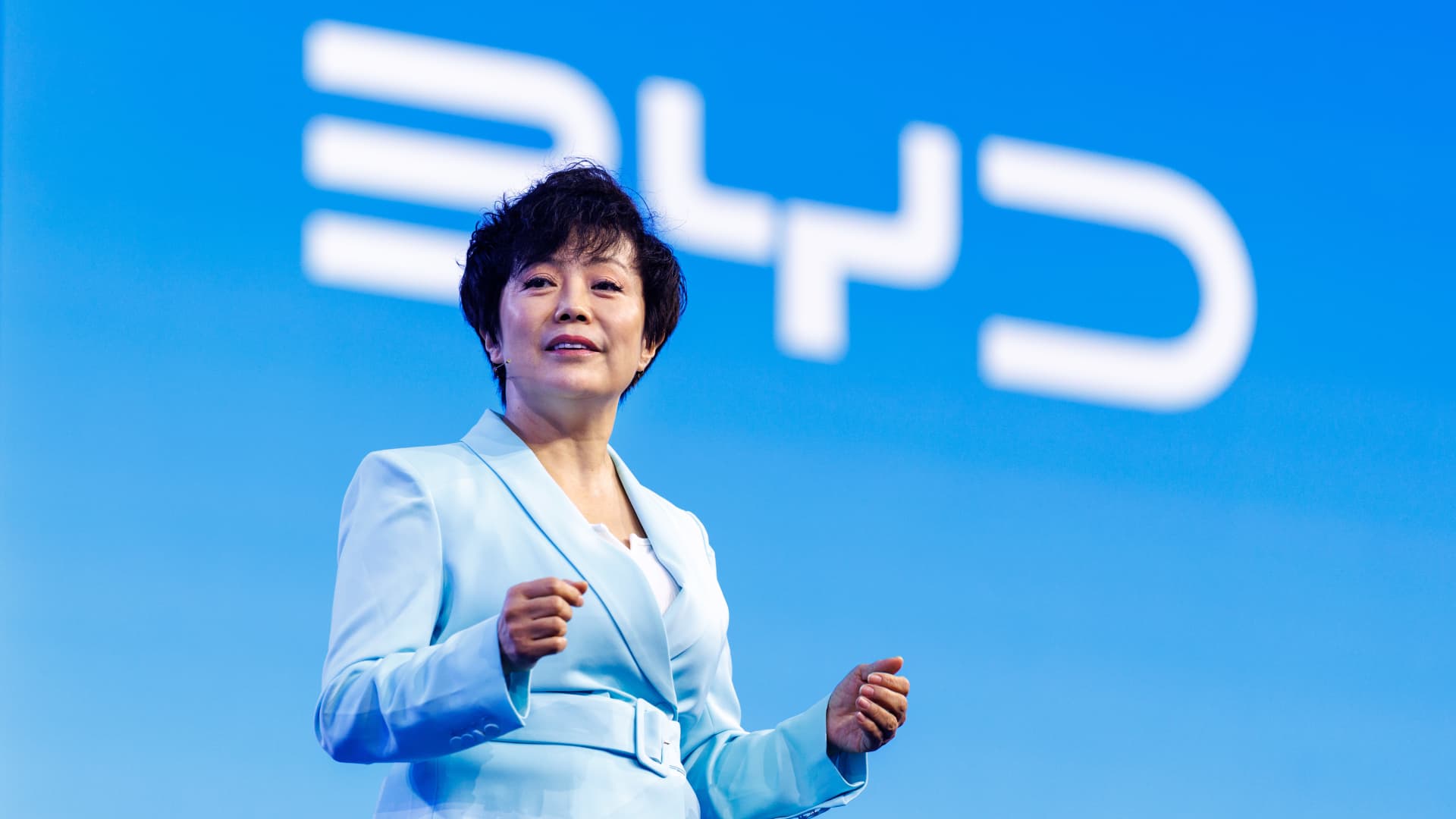
BYD, a major player in the electric vehicle market, has issued a remarkably optimistic forecast, predicting that electric vehicle sales will soon account for 80% of all car purchases in China. This bold projection challenges recent industry skepticism and highlights a significant divergence in outlook among leading EV manufacturers.
💰 Financial Strategy & Market Insights
- BYD’s Aggressive EV Forecast. The company projects an 80% electric vehicle penetration rate in China, driven by innovation and state support, contrasting with rival Nio’s more cautious ‘golden era’ assessment.
- China’s Rapid EV Adoption. The nation’s market has already seen hybrid and battery-only vehicles exceed 60% of new passenger car sales, a stark difference from global and U.S. adoption rates.
- Technological Edge and Demand. BYD cites advanced battery technology and fast-charging capabilities as key drivers, with domestic demand currently doubling its production capacity, signaling robust underlying consumer interest.
In a striking counter-narrative to recent industry slowdown concerns, Chinese electric vehicle giant BYD is aggressively projecting that Electric Vehicle Sales in China are poised to reach an 80% penetration rate in the near future. This forward-looking stance from BYD’s Executive Vice President Stella Li directly contradicts the more conservative outlook from competitors like Nio, which recently suggested the industry’s ‘golden era’ might be over. The divergence in forecasts underscores a fascinating dynamic within China’s intensely competitive EV sector, a market already demonstrating rapid adoption rates.
China’s passenger car market has been a global outlier in EV adoption, with hybrid and battery-only vehicles surpassing half of new passenger car sales in 2024, and reaching a record 62.9% last month, according to the Chinese Passenger Car Association (CPCA). This rapid ascent is largely attributed to sustained state support and an extensive array of vehicle options available to consumers, fostering an environment ripe for mass adoption. In contrast, the U.S. market currently hovers around a 10% EV penetration, while the global average stands at approximately 25%, as reported by the International Energy Agency. These figures highlight China’s unique position as a bellwether for rapid electrification.
However, the path forward is not without hurdles. U.S. tariffs of 100% on China-made electric cars have significantly constrained BYD’s and other Chinese manufacturers’ expansion into the American market. Adding to geopolitical complexities, BYD was recently named on the Pentagon’s list of Chinese military-affiliated companies, a development that could further complicate its international ambitions. Despite these external pressures, BYD expresses strong optimism about its domestic market prospects, particularly banking on its technological advancements. The company touts its fast-charging battery technology, reportedly capable of a 70% charge in just five minutes, as a major differentiator. Demand for BYD’s EVs within China currently exceeds its production capabilities by roughly twofold, signaling robust consumer appetite. This internal market strength is further amplified by the steep decline in gasoline-powered car sales in China, which plunged 39% in May year-over-year, largely due to higher global oil prices exacerbated by Middle East hostilities, according to CPCA data. For broader market analysis, investors often look to insights provided by global financial news to understand these technological shifts. Additionally, for broader market insights into the financial sector’s response to such trends, educational resources are widely available for understanding market dynamics.
- BYD’s ambitious 80% EV penetration forecast for China positions it against more cautious industry sentiments, particularly from rival Nio, highlighting differing views on market maturity and growth potential.
- The Chinese market’s current EV and hybrid adoption rate, already exceeding 60%, far outpaces the U.S. (10%) and global (25%) averages, demonstrating a unique, government-supported growth trajectory.
- While U.S. tariffs and geopolitical listings present export challenges, BYD’s domestic demand significantly outstrips supply, driven by technological innovations like advanced fast-charging battery systems.
- The escalating costs of traditional fuels, influenced by global events, are accelerating the shift towards EVs within China, creating a favorable demand environment for companies like BYD.
The next frontier for competition, according to BYD’s Li, will likely be in advanced driver-assist features. BYD has expanded insurance coverage for its ‘L2+’ driver-assist users and has developed its own driver-assist chip, although it still largely relies on Nvidia’s chipsets for now. This focus on integrated software and hardware solutions reflects a broader industry trend toward intelligent vehicles, transforming the battle for market share from mere vehicle production to sophisticated technological ecosystems.
- Upside:
- Accelerated Market Dominance: If BYD’s 80% forecast materializes, it implies massive growth in China’s EV sector, benefiting leading local players like BYD significantly, reinforcing its market leadership.
- Technological Innovation Edge: Success in fast-charging and advanced driver-assist features could solidify BYD’s competitive moat, attracting more consumers and potentially enabling premium pricing.
- Export Market Growth: Despite current hurdles, local production targets in Europe (75%) signal aggressive global expansion, diversifying revenue streams and reducing reliance on the domestic market.
- Downside Risks:
- Intensifying Price Wars: The fierce competition in China’s EV market could lead to further price compression, impacting profit margins for all players, including BYD.
- Geopolitical and Regulatory Headwinds: U.S. tariffs and potential EU investigations (e.g., Hungary factory labor concerns) pose significant risks to BYD’s international expansion and global market acceptance.
- Technological Catch-up: While BYD invests heavily in R&D, maintaining a lead in rapidly evolving areas like autonomous driving and battery tech requires continuous, substantial investment, and rivals are aggressively developing their own solutions.
Asset Valuation in EV Sector: The valuation of electric vehicle manufacturers like BYD is increasingly tied to future growth projections, technological differentiation, and geopolitical resilience, rather than just current sales volumes. High penetration forecasts, if credible, can justify higher price-to-earnings multiples, but only if accompanied by sustainable profit margins and effective risk mitigation strategies against trade barriers and competitive pressures.
- China EV/Hybrid Penetration:
- Over 50% of new passenger cars sold in 2024
- Record 62.9% last month
- Global/U.S. EV Penetration (IEA):
- Global: ~25%
- U.S.: ~10%
- BYD Domestic Demand vs. Supply: Approximately double current delivery capacity.
- China Gas Car Sales Decline (May YoY): 39%.
BYD Market Sentiment Tracker: Navigating Forecasts and Geopolitics
Investor sentiment surrounding BYD remains a complex interplay of its remarkable growth trajectory in China and the escalating geopolitical headwinds. While the company’s aggressive market penetration forecasts and technological advancements bolster bullish views, concerns over U.S. tariffs and the Pentagon listing introduce a layer of uncertainty. Analysts are closely watching BYD’s ability to execute its export strategy, particularly its commitment to local production in Europe, as a key indicator of its long-term global viability. Any significant breakthroughs in driver-assist technologies or further diversification of its supply chain away from potential regulatory flashpoints could swiftly re-calibrate market perceptions. For deeper analysis into these market movements, investors often turn to comprehensive market analysis platforms.
China EV Market Liquidity Analysis: Capital Inflows and Competitive Pressure
The sheer scale of China’s EV market ensures robust liquidity for top-tier players, but the landscape is increasingly competitive. Government subsidies and consumer incentives have historically channeled significant capital into the sector, fostering rapid expansion and innovation. However, as the market matures and growth slows from its initial explosive pace, capital is becoming more discerning, favoring companies with proven profitability, advanced technology, and clear differentiation. Smaller players might face liquidity crunches as the industry consolidates, while giants like BYD continue to attract investment due to their scale and perceived resilience. This dynamic environment is often covered in detail by leading financial news platforms.
BYD’s Bold Vision: Charting the Future of China’s EV Landscape
BYD’s audacious prediction for 80% EV penetration in China signifies a strategic commitment to continued aggressive growth, banking on domestic demand and technological superiority. This outlook provides a stark contrast to broader industry caution, positioning BYD as a confident leader navigating both intense local competition and international trade friction.
- BYD’s forecast implies significant structural shifts within China’s automotive sector, with traditional ICE vehicles rapidly ceding market share.
- The company’s focus on advanced battery and driver-assist technologies is critical for maintaining its competitive edge and sustaining growth in a maturing market.
- Geopolitical factors, including tariffs and government listings, remain potent variables that could temper international expansion plans despite robust domestic performance.
How will BYD’s technological lead and export ambitions ultimately reshape the global electric vehicle market landscape?
📊 StockXpo Analyst’s View
Market Impact: BYD’s bullish outlook, despite some flattening sales, injects a renewed sense of optimism into the broader EV sector, particularly within China. This confidence could stabilize investor sentiment for leading Chinese EV manufacturers, potentially attracting capital towards companies demonstrating strong domestic demand and technological differentiation. However, the international market liquidity for Chinese EVs remains constrained by protectionist measures.
Sector To Watch: The Battery Technology and Semiconductor sectors are critical. BYD’s emphasis on fast-charging and its own driver-assist chip highlights the increasing vertical integration and importance of proprietary tech. Investors should monitor companies supplying advanced materials and computing solutions to EV giants, as these will be key beneficiaries of a rapidly electrifying automotive future.
Financial Disclaimer:
StockXpo.com is a financial news aggregator and educational portal, not a registered investment advisor or broker-dealer. All information, news, and analysis provided herein are strictly for educational purposes and do not constitute investment, financial, legal, or tax advice. Investing in the stock market involves high risks, and past performance is not indicative of future results. StockXpo will not be liable for any financial losses or investment damages. Always consult a certified financial advisor before making market decisions.
MORE IN INSIDE FINANCE

Crypto Derivatives Trading: Blockchain.com’s Bold Move into U.S. Markets
Published: Friday, October 9, 2026 · 8:23 AM

China’s Real Estate Market: A Potential Turnaround Amid Policy Shifts
Published: Thursday, October 8, 2026 · 6:10 AM