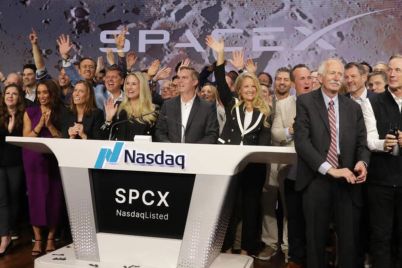
Published: Thursday, June 4, 2026 · 12:03 AM | Updated: Thursday, June 4, 2026 · 10:20 AM
📊 256 views




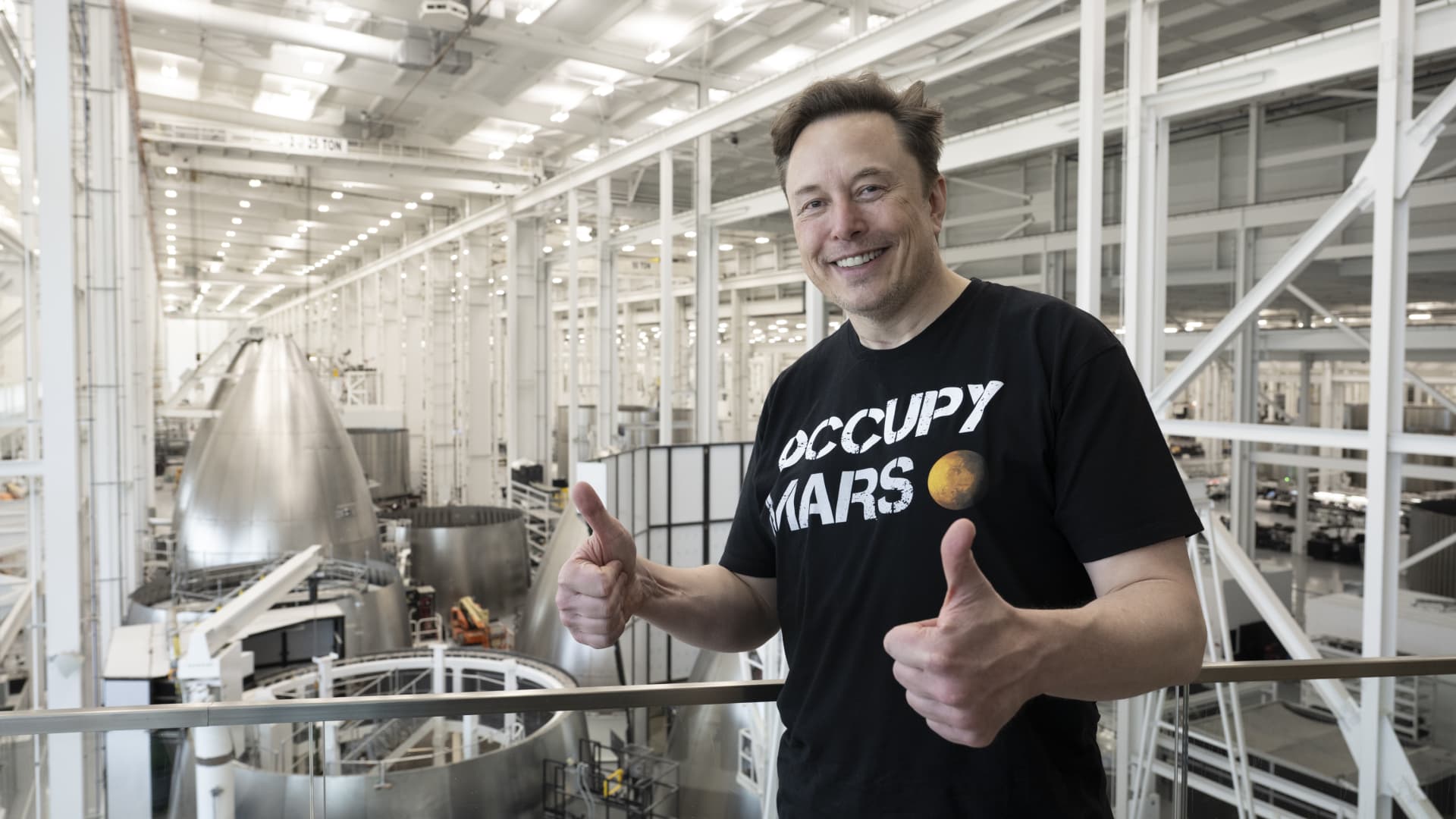
Elon Musk’s SpaceX is on the cusp of a monumental Initial Public Offering, potentially valuing the reusable rocket maker at an astonishing $1.77 trillion. This impending public debut signifies a pivotal moment not only for Musk’s personal wealth, which is projected to surge past the $1 trillion mark, but also for the broader landscape of space technology and its commercial viability. The valuation underscores a significant shift in how the market perceives the potential of space exploration beyond government initiatives.
🚀 Tech Strategy & Market Disruptions
- Valuation Jump. SpaceX’s projected IPO valuation of $1.77 trillion dwarfs many established technology giants, signaling a high market confidence in its long-term growth and disruptive potential in both satellite deployment and future space endeavors.
- Dual-Sector Dominance. Should SpaceX hit its target valuation, Musk would control stakes in two of the eight most valuable U.S. companies, placing him at the forefront of both automotive electrification and private space exploration.
- AI Consolidation Speculation. Rumors of a potential merger between SpaceX and Tesla to consolidate AI resources and streamline capital raises suggest a forward-thinking strategy by Musk to leverage synergies across his technology empires.
The pricing strategy for the SpaceX IPO, set at $135 a share, positions the company for a significant market entry, a stark contrast to its relatively modest revenues of $18.67 billion last year when compared to titans like Meta or Tesla. This premium valuation is clearly anchored in future potential rather than current financial output, reflecting investor faith in SpaceX’s technological roadmap and its ability to capture emerging markets in satellite internet, space tourism, and extraterrestrial colonization. Musk’s substantial ownership, projected to remain above 82% post-IPO, aligns his personal incentives directly with the company’s success, a factor explicitly noted in the prospectus.
This valuation surge for SpaceX highlights a broader trend in the technology market: the increasing investor appetite for companies pioneering frontier technologies. The exponential growth of Elon Musk’s net worth, largely driven by Tesla’s earlier market performance and now bolstered by SpaceX’s prospects, illustrates the profound impact of visionary leadership on asset valuation. While Tesla’s stock experienced significant volatility, its eventual resurgence demonstrates the resilience and long-term potential of disruptive innovation in established sectors.
SpaceX’s Ascent: Fueling Innovation Beyond Earth
The financial milestones being achieved by SpaceX are intrinsically linked to its technological advancements. The company’s reusable rocket technology has drastically reduced the cost of space access, paving the way for ambitious projects like the Starlink satellite constellation and potential human missions to Mars. The prospectus’s mention of compensation rewards tied to milestones like a $7.5 trillion market cap and Mars colonization underscores the audacious, long-term vision driving the company. This approach to incentivization, while extreme, reflects the high-risk, high-reward nature of pioneering deep space technologies and establishing a multi-planetary future, a narrative that resonates strongly with a speculative market.
- Elon Musk’s projected net worth approaching $1 trillion marks a new echelon of personal wealth tied to technological innovation.
- SpaceX’s IPO valuation, set at $1.77 trillion, significantly outpaces its current revenue, emphasizing future growth potential.
- The company’s compensation structure, linked to ambitious goals like Mars colonization, signals a long-term, high-stakes strategy.
The potential merger speculation between SpaceX and Tesla is a fascinating aspect of this unfolding narrative. Such a consolidation could indeed create powerful synergies, particularly in the realm of artificial intelligence and autonomous systems, which are critical for both advanced automotive manufacturing and long-duration space missions. Streamlining capital raises and consolidating R&D efforts could accelerate development timelines, offering a competitive edge in rapidly evolving technology sectors. Understanding the underlying architecture of these interconnected ventures is key to grasping their future scalability.
The projected financial scale of the SpaceX IPO demonstrates a market ready to invest heavily in ambitious, long-term technological visions, particularly those that promise to redefine industry boundaries and create entirely new markets beyond Earth. This is innovation-driven growth at its most audacious.
SpaceX Platform Architecture: Beyond Rockets
SpaceX’s operational backbone is a testament to sophisticated engineering and scalable systems. The core of its innovation lies in its proprietary rocket designs, such as the Falcon 9 and Starship, which are engineered for rapid reuse and modularity. This focus on reusability is not merely an engineering feat but a foundational element of its business strategy, drastically lowering the cost per launch. The Starlink constellation, a vast network of satellites designed to provide global broadband internet, represents a significant expansion into terrestrial services, requiring robust ground infrastructure and advanced network management. This dual approach—mastering space launch while simultaneously building a substantial earth-bound service—positions SpaceX uniquely within the technology landscape. Its approach to cloud infrastructure and data management for its satellite network is critical for ensuring seamless connectivity and continuous service improvement, a key aspect of its overall platform architecture. For insights into similar technological advancements, exploring emerging technologies offers valuable context.
SpaceX Market Adoption Challenges
Despite the immense valuation and groundbreaking technology, SpaceX faces considerable market adoption challenges, particularly concerning its terrestrial ventures like Starlink. While the service promises ubiquitous connectivity, competition from established internet providers and other satellite internet services is intensifying. Furthermore, the sheer scale of the Starlink constellation, with thousands of satellites planned, raises concerns about orbital debris and long-term space sustainability, a topic gaining traction within global technology discussions. Regulatory hurdles in different countries for offering internet services also present a complex landscape to navigate. The success of SpaceX’s broader market penetration hinges not just on its launch capabilities but also on its ability to deliver reliable, affordable services and to proactively address environmental and regulatory concerns, making its ecosystem expansion potential a critical factor.
SpaceX’s Billion-Dollar Trajectory: A New Era for Space Commerce
The impending SpaceX IPO heralds a new phase of commercial space exploration, demonstrating that ambitious technological goals can translate into immense financial value. This event is set to redefine public market perceptions of space-based industries, potentially catalyzing further investment and innovation in areas ranging from deep space resource utilization to orbital manufacturing.
- The SpaceX IPO represents a monumental validation of private sector investment in space technology.
- It signals a significant shift in market valuation, prioritizing future potential and disruptive capabilities.
- The event is likely to inspire further innovation and investment across the entire space economy.
What fundamental technological advancements will be required to sustain such valuations and deliver on the promise of Mars colonization and beyond?
📊 StockXpo Analyst’s View
Market Impact: The SpaceX IPO is poised to inject significant liquidity and speculative interest into the broader technology and aerospace markets. Investor sentiment will likely shift towards companies with ambitious, long-term technological visions, potentially increasing valuations across the sector. The immense success of this IPO could also lead to increased scrutiny on the financial models of other high-growth, pre-revenue technology firms.
Sector To Watch: The immediate beneficiaries will be companies involved in satellite technology, advanced materials, AI, and aerospace manufacturing. Furthermore, expect increased investor focus on companies exploring next-generation energy solutions and sustainable resource management, given the forward-looking nature of SpaceX’s ambitions.
Financial Disclaimer:
StockXpo.com is a financial news aggregator and educational portal, not a registered investment advisor or broker-dealer. All information, news, and analysis provided herein are strictly for educational purposes and do not constitute investment, financial, legal, or tax advice. Investing in the stock market involves high risks, and past performance is not indicative of future results. StockXpo will not be liable for any financial losses or investment damages. Always consult a certified financial advisor before making market decisions.
MORE IN INSIDE TECHNOLOGY

AI Legal Tech: Revolutionizing Billing and Training in Law with Innovation
Published: Saturday, October 10, 2026 · 2:58 AM

Starlink India: Regulatory Hurdles and Innovation-Driven Growth Risks
Published: Friday, October 9, 2026 · 12:48 AM