Published: Friday, June 26, 2026 · 11:14 AM | Updated: Friday, June 26, 2026 · 11:14 AM
📊 232 views




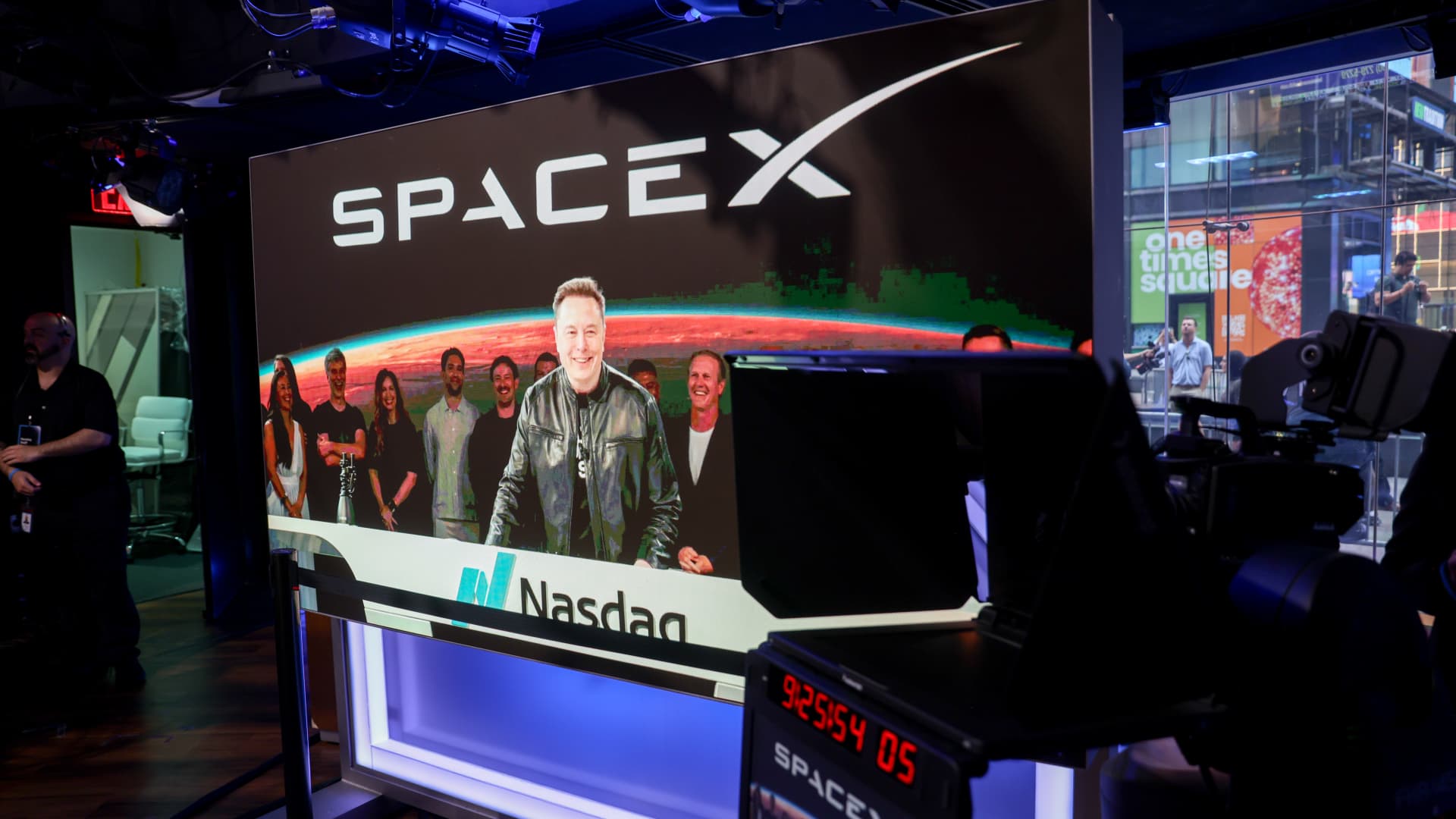
SpaceX’s public debut has been a dramatic market spectacle, with its stock experiencing a whirlwind of surges and sharp declines. This intense volatility underscores the unique challenges and opportunities for a company powered by ambitious long-term narratives rather than immediate financial fundamentals, profoundly influencing broader technology market trends.
🚀 Tech Strategy & Market Disruptions
- Extreme Market Fluctuations. SpaceX’s stock surged over 60% post-IPO, momentarily surpassing tech giants like Amazon and Microsoft in market cap, before significant double-digit percentage drops introduced substantial volatility.
- Narrative-Driven Valuation. Unlike traditional earnings-based valuations, SpaceX trades heavily on futuristic expectations such as Mars colonization and space-based data centers, fueled by its celebrity founder.
- Retail Investor Influence & Long-term Headwinds. Retail investors flocked to the IPO, drawn by the transformative technology story, yet the company faces future share supply increases and massive capital requirements amid its current loss-making status.
Following a record-breaking IPO, SpaceX’s initial weeks as a public company have been nothing short of a rollercoaster. Shares initially soared, at one point outstripping the market capitalizations of Amazon and Microsoft, with a peak rally exceeding 60% above its $135 initial share offering price. This bullish momentum, however, quickly reversed, giving way to daily declines of 5% and 4%, culminating in a notable 16% slump as broader market jitters began to surface.
The significant market swings highlight the distinctive nature of a ‘story-driven stock’ like SpaceX. Gil Luria, head of technology research at D.A. Davidson, observed that ‘Elon Musk companies don’t really do that’ when comparing them to traditional stocks valued on earnings multiples. Instead, Musk’s ventures, including Tesla with its Robotaxi and Optimus projects, are largely traded on future expectations rather than current operational metrics, a dynamic also driving SpaceX’s valuation based on the promise of Mars exploration or vast data centers in space. This narrative-driven trading pattern is frequently observed in high-growth sectors, a trend widely covered across leading financial news outlets such as Bloomberg Technology.
This forward-looking narrative captivated retail investors, who purchased a net $405 million in SpaceX shares during its first five trading sessions, marking the strongest retail IPO debut in recent history, according to research firm Vanda. Viraj Patel, global macro strategist at Vanda, noted that SpaceX embodies qualities that deeply resonate with retail investors: a vision of a transformative future, groundbreaking technology, a prominent founder, and intense media coverage. Mike Coop, chief investment officer, EMEA at Morningstar Wealth, further linked this phenomenon to the ‘cult of Elon,’ which amplifies retail investor interest and market hype, mirroring past experiences with Tesla’s share price volatility. Notably, Morningstar analysts previously stirred controversy by suggesting SpaceX was worth significantly less than half of its projected $1.75 trillion target valuation.
After an initial surge, market fundamentals began to assert greater influence, leading to a ‘hangover’ effect, as Kyle Rodda, senior market analyst at Reuters Technology, described. Despite the company’s current financial position – an $18.7 billion revenue in 2025 with a $4.9 billion net loss, and a $4.28 billion loss in the first quarter of 2026 – Musk has projected an ambitious $1 trillion in revenue by 2030. Such targets place immense pressure on future performance and technological execution.
Coop highlighted two primary long-term market challenges for SpaceX:
- An anticipated increase in share supply as early investors seek to monetize their gains.
- The current valuation being excessively high given the profound uncertainties surrounding its future prospects and its significant capital requirements amidst substantial losses.
Despite these concerns, major investors, including Michael Burry of ‘The Big Short’ fame, have remained hesitant to bet against the stock, citing the prohibitive cost of options for shorting the company. This reluctance, coupled with a general fear among many to oppose Musk, suggests the narrative power continues to influence market sentiment, even amid skepticism regarding its near-term financial viability.
SpaceX’s pioneering reusable rocket technology and ambitious Starlink satellite constellation exemplify a profound disruption in the aerospace sector. This technological leap has directly led to significantly lower launch costs, fostering increased accessibility to space for various applications, which in turn fuels the market for satellite internet and beyond-Earth logistics. This innovation-driven accessibility creates a feedback loop, attracting more private and public sector investment into space economy startups, intensifying competition, and accelerating the pace of cosmic exploration and exploitation. The resulting market disruption forces legacy aerospace companies to innovate or face obsolescence, reshaping defense, communications, and scientific research.
‘The valuation model for companies like SpaceX, driven by aspirational narratives rather than conventional P/E ratios, represents a new frontier in market psychology. For a CTO, this signifies the imperative to translate visionary technology into tangible, scalable revenue streams, even as market perception fluctuates wildly. The true innovation lies in making the seemingly impossible commercially viable, and that demands a robust, adaptable underlying tech stack capable of enduring extended periods of significant R&D investment and operational losses.’
| Metric | Value | Period/Source |
|---|---|---|
| Initial Share Offering Price | $135 | IPO Debut |
| Peak Market Cap Comparison | Briefly surpassed Amazon & Microsoft | Post-IPO Rally |
| Retail Investor Net Buy | $405 million | First 5 Trading Sessions (Vanda) |
| 2025 Revenue | $18.7 billion | Company Filings |
| 2025 Net Loss | $4.9 billion | Company Filings |
| Q1 2026 Net Loss | $4.28 billion | Company Filings |
| Musk’s 2030 Revenue Target | ~$1 trillion | June 14th Statement |
SpaceX Market Adoption Challenges: Bridging Vision and Reality
The ambitious scope of SpaceX’s vision, from Mars colonization to global satellite internet, presents inherent market adoption challenges. While the ‘cult of Elon’ effectively galvanizes early retail investor interest and media attention, translating grand narratives into consistent, profitable revenue streams that justify such elevated valuations requires overcoming substantial technical, logistical, and regulatory hurdles. The commercial viability of projects like Starship for deep-space transport and Starlink for ubiquitous broadband depends on achieving mass-market scale at cost points that significantly undercut existing solutions, a feat that is easier said than done. Furthermore, competition from established players and emerging startups in the rapidly evolving space economy, alongside potential regulatory scrutiny over orbital debris or spectrum allocation, will continuously test SpaceX’s ability to maintain its competitive edge and sustain long-term growth.
SpaceX Ecosystem Expansion Potential: Beyond Low Earth Orbit
SpaceX’s long-term value proposition extends far beyond its current launch and satellite internet services, tapping into immense ecosystem expansion potential. The development of Starship, for instance, aims to enable lunar and Martian missions, opening entirely new markets for space tourism, resource extraction, and off-world infrastructure development. Starlink’s vast constellation also provides a backbone for a future inter-satellite network, potentially disrupting global data transmission and cybersecurity paradigms. These initiatives signify a concerted effort to build a self-sustaining space economy, where the company’s various ventures — from manufacturing rockets to delivering orbital services and eventually establishing extraterrestrial bases — can feed into and reinforce one another. This integrated approach to space utilization positions SpaceX not just as a launch provider, but as an architect of humanity’s multi-planetary future, a critical component of emerging technologies.
SpaceX’s Valuation: Navigating the Gravitational Pull of Future Expectations
SpaceX’s initial public market journey powerfully illustrates the tension between revolutionary technological promise and traditional financial valuation metrics. While its market debut was characterized by extreme volatility driven by a charismatic founder and bold visions, underlying fundamentals reveal a company still in heavy investment and loss-making phases. The path ahead will demand consistent execution on highly complex projects to justify current and future expectations.
- The influence of ‘story stocks’ and celebrity founders on market behavior will persist, creating outsized short-term swings.
- Long-term investors must weigh the extraordinary technological potential against significant capital requirements and prolonged profitability timelines.
- SpaceX’s success hinges on transforming its audacious sci-fi ambitions into demonstrable, scalable commercial operations.
Can the sheer force of innovation and aspirational narratives ultimately outweigh the gravitational pull of traditional financial scrutiny?
📊 StockXpo Analyst’s View
Market Impact: The intense volatility surrounding SpaceX’s IPO signals a growing appetite for high-risk, high-reward innovation plays among retail investors, often decoupled from conventional earnings multiples. This trend could exert upward pressure on valuations for other disruptive technology companies with strong visionary leadership, even if they are pre-profit. It also highlights liquidity challenges for early investors looking to exit.
Sector To Watch: The aerospace and satellite communication sectors are prime for disruption. Companies innovating in reusable rocket technology, advanced satellite manufacturing, and low-latency global broadband will likely see increased investor and competitive interest. However, careful scrutiny of unit economics and long-term capital intensity will be crucial for sustained success in this evolving landscape, as noted in analyses on educational tech insights.
Financial Disclaimer:
StockXpo.com is a financial news aggregator and educational portal, not a registered investment advisor or broker-dealer. All information, news, and analysis provided herein are strictly for educational purposes and do not constitute investment, financial, legal, or tax advice. Investing in the stock market involves high risks, and past performance is not indicative of future results. StockXpo will not be liable for any financial losses or investment damages. Always consult a certified financial advisor before making market decisions.
MORE IN INSIDE TECHNOLOGY
AI Era Innovation: Nadella’s Bold Microsoft Re-Invention
Published: Monday, October 5, 2026 · 7:16 AM

State-Backed Dating App Innovation: Singapore’s Bold Demographic Tech Strategy
Published: Sunday, October 4, 2026 · 3:36 AM