Published: Friday, May 29, 2026 · 4:38 AM | Updated: Friday, May 29, 2026 · 4:38 AM
📊 205 views




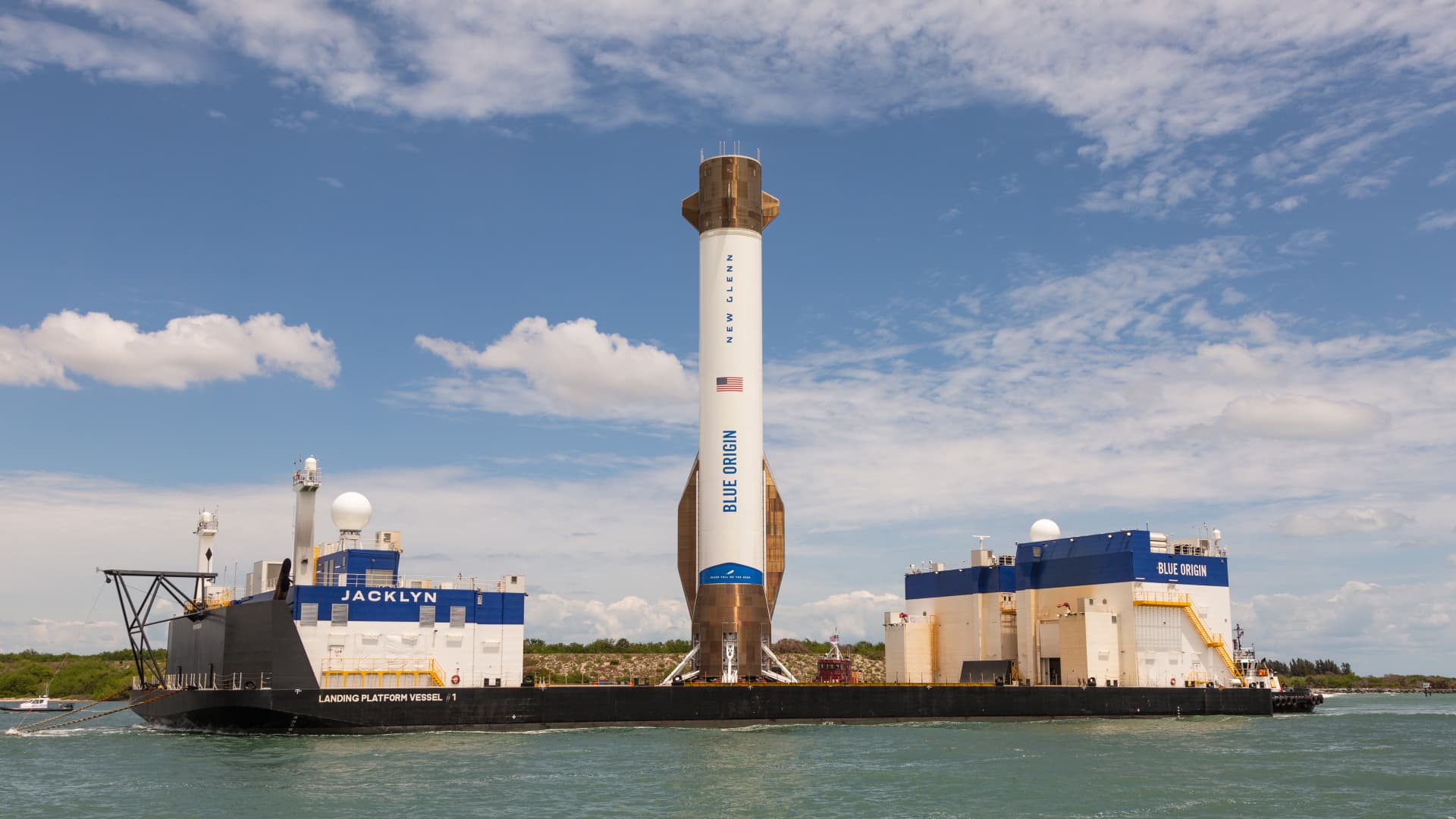
A Blue Origin rocket, specifically the New Glenn, experienced a significant explosion during a hot-fire ground test at a Space Force facility in Cape Canaveral, Florida. This incident, involving Amazon founder Jeff Bezos’s reusable rocket venture, marks a considerable setback in its ambitious efforts to compete with SpaceX and advance space launch capabilities.
The anomaly occurred during a critical phase of pre-flight testing, underscoring the formidable engineering challenges and inherent risks involved in developing heavy-lift launch vehicles for both commercial and government clients, including NASA’s lunar ambitions.
🚀 Tech Strategy & Market Disruptions
- Reusability Roadblocks. The explosion during a ground test highlights the complex engineering hurdles in perfecting reusable rocket technology, a cornerstone of Blue Origin’s strategy to reduce launch costs and gain market share.
- NASA Program Vulnerability. This setback could impact the timelines for NASA’s critical Artemis program and the recently awarded $188 million contract for a Moon Base, demonstrating the interdependencies between government space initiatives and private sector reliability.
- Competitive Pressure Intensifies. As Blue Origin works to resolve this anomaly, rivals like SpaceX, already with a demonstrated track record of successful launches and reusability, stand to gain further competitive advantage in the burgeoning space economy.
Blue Origin’s founder, Jeff Bezos, swiftly confirmed that all personnel were safe, stating on social network X that the company would investigate the ‘root cause’ and ‘rebuild whatever needs rebuilding.’ The Brevard County Emergency Management office assured the public there was ‘no threat,’ describing the event as an ‘anomaly.’ This incident follows closely on the heels of NASA Administrator Jared Isaacman’s praise for Blue Origin’s crucial role in the Artemis program and the significant lunar base contract.
The explosion of the Blue Origin rocket underscores the harsh realities of spaceflight development. While hot-fire tests are designed to identify potential weaknesses under controlled conditions, such failures necessitate a comprehensive review of engineering designs, materials science, and operational protocols. This process inherently leads to delays, affecting not only Blue Origin’s internal timelines but also its commitments to clients and partners, including crucial government contracts. For investors keen on analyzing technology market trends, this incident presents a reminder of the inherent volatility.
From a CTO perspective, this ‘anomaly’ serves as a critical learning event, highlighting that even in highly engineered systems, unforeseen variables can emerge during real-world testing. The focus must immediately shift to meticulous root cause analysis, ensuring that iterative design improvements enhance overall system resilience and safety for future missions.
Elon Musk, CEO of competitor SpaceX, commented on X, ‘Most unfortunate. Rockets are hard,’ reflecting a shared understanding of the technical challenges in the sector. NASA, while expressing awareness of the incident, reiterated the difficulty of developing new heavy-lift capabilities and pledged support for a thorough investigation to assess any impacts on its Artemis and Moon Base programs.
- The New Glenn is Blue Origin’s heavy-lift orbital launch vehicle, designed for a variety of missions including satellite deployment and deep space exploration.
- The company is a key partner in NASA’s Artemis program, an initiative aimed at returning humans to the Moon.
- Ground-based hot-fire tests are a standard, yet high-risk, part of rocket development, designed to validate engine performance and structural integrity before flight.
This disruption flow initiates with the **unexpected explosion** during a critical test, leading directly to an **immediate operational halt** and a mandated **intensive technical investigation**. This scrutiny will inevitably cause **program delays** for future tests and launches of the Blue Origin rocket, potentially impacting contracted missions. The ultimate outcome could be a **recalibration of market expectations** regarding private space sector timelines and an intensified focus on reliability within the commercial space race.
Blue Origin Market Adoption Challenges
Securing broad market adoption for a new heavy-lift launch vehicle like the Blue Origin rocket necessitates a flawless execution record and competitive pricing. The commercial space launch market is fiercely competitive, with SpaceX currently dominating in terms of launch cadence and cost-effectiveness. Incidents like the recent explosion, while part of the development process, can erode confidence among potential customers, causing them to reconsider their launch providers. Blue Origin’s strategy to capture market share will hinge on not only the technical prowess of its New Glenn but also its ability to demonstrate consistent reliability and adherence to revised schedules, requiring robust strategies in emerging technologies.
Blue Origin Security & Infrastructure Strength
Ensuring the security and robust infrastructure of its test and launch facilities is paramount for Blue Origin, especially when dealing with volatile rocket fuel and powerful engines. The fact that all personnel were accounted for and safe following the explosion suggests that emergency protocols and immediate response systems were effective. However, the incident will undoubtedly lead to a rigorous review of physical infrastructure, containment systems, and digital controls that manage the test sequences. Strengthening infrastructure resilience and bolstering cybersecurity measures for complex launch operations remain continuous priorities in the highly regulated space industry, impacting global technology news.
Assessing the New Glenn Rocket’s Trajectory After Setback
The explosion of a Blue Origin rocket’s first stage during a ground test represents a significant, yet not insurmountable, obstacle in its path to commercial readiness. This event will undoubtedly force a period of intensive re-evaluation and refinement, ultimately contributing to a more robust final product.
- Engineering Deep Dive: Expect a thorough analysis to uncover specific failure points, driving improvements in material science and engine design.
- Adjusted Timelines: Both internal development and external customer launch schedules are likely to experience revisions.
- Focus on Resilience: The incident will reinforce Blue Origin’s commitment to building highly resilient systems and robust safety protocols.
What critical innovations will emerge from Blue Origin’s post-incident analysis to redefine safety and reliability standards for future space launches?
📊 StockXpo Analyst’s View
Market Impact: The Blue Origin rocket anomaly injects a degree of uncertainty into the commercial space sector’s immediate growth projections. While the company is privately held, delays in its New Glenn program could impact the broader ecosystem of satellite manufacturers and space infrastructure providers. Investors in the aerospace supply chain should monitor the ripple effects on related public companies. For those seeking educational tech insights, the event highlights capital-intensive R&D risks.
Sector To Watch: The space launch services sector will be under intense scrutiny. While SpaceX maintains its lead, the long-term viability of other players like Blue Origin is crucial for diversification and competition. Companies involved in advanced propulsion, autonomous testing systems, and space insurance might see increased demand for enhanced solutions and risk mitigation strategies.
Financial Disclaimer:
StockXpo.com is a financial news aggregator and educational portal, not a registered investment advisor or broker-dealer. All information, news, and analysis provided herein are strictly for educational purposes and do not constitute investment, financial, legal, or tax advice. Investing in the stock market involves high risks, and past performance is not indicative of future results. StockXpo will not be liable for any financial losses or investment damages. Always consult a certified financial advisor before making market decisions.
MORE IN INSIDE TECHNOLOGY

AI Legal Tech: Revolutionizing Billing and Training in Law with Innovation
Published: Saturday, October 10, 2026 · 2:58 AM

Starlink India: Regulatory Hurdles and Innovation-Driven Growth Risks
Published: Friday, October 9, 2026 · 12:48 AM