Published: Friday, May 29, 2026 · 2:07 AM | Updated: Friday, May 29, 2026 · 2:07 AM
📊 254 views




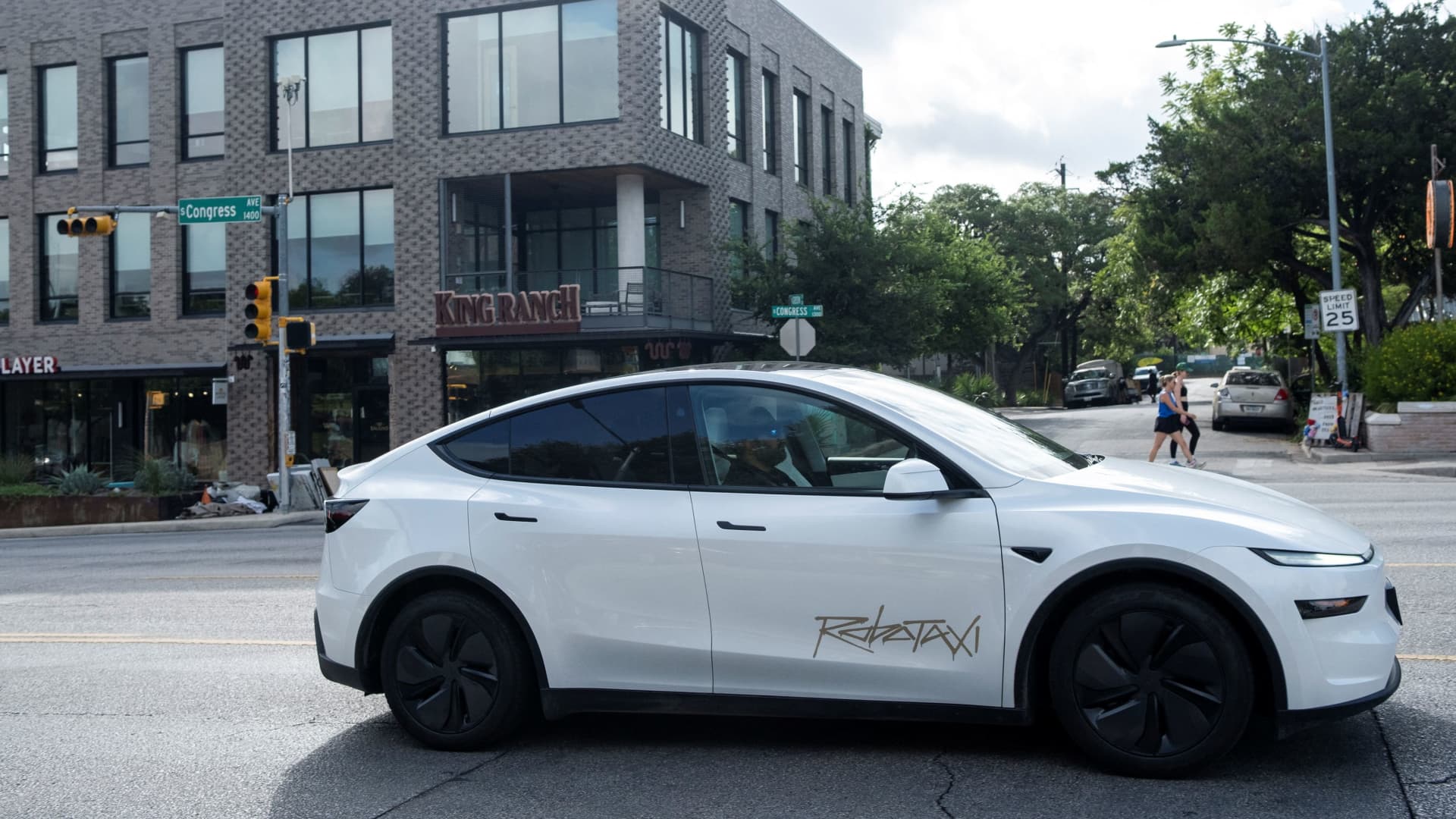
New state filings in Texas reveal that Tesla’s ambitious driverless Robotaxi fleet is a fraction of its leading competitor, Waymo, underscoring significant scalability challenges. This development emerges as Texas implements new regulations, forcing autonomous vehicle operators to self-certify their technology to SAE Level 4 standards, a move that could redefine market leadership in the burgeoning robotaxi sector.
🚀 Tech Strategy & Market Disruptions
- Fleet Disparity: Tesla’s Robotaxi fleet in Texas stands at 42 vehicles, significantly dwarfed by Waymo’s 577, highlighting a substantial lead for Alphabet’s subsidiary.
- Regulatory Shift: New Texas legislation requires Level 4 self-certification, pushing operators to align with higher autonomous driving standards previously not mandated, directly impacting operational compliance.
- Competition Intensifies: Tesla faces stiff competition not only from Waymo but also from smaller players like AV Ride and Amazon’s Zoox, complicating its path to market dominance in autonomous ride-hailing.
The competitive landscape for autonomous vehicles in Texas has sharpened considerably with the recent release of state Department of Motor Vehicles data. These filings reveal that the Tesla Robotaxi fleet, with 42 authorized vehicles for driverless ride-hailing, is struggling to gain traction against established players. In stark contrast, Alphabet’s Waymo operates a fleet of 577 robotaxis in the state, holding a substantial lead that signals a mature operational capability. This discrepancy is particularly notable given Tesla CEO Elon Musk’s strong emphasis on autonomous driving as a core pillar of the company’s future growth strategy, especially as the electric vehicle market sees intensified competition. Tesla’s approach to autonomous certification has historically been conservative, labeling most of its systems as Level 2 driver assistance. However, the company has now self-certified 42 vehicles as Level 4 for its Texas operations, a shift that raises questions about the underlying technology and its regulatory alignment, especially since Tesla has not disclosed how these vehicles meet the SAE Level 4 criteria.
This regulatory evolution is spurred by a new Texas law, effective May 28, which grants the state increased oversight over commercial driverless vehicle operations. The mandate requires operators, including Tesla and Waymo, to self-certify their AVs as Level 4, indicating an ability to operate without human intervention under normal conditions. Waymo has consistently identified its vehicles as Level 4, a standard it has long aimed to meet across its expanding U.S. commercial fleet, which now nears 4,000 vehicles. For an in-depth look at emerging technologies, explore our insights on the latest tech innovations. Industry analysts at Bloomberg Technology frequently highlight the significant gap in operational scale.
Incidents involving Tesla’s Austin fleet further underscore the challenges. Records filed with the National Highway Traffic Safety Administration indicate 17 known incidents between July 2025 and April 2026, two of which resulted in minor injuries, even with human safety supervisors present. This data suggests that while autonomous technology promises a future free of human error, the path to flawless execution remains complex and fraught with operational realities. The disparity in fleet size and incident reporting highlights the rigorous development and testing required for robust Level 4 autonomy, an area where Waymo appears to have a considerable head start.
The new Texas law requiring Level 4 self-certification acts as a significant regulatory catalyst, which in turn elevates the operational barrier for autonomous vehicle companies. This higher standard means only truly robust, independently capable systems can scale, thereby intensifying the competitive pressure on companies like Tesla that are still defining their Level 4 capabilities. The result is a potential reshuffling of market leadership, where incumbents with proven Level 4 technology gain a decisive advantage, potentially disrupting the market share of those who are lagging in certification and deployment.
‘The ability to confidently self-certify Level 4 autonomy is not merely a regulatory checkbox; it reflects a deep maturity in a company’s sensor fusion, perception stacks, and redundant safety systems. This threshold defines who can truly scale driverless operations safely and efficiently, setting the pace for market dominance in autonomous mobility,’ stated a lead solution architect at StockXpo.com.
| Operator | Authorized AVs (Texas) | SAE Level Claim |
|---|---|---|
| Waymo (Alphabet) | 577 | Level 4 |
| AV Ride | 317 | Level 4 (Implied) |
| Tesla | 42 | Level 4 (Self-certified for Texas fleet) |
| Zoox (Amazon) | 35 | Level 4 (Implied) |
Addressing Tesla Robotaxi Market Adoption Challenges
Tesla’s path to widespread Robotaxi adoption faces several critical hurdles beyond fleet size. Public perception, safety record, and regulatory clarity are paramount. While Elon Musk aggressively champions the vision, the transition from advanced driver-assistance systems (ADAS) to true Level 4 autonomy is not merely a software update; it requires exhaustive validation, incident-free operations, and transparent communication with regulators and the public. The 17 incidents in its Austin fleet, even with human supervision, highlight the steep learning curve and the imperative for absolute reliability before widespread driverless trust can be established. Moreover, integrating autonomous ride-hailing into urban infrastructure demands robust mapping capabilities and partnerships, areas where Waymo has demonstrated a more methodical and transparent build-out. To stay informed on technology market trends, visit StockXpo.
Unlocking Tesla’s Ecosystem Expansion Potential in Autonomy
Despite current challenges, Tesla’s long-term ecosystem expansion potential in autonomous driving remains significant, largely due to its vast fleet of vehicles on the road collecting real-world data. This data flywheel, if effectively leveraged for Level 4 development, could accelerate its progress. The strategy hinges on two key factors: converting its existing customer base into early adopters for Robotaxi services and horizontally integrating autonomous technology into diverse applications beyond ride-hailing, such as automated logistics. However, realizing this potential demands a pivot from its current ADAS-centric narrative to a clearly defined, verifiable Level 4 architecture that can withstand intense regulatory scrutiny and direct competition. Partnerships with urban planners and local authorities will also be crucial for seamless integration and public acceptance. For more educational tech insights, delve into our latest blog articles.
Tesla’s Robotaxi Ambitions: A Crossroads in Autonomy
Tesla’s foray into the Robotaxi market, particularly in Texas, is currently defined by a significant gap between ambition and operational scale compared to its rivals. While the company’s long-term vision for autonomous vehicles remains a central pillar of its growth, the immediate future demands rigorous execution and clear regulatory compliance to bridge this disparity.
- Tesla’s current operational footprint in Texas is minimal compared to Waymo, suggesting a need for accelerated development and deployment.
- The new Level 4 self-certification requirement in Texas marks a critical regulatory benchmark, favoring companies with proven high-level autonomy.
- Future growth hinges on Tesla’s ability to demonstrate robust, incident-free Level 4 capabilities and scale its fleet rapidly to compete effectively.
Can Tesla rapidly close the operational gap and truly establish itself as a leader in the autonomous ride-hailing future?
📊 StockXpo Analyst’s View
Market Impact: This news highlights the fragmented and highly competitive nature of the autonomous vehicle market. Waymo’s established lead and robust Level 4 certification position them favorably, potentially attracting further investment confidence in Alphabet’s AV segment. Tesla’s slower scale-up in Robotaxi deployment, combined with regulatory scrutiny, could introduce investor uncertainty regarding its near-term autonomous revenue projections, putting pressure on TSLA shares. It reinforces the view that true Level 4 autonomy is a capital-intensive, long-haul endeavor.
Sector To Watch: The broader mobility-as-a-service (MaaS) sector and its underlying AI and sensor technology providers will be critical. Companies specializing in Lidar, high-definition mapping, and validated AI safety systems stand to gain as regulatory bodies push for higher standards. Traditional automotive OEMs making strategic alliances or investing heavily in their own AV divisions, like those seen with Reuters’ technology coverage, may also see renewed interest as the gap between aspirational and operational autonomy becomes clearer. Additionally, infrastructure development companies supporting EV charging and smart city integration will indirectly benefit from any widespread AV adoption.
Financial Disclaimer:
StockXpo.com is a financial news aggregator and educational portal, not a registered investment advisor or broker-dealer. All information, news, and analysis provided herein are strictly for educational purposes and do not constitute investment, financial, legal, or tax advice. Investing in the stock market involves high risks, and past performance is not indicative of future results. StockXpo will not be liable for any financial losses or investment damages. Always consult a certified financial advisor before making market decisions.
MORE IN INSIDE TECHNOLOGY
AI Legal Tech: Revolutionizing Billing and Training in Law with Innovation
Published: Saturday, October 10, 2026 · 2:58 AM
Starlink India: Regulatory Hurdles and Innovation-Driven Growth Risks
Published: Friday, October 9, 2026 · 12:48 AM