Published: Tuesday, May 26, 2026 · 4:02 PM | Updated: Tuesday, May 26, 2026 · 4:02 PM
📊 234 views




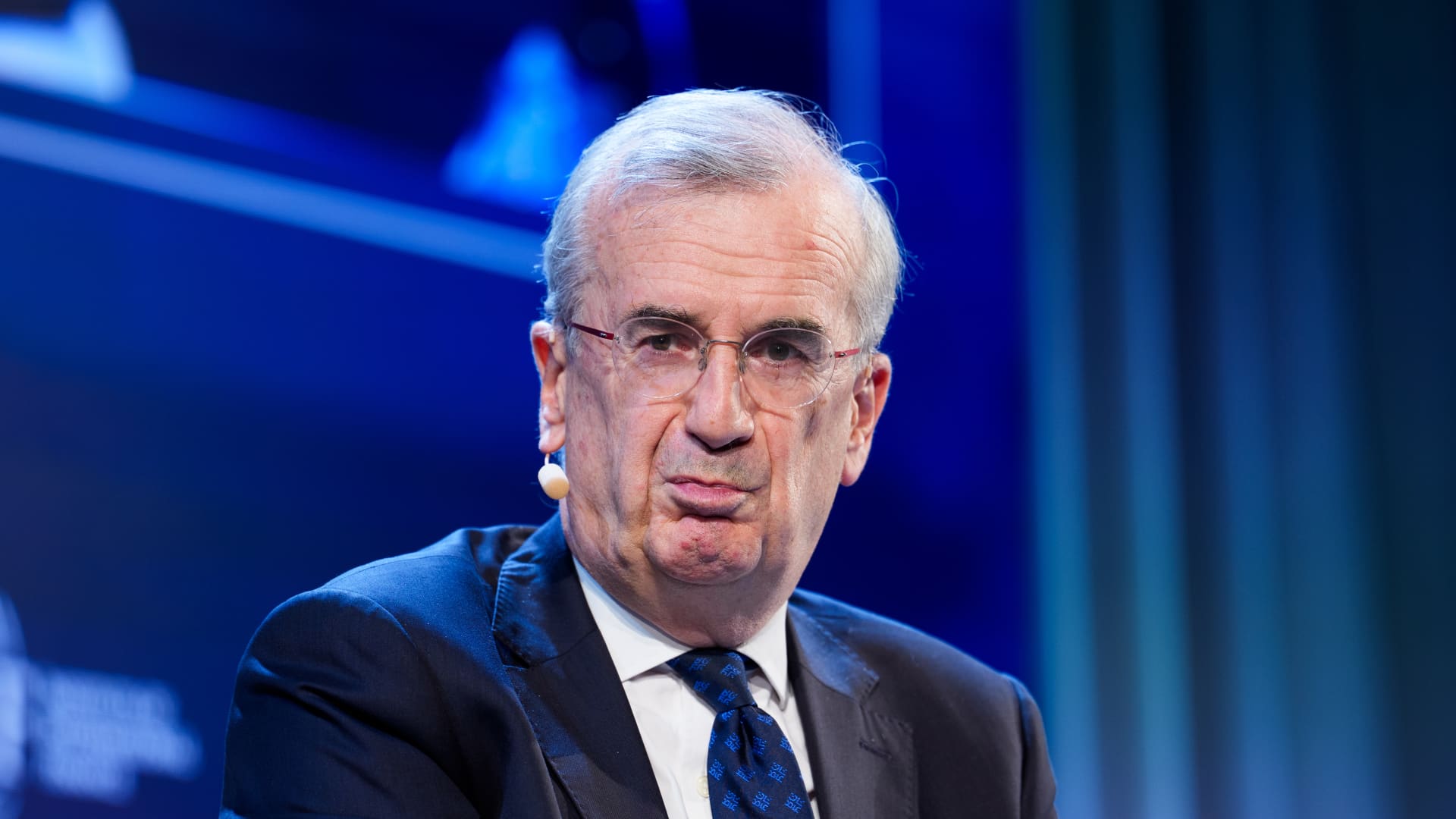
The European Central Bank is signaling an unwavering commitment to price stability, a critical stance reaffirmed by Bank of France Governor Francois Villeroy de Galhau. As geopolitical tensions drive up energy costs, the specter of resurging ECB inflation looms large over the Eurozone, challenging the central bank’s medium-term 2% target and prompting swift policy considerations to safeguard macroeconomic stability.
📊 Macro-Economic Strategic Insights
- ECB’s Firm Stance. The European Central Bank has explicitly committed to ‘do what is necessary’ to bring inflation back to its 2% medium-term target, as articulated by Governor Villeroy de Galhau.
- Energy Shocks Fueling Price Pressures. Rising oil prices, exacerbated by geopolitical conflicts in the Middle East and concerns over the Strait of Hormuz, are seen as the primary catalyst behind the recent jump in Eurozone inflation.
- Vigilance Against Second-Round Effects. Policymakers are closely monitoring wage growth and inflation expectations, dubbed ‘second-round effects,’ to prevent initial energy-driven price increases from becoming entrenched in the broader economy.
The European Central Bank (ECB) finds itself at a critical juncture, navigating renewed inflationary pressures fueled by global geopolitical instability. Francois Villeroy de Galhau, Governor of the Bank of France and a key member of the ECB’s Governing Council, recently asserted that the central bank ‘will do what is necessary’ to restore price stability and achieve its 2% medium-term inflation target. This resolute declaration, made to CNBC, aims to reassure sovereign debt markets amidst a backdrop of escalating energy costs and increased market volatility.
The immediate driver of this concern is the spike in oil prices, largely attributed to heightened tensions in the Middle East, particularly around the Strait of Hormuz. For Europe, a major net energy importer, such shocks are particularly acute, leading to surging prices for gasoline, diesel, and jet fuel. This vulnerability has already prompted government interventions in some countries and warnings of airline flight cancellations, underscoring the broad economic impact.
Eurozone inflation, which had momentarily dipped below the ECB’s 2% target to 1.9% before the recent escalation of conflicts, surged to 3% in April, up from 2.6% in March, according to Eurostat. This rapid acceleration has ignited fears of persistent inflationary pressures, reminiscent of previous energy crises.
The ECB’s challenge lies in distinguishing between transient ‘first-round effects’ from energy price increases and more dangerous ‘second-round effects,’ which involve widespread wage increases and shifts in long-term inflation expectations. Villeroy de Galhau emphasized that while current data primarily suggest first-round effects, extreme vigilance is required to prevent these from becoming embedded.
- Key Data Points Under Scrutiny:
- Underlying inflation excluding volatile energy and food components.
- Inflation expectations from both households and businesses.
- Wage growth trends across member states.
Despite the recent inflation surge, the ECB held its key interest rate steady at 2% last month. This decision was primarily due to the ongoing assessment of whether the inflation spike represented a temporary shock or a more systemic shift requiring monetary tightening. However, market sentiment, reflected in LSEG data, now overwhelmingly anticipates a rate hike at the ECB’s June meeting, with traders pricing in at least a 50 basis point increase by year-end. This expectation is echoed by comments from other ECB policymakers, including President Christine Lagarde, who previously indicated a readiness to adjust policy even for temporary overshoots, and Bundesbank President Joachim Nagel, who noted the ECB’s position between a baseline and an adverse scenario. This consensus highlights the growing imperative for decisive action to manage broader economic trends.
THE RIPPLE EFFECT: Navigating Inflationary Pressures
Geopolitical Tensions ↑ (e.g., Iran War) → Oil Supply Risks ↑ → Crude Oil Prices ↑ → Energy Costs for Businesses & Consumers ↑ → Eurozone Inflation (Headline CPI) ↑ → Inflation Expectations (Businesses & Households) ↑ → Bond Yields ↑ → Market Volatility ↑ → ECB Monetary Policy Hawkishness ↑ → Potential Interest Rate Hikes ↑ → Borrowing Costs ↑ → Investment & Consumer Spending ↓ → Economic Growth Slowdown ↓ → Price Stability Sought ↑.
The concept of ‘second-round inflation effects’ is paramount for central banks. It describes a scenario where initial price shocks, like those from energy, lead to demands for higher wages and a general expectation of ongoing inflation. If these expectations become entrenched, it creates a self-fulfilling prophecy, making inflation far more persistent and difficult to control through monetary policy alone. Preventing this spiral is the ECB’s core commitment.
Recent economic indicators paint a clear picture of the Eurozone’s inflationary challenges:
- Eurozone CPI (April): Jumped to 3% from 2.6% in March, signaling renewed upward pressure on consumer prices.
- ECB Key Interest Rate: Held steady at 2% in the last meeting, reflecting a cautious approach pending clearer data on inflation’s persistence.
- German 10-Year Bund Yield: Surged by approximately 32 basis points since the conflict began, indicating investors are pricing in higher inflation and more aggressive monetary policy.
Eurozone Inflationary Risks: Navigating the Energy Shock
Europe’s reliance on energy imports leaves it acutely vulnerable to global supply shocks, a reality starkly highlighted by the recent escalation in oil prices. The effective closure of key shipping routes or threats to production can quickly translate into higher domestic energy bills, impacting industrial production and household purchasing power. This structural vulnerability means that while the ECB focuses on monetary tools, fiscal policies in member states will also play a crucial role in mitigating the immediate burden on consumers and businesses, though care must be taken to avoid exacerbating underlying demand-side inflation. Understanding these nuanced risks is essential for any long-term investment analysis.
Global Benchmarking: How ECB Stance Compares
Compared to other major central banks, the ECB’s current policy stance reflects a delicate balance. While the U.S. Federal Reserve has also grappled with inflation, its energy independence offers a different dynamic. The ECB’s emphasis on medium-term targets and vigilance against second-round effects aligns with a cautious, data-dependent approach, similar to the Bank of England’s recent communications. However, Europe’s unique exposure to geopolitical energy shocks means the ECB’s reaction function might need to be more agile in the short term, potentially outpacing some peers if inflation becomes entrenched. Investors often compare these approaches when assessing global stock markets and bond market movements. For more insights, a detailed look at global economic policies can be found on Bloomberg Economics.
The Path Forward for ECB Inflation Control Amidst Global Headwinds
The European Central Bank’s firm pledge to control ECB inflation underscores its commitment to navigating a complex economic landscape. While immediate energy-driven price pressures are evident, the decisive factor for future monetary policy will be the extent of second-round effects—specifically, how wage growth and inflation expectations react. This period demands acute vigilance and a readiness to act, as market participants increasingly anticipate tighter monetary conditions.
- The ECB’s resolve signals potential interest rate hikes as early as June, reinforcing a commitment to its 2% inflation target.
- Investors should prepare for continued volatility in government bond markets and reassess growth forecasts for import-dependent European sectors.
- The effectiveness of the ECB’s strategy hinges on its ability to prevent energy price shocks from translating into a broader, entrenched inflationary cycle.
Will the ECB’s robust stance be sufficient to anchor inflation expectations and restore sustainable price stability in the Eurozone?
📊 StockXpo Analyst’s View
Market Impact: The ECB’s hawkish tone, while crucial for long-term stability, will likely inject further volatility into European equity and bond markets. Higher interest rate expectations will strengthen the Euro, but could weigh on highly leveraged companies and consumer discretionary sectors. Bond yields will continue their upward trajectory, potentially impacting corporate borrowing costs and sovereign debt sustainability. Investors may shift towards defensive assets or those with strong pricing power.
Sector To Watch: The energy sector, particularly diversified players and renewable energy infrastructure, may see continued interest due to sustained high prices and Europe’s drive for energy independence. Conversely, sectors heavily reliant on consumer spending or with significant energy input costs, like airlines and manufacturing, could face headwinds, making careful stock market analysis crucial. For broader educational insights, explore the StockXpo blog. Additional context on Europe’s economic outlook can be found via Reuters Economy.
Financial Disclaimer:
StockXpo.com is a financial news aggregator and educational portal, not a registered investment advisor or broker-dealer. All information, news, and analysis provided herein are strictly for educational purposes and do not constitute investment, financial, legal, or tax advice. Investing in the stock market involves high risks, and past performance is not indicative of future results. StockXpo will not be liable for any financial losses or investment damages. Always consult a certified financial advisor before making market decisions.
MORE IN INSIDE ECONOMY

AI Concentration Risks Loom as East Asia & Pacific Sees 4.5% Growth Outlook
Published: Tuesday, October 6, 2026 · 1:56 AM

Western Populations’ Shrinkage: A Looming Fiscal Warning by 2029
Published: Monday, October 5, 2026 · 3:15 AM