
Published: Thursday, June 18, 2026 · 1:47 PM | Updated: Thursday, June 18, 2026 · 1:47 PM
📊 238 views




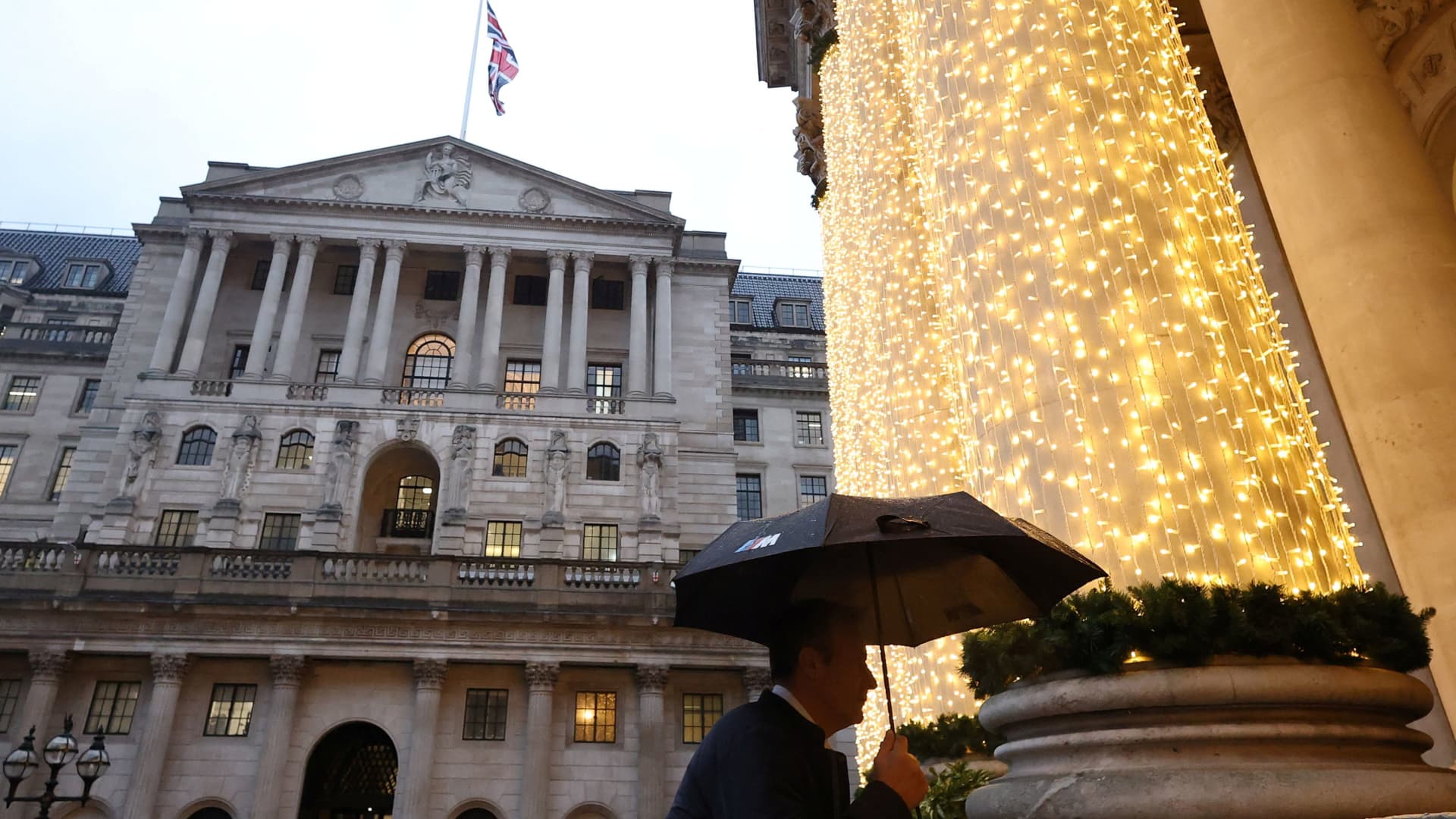
The Bank of England’s Monetary Policy Committee has once again opted to hold its key interest rate at 3.75%, a decision reflecting a delicate balancing act between persistent inflationary pressures and a stagnant economic outlook. This latest move comes as global energy markets grapple with the aftershocks of the Iran war, presenting a complex challenge for central banks worldwide aiming for economic stability.
📊 Macro-Economic Strategic Insights
- Rates Held Steady: The Bank of England maintained its base rate at 3.75%, aligning with market expectations despite internal dissent for a hike.
- Inflationary Headwinds: Above-target inflation, fueled by elevated energy costs from the Iran war, continues to challenge the UK economy, a net energy importer.
- Growth Stagnation: Alongside inflation concerns, the UK economy contracted by 0.1% in April, indicating broader macroeconomic weakness.
London — The Bank of England’s decision to keep its benchmark interest rate at 3.75% on Thursday underscores the tightrope policymakers are walking as they attempt to curb inflation without stifling an already struggling economy. Seven of the nine Monetary Policy Committee (MPC) members voted for the hold in their May meeting, signaling a consensus to observe the impact of past tightening measures and evolving global dynamics. However, chief economist Huw Pill and external member Megan Greene dissented, advocating for a 25 basis point hike, highlighting the internal debate over the appropriate response to current economic conditions.
The global economic landscape remains heavily influenced by geopolitical events. The ongoing impact of the Iran war on energy prices has created significant inflationary pressures across major economies, with the UK being particularly vulnerable due to its reliance on energy imports. While headline inflation cooled to 2.8% in May, this was largely attributed to a temporary shift in the UK’s regulated energy price cap. This reprieve is expected to be short-lived, with the cap slated to rise by 13% later this summer, pushing energy costs to a two-year high.
Adding to the complexity, recent data revealed the UK economy unexpectedly shrank by 0.1% in April, indicating a contraction that further complicates the central bank’s mandate. The Bank of England acknowledges that while monetary policy cannot directly influence global energy prices, its role is to ensure that these external shocks do not translate into persistent, long-lasting domestic inflation. The committee remains in a watchful mode, monitoring the situation closely as the broader effects of sustained high energy prices ripple through various sectors. Key drivers of persistent UK inflation include:
- Elevated global energy costs directly impacting household bills.
- Rising transportation fuel prices, contributing to broader cost-push inflation.
- The anticipated increase in the domestic energy price cap later in the summer.
Despite the recent breakthrough in peace negotiations between Washington and Tehran, which saw U.S. President Donald Trump and Iranian President Masoud Pezeshkian electronically sign a 14-point Memorandum of Understanding, markets are still factoring in the probability of a rate hike by the end of the year, according to LSEG figures. The closure of the Strait of Hormuz has kept oil prices elevated, acting as a critical choke point for global crude shipments and perpetuating cost pressures. For deeper insights into market movements, consider visiting StockXpo’s investment analysis section.
The interplay of global events and domestic policy creates a discernible ripple effect across the economy:
- Elevated Energy Prices → Higher Production Costs & Consumer Bills → Reduced Disposable Income & Business Margins.
- Stagnant Economic Output → Lower Business Confidence & Investment → Potential Job Losses & Reduced Spending.
- Hawkish Central Bank Stance (even on hold) → Sustained High Borrowing Costs → Slower Demand Growth & Debt Servicing Challenges.
- Geopolitical Peace Prospects → Potential Easing of Energy Prices → Reduced Inflationary Pressure & Improved Consumer Sentiment.
Monetary policy in a globally interconnected world often involves navigating ‘imported inflation.’ This refers to price increases driven by external factors like commodity prices or supply chain disruptions, which domestic central banks can’t directly control but must manage to prevent second-round effects on wages and services.
Key Economic Indicators: A Snapshot
Understanding these core economic metrics is crucial for assessing the current health and future trajectory of the UK and global economies.
| Indicator | Value (May/April 2026) | Significance |
|---|---|---|
| Bank of England Base Rate | 3.75% | Influences borrowing costs for consumers and businesses, impacting spending and investment. |
| UK Inflation Rate (CPI) | 2.8% | Measures the rate of price increases, central to the BoE’s mandate of price stability. |
| UK GDP Growth (April) | -0.1% | Indicates economic contraction, signaling potential recessionary pressures and weak output. |
| US Federal Funds Rate | 3.5%-3.75% | Benchmark for US borrowing costs, influencing global capital flows and trade. |
| Bank of Japan Policy Rate | 1.0% | Reflects Japan’s shift from decades of ultra-loose monetary policy, impacting global yields. |
UK Policy Commentary: The Growth vs. Inflation Dilemma
The Bank of England’s current policy stance reflects a profound dilemma: how to tame inflation effectively when economic growth is already fragile. Unlike the hawkish shift seen from the European Central Bank and the Bank of Japan, the BoE has largely held its ground, signaling a reluctance to tighten further into a potential recession. Senior economist George Brown of Schroders noted that the Bank ‘cannot afford to be complacent,’ yet also believes ‘the bar for hikes remains high’ given the soft labor market and weak growth. This implies a strategy that prioritizes avoiding a deeper economic downturn while remaining vigilant about price stability. The potential for eased energy prices due to peace talks offers a glimmer of hope that inflation could moderate without necessitating further aggressive monetary tightening.
Global Central Bank Benchmarking: Diverging Paths Ahead
The global monetary policy landscape is fracturing, with major central banks adopting increasingly divergent strategies. While the Bank of England held its ground, the European Central Bank recently initiated rate hikes in response to the energy crisis, and the Bank of Japan followed suit with its first significant hike in decades. The US Federal Reserve also maintained its rates but issued hawkish signals, unnerving investors. This divergence reflects varying national economic conditions, inflationary drivers, and geopolitical exposures. Aberdeen’s deputy chief economist Luke Bartholomew suggests the BoE might avoid the aggressive tightening seen elsewhere, potentially even considering rate cuts next year if energy prices stabilize. However, the unique vulnerabilities of the UK economy, particularly its energy import dependency, place a unique burden on the UK’s economic policy makers. For a broader perspective on global economic shifts, explore analyses on Bloomberg Economics.
Bank of England’s Tightrope Walk: Future Rate Path Insights
The Bank of England’s decision to hold rates firm at 3.75% highlights a precarious balance between controlling persistent inflation, largely driven by external energy shocks, and supporting a contracting domestic economy. With geopolitical developments offering a potential reprieve on energy prices, the immediate pressure for a hike has eased, but the underlying inflationary risks remain. The MPC is clearly playing for time, hoping that external factors will align to allow for a more stable economic outlook.
- The immediate impact of the hold provides temporary stability for borrowers. For more educational insights on market dynamics, visit the StockXpo blog.
- The UK’s economic fragility, marked by negative GDP growth, remains a significant constraint on aggressive monetary tightening.
- Peace prospects in the Iran war could be a crucial determinant for future energy price trajectory and, by extension, UK inflation.
Will this cautious stance ultimately pave the way for a soft landing, or is the Bank merely delaying the inevitable tightening required to truly conquer inflation?
📊 StockXpo Analyst’s View
Market Impact: The Bank of England’s decision to hold rates, while expected, reflects a global uncertainty that will keep markets volatile. Equities might find temporary relief from a pause in tightening, but concerns over economic stagnation will cap upside. Bond yields could remain elevated as inflation risks persist despite the hold. The pound Sterling might see some short-term pressure against currencies whose central banks are actively hiking, but long-term sentiment hinges on the UK’s ability to navigate inflation without a severe recession.
Sector To Watch: The energy sector remains paramount. Any concrete de-escalation in the Middle East could quickly depress oil prices, easing inflationary pressures and potentially boosting consumer discretionary spending. Conversely, prolonged high energy costs will continue to weigh on energy-intensive industries and consumer staples, while defensive sectors might maintain their appeal. Technology and growth stocks could also benefit from any hint of future rate cuts, should inflation truly temper.
Financial Disclaimer:
StockXpo.com is a financial news aggregator and educational portal, not a registered investment advisor or broker-dealer. All information, news, and analysis provided herein are strictly for educational purposes and do not constitute investment, financial, legal, or tax advice. Investing in the stock market involves high risks, and past performance is not indicative of future results. StockXpo will not be liable for any financial losses or investment damages. Always consult a certified financial advisor before making market decisions.
MORE IN INSIDE ECONOMY

Labor Market Weakness: September Jobs Report Signals Economic Shift
Published: Friday, October 2, 2026 · 10:08 AM
China Industrial Profit Growth: A Slowing Expansion Amidst Economic Headwinds
Published: Sunday, September 27, 2026 · 11:09 PM


