Published: Wednesday, June 17, 2026 · 10:33 PM | Updated: Wednesday, June 17, 2026 · 10:33 PM
📊 278 views




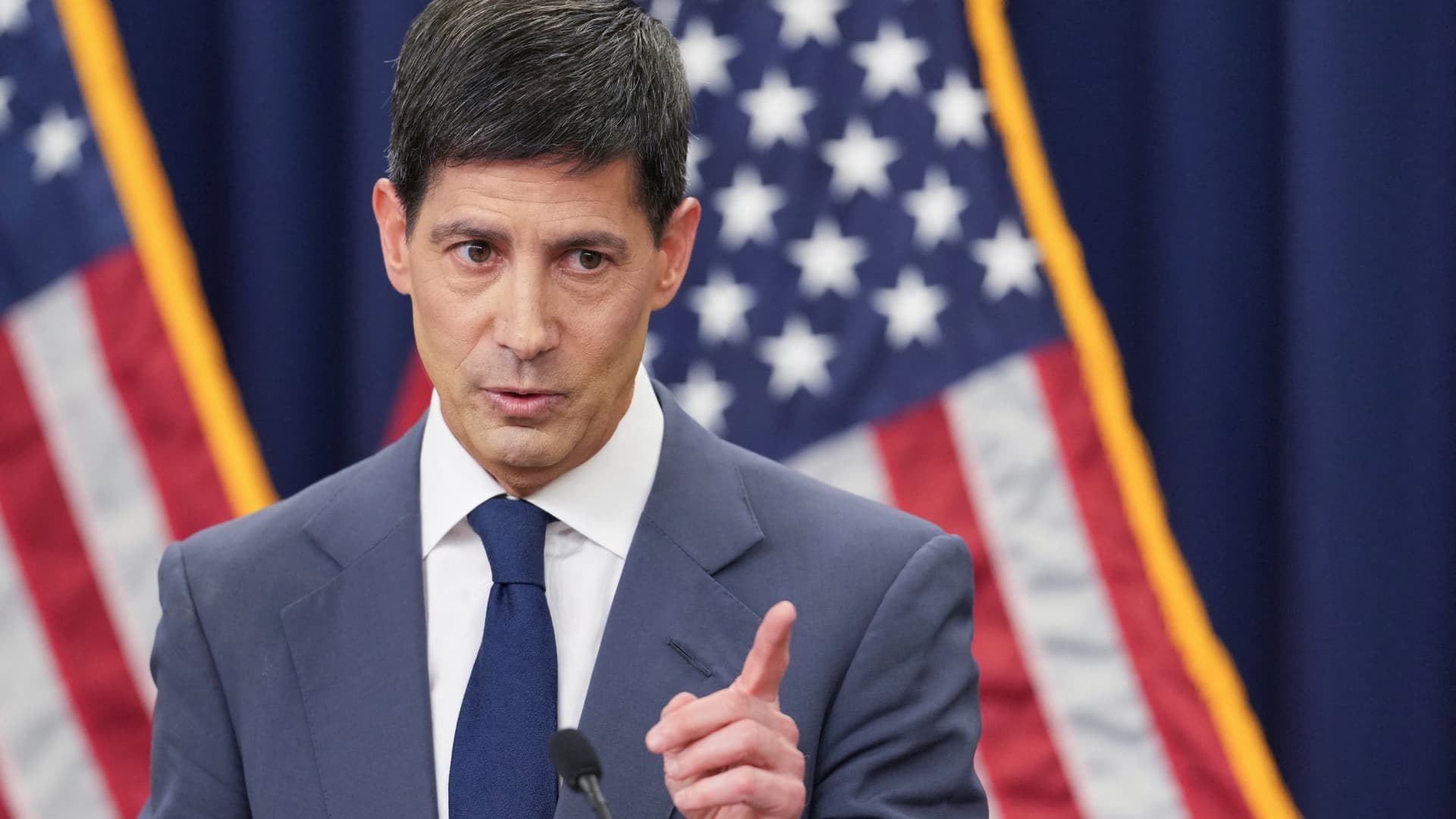
The Federal Reserve, under its new Chairman Kevin Warsh, has signaled a decisive shift in monetary policy, prioritizing price stability with a hawkish undertone that has injected new layers of complexity into market expectations. This transition marks a significant moment for global economic strategy as the central bank navigates post-pandemic recovery and persistent inflationary pressures.
📊 Macro-Economic Strategic Insights
- Hawkish Inflation Stance. Chairman Warsh’s repeated emphasis on ‘price stability’ and ‘unambiguous and unanimous’ resolve indicates a firm commitment to combating inflation, even at the potential cost of short-term market volatility.
- Forward Guidance Uncertainty. Warsh’s decision to abstain from submitting ‘dot plot’ projections underscores a philosophical departure from explicit forward guidance, suggesting a policy framework that prioritizes flexibility over pre-commitment. This has historically been a strategy to avoid prematurely binding future policy decisions.
- Institutional Reform Agenda. The establishment of five new task forces signals an administration keen on re-evaluating the Fed’s operational framework, from communication strategies and data reliance to the impact of AI and the central bank’s approach to inflation, indicating a period of institutional introspection.
Kevin Warsh’s Inflationary Resolve and Market Reaction
In his inaugural press conference as Federal Reserve Chairman, Kevin Warsh presented a surprisingly hawkish front on inflation, a stark contrast to his prior leanings towards rate cuts. His repeated use of the term ‘price stability’ and the committee’s ‘unambiguous and unanimous’ commitment to controlling inflation sent a clear signal to markets. This strong rhetoric manifested almost immediately in policy-sensitive assets, with the 2-year Treasury yield surging by 14.4 basis points, reflecting increased expectations for tighter monetary policy. The Fed’s ‘dot plot’ of interest rate expectations revealed a divided committee, with an even split between those anticipating steady rates or a cut, and those projecting at least one hike. The median projection, however, pointed towards a quarter-percentage-point increase later in the year, highlighting the ongoing debate within the FOMC.
A key development was Warsh’s personal abstention from submitting his ‘dot plot’ projection, a move widely anticipated and consistent with his long-held reservations about the utility of such forward guidance. He articulated that while encouraging colleagues to continue submitting projections, his personal decision stemmed from a belief that these can hamstring future policy flexibility. This departure from convention adds another layer of complexity for investors seeking clear signals from the central bank, suggesting that market interpretation will require a more nuanced approach to understanding the Fed’s future trajectory.
Warsh is also initiating a significant reform agenda, highlighted by the formation of five task forces. These groups are set to rigorously examine crucial aspects of the Fed’s operations:
- Communication Strategies: Rethinking how the Fed communicates its policy decisions and outlook to the public and markets.
- Balance Sheet Dynamics: Analyzing the optimal size and composition of the Fed’s balance sheet.
- Data Reliance: Evaluating the diverse sources of economic data used for policy formation.
- Productivity and Jobs: Investigating trends in labor markets and their impact on economic growth.
- Technological Impact: Assessing the influence of artificial intelligence and other transformative technologies on the economy.
- Inflation Approach: Re-examining the Federal Reserve’s framework for targeting and managing inflation.
This broad-ranging initiative signals a proactive approach to adapting the central bank’s framework for the evolving economic landscape. Furthermore, Warsh’s commitment to streamlining Fed communications was evident in the significantly abbreviated post-meeting statement, which, at 130 words, was less than half the length of previous statements. This move aims to deliver a more concise and less ambiguous message, a stark departure from the lengthy, boilerplate language that often characterized prior announcements.
The Ripple Effect of Policy Shifts
New Fed Chairman Warsh’s hawkish inflation talk → Increased probability of rate hikes later in 2026 → Higher borrowing costs for consumers and businesses → Potential slowdown in consumer spending and business investment → Moderation of inflationary pressures.
Warsh’s disavowal of explicit ‘dot plot’ guidance → Increased market speculation and uncertainty → Greater reliance on interpreting Fed communications and economic data → Volatility in financial markets as investors attempt to gauge future policy moves.
Establishment of Fed task forces → Deeper institutional review of policy frameworks → Potential for significant changes in how the Fed operates and communicates → Long-term impact on monetary policy effectiveness and market predictability.
The shift towards prioritizing ‘price stability’ under Kevin Warsh represents a critical pivot. It suggests that the Federal Reserve is prepared to tolerate greater short-term market volatility to achieve its inflation mandate. This recalibration of priorities from potential rate cuts to a more hawkish stance on inflation is a significant development for global monetary policy outlooks, as detailed by analysts at Bloomberg Economics.
The Federal Reserve’s current stance on interest rates, targeted between 3.5%-3.75%, remains unchanged for now. However, the internal debate within the FOMC, evidenced by the 9-9 split on the ‘dot plot’ concerning future rate movements, indicates a delicate balance. The median projection of a quarter-percentage-point hike suggests a cautious consensus leaning towards tightening, a metric crucial for understanding the trajectory of market interest rates.
US Economic Policy Commentary
Chairman Warsh’s focus on ‘price stability’ signals a clear direction for U.S. economic policy. The commitment to combating inflation is paramount, and this hawkish tone suggests that the Fed is willing to employ its tools aggressively to achieve this goal. The formation of task forces indicates a forward-thinking approach, aiming to modernize the Fed’s operational framework and its understanding of new economic drivers like AI. This proactive stance is crucial for maintaining long-term macro-stability, even if it introduces short-term market choppiness. The revamped communication strategy, emphasizing brevity, aims to reduce ambiguity, though Warsh’s personal non-participation in the ‘dot plot’ may introduce its own brand of uncertainty for investors closely watching for policy cues. The overall direction points towards a Fed that is both resolute in its fight against inflation and committed to adapting its methodologies for the future.
Global Inflationary Risks
The Federal Reserve’s renewed focus on price stability directly impacts global inflation dynamics. As the U.S. economy navigates these policy adjustments, its actions will reverberate across international markets. A commitment to taming domestic inflation can, in theory, help to anchor global inflation expectations. However, the tools employed—potentially including interest rate hikes—can also lead to dollar strengthening and tighter global financial conditions. This can put pressure on emerging economies with dollar-denominated debt. The global market’s interpretation of Warsh’s hawkish rhetoric will be crucial; a perception of sustained tightening in the U.S. could necessitate similar policy responses from other central banks, creating a synchronized global monetary tightening cycle. Navigating these interconnected risks requires careful observation of both U.S. domestic data and international economic responses, as noted in reports from Reuters.
Warsh’s Fed Era: A New Path for Market Stability?
The initial moves under Kevin Warsh suggest a Federal Reserve prioritizing inflation control and institutional reform, potentially laying the groundwork for long-term macro-stability. However, the departure from traditional forward guidance and the divided committee outlook introduce an element of unpredictability that markets will need to decipher. The emphasis on a more concise communication style, while intended to reduce ambiguity, could paradoxically lead to increased scrutiny and volatility as analysts parse for subtle policy shifts.
- The Fed’s hawkish turn on inflation signals a commitment to price stability, potentially leading to higher interest rates sooner than previously expected.
- Warsh’s personal abstention from the ‘dot plot’ complicates forward guidance, requiring markets to adapt to a less predictable policy signaling environment.
- The extensive task force initiatives suggest a Fed intent on modernizing its operational framework to address future economic challenges, including technological disruptions.
Will this new era of Fed communication and policy focus ultimately foster greater market confidence, or will the increased uncertainty surrounding forward guidance lead to prolonged periods of investor apprehension?
📊 StockXpo Analyst’s View
Market Impact: Investor sentiment is likely to become more cautious as the Fed signals a tougher stance on inflation. This could lead to increased volatility in equity markets and a preference for assets perceived as inflation hedges or those with strong pricing power. Market liquidity might tighten as the prospect of higher rates becomes more concrete.
Sector To Watch: Financials, particularly banks, could benefit from higher net interest margins. Technology and growth stocks, sensitive to interest rate increases, may face headwinds. Sectors with essential goods and services or strong inelastic demand, such as utilities and consumer staples, might demonstrate resilience.
Financial Disclaimer:
StockXpo.com is a financial news aggregator and educational portal, not a registered investment advisor or broker-dealer. All information, news, and analysis provided herein are strictly for educational purposes and do not constitute investment, financial, legal, or tax advice. Investing in the stock market involves high risks, and past performance is not indicative of future results. StockXpo will not be liable for any financial losses or investment damages. Always consult a certified financial advisor before making market decisions.
MORE IN INSIDE ECONOMY
Trump Economic Approval Plummets: A Warning for Macro Stability
Published: Thursday, October 22, 2026 · 9:12 AM

UK Inflation Jumps to 3.5%: Cementing Rate Hike Expectations
Published: Wednesday, October 21, 2026 · 2:51 AM