Published: Thursday, July 9, 2026 · 2:20 AM | Updated: Thursday, July 9, 2026 · 2:20 AM
📊 243 views




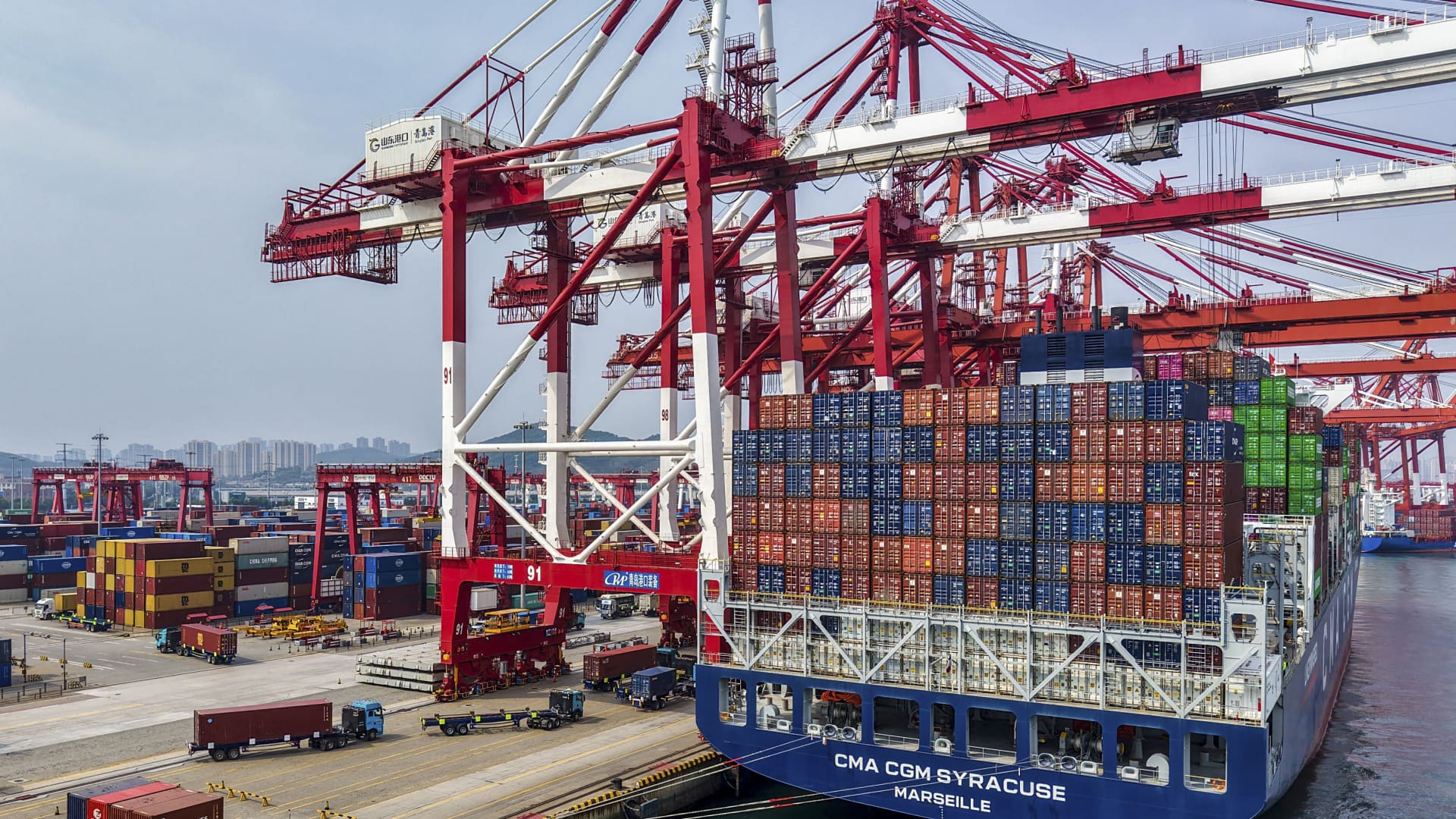
China’s latest inflation data reveals a complex economic picture, with diverging consumer and producer price trends that underscore ongoing rebalancing challenges. While consumer demand remains subdued, a surge in factory-gate prices signals robust export performance and strategic industrial growth, impacting global supply chains and commodity markets. This dual dynamic is crucial for assessing China’s macro-stability and its ripple effects on the international economy.
📊 Macro-Economic Strategic Insights
- Weak Consumer Demand. China’s consumer price growth unexpectedly slowed in June to 1%, reflecting persistent household caution and the lingering impact of the housing downturn.
- Producer Price Surge. Wholesale inflation jumped 4.1% year-over-year, driven by elevated energy costs from geopolitical tensions and strong demand for AI computing components, marking a return from deflation.
- Two-Speed Economy. The divergence highlights China’s ‘two-speed’ growth model, where robust export-led manufacturing and high-tech sectors outpace sluggish domestic consumption, influencing Beijing’s stimulus calculus.
Data released by the National Bureau of Statistics on Thursday revealed that China’s consumer price index (CPI) rose just 1% in June year-over-year, falling short of economists’ projections for 1.1% and decelerating from May’s 1.2%. Core CPI, which strips out volatile food and energy costs, mirrored this trend, also climbing 1%—a slight dip from the 1.1% increase observed in May. This persistent softness in consumer spending underscores the challenges facing domestic demand, aggravated by a prolonged housing market downturn that continues to depress household wealth and sentiment. Food prices, notably, saw a 1.6% decline, marginally less than the 1.7% fall recorded the previous month, contributing to the overall muted CPI figure.
In stark contrast, the producer price index (PPI), a key indicator of factory-gate inflation, surged 4.1% from a year earlier. This increase aligned with forecasts and outpaced May’s 3.9% rise, signaling a significant acceleration in industrial input costs. The rebound in factory-gate prices, which first saw growth in March after a prolonged deflationary period, is largely attributable to two primary factors:
- Geopolitical Supply Shocks: Elevated global energy costs, exacerbated by ongoing Middle East conflicts, have driven up raw material prices for Chinese manufacturers.
- High-Tech Demand: A robust global demand for artificial intelligence computing power has translated into increased prices for tech equipment and semiconductors, boosting upstream industrial costs.
However, recent manufacturing Purchasing Managers’ Index (PMI) data for June indicated a potential moderation. Input cost inflation eased to a six-month low of 54.2 from 60.5 in May, while the output price sub-index actually fell into contraction at 48.2—its first decline this year. This suggests that while initial price pressures from war and tech demand drove up wholesale inflation, some of these cost escalations might be starting to normalize within the industrial chain. Despite domestic consumption struggles, the International Monetary Fund (IMF) recently upgraded China’s economic growth forecast for 2026 to 4.6% from 4.4%, citing strong high-tech manufacturing, robust export performance, and strategic public infrastructure investments. This positive outlook is in contrast to a trimmed global growth forecast of 3%.
The Ripple Effect: Understanding China’s Economic Consequences
The dual inflation trends in China trigger several significant economic ripple effects:
- Weak Consumer Confidence → Reduced Domestic Spending → Potential for Further Rate Cuts or Targeted Stimulus for Households.
- Rising Producer Prices → Higher Export Costs → Potential for Global Inflationary Pass-Through in Goods, impacting international purchasing power.
- Robust Exports & Tech Manufacturing → Sustained Industrial Production → Stronger GDP Growth Driven by Supply Side, reinforcing global supply chain dynamics.
Neo Wang, China strategist at Evercore ISI, observed that ‘Many investors in China increasingly view the two-speed growth—marked by robust exports versus weak consumption and housing market—as a defining long-term feature of the Chinese economy.’ This ‘two-speed growth’ refers to a persistent economic divergence where certain sectors, like manufacturing and exports, exhibit strong performance, while others, particularly domestic consumption and real estate, remain subdued, creating policy challenges.
These key economic indicators provide a snapshot of China’s current macro-economic landscape, highlighting both areas of strength and persistent challenges.
| Metric | June 2026 | May 2026 | Significance |
|---|---|---|---|
| Consumer Price Index (CPI) | 1.0% Y/Y | 1.2% Y/Y | Measures consumer inflation, indicating domestic demand health. |
| Producer Price Index (PPI) | 4.1% Y/Y | 3.9% Y/Y | Reflects factory-gate prices, showing industrial cost pressures and export competitiveness. |
| IMF GDP Growth Forecast | 4.6% | 4.4% (Previous) | Indicator of overall economic expansion, IMF’s upgrade highlights export and tech sector strength. |
China’s Fiscal Policy Commentary
Despite the observed weakness in consumer demand, Beijing’s policymakers appear hesitant to implement broad-based stimulus measures. The strong performance of high-tech manufacturing and exports, as validated by the IMF’s upward revision of growth forecasts, seems to be influencing this cautious stance. Analysts like Gabriel Wildau, managing director at Teneo, suggest that ‘Policymakers are likely to refrain from major new stimulus unless the slowdown persists beyond the conflict.’ The next critical juncture for potential policy shifts is anticipated to be the 24-member Politburo meeting scheduled for late July, where economic strategies will be reviewed.
Global Benchmarking of China’s Export Dynamics
China’s export prowess, particularly in high-tech and manufacturing, continues to set it apart on the global stage. While many advanced economies grapple with slowing growth and elevated inflation, China’s ability to leverage its industrial base for export orders—partly driven by global AI demand and infrastructure investments—provides a crucial growth buffer. This resilience in external trade positions China uniquely in the global economic landscape, where other major economies are forecasting a sluggish 3% global growth rate, according to Bloomberg economics research.
China’s Inflation Trends: Navigating Divergent Economic Forces
The latest data on China’s inflation trends paints a nuanced picture of an economy facing both internal demand headwinds and external manufacturing tailwinds. This complex environment demands careful policy calibration to ensure systemic growth without exacerbating existing imbalances.
- Policymakers are likely to prioritize supply-side growth through manufacturing and exports, given their current strength.
- Consumer stimulus remains a potential, but not immediate, action, heavily dependent on future domestic demand indicators.
- The global economy will continue to feel the impact of China’s industrial output and its role in managing commodity and technology supply chains.
As China navigates these divergent forces, how will its policy choices influence its long-term economic stability and its position in the global trade architecture?
📊 StockXpo Analyst’s View
Market Impact: The bifurcated inflation data suggests a cautious outlook for domestic consumption-linked equities in China, while export-oriented manufacturing and technology sectors could see continued strength. Global investors may view this as a reinforcing signal for China’s industrial backbone, potentially increasing foreign direct investment in its advanced manufacturing capabilities. This could shift sentiment away from property developers and towards industrial giants.
Sector To Watch: Given the explicit mention of AI computing power demand, the semiconductor and advanced materials sectors within China are poised for sustained growth. Additionally, infrastructure-related industries, benefiting from frontloaded public investments, are likely to present robust opportunities. Conversely, consumer discretionary and real estate sectors face ongoing headwinds.
Financial Disclaimer:
StockXpo.com is a financial news aggregator and educational portal, not a registered investment advisor or broker-dealer. All information, news, and analysis provided herein are strictly for educational purposes and do not constitute investment, financial, legal, or tax advice. Investing in the stock market involves high risks, and past performance is not indicative of future results. StockXpo will not be liable for any financial losses or investment damages. Always consult a certified financial advisor before making market decisions.
MORE IN INSIDE ECONOMY

India Rate Hike: Inflation Risks Build Amid Global Headwinds
Published: Wednesday, October 7, 2026 · 1:41 AM

AI Concentration Risks Loom as East Asia & Pacific Sees 4.5% Growth Outlook
Published: Tuesday, October 6, 2026 · 1:56 AM