Published: Monday, May 25, 2026 · 7:36 AM | Updated: Monday, May 25, 2026 · 7:36 AM
📊 260 views




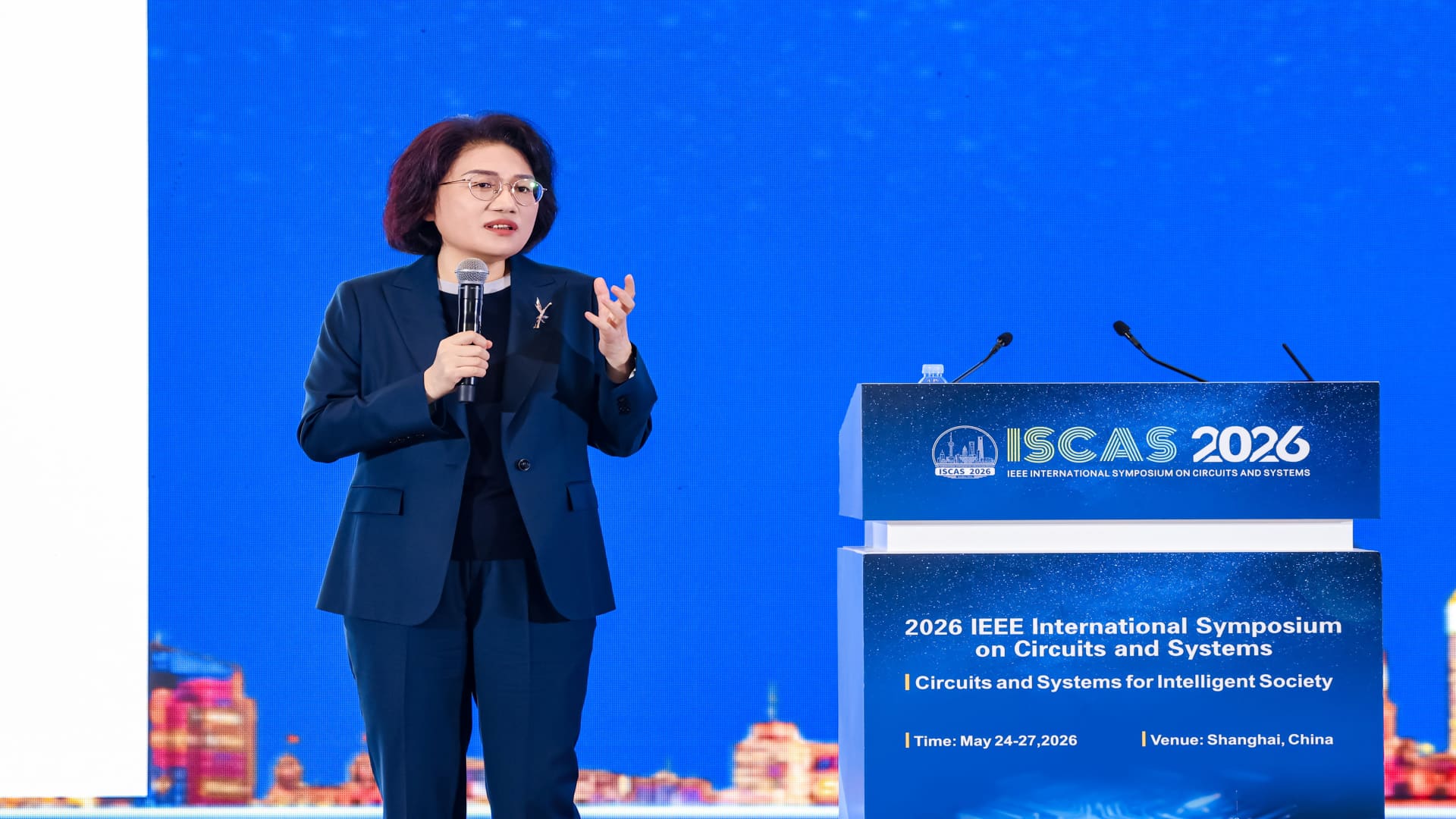
Chinese tech giant Huawei has unveiled a groundbreaking engineering approach, ‘LogicFolding,’ to develop advanced Huawei Chips for its smartphones, signaling a significant push against U.S. sanctions. This strategic move aims to enable the company to manufacture its Kirin smartphone chips this fall, intensely heating up the rivalry with industry behemoths like Nvidia and Apple.
The announcement comes as Huawei seeks to reassert its dominance in the global semiconductor landscape, particularly within its domestic market, despite ongoing restrictions on accessing crucial Western technology.
💰 Financial Strategy & Market Insights
- Sanctions Drive Innovation. Huawei’s ‘LogicFolding’ is a direct response to U.S. export restrictions, showcasing a resilient strategy to overcome technological barriers and reduce reliance on foreign supply chains.
- Competitive Pressure on Giants. The re-emergence of advanced Huawei Chips poses a significant threat to Nvidia’s market share in China and intensifies competition for Apple in the lucrative Chinese consumer economy.
- Long-term R&D Focus. Huawei’s commitment to a decade-long development path for its new chip architecture highlights a long-term investment strategy in foundational technology, despite immediate scaling and yield challenges.
Huawei’s claim of developing a new engineering approach, ‘LogicFolding,’ to produce its Kirin smartphone chips this fall marks a critical juncture in the global tech rivalry. This comes amidst Nvidia’s struggles to sell its high-end chips in China due to U.S. export restrictions, a situation that led Nvidia CEO Jensen Huang to concede the Chinese market to Huawei, as reported by CNBC. The implication is a narrowing window for advanced chip sales like Nvidia’s H200 into China, a development likely to raise concerns in Washington regarding the efficacy of its export controls, according to George Chen of The Asia Group.
The resurgence of Huawei’s smartphone offerings, exemplified by the Mate 60’s 5G connectivity in 2023, has already allowed the company to regain significant market share from Apple in China. This renewed competition underscores the importance of homegrown technology for Beijing, which actively supports domestic innovation.
- Huawei’s new chip technology aims to deliver capabilities equivalent to 1.4-nanometer process technology by 2031, despite global leader TSMC only just beginning volume production of 2-nanometer chips.
- Experts like Paul Triolo of DGA Group and Neil Shah of Counterpoint Research express skepticism regarding the feasibility and scalability of Huawei’s 1.4-nanometer claims, citing potential challenges with process, yield, power, thermal management, and manufacturing complexities at scale.
- The inability to access advanced extreme ultraviolet (EUV) lithography machines from Dutch maker ASML has forced Huawei to pursue unconventional chip development paths to remain competitive, especially in AI.
Academically, Huawei is promoting its findings as the ‘Law of Tau,’ or ‘τ scaling,’ a principle it claims addresses contemporary semiconductor industry challenges. While traditional semiconductor development has long been guided by Moore’s Law, even Nvidia’s Huang has suggested its diminishing applicability. Huawei’s ‘Law of Tau’ is described as a systems-level optimization doctrine focusing on shortened wires, stacked logic, and co-design of chips, packages, software, and clusters, as detailed by Triolo.
Risk vs. Reward: Huawei’s Chip Ambitions
- Upside: Potential for technological independence and market leadership in China, reducing reliance on Western technology. Increased revenue and market share for Huawei, boosting national tech capabilities. Validation of innovative engineering approaches like ‘LogicFolding’ could open new avenues for chip design globally.
- Downside Risks: Significant execution risk in scaling ‘LogicFolding’ to mass production with acceptable yields and performance, especially without advanced EUV equipment. Potential for continued U.S. sanctions and export controls to evolve, further limiting access to global supply chains and markets. Skepticism from industry experts regarding the long-term viability and true equivalence of its 1.4nm claims could impact investor confidence and adoption. Intense competition from established players like Apple and potential retaliatory strategies from chipmakers like Nvidia could dampen market re-entry success.
Understanding Nanometer Processes: In semiconductor manufacturing, nanometer (nm) processes refer to the characteristic feature size of transistors on an integrated circuit. Smaller nanometer nodes, such as 2nm or 1.4nm, generally indicate higher transistor density, leading to more powerful, energy-efficient, and compact chips. Achieving these smaller nodes is a critical benchmark for technological advancement and competitive advantage in the chip industry.
Competitive Landscape: Tech Giants React
- Nvidia, a key competitor, has largely conceded the Chinese AI chip market to Huawei, shifting its focus elsewhere. This reorientation indicates a clear strategic adaptation to regulatory hurdles, influencing global markets and investment flows.
- Apple faces renewed pressure in the Chinese smartphone market, where Huawei’s resurgence, driven by its advanced chips, is directly impacting its market share. This intensifies the battle for consumer loyalty and technological superiority.
- ASML Holding N.V., a critical supplier of lithography equipment, remains restricted from selling its most advanced EUV machines to China, indirectly fueling Huawei’s drive for alternative, domestically-developed manufacturing solutions.
Huawei Market Sentiment Tracker
Market sentiment around Huawei remains complex, oscillating between cautious optimism regarding its innovation and deep skepticism due to geopolitical tensions and technical challenges. The announcement of ‘LogicFolding’ has undoubtedly injected a new wave of interest, particularly in the domestic Chinese market, where national support for technological self-reliance runs high. However, international investor sentiment, particularly from the West, is likely to remain guarded, focusing on the company’s ability to scale production and achieve the claimed performance benchmarks without access to critical Western technology. Any successful deployment of Huawei Chips in its upcoming Mate 90 series will be a significant barometer for future sentiment, demonstrating a credible workaround to sanctions and potentially unlocking new avenues for growth and investment within China’s tech ecosystem.
Semiconductor Sector Liquidity Analysis
The broader semiconductor sector’s liquidity dynamics are increasingly influenced by geopolitical pressures and nationalistic tech ambitions. While established players like TSMC continue to command significant capital and manufacturing prowess, the emergence of entities like Huawei with independent chip development pathways suggests a potential fragmentation of the supply chain. This could lead to diversified capital allocation, with increased investment in domestic capabilities within countries seeking technological autonomy. For those analyzing market analysis, this implies a need to monitor capital flows into regions fostering self-sufficiency versus those maintaining globalized supply chains. The long-term implications for global market liquidity will depend on the scalability and economic viability of these parallel semiconductor paths, particularly if they introduce inefficiencies or reduce overall market integration.
Huawei’s Semiconductor Play: Navigating a Sanctioned Future
Huawei’s audacious claim of developing next-generation smartphone chips through ‘LogicFolding’ signals a defiant push against U.S. sanctions, aiming to redefine its role in the global semiconductor race. While the declared 1.4-nanometer equivalent capabilities face expert scrutiny regarding scalability and yield, this innovation underscores China’s unwavering commitment to technological independence.
- The immediate market impact involves intensified competition for Apple in China and further pressure on Nvidia’s presence in the region.
- Huawei’s long-term success hinges on its ability to transition this engineering feat from a theoretical ‘Law of Tau’ to proven, high-volume manufacturing.
- This development represents a critical test for China’s strategy to circumvent Western technology restrictions and foster domestic technological self-reliance.
Will Huawei’s ‘LogicFolding’ truly reshape the semiconductor industry, or will the formidable challenges of scaling and global market acceptance prove insurmountable?
### 📊 StockXpo Analyst’s View
Market Impact: This news introduces significant volatility into the semiconductor sector, particularly impacting financial sector firms with exposure to China-U.S. tech rivalry. For Nvidia, the confirmed loss of the Chinese market to Huawei for high-end AI chips forces a strategic reassessment of its global sales distribution. Apple may see continued erosion of its market share in China, prompting adjustments to its regional strategy. Investors should brace for increased competition and potential supply chain reconfigurations as a direct result of these developments, influencing capital shifts towards diversified and resilient manufacturing capabilities. More educational financial insights are available.
Sector To Watch: The Semiconductor Equipment and Materials sector (e.g., ASML’s peers) will be crucial, as companies innovate to meet diversified global demand, or face evolving export controls. Additionally, the broader AI infrastructure sector will witness a bifurcated development, with China fostering its own ecosystem led by Huawei, while the West continues its trajectory. Monitoring regulatory landscapes and government subsidies in key regions will be paramount for discerning profitable opportunities in this evolving technological arms race. Keeping an eye on business news will be essential.
Financial Disclaimer: StockXpo.com is a financial news aggregator and educational portal, not a registered investment advisor or broker-dealer. All information, news, and analysis provided herein are strictly for educational purposes and do not constitute investment, financial, legal, or tax advice. Investing in the stock market involves high risks, and past performance is not indicative of future results. StockXpo will not be liable for any financial losses or investment damages. Always consult a certified financial advisor before making market decisions.
MORE IN INSIDE FINANCE
China’s Exports Surge: Unpacking Global Trade Growth and Asset Implications
Published: Wednesday, October 14, 2026 · 2:14 AM

Singapore Haven: Stability Yields Opportunity Amid Global Volatility
Published: Tuesday, October 13, 2026 · 12:19 AM