Published: Friday, May 22, 2026 · 12:53 PM | Updated: Friday, May 22, 2026 · 12:53 PM
📊 328 views




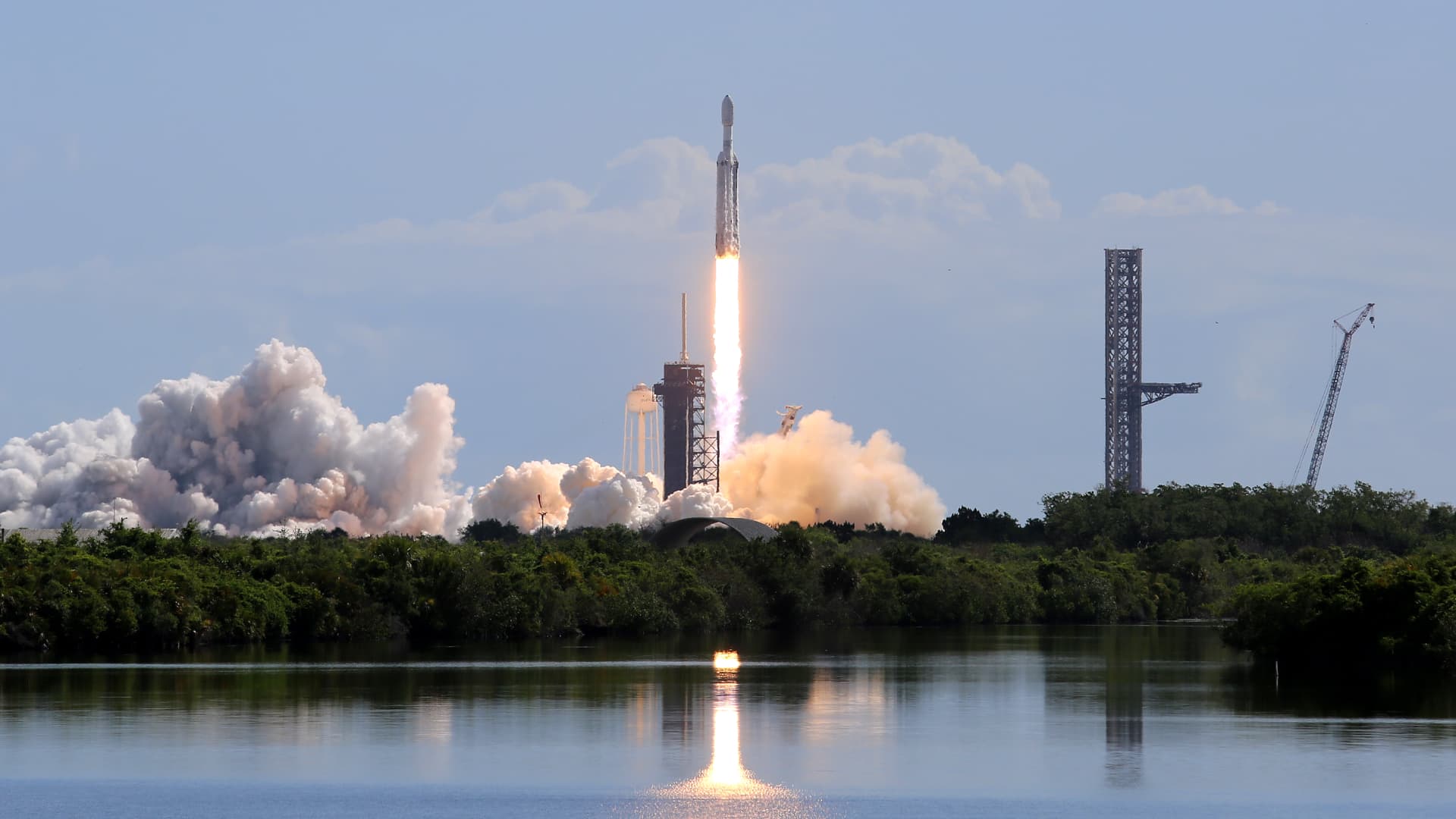
The financial world is abuzz as a wave of eagerly anticipated Mega-IPOs, notably from SpaceX and OpenAI, prepares to hit public markets, potentially marking historic valuations. However, seasoned analysts are sounding alarms, drawing unsettling comparisons to the exuberant, yet ultimately unsustainable, market peaks of the late-1990s dot-com bubble. This flurry of activity from high-profile, pre-profit companies signals a critical juncture for investors navigating a complex technological and economic landscape.
🚀 Tech Strategy & Market Disruptions
- Valuation Concerns. SpaceX’s targeted $1.75 trillion valuation, at 67 times sales, raises questions about sustainability given its current net losses and reliance on untested technologies.
- Profitability Puzzle. Both SpaceX and OpenAI have yet to achieve consistent annual profitability, challenging traditional IPO metrics and increasing investor risk.
- Market Top Signal. Analysts like John Blank (Zacks) view these mega-floats as a potential indicator of a market top, reminiscent of the speculative fervor seen during the dot-com era.
The imminent rush of Mega-IPOs from tech giants like SpaceX and OpenAI is generating considerable excitement, but also significant apprehension among market observers. SpaceX, aiming for a staggering $1.75 trillion valuation on the Nasdaq, could become the largest float in history, as confirmed by its recent S-1 filing. This valuation places it at an extraordinary 67 times sales, a figure three times higher than Nvidia’s current rating based on its past financial year, according to Dan Coatsworth, head of markets at AJ Bell. However, the company reported a net loss of $4.28 billion in its latest quarter, following a $4.94 billion loss in 2025. While its Starlink division generated $3.26 billion in revenue, constituting 69% of its total, the space business lost $619 million operationally, and its nascent AI unit incurred a $2.5 billion loss. SpaceX explicitly stated in its S-1 filing a ‘history of net losses and may not achieve profitability in the future,’ highlighting the speculative nature of its value, which is heavily tied to the success of ‘novel and untested’ technologies and significant future capital expenditures.
Similarly, OpenAI and Anthropic are poised for public listings later this year, despite both companies also operating without consistent annual profits. Anthropic expects to report its first profitable quarter soon, but the broader picture for these AI pioneers remains cloudy. The opacity surrounding their business models and financial health leads some analysts to urge extreme caution for prospective investors. Deutsche Bank’s thematic research strategist Adrian Cox noted the uncertainty of how public markets will value these companies once their financials are subjected to greater scrutiny and the economics of their models are better understood. This scenario poses a complex challenge for investors keen on participating in the burgeoning AI and space technology sectors, particularly when considering broader technology market trends.
- A significant portion of SpaceX’s valuation is built on the future success of unproven technologies, requiring substantial, long-term capital investment before potential profitability.
The anticipated Mega-IPOs represent a complex disruption flow. The listing of pre-profit, high-valuation companies → introduces significant capital into emerging sectors like space and advanced AI → accelerates R&D and market penetration for these technologies → but simultaneously raises systemic risks due to opaque financials and unproven business models → potentially leading to market volatility and a re-evaluation of growth-at-all-costs investment strategies.
‘The current environment, characterized by massive IPOs of companies with ambitious valuations but limited profitability, compels us to rigorously assess underlying technological maturity and sustainable value creation. It’s not just about market hype; it’s about the tangible pathways to long-term economic viability.’
SpaceX Financial Snapshot (Latest Quarter)
| Metric | Value | Comment |
|---|---|---|
| Net Loss (Latest Quarter) | $4.28 Billion | Follows $4.94B loss in 2025. |
| Starlink Revenue (Latest Quarter) | $3.26 Billion | Accounts for 69% of total revenue. |
| Space Business Operating Loss | $619 Million | Excludes Starlink. |
| AI Unit Loss | $2.5 Billion | Significant investment into AI initiatives. |
| Targeted IPO Valuation | $1.75 Trillion | Implies 67x sales, 3x Nvidia’s past rating. |
SpaceX’s Market Adoption Challenges
SpaceX’s ambitious ventures, from Starlink internet services to Mars colonization, face unique market adoption challenges. While Starlink has seen significant uptake, penetrating diverse global markets with varying regulatory landscapes and existing infrastructure requires sustained investment and strategic partnerships. The company’s core space launch business, though highly successful, operates in a specialized and competitive arena. Critically, its developing AI unit, intended to power future innovations, must prove its commercial viability and scale beyond internal applications to justify its substantial capital burn. Overcoming these hurdles will require not just technological prowess but astute market navigation and a clear path to profitability in each segment. For deeper insights into market dynamics, StockXpo explores emerging technologies and their impact.
OpenAI’s Ecosystem Expansion Potential
OpenAI, a key rival to SpaceX in the AI race, stands at the cusp of immense ecosystem expansion potential, yet also significant risks. Its foundational models are rapidly being integrated across countless applications and industries, driving a new wave of software innovation. The challenge lies in monetizing this expansive reach effectively while managing the immense computational costs associated with advanced AI training and inference. Expanding its ecosystem requires robust developer tools, strategic enterprise partnerships, and a clear vision for sustainable revenue streams that don’t rely solely on upfront licensing or API calls. Furthermore, ethical AI development, data privacy, and regulatory compliance will be paramount for widespread, trusted adoption and sustained growth across diverse user bases and global markets, factors critical for understanding digital transformation. Insights into such areas are often found in Bloomberg technology reports.
The Ripple Effect of Mega-IPOs on 2026 Markets
The anticipated wave of Mega-IPOs from companies like SpaceX and OpenAI in 2026 presents a double-edged sword for the global markets. While offering unprecedented access to innovative sectors, these listings highlight a growing chasm between speculative valuations and proven profitability, a dynamic reminiscent of past market excesses. The market’s reception to these high-stakes debuts will serve as a crucial barometer for investor appetite for risk and the sustainability of current tech valuations.
- Investor sentiment could shift dramatically based on initial trading performance and subsequent financial disclosures.
- The IPOs will test the market’s capacity to absorb multi-trillion-dollar valuations from companies still in their growth phase.
- Increased transparency post-IPO will force a re-evaluation of business models in the advanced AI and space industries.
Will these highly anticipated public offerings usher in a new era of innovation-driven growth, or merely expose an overleveraged market’s vulnerabilities?
📊 StockXpo Analyst’s View
Market Impact: The sheer scale of these Mega-IPOs introduces significant liquidity demands and could divert capital from established tech players. If initial performance falters, it could temper investor enthusiasm for other high-growth, pre-profit ventures, potentially creating a broader market correction for speculative assets. Conversely, a successful float could fuel further confidence in disruptive tech, but at potentially elevated risk levels, as detailed by Reuters technology news.
Sector To Watch: Investors should closely monitor the broader AI and space exploration sectors. The performance of SpaceX and OpenAI will directly influence the valuation multiples and fundraising capabilities of their competitors and adjacent startups. Additionally, the semiconductor industry, underpinning AI’s computational needs, stands to gain regardless of individual company profitability, driven by sustained demand for advanced processing power. For more educational tech insights, visit the StockXpo blog.
Financial Disclaimer:
StockXpo.com is a financial news aggregator and educational portal, not a registered investment advisor or broker-dealer. All information, news, and analysis provided herein are strictly for educational purposes and do not constitute investment, financial, legal, or tax advice. Investing in the stock market involves high risks, and past performance is not indicative of future results. StockXpo will not be liable for any financial losses or investment damages. Always consult a certified financial advisor before making market decisions.
MORE IN INSIDE TECHNOLOGY

AI Buildout Hits Credit Headwinds: Neoclouds Under Pressure
Published: Saturday, October 24, 2026 · 12:23 AM

SK Hynix Shares Rebound: A Strategic Shift in Semiconductor Funding
Published: Friday, October 23, 2026 · 1:46 AM