Published: Monday, May 18, 2026 · 6:49 PM | Updated: Monday, May 18, 2026 · 6:49 PM
📊 639 views




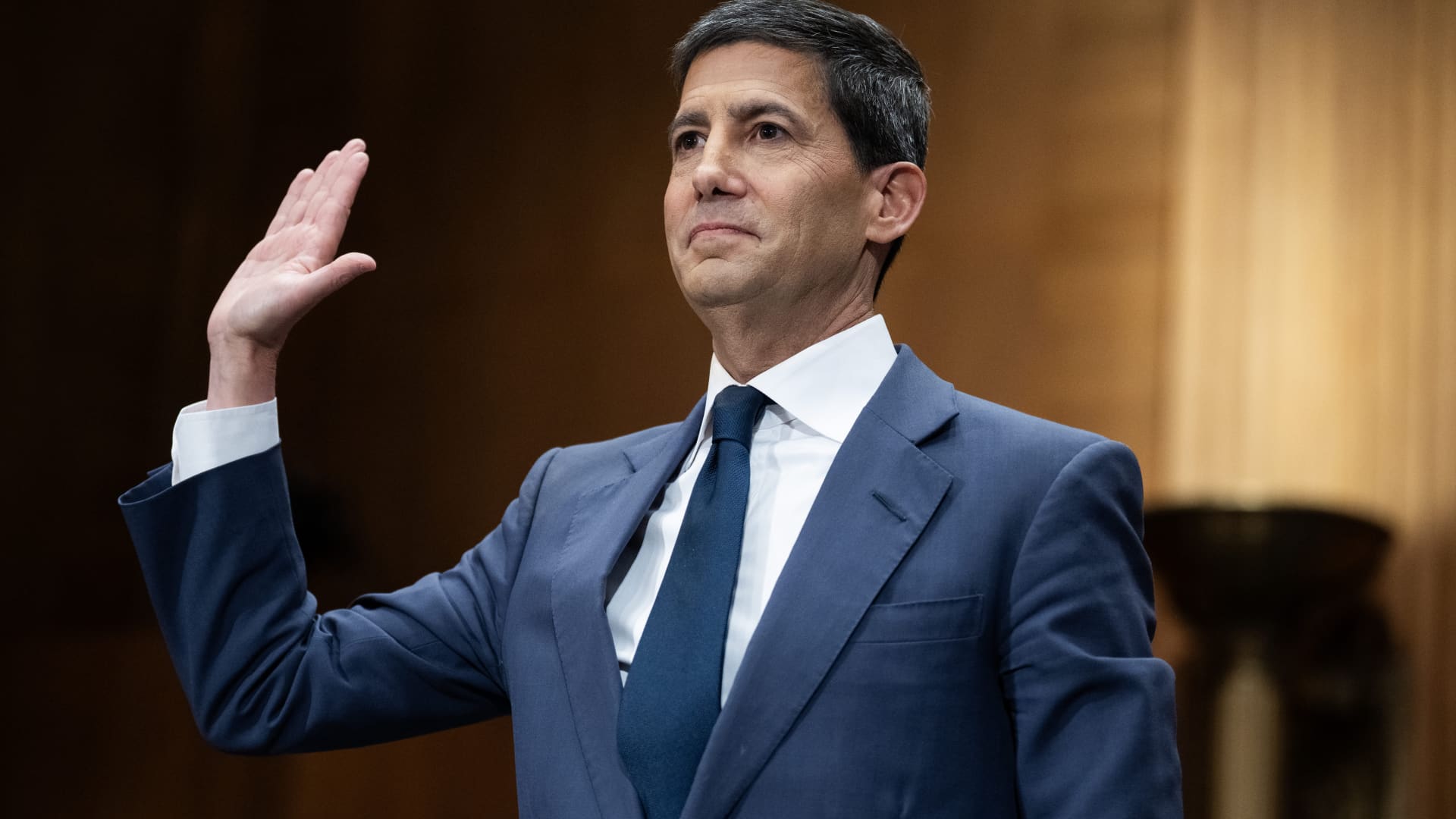
The U.S. central bank officially transitions leadership this Friday as Kevin Warsh assumes the role of Federal Reserve chair, marking a pivotal moment for global monetary policy. His swearing-in caps a contentious confirmation process and signals a potential strategic realignment for the Fed amidst persistent inflation and a robust labor market. This change in command carries significant implications for interest rates, investor sentiment, and overall economic stability.
📊 Macro-Economic Strategic Insights
- Leadership Transition. Kevin Warsh’s appointment as Federal Reserve chair concludes a key political process, installing a new vision for the central bank.
- Policy Expectations. Markets anticipate potential easing pressure from the Trump administration, yet elevated inflation and strong employment may constrain immediate rate cuts.
- Economic Context. The new chair inherits an economy grappling with sustained inflation above the Fed’s 2% target and a surprisingly resilient job market, setting a complex policy landscape.
Kevin Warsh officially steps into his role as Federal Reserve chair this Friday, taking the reins from Jerome Powell after a nearly party-line Senate confirmation. This leadership change, orchestrated by President Donald Trump, is widely seen as an attempt to pivot the central bank towards a more accommodative monetary stance, following three rate cuts in 2025. However, the economic reality Warsh inherits presents a formidable challenge to any immediate easing plans.
The outgoing chair, Jerome Powell, oversaw a period where inflation consistently exceeded the Fed’s 2% target for over five years. Despite the administration’s stated desire for lower interest rates, market participants widely anticipate that current elevated inflation levels, coupled with a stable and robust labor market, will likely deter further rate reductions until clear evidence emerges that price increases are firmly retreating toward the target. This creates an immediate tension between political expectations and economic imperatives.
Warsh, 56, becomes the 11th individual to hold the modern chairmanship and reportedly the wealthiest, requiring significant divestment of his substantial investment portfolio to comply with new, stringent Fed regulations. His background and economic philosophy will be closely scrutinized as he navigates the complex interplay of inflation, employment, and growth. Observers will be watching for signals on how he balances the dual mandate of price stability and maximum employment, particularly given the strong political headwinds.
- New Leadership Era: Warsh’s appointment marks a definitive shift from the Powell era, potentially influencing the Fed’s long-term strategy and communication.
- Inflationary Pressures: Sustained price increases remain a primary concern, complicating the path for any immediate interest rate adjustments.
- Market Disconnect: A divergence exists between the administration’s desire for lower rates and market expectations grounded in current economic data.
His initial moves, particularly regarding forward guidance and public statements, will offer crucial insights into the future trajectory of U.S. monetary policy. The global stock markets will undoubtedly react to his early signals, seeking clarity on the Fed’s commitment to its inflation target versus political pressures.
The transition in Federal Reserve leadership could create several economic ripple effects:
Pressure for Rate Cuts → Increased Market Volatility (if not justified by data)
Unjustified Rate Cuts → Higher Inflationary Expectations → Erosion of Purchasing Power
Continued High Inflation → Sustained High Interest Rates → Increased Borrowing Costs for Businesses & Consumers
Strong Labor Market + High Inflation → Challenging Dual Mandate for New Chair → Scrutiny on Policy Independence
“The appointment of a new Federal Reserve chair is rarely just about personnel; it’s about the philosophical underpinning of monetary policy itself. Warsh’s challenge will be to establish credibility with markets while navigating political expectations, all against a backdrop of inflation that has proven stubbornly resilient. His success will hinge on his ability to communicate a clear, data-driven strategy that reassures both investors and the public,” commented a senior analyst at a major investment bank.
Given the current data landscape, key metrics that will inform the new Federal Reserve chair’s decisions include:
- Inflation Rate (CPI): Currently elevated above the 2% target, this metric directly influences the Fed’s price stability mandate.
- Unemployment Rate: Signifies the health of the labor market, impacting the Fed’s maximum employment goal.
- GDP Growth: Reflects overall economic activity and can guide decisions on economic stimulus or contraction.
U.S. Inflationary Risks Under New Leadership
The core challenge for the new economic policy leadership will be taming persistent inflation without derailing a relatively strong labor market. The prior administration’s efforts saw interest rates lowered three times in 2025, a move that some economists argue contributed to sustained price pressures. Warsh will need to articulate a clear strategy for re-anchoring inflation expectations, potentially requiring a more hawkish stance than desired by the White House. The risk of monetary policy becoming overly politicized could undermine the Fed’s independence and complicate its ability to manage the business cycle effectively, as noted by economic analysts at Bloomberg.
Global Benchmarking: Fed Policy Crossroads
As the U.S. Federal Reserve shifts leadership, central banks worldwide will be closely observing its trajectory. Global monetary policies often move in relative tandem, and a significant deviation by the Fed could create currency volatility and capital flows. While many developed economies are also grappling with inflation, the extent to which the new U.S. Federal Reserve chair prioritizes growth over price stability will set an important precedent. This could lead to a decoupling of policy paths if other major central banks maintain a more stringent anti-inflationary stance, creating new dynamics for investment analysis and international trade. Insights into these shifts are often detailed in global economic trends reported by Reuters. The Bank for International Settlements (BIS) has repeatedly stressed the importance of central bank independence and long-term price stability.
The Kevin Warsh Era: Navigating Monetary Policy Shifts
The arrival of Kevin Warsh as Federal Reserve chair marks a critical juncture for U.S. monetary policy, promising a potential realignment from the previous administration’s approach. His tenure will immediately test the delicate balance between political pressures for economic stimulus and the imperative to control persistent inflation.
- Warsh inherits a complex economic landscape with elevated inflation and a tight labor market.
- Market expectations for rate cuts are tempered by current economic realities, suggesting an uphill battle for immediate easing.
- The new chair’s independence and communication strategy will be crucial in shaping investor confidence and policy credibility.
How will the new Federal Reserve chair define his legacy in an era of persistent inflation and geopolitical uncertainty?
📊 StockXpo Analyst’s View
Market Impact: The appointment of Kevin Warsh, particularly with the explicit political expectation of lower rates, introduces a layer of uncertainty for bond markets and potentially equity valuations. While a dovish Fed could theoretically boost stocks, an aggressive easing without fundamental justification risks inflationary spirals, which would be detrimental in the long run. Investor sentiment will hinge on Warsh’s early pronouncements and his perceived independence.
Sector To Watch: Given the potential for shifting interest rate expectations, sectors sensitive to borrowing costs and consumer spending, such as real estate, financial services, and consumer discretionary, warrant close observation. Conversely, defensive sectors and commodities might see renewed interest if inflationary pressures remain elevated or intensify.
Financial Disclaimer:
StockXpo.com is a financial news aggregator and educational portal, not a registered investment advisor or broker-dealer. All information, news, and analysis provided herein are strictly for educational purposes and do not constitute investment, financial, legal, or tax advice. Investing in the stock market involves high risks, and past performance is not indicative of future results. StockXpo will not be liable for any financial losses or investment damages. Always consult a certified financial advisor before making market decisions.
MORE IN INSIDE ECONOMY
Trump Economic Approval Plummets: A Warning for Macro Stability
Published: Thursday, October 22, 2026 · 9:12 AM

UK Inflation Jumps to 3.5%: Cementing Rate Hike Expectations
Published: Wednesday, October 21, 2026 · 2:51 AM