Published: Sunday, November 29, 2026 · 8:11 AM | Updated: Sunday, November 29, 2026 · 8:11 AM
📊 42 views




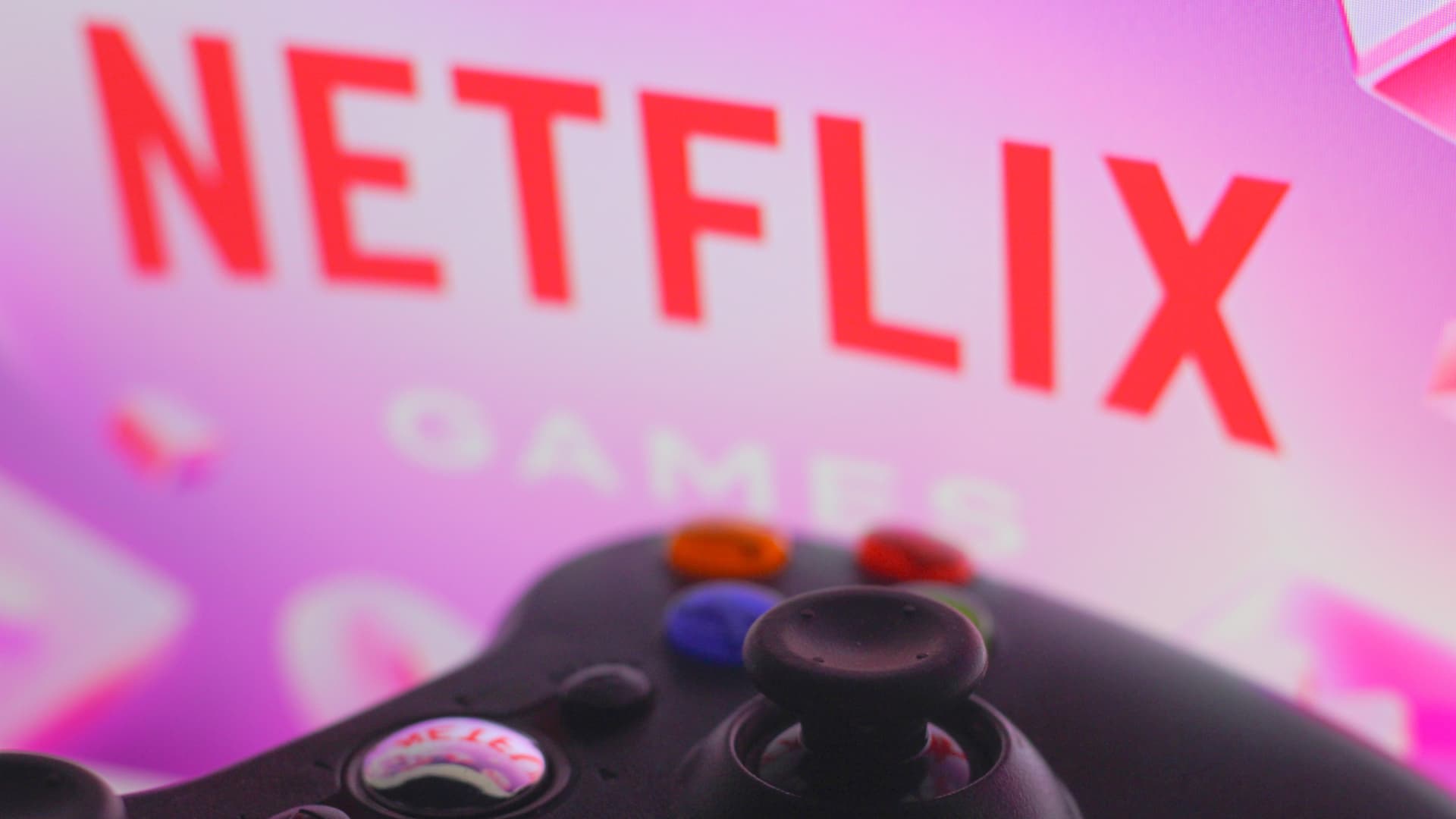
Netflix’s evolving Netflix Gaming Strategy marks a critical pivot for the streaming giant, aiming to combat stagnating viewing hours and diversify its revenue streams. This strategic move into interactive entertainment is poised to reshape its engagement model, challenging traditional content consumption patterns and intensifying competition in the digital entertainment landscape.
🗝️ Corporate Strategy Insights
- Engagement Diversification. Netflix initiated gaming to capture user time, acknowledging competition from titles like Fortnite. This addresses slowing viewing hour growth and seeks to enhance subscriber retention by offering more value within the existing subscription.
- Strategic Refocus and Platform Expansion. After an initial broad mobile launch, Netflix has narrowed its gaming efforts to specific genres (narrative, mainstream, kids, party games) and expanded to living room TVs, signaling a more targeted approach to a $150 billion market.
- Leveraging IP and Acquisitions. The strategy combines licensing popular existing games (like Grand Theft Auto) with developing titles based on Netflix’s own franchises and strategic acquisitions of studios to build internal expertise, though some studios were later shuttered.
Facing intense competition for user attention, with games like Grand Theft Auto VI commanding billions of minutes of playtime, Netflix’s foray into gaming is a direct response to a fundamental challenge: time. Initially launching five mobile games in November 2021, the company has aggressively scaled its offering to over 100 titles. Co-CEO Greg Peters, instrumental in launching these efforts, described the early strategy as a broad exploratory approach. Now, executives assert their gaming division has matured, targeting an estimated $150 billion consumer spending market, excluding China and Russia, according to CNBC.
The streaming giant has refined its focus to four core gaming areas: narrative titles leveraging existing Netflix franchises, mainstream games, kids’ games, and party games. A significant shift includes expanding beyond mobile to games playable on living room TVs, aiming to integrate gaming more deeply into the traditional Netflix user experience. This pivot is designed to bolster subscriber engagement at a time when Netflix is navigating concerns about stagnating viewing hours and intensified competition from platforms like YouTube.
Despite these strategic maneuvers, Netflix’s gaming efforts have faced skepticism. LightShed Partners analyst Brandon Ross highlights the historical difficulty for non-game companies to cultivate gaming studio DNA, citing Disney’s past struggles with Disney Interactive and its subsequent shift to licensing and strategic investments, such as a $1.5 billion stake in Epic Games, developer of Fortnite. Warner Bros. Games, despite some hits like Hogwarts Legacy, also demonstrates the volatile nature of game development, though their titles are not bundled into streaming subscriptions as Netflix’s are.
Initially, Netflix gaming attracted approximately 1.7 million daily active users as of Q3, less than 1% of its 325 million subscribers, and a decline from 2.2 million in September 2023. This led to a ‘less is more’ strategy by the end of 2025, which saw the company shutter or sell several in-house video game studios. However, the introduction of cloud gaming and a dedicated controller app for TVs has shown promising signals, with monthly active players for cloud games increasing 11-fold since October 2025. TV-based gameplay now accounts for 57% of total game play sessions, a dramatic rise from 0.2% in 2023.
- Focus on TV and Cloud Gaming: Netflix’s recent emphasis on cloud gaming playable on TVs, utilizing smartphones as controllers, has significantly boosted engagement metrics for its interactive content.
- Kids’ Content as a Growth Engine: The launch of the Playground app, integrating both games and existing Netflix content for children, has seen a 600% year-over-year increase in engagement, pointing to a strong niche.
- IP Leverage and Narrative Expansion: The company is increasingly using its popular TV and film franchises for game development, like ‘Squid Game: Unleashed’, alongside licensing established titles to create immersive experiences.
The Netflix Gaming Strategy, particularly its push into cloud gaming and TV integration, creates a strategic ripple effect across the entertainment industry. A successful transition to interactive living-room entertainment could significantly increase subscriber ‘stickiness,’ potentially reducing churn and attracting new users seeking bundled value. This would directly challenge traditional gaming platforms by embedding casual and mid-core games within an already ubiquitous streaming interface. For competitors in streaming, it sets a precedent for expanding engagement beyond linear content, possibly forcing them to consider similar interactive offerings. Meanwhile, traditional game developers could face increased pressure to innovate or partner, as Netflix leverages its vast subscriber base to distribute games at scale without the traditional purchase barrier. This could reshape market share dynamics in both streaming and casual gaming sectors, driving a new era of cross-platform entertainment integration.
“It’s been notoriously hard for non-game companies to build gaming studio DNA. It’s just a different culture, a different form of content creation. It hasn’t worked.” – Brandon Ross, LightShed Partners analyst, told CNBC.
While Netflix’s gaming journey is still in its early stages, several key metrics indicate both challenges and potential. The company’s capital allocation towards gaming is still relatively small compared to its overall content spend, suggesting a measured approach to this high-risk, high-reward venture. Understanding these indicators is crucial for investors tracking the success of this diversification.
- Daily Active Users (DAU): Approximately 1.7 million, a critical measure of immediate engagement, though representing less than 1% of total subscribers, highlighting the nascent stage of adoption.
- Mobile Game Downloads: 70.5 million total by September 2023, indicating initial reach but also the challenge of converting downloads into sustained daily usage.
- TV Game Sessions Percentage: Now comprising 57% of total gameplay, a significant increase from 0.2% in 2023, this metric underscores the success of the shift to living room entertainment.
- Kids’ Game Engagement Growth: Up 600% year-over-year, demonstrating strong performance in a specific, high-value demographic segment for future growth.
- Controller App Downloads/Opens: Over 48 million downloads and 977 million opens, indicating widespread adoption of the TV controller functionality, which is vital for the cloud gaming initiative.
Netflix Competitive Advantages in Gaming
Netflix possesses several inherent advantages that could differentiate its Netflix Gaming Strategy from past failed attempts by other entertainment giants. Foremost among these is its massive, established global subscriber base, offering a direct distribution channel for games without the need for additional marketing or platform fees. The bundling of games into existing subscriptions removes a significant barrier to entry for users, encouraging experimentation. Furthermore, Netflix’s extensive library of globally recognized intellectual property (IP) provides a rich source for narrative-driven games that can seamlessly integrate with its core streaming content. This ecosystem allows for cross-promotion and deep fan engagement that traditional game studios may find difficult to replicate.
Netflix Industry Benchmarking Against Entertainment Rivals
Benchmarking Netflix’s approach against its peers reveals a unique strategy. While Disney, after its own struggles, opted for licensing its powerful IP to established game developers and taking equity stakes (e.g., Epic Games), Netflix has pursued a hybrid model of internal development, strategic acquisitions, and licensing. This contrasts with Warner Bros. Games, which operates as a separate, traditional publisher whose games are typically standalone purchases. Netflix’s decision to integrate games directly into its subscription and platform, particularly with the recent focus on TV-based cloud gaming, represents a more ambitious and direct challenge to the definition of ‘entertainment’ within a single subscription. The success of this model will determine if it can avoid the pitfalls encountered by others who ventured into the notoriously difficult gaming development space, offering a unique take for investors observing the wider stock markets.
Netflix Gaming Strategy: Is the Scale Up Sustainable?
Netflix’s evolving Netflix Gaming Strategy represents a crucial effort to re-ignite subscriber engagement and diversify its value proposition. While initial user adoption has been modest, recent shifts towards TV-based cloud gaming and a strong performance in kids’ content signal a more focused, potentially impactful direction. The challenge now lies in scaling these nascent successes to materially affect the company’s broader financial performance.
- The pivot to cloud gaming on TVs could be a game-changer for casual and party games, leveraging existing hardware.
- Success in kids’ gaming, integrating content and play, demonstrates a viable path for leveraging existing IP for engagement.
- The company faces a significant hurdle in competing with blockbuster titles, requiring either substantial M&A or a unique low-cost, high-engagement model.
Will Netflix successfully transform its gaming initiatives from a ‘nice to have’ feature into a core pillar of its global entertainment leadership?
📊 StockXpo Analyst’s View
Market Impact: Netflix’s gaming expansion, if successful, could bolster investor confidence by demonstrating new avenues for subscriber retention and growth, potentially driving a re-rating of the stock. It could also increase churn pressure on pure-play streaming services. This strategic push to integrate interactive content reflects broader trends toward multi-modal digital engagement, influencing investor sentiment across the tech and media sectors.
Sector To Watch: The streaming sector is clearly in play, with Netflix attempting to redefine its value. Beyond that, the casual and mid-core gaming segments will be impacted, especially those leveraging mobile and cloud platforms. Companies specializing in interactive entertainment technologies and content IP will become more valuable as other media companies consider similar diversification strategies, prompting closer scrutiny in business news.
Financial Disclaimer:
StockXpo.com is a financial news aggregator and educational portal, not a registered investment advisor or broker-dealer. All information, news, and analysis provided herein are strictly for educational purposes and do not constitute investment, financial, legal, or tax advice. Investing in the stock market involves high risks, and past performance is not indicative of future results. StockXpo will not be liable for any financial losses or investment damages. Always consult a certified financial advisor before making market decisions.
MORE IN INSIDE BUSINESS

Black Friday Strategy: Retailers Navigate Value-Driven Holiday Spending Amid Inflation
Published: Friday, November 27, 2026 · 8:28 AM

Microdrama Apps: Hollywood’s Strategic Bet on Short-Form Content
Published: Thursday, November 26, 2026 · 7:19 AM