Published: Tuesday, November 24, 2026 · 1:48 AM | Updated: Tuesday, November 24, 2026 · 1:48 AM
📊 17 views




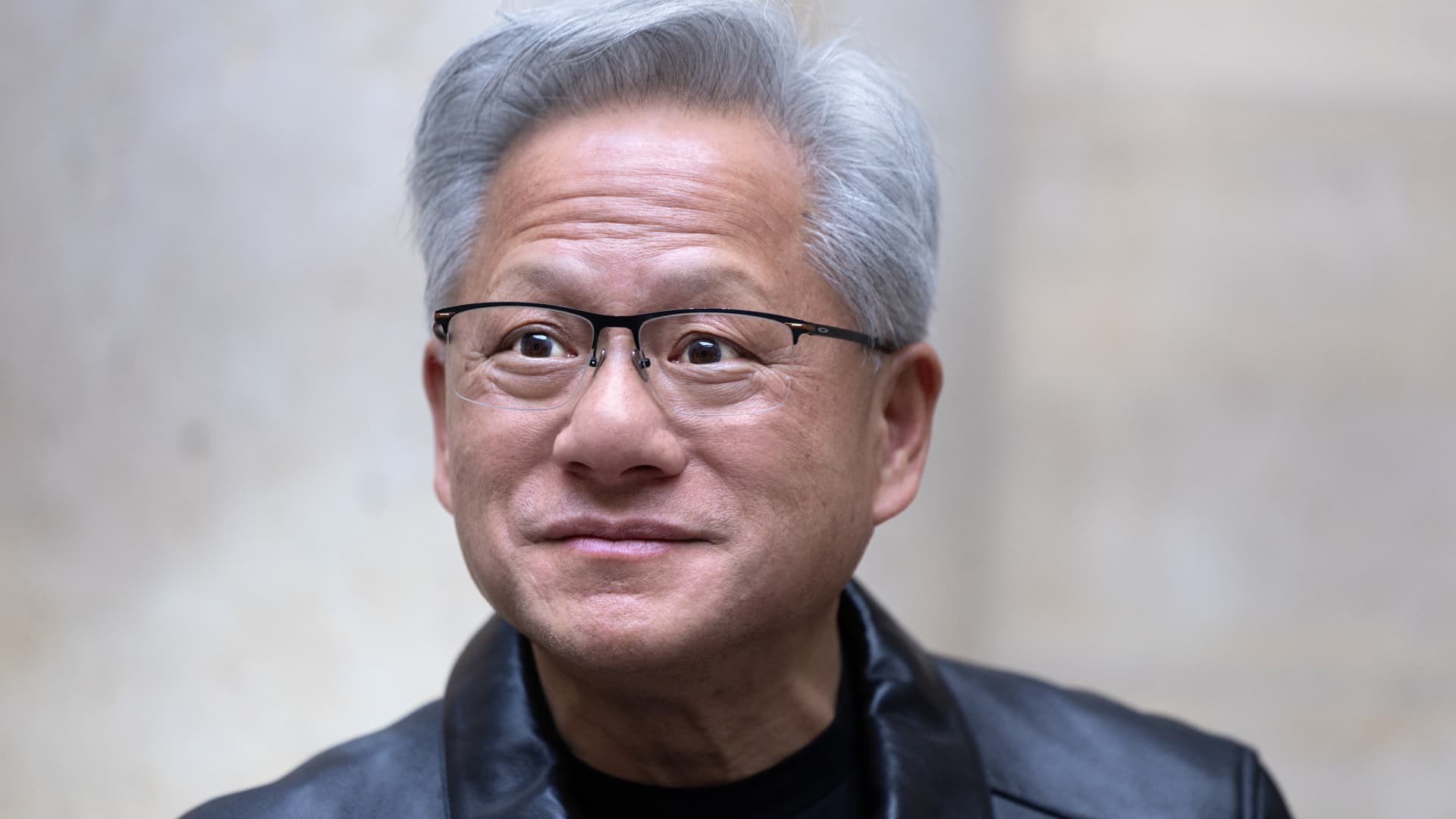
Jensen Huang’s unexpected departure and rapid reinstatement as Nvidia CEO have thrust the firm’s corporate Nvidia’s governance practices into the spotlight, sparking intense debate among analysts and investors. This unprecedented event highlights critical questions regarding leadership succession, board oversight, and the enduring influence of a founder at a world-leading technology giant. The incident serves as a crucial moment for Nvidia to address vulnerabilities and solidify its future operational resilience amidst its rapid expansion.
🚀 Tech Strategy & Market Disruptions
- Succession Scrutiny. Huang’s brief absence exposed Nvidia’s vulnerability to ‘key man risk’, prompting renewed calls for robust succession planning to ensure long-term stability and leadership continuity.
- Governance Overhaul Opportunity. Industry experts suggest this incident is a chance for Nvidia to enhance board experience and formalize management structures, scaling its oversight functions alongside its hyper-growth.
- Founder-Centric Innovation. The crisis underscored Huang’s pivotal role in driving Nvidia’s strategic bets on AI and high-performance computing, raising questions about how innovation momentum would be sustained without his direct, passionate vision.
The recent whirlwind surrounding Jensen Huang’s leadership at Nvidia has brought a sharp focus to the foundational elements of corporate control and strategic continuity. Huang’s brief stepping away from the helm, followed by a swift return, catalyzed a public discourse on Nvidia’s governance, particularly its dependence on its charismatic co-founder. Angela Mancini, head of advisory for global risk insights at Dow Jones, observed to CNBC, ‘What does it mean if you have a company too big to fail or a CEO too big to fire?’ This sentiment encapsulates the core challenge facing Nvidia: managing the duality of a visionary leader whose influence is both a driving force and a potential single point of failure.
Jeff Herbst, managing partner at GFT Ventures and a former Nvidia executive, openly advocated for Huang’s return, viewing the episode not as a setback but as a crucial inflection point. Herbst noted that the situation presented ‘a potential opportunity’ for Nvidia to proactively strengthen its governance frameworks, succession strategies, and overall management infrastructure. He highlighted the necessity for these functions to scale commensurately with Nvidia’s transformation from a specialized tech firm into a global corporate powerhouse. The sheer scale of Huang’s operational engagement, reportedly managing 60 direct reports, underscores the immediate need for a distributed leadership model and enhanced delegation, moving beyond a founder-centric command structure. For broader insights into evolving technology market trends, readers can refer to StockXpo’s analysis.
Stacy Rasgon, managing director and senior U.S. semiconductor analyst at Bernstein Research, admitted that the ‘key man risk’ associated with Huang had been largely overlooked by investors. This incident, he argues, has now compelled both Huang and the board to articulate a clearer succession plan, assuring stakeholders of the company’s long-term stability. The future of innovation-driven growth hinges on establishing a sustainable leadership pipeline that can absorb and extend Huang’s visionary passion into emerging technologies like autonomous systems and robotics.
Key areas for immediate action include:
- Board Enhancement: Recruiting directors with experience leading large, complex global enterprises to provide diversified oversight and strategic guidance.
- Formal Succession Pathways: Implementing structured programs to identify, mentor, and prepare internal candidates for top leadership roles.
- Operational Delegation: Re-evaluating the executive reporting structure to reduce reliance on a single individual and empower a broader leadership team.
The governance concerns ripple beyond internal operations, affecting market perception and investor confidence. This sudden leadership volatility acts as a Cause: it exposes structural weaknesses in a high-growth, innovation-led company. The Effect is immediate investor unease and heightened scrutiny, forcing the board to confront succession challenges. This then triggers a Disruption: a potential re-evaluation of valuation multiples, as governance risk is priced into future projections. Ultimately, this could lead to a Transformation Opportunity: driving the adoption of more robust corporate governance standards across the tech industry, setting new benchmarks for founder-led firms to ensure sustainable innovation and prevent leadership disruptions from becoming existential threats. Such developments are crucial for understanding the broader landscape of emerging technologies, which StockXpo actively covers.
‘The stability of leadership, especially at a company driving fundamental shifts in AI and computing, is paramount. Effective governance is not just compliance; it’s a strategic asset that secures continuous innovation, mitigates operational vulnerabilities, and sustains investor trust in a dynamic market environment. Nvidia’s current situation serves as a stark reminder that even the most innovative tech giants must mature their corporate structures alongside their technological advancements.’
Nvidia’s Ecosystem Expansion Potential: Beyond Chips
While much attention is on chip manufacturing, Nvidia’s long-term value proposition extends deeply into its ecosystem. The CUDA platform, its robust software stack, and its aggressive move into data center solutions, professional visualization, and autonomous vehicles solidify its market dominance. However, maintaining growth requires not only continued technological breakthroughs but also strategic partnerships and acquisitions that integrate seamlessly into its overarching platform. Any governance instability can create friction in securing these crucial alliances, potentially hindering the synergistic growth necessary to penetrate new verticals and solidify its position against emerging competitors. The challenge for Nvidia lies in decentralizing its strategic vision sufficiently to allow various ecosystem components to thrive independently while contributing to a unified technological direction.
Nvidia’s Security & Infrastructure Strength: A Double-Edged Sword
Nvidia’s infrastructure strength, particularly its security protocols for chip design, manufacturing, and software distribution, is critical to its market leadership. The integrity of its IP and supply chain is non-negotiable in an era of escalating cyber threats and geopolitical tensions. However, an over-reliance on a ‘hero CEO’ model can inadvertently centralize security decision-making and oversight, potentially creating blind spots if key personnel are not empowered with sufficient autonomy and resources. Strengthening board oversight in cybersecurity, appointing dedicated executive-level security leadership, and continuously stress-testing infrastructure resilience are essential. This ensures that while innovation accelerates, the underlying security architecture does not become a hidden vulnerability, especially as the company’s influence expands into highly sensitive sectors like defense and critical national infrastructure.
Nvidia’s Governance Reset: Charting the Next Era of AI Leadership
Jensen Huang’s return provides a critical window for Nvidia to enact meaningful reforms in its corporate structure and leadership strategy. The incident, while disruptive, offers a potent catalyst for enhancing transparency, formalizing succession pathways, and distributing strategic oversight more effectively across the organization. This isn’t merely about compliance; it’s about building a more resilient foundation for sustained technological leadership.
- The immediate focus must be on empowering a broader leadership cadre to reduce key-person dependency.
- Investing in robust board diversity and experience will strengthen strategic resilience and accountability.
- Clear communication on succession plans will restore investor confidence and de-risk future transitions.
Can Nvidia leverage this governance inflection point to not only maintain its AI dominance but also define a new standard for founder-led technological innovation?
📊 StockXpo Analyst’s View
Market Impact: The market initially reacted with uncertainty to Huang’s departure, highlighting how deeply tied Nvidia’s valuation is to its founder’s vision. His reinstatement has alleviated immediate concerns, yet the governance questions persist. Investors will now closely watch for concrete steps toward formalized succession and board independence, impacting long-term investor sentiment and potentially influencing how other founder-led tech companies are perceived. While short-term liquidity might stabilize, sustained upward momentum will require tangible evidence of structural maturity, as observed in recent reports on leading tech market trends from Bloomberg.
Sector To Watch: The semiconductor industry, particularly AI chip development, remains critical. This event underscores the outsized influence of key figures in highly specialized, innovation-driven sectors. Companies dependent on proprietary technology and singular visionary leadership will face increased scrutiny regarding their own governance and succession strategies. This could also prompt a re-evaluation of leadership decentralization in sectors like autonomous systems and cloud infrastructure, pushing for more distributed innovation management, as discussed in various Forbes technology articles.
Financial Disclaimer:
StockXpo.com is a financial news aggregator and educational portal, not a registered investment advisor or broker-dealer. All information, news, and analysis provided herein are strictly for educational purposes and do not constitute investment, financial, legal, or tax advice. Investing in the stock market involves high risks, and past performance is not indicative of future results. StockXpo will not be liable for any financial losses or investment damages. Always consult a certified financial advisor before making market decisions.
MORE IN INSIDE TECHNOLOGY
Nvidia China AI Access: Escalating Risks and Export Control Innovation
Published: Tuesday, November 17, 2026 · 3:36 AM
Jensen Huang’s Return: Nvidia’s Leadership at a Crossroads
Published: Monday, November 16, 2026 · 1:00 AM