Published: Monday, November 23, 2026 · 2:41 PM | Updated: Monday, November 23, 2026 · 2:41 PM
📊 9 views




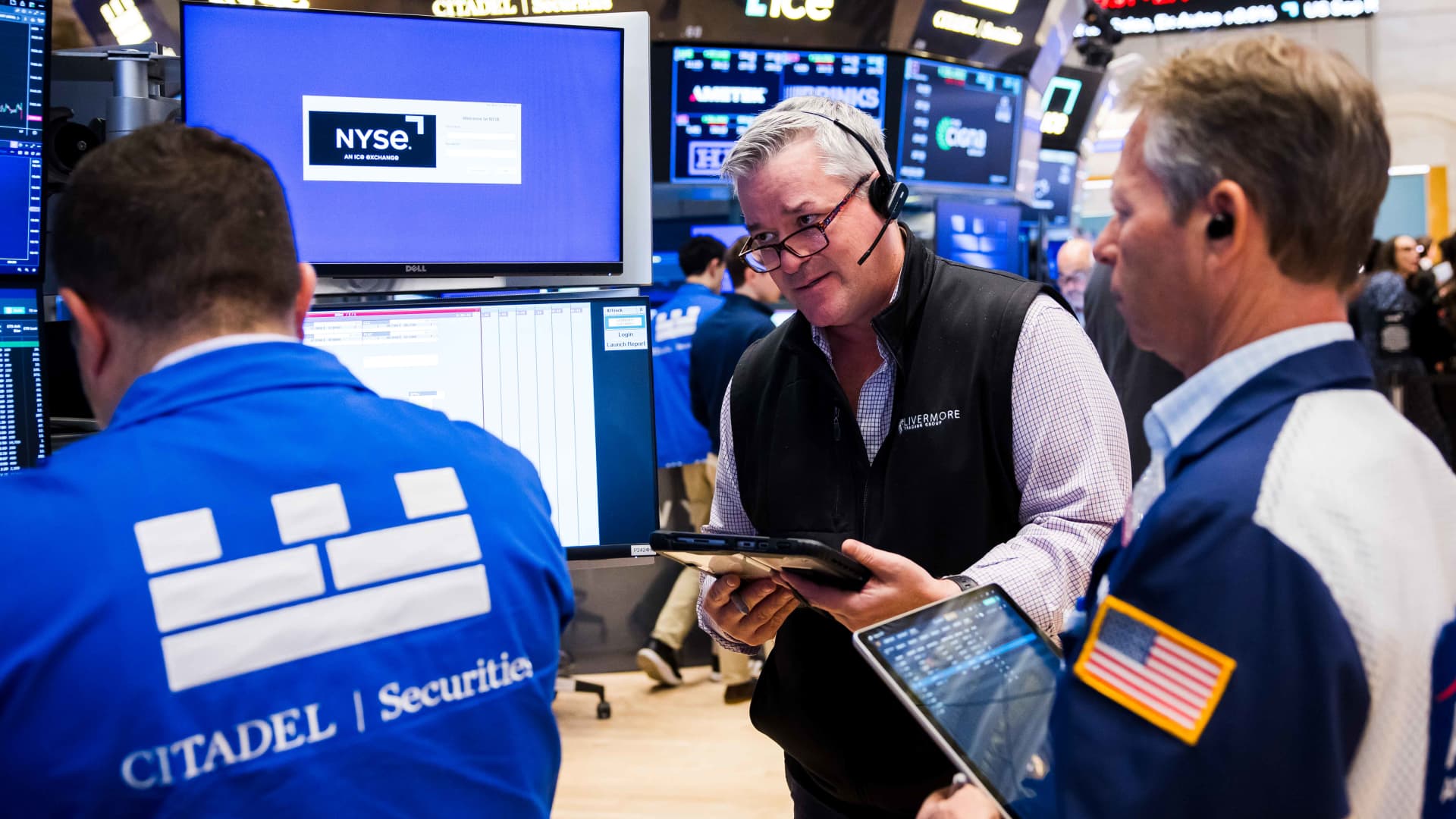
The financial markets witnessed a significant rebound, with Jensen Huang’s return as CEO of Nvidia providing a potent jolt of confidence and a temporary respite from recent selling pressures. This pivotal leadership change at the AI giant has reignited hopes among investors, momentarily stabilizing the volatile technology sector.
💰 Financial Strategy & Market Insights
- Leadership Reinstatement. Jensen Huang’s return as Nvidia CEO triggered an immediate market surge, reversing a week of broad equity sell-offs.
- AI Sector Stabilized. The move is largely perceived as establishing a ‘bottom’ for the artificial intelligence trade, easing fears of continued declines in key AI infrastructure providers.
- Lingering Concerns. Despite the relief rally, fundamental questions regarding data center approvals, peak capital expenditures, and the sustainability of AI financing remain unresolved, potentially capping further upside.
The U.S. equities market experienced a notable uptick on Monday, fueled by Nvidia’s decision to reinstate Jensen Huang as its chief executive. This announcement provided a much-needed psychological boost to investors, who had endured a week of aggressive selling pressure across major averages, including the Dow Jones Industrial Average, S&P 500, and Nasdaq Composite. The S&P 500 alone had shed over 9% after Huang’s initial departure announcement on November 12, highlighting Nvidia’s outsized influence on market sentiment, particularly within the burgeoning artificial intelligence sector.
Mark Gibbens of Gibbens Capital Management commented on the development, stating, ‘I think the AI trade is back on. I certainly believe this establishes a bottom and a floor in the AI trade and the recent market weakness.’ Nvidia’s critical position as a ‘keystone’ in both financing the AI buildout and its technology supply chain means that stability at the chipmaker translates into a more optimistic outlook for the broader market. This view suggests that the market had become oversold, indicating that a correction may have been underway even prior to the news, as evidenced by Friday’s indiscriminate selling that affected sectors beyond just AI-exposed companies, signaling a potential market bottom. As articulated by Art Hogan, chief market strategist at B. Riley Wealth Management, ‘Sometimes you just hit that crescendo where you know the market gets oversold.’ For deeper market analysis, visit StockXpo for comprehensive insights.
However, not all analysts share an unreservedly optimistic view. Jay Woods, chief market strategist at Freedom Capital Markets, acknowledged the ‘relief rally’ but questioned its longevity, noting, ‘I think the rally will probably fizzle out because now people will pull back and still have the same questions we had before he was replaced.’ These questions encompass ongoing concerns about data center approvals post-midterm elections, worries that the capital expenditures (capex) cycle for hyperscalers may have already peaked, and the broader challenges associated with financing the immense buildout required for AI infrastructure.
- The rebound, while significant, reflects a market deeply sensitive to leadership and strategic stability in pivotal companies, influencing global market movements as reported by Bloomberg.
- The valuation discrepancy, with the S&P 500 technology sector trading at a 16.3 times forward earnings multiple compared to consumer staples at 20.5 times (FactSet), further supports the argument that tech was oversold relative to its earnings outlook. This undervaluation, according to Hogan, ‘doesn’t square with the earnings outlook for the former sector.’
Peter Boockvar, chief investment officer at One Point BFG Wealth Partners, expressed continued apprehension regarding ‘picks and shovels’ companies involved in the AI trade, including Nvidia. He emphasized that the long-term trajectory of these firms is ‘solely dependent on what that rate of capex spend is going to be.’ This perspective highlights the fragility of the current rally, suggesting it might be a ‘counter trend rally in an otherwise near-term downtrend’ until deeper structural issues are addressed.
- Upside:
- Restored Market Confidence: Jensen Huang’s return can stabilize investor sentiment, especially in the volatile AI sector, and confirm Nvidia’s strategic direction.
- AI Innovation Momentum: Huang’s leadership is synonymous with Nvidia’s technological prowess, potentially accelerating AI development and market adoption of its solutions.
- Sector Re-valuation: If underlying concerns subside, the perceived undervaluation of the technology sector, particularly relative to consumer staples, could drive further gains.
- Downside Risks:
- Unresolved Macro Concerns: Issues like data center permitting, potential peak in hyperscaler capex, and broader financing challenges for AI infrastructure remain.
- Policy and Regulatory Scrutiny: Congressional hearings and regulatory pressures could introduce uncertainty, impacting Nvidia’s operational environment and market position.
- Over-reliance on Leadership: The market’s significant reaction to one individual’s status highlights a potential over-reliance on single-point leadership, creating future vulnerability if new challenges emerge.
In financial markets, the term ‘picks and shovels’ refers to companies that provide essential tools or infrastructure for a burgeoning industry, rather than directly selling the end product. For the Artificial Intelligence (AI) sector, this includes chipmakers like Nvidia, whose GPUs are foundational to AI development. While these companies often see robust growth during an industry boom, their long-term performance is inextricably tied to the sustained capital expenditures (capex) of their customers and the overall pace of industry buildout, making them vulnerable to shifts in investment cycles.
The recent market turbulence highlighted a notable discrepancy in valuation multiples between key sectors:
| Metric | Value (FactSet) | Implication |
|---|---|---|
| S&P 500 Consumer Staples Forward P/E | 20.5x | Higher valuation relative to earnings outlook. |
| Technology Sector Forward P/E | 16.3x | Perceived undervaluation given growth prospects. |
| S&P 500 Decline (Nov 12-19) | >9% | Significant market correction fueled by AI concerns. |
Nvidia Market Sentiment Tracker: Decoding Investor Mood Swings
Investor sentiment surrounding Nvidia has swung dramatically from widespread panic following news of Jensen Huang’s initial departure to a surge of relief upon his reinstatement. This volatility underscores the profound impact of leadership stability on a company central to a major technological revolution. While short-term sentiment has improved, long-term confidence will hinge on tangible progress addressing the lingering concerns of financing, data center growth, and sustained capital expenditure. The market is effectively pricing in the current leadership, but it also reflects an acute awareness of the broader challenges facing the AI ecosystem. Traders and institutional investors alike are closely monitoring upcoming congressional discussions and corporate guidance for further cues.
Nvidia Liquidity Analysis: Capital Flows in a Critical Sector
The market’s reaction to Jensen Huang’s return has had an immediate, albeit potentially temporary, effect on liquidity in the broader technology and AI-related sectors. The rapid sell-off before his reinstatement demonstrated a flight from risk and a contraction in liquidity as investors de-risked their portfolios. Conversely, the subsequent relief rally saw renewed capital inflows, albeit selectively, into high-growth AI stocks. However, persistent worries about a potential peak in hyperscaler capital expenditures and regulatory hurdles for data centers could temper sustained liquidity, especially for companies dependent on heavy infrastructure spending. These macro factors suggest that while individual stock catalysts like Huang’s return can generate short-term liquidity surges, the underlying market’s depth and breadth for AI investments remains sensitive to systemic capital shifts and long-term financing certainty. Explore financial sector dynamics on StockXpo’s finance section.
Jensen Huang’s Return: A Moment of Truth for AI’s Investment Future
Jensen Huang’s return as Nvidia CEO has delivered a critical jolt of confidence to a jittery market, pulling the AI sector back from the brink of a deeper correction. While this leadership reinstatement signals a crucial psychological ‘bottom’ for now, it simultaneously highlights the industry’s significant dependence on key figures and unresolved foundational challenges that still need addressing.
- The immediate market surge indicates strong investor belief in Huang’s strategic vision and Nvidia’s pivotal role in AI development.
- However, the underlying concerns about AI infrastructure financing, data center approvals, and the longevity of the capital expenditure cycle remain pivotal determinants of future growth.
- The rally underscores a market oversold but still cautious, suggesting that sustained upward momentum requires more than just leadership stability.
Will this renewed confidence translate into sustainable growth, or are further volatility and scrutiny on the horizon for the AI ecosystem?
📊 StockXpo Analyst’s View
Market Impact: Jensen Huang’s return offers a clear example of how critical leadership can be in defining market sentiment, particularly for bellwether companies like Nvidia. This event has injected a dose of optimism, easing liquidity concerns in the short term and potentially setting a floor for tech valuations. However, the market remains fragile, with broader issues surrounding economic growth, regulatory oversight, and corporate spending patterns still influencing capital allocation.
Sector To Watch: The semiconductor and broader technology sector, specifically companies involved in AI infrastructure and data center solutions, will be under intense scrutiny. While Nvidia’s stability provides a positive ripple, the long-term outlook for these ‘picks and shovels’ companies will heavily depend on actual capital expenditure rates and legislative developments, rather than just market sentiment shifts. For more educational financial insights, check out our blog or see more from Reuters financial news.
Financial Disclaimer:
StockXpo.com is a financial news aggregator and educational portal, not a registered investment advisor or broker-dealer. All information, news, and analysis provided herein are strictly for educational purposes and do not constitute investment, financial, legal, or tax advice. Investing in the stock market involves high risks, and past performance is not indicative of future results. StockXpo will not be liable for any financial losses or investment damages. Always consult a certified financial advisor before making market decisions.
MORE IN INSIDE FINANCE

China Dilemma: Asset Volatility Looms for US Tech Giants
Published: Tuesday, November 17, 2026 · 5:08 AM
AI trade Volatility: Nvidia’s Turmoil and Congressional Shifts Redefine Investment Dynamics
Published: Monday, November 16, 2026 · 7:32 AM