
Published: Saturday, October 31, 2026 · 10:09 AM | Updated: Saturday, October 31, 2026 · 10:09 AM
📊 16 views




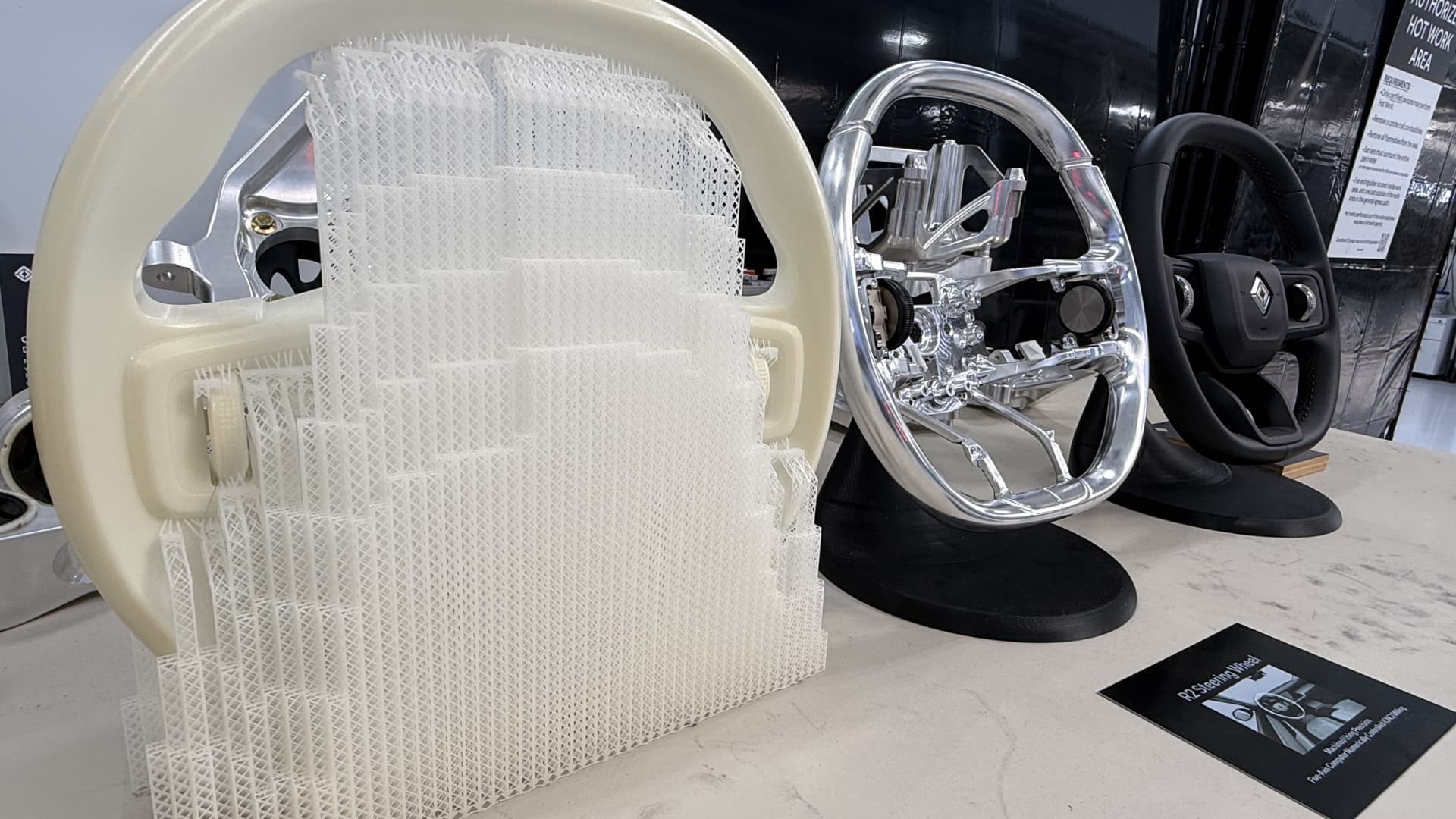
Detroit’s automotive giants, alongside agile electric vehicle innovators, are aggressively integrating advanced 3D printing technologies into their core manufacturing processes. This strategic shift signals a profound transformation in how vehicles are designed, produced, and maintained, promising significant reductions in operational costs and unprecedented acceleration in development cycles. The move highlights a broader industry pivot towards localized, on-demand production capabilities that enhance supply chain resilience and foster rapid innovation.
🗝️ Corporate Strategy Insights
- Cost Reduction Imperative. Automakers are leveraging 3D printing to significantly cut supplier tooling costs and streamline logistics, with equipment often paying for itself within a year.
- Speed-to-Market Advantage. Additive manufacturing slashes part production times from weeks to days or even hours, accelerating R&D and enabling faster vehicle iteration and plant uptime.
- Operational Decentralization. By installing 3D printers directly in assembly plants and R&D labs, companies like Ford and Rivian are democratizing access to custom parts and tools, boosting plant efficiency and engineering agility.
The automotive sector is witnessing a quiet but profound manufacturing revolution, spearheaded by the widespread adoption of 3D printing, also known as additive manufacturing. Companies like Rivian, Ford Motor, and General Motors are no longer treating 3D printing as a niche prototyping tool but as a fundamental pillar of their production ecosystems. Rivian, for instance, has invested over $5 million in 3D-printing machinery, with annual material costs reaching $1.7 million, yet reports that these machines typically achieve a payback period within a year. Jared Beck, Rivian’s head of additive manufacturing, emphasized the technology’s critical role, stating, “We don’t have a choice but to scale up and begin using it through all factions of Rivian.” The main benefit, according to Beck, is speed, translating into millions in savings and significantly reduced production times for parts. This enables engineers to rapidly iterate designs, create flexible silicone parts, and even produce screw guides for tooling on demand.
More established players like Ford have integrated 3D printing across their vast operations for years, now deploying dedicated additive manufacturing departments at many of their plants. Ford expects to have 3D labs deployed at over 23 facilities by the end of this year, operating more than 200 machines within its official program, with additional printers in use beyond this count. Gregory Foresi, a Ford mechanical engineer, highlighted the immediate impact, describing how a “vending machine” system for 3D-printed parts at the F-150 plant in Dearborn keeps operations fluid. This system allows team leaders to access custom tools like torque bit sockets and hood jackers, often designed by employees, significantly faster and at a lower cost than traditional sourcing. Furthermore, 3D-printed components have been crucial for maintaining assembly line production by serving as temporary replacements for critical machining parts, ensuring operational continuity.
- This pervasive integration underscores a shift from traditional, centralized manufacturing to a more distributed, agile model that leverages localized production for a distinct competitive edge.
General Motors has also deepened its commitment, utilizing 3D-printed parts for low-volume, specialized products such as the bespoke Cadillac Celestiq, which features 135 3D-printed components. They’ve also expanded the use of industrial Stratasys printers, which can cost hundreds of thousands of dollars, across 20 manufacturing facilities, demonstrating a clear path to standardization and scalability. Fadi Abro, senior global director of automotive and mobility at Stratasys, noted that “material properties improved so significantly that the use cases improved,” signaling a maturing technology that is increasingly viable for production-grade applications. The overarching trend indicates that 3D printing is transitioning from a novelty to a commoditized, indispensable tool that drives efficiency and accelerates product development across the industry, impacting global stock markets.
The widespread embrace of 3D printing creates a significant strategic ripple effect across the automotive value chain.
This technology directly impacts operational efficiency (Cause) by enabling on-demand production of parts and tools (Effect), which in turn reduces manufacturing lead times and inventory costs (Further Effect). For established automakers like Ford and GM, it enhances their supply chain resilience by reducing dependence on external suppliers for certain components and tooling, directly influencing market share through sustained production and faster innovation cycles. For newer entrants like Rivian, it acts as a critical enabler for agility, allowing rapid prototyping and iteration of complex EV components, accelerating their product launch timelines and competitive positioning in the rapidly evolving EV market. The ability to quickly design, test, and deploy specialized tools or even production parts offers a significant competitive advantage, allowing companies to respond to engineering challenges and market demands with unprecedented speed. This increased operational agility creates a formidable barrier to entry for competitors who rely solely on traditional manufacturing processes, forcing them to accelerate their own adoption of additive manufacturing to keep pace with industry leaders in efficiency and innovation, as reported by business news and trends.
The democratizing effect of 3D printing empowers every engineer and plant worker, transforming problem-solving from a lengthy procurement process into an immediate, in-house manufacturing solution. This is not just cost-cutting; it’s a fundamental re-architecture of automotive production flexibility.
Key Performance Indicators for Additive Manufacturing Adoption:
- Rivian’s Investment: Over $5 million in 3D printing machinery, with annual material costs around $1.7 million, yielding payback within one year.
- Ford’s Scale: Plans for 3D labs in more than 23 plants by year-end, utilizing over 200 machines in its official program.
- GM’s Customization: Integration of 135 3D-printed components into its Cadillac Celestiq, alongside broader deployment of industrial Stratasys printers across manufacturing facilities.
These metrics underscore the substantial capital allocation towards 3D printing infrastructure and its quantifiable impact on reducing costs, accelerating development, and enhancing manufacturing flexibility across the automotive industry.
Rivian’s Strategic Play for Production Agility
Rivian’s aggressive investment in additive manufacturing, particularly its goal to “democratize 3D printing for the entire company,” highlights a core strategy focused on agility and rapid iteration. As an emerging EV manufacturer, speed in development and the ability to quickly address production challenges are paramount. By empowering engineers with on-demand printing capabilities, Rivian reduces its reliance on external suppliers for prototypes and specialized tools, dramatically cutting lead times from weeks to days or hours. This internal capability allows Rivian to maintain tighter control over its intellectual property, customize solutions precisely to its needs, and accelerate the launch of new models like the R2 SUV by streamlining the design-to-production pipeline. This focus on internalizing production flexibility is a crucial aspect of its long-term corporate growth strategies within the fast-moving electric vehicle market.
Ford’s Industrial Moat Through Additive Solutions
For an automotive titan like Ford, the strategic application of 3D printing extends beyond mere cost savings; it reinforces an existing industrial moat and enhances operational resilience. With a vast network of assembly plants and complex supply chains, Ford’s deployment of over 200 machines across 23 plants by year-end signals a mature integration of additive manufacturing into large-scale production. The ability to print critical tools, jigs, and even temporary replacement parts on-site minimizes downtime, optimizes worker efficiency, and mitigates risks associated with supply chain disruptions. This strategy allows Ford to not only innovate faster but also to maintain consistent production levels, which is vital for high-volume vehicles like the F-150. By fostering employee-designed solutions and distributing access to 3D printing, Ford is cultivating a culture of continuous improvement and problem-solving at the factory floor, securing its market leadership in traditional and electrified vehicle segments.
The Future of 3D Printing in Automotive Manufacturing
The automotive industry’s accelerating adoption of 3D printing signifies a permanent shift towards more agile, cost-effective, and resilient manufacturing paradigms. This technology is proving instrumental in driving down operational expenses and dramatically shortening product development cycles, offering a clear competitive advantage to companies that master its application.
- Automakers are moving beyond prototyping, integrating 3D printing for production-grade parts, tools, and critical assembly components.
- The “democratization” of this technology allows for localized, on-demand manufacturing, empowering plant workers and engineers alike.
- Expect continued investment and innovation in materials and printer capabilities, further expanding the scope of additive manufacturing in vehicle production.
Will this manufacturing revolution fundamentally alter the competitive landscape, pushing traditional supply chains into obsolescence?
### 📊 StockXpo Analyst’s View
Market Impact: This widespread adoption of 3D printing will likely exert downward pressure on manufacturing costs, enhancing automakers’ margins and potentially influencing vehicle pricing strategies. Investors should view companies with advanced additive manufacturing capabilities as having stronger operational moats and greater resilience against supply chain shocks. The emphasis on speed also means faster innovation, potentially accelerating product refreshes and new model introductions across the industry. For deeper insights, consult educational insights.
Sector To Watch: The additive manufacturing sector, including companies like Stratasys (SSYS) mentioned in the article, stands to gain significantly from this automotive trend. As more automakers scale up their 3D printing operations, demand for industrial-grade printers, specialized materials (plastics, metals, composites), and related software solutions will surge. This growth could spill over into adjacent industrial technology sectors focused on automation and advanced robotics, as often covered by global market updates.
Financial Disclaimer:
StockXpo.com is a financial news aggregator and educational portal, not a registered investment advisor or broker-dealer. All information, news, and analysis provided herein are strictly for educational purposes and do not constitute investment, financial, legal, or tax advice. Investing in the stock market involves high risks, and past performance is not indicative of future results. StockXpo will not be liable for any financial losses or investment damages. Always consult a certified financial advisor before making market decisions.
MORE IN INSIDE BUSINESS

Starbucks Sales: U.S. Turnaround Fuels Stronger Outlook
Published: Friday, October 30, 2026 · 11:16 AM

Eli Lilly’s $92 Billion Leap: Unpacking Unprecedented Growth
Published: Thursday, October 29, 2026 · 7:36 AM


