
Published: Wednesday, October 21, 2026 · 7:30 AM | Updated: Wednesday, October 21, 2026 · 7:30 AM
📊 16 views




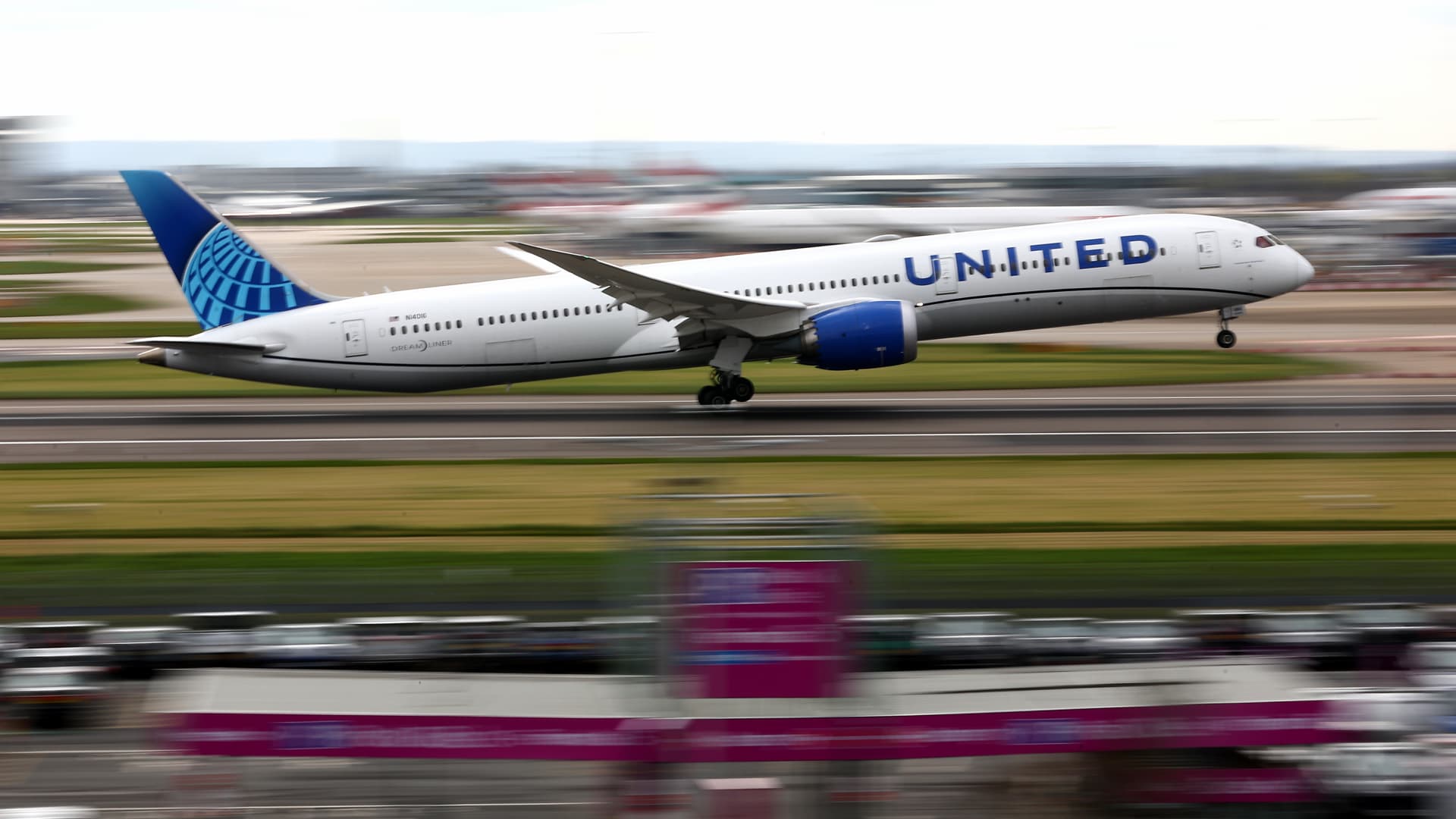
United Airlines has significantly revised its 2026 profit outlook downward, citing escalating fuel expenses as a primary headwind. This development underscores the persistent challenge airlines face in balancing robust travel demand with volatile operational costs, a dynamic critical for the broader aviation sector, as often highlighted by leading market analysis firms.
🗝️ Corporate Strategy Insights
- Fuel Price Volatility. United Airlines profit outlook is directly impacted by a sharp increase in jet fuel prices, compelling a significant reduction in its 2026 earnings forecast from $9-$11 to $7.22 per share.
- Pricing Power Strategy. Despite rising costs, United successfully passed on 72% of the oil price surge to consumers, demonstrating strong pricing power in a high-demand travel market, with an ambition to reach 100%.
- Resilient Passenger Demand. The airline reported increased passenger counts and robust domestic and international unit revenue, indicating sustained traveler willingness to book, even with elevated airfares.
United Airlines (UAL) has dramatically recalibrated its financial expectations for 2026, announcing a revised adjusted earnings forecast between $0.50 and $1.50 per share for the fourth quarter, sharply below analyst estimates of $1.76. This adjustment translates to a full-year 2026 adjusted earnings projection of no more than $7.22 per share, a substantial drop from its mid-July guidance of $9 to $11 per share. The primary catalyst for this downward revision is the persistent surge in fuel prices, which the carrier anticipates will average $4.80 per gallon in Q4, up from $3.90 per gallon in Q3. This increased cost structure is significantly eroding profit margins despite what CEO Scott Kirby describes as strong consumer demand.
Third-quarter results, while slightly missing Wall Street’s adjusted EPS and revenue targets, still demonstrated underlying operational strength. United reported adjusted earnings of $2.54 per share against an expected $2.57, on revenues of $17.88 billion versus an anticipated $17.9 billion. Notably, Q3 net income actually rose 8.5% year-over-year to $1.03 billion, or $3.14 a share, reflecting effective cost management and robust demand prior to the more severe fuel price spikes impacting Q4. The airline’s fuel bill surged by nearly 62% year-over-year in Q3 to $4.84 billion, illustrating the sheer scale of the cost pressure.
Despite these challenges, United’s strategic focus on a ‘brand-loyal airline’ appears to be paying off in terms of customer engagement and pricing power.
- Domestic passenger unit revenue climbed 14.5% year-over-year.
- International unit revenue increased by 17.4% annually.
- Passenger counts rose over 2% from the previous year, signaling sustained travel demand.
CEO Kirby noted that the airline is currently passing on approximately 72% of the oil price surge to its customers, a testament to its market positioning and the inelasticity of current travel demand. The company’s aspiration to achieve 100% pass-through indicates a strong belief in continued consumer willingness to absorb higher fares, a key element for sustaining profitability in a high-cost environment. The ability of airlines to transfer cost increases to passengers without a significant drop in demand is a crucial factor for their long-term viability, particularly as the industry navigates various macro-economic headwinds, a topic frequently discussed in investment analysis.
The Strategic Ripple of Rising Fuel Costs on Aviation
The revised United Airlines profit outlook creates a strategic ripple effect across the aviation sector. The direct cause – escalating fuel costs – leads to a primary effect of reduced profitability for United. However, the secondary effect is a clearer demonstration of strong airline pricing power. If United can pass on 72% of fuel costs and aims for 100%, it signals that the broader industry, including competitors like Delta and American Airlines, may also possess similar leverage over consumers. This could lead to a sector-wide trend of sustained higher airfares. For consumers, this translates to permanently elevated travel costs. For competitors, it validates strategies focused on premium services and managing capacity to maintain price integrity. This environment might also intensify efforts toward fuel efficiency investments or hedging strategies across the industry, impacting long-term capital allocation decisions for major carriers as they seek to enhance corporate growth.
“United’s ability to maintain strong passenger bookings and pass through a significant portion of rising fuel costs highlights a critical competitive advantage in the current market: resilient demand coupled with effective yield management. This pricing power mitigates what would otherwise be a much more severe hit to profitability.”
Key Financial Metrics: Q3 2026 vs. Expectations
| Metric | Reported (Adjusted) | Expected (LSEG) | Significance |
|---|---|---|---|
| EPS | $2.54 | $2.57 | Slight miss indicates cost pressures on bottom line. |
| Revenue | $17.88 Billion | $17.9 Billion | Marginal miss despite 17.4% YoY growth, signaling strong demand. |
| Q4 Fuel Price Forecast | $4.80/gallon | N/A (vs. $3.90/gallon in Q3) | Key driver of the revised 2026 profit outlook. |
These metrics highlight that while demand remains robust, cost inflation, particularly in fuel, is a significant headwind impacting the airline’s earnings potential, despite strong revenue performance.
United Airlines Strategic Analysis: Navigating Fuel Headwinds
United’s strategy appears dual-faceted: leveraging strong post-pandemic travel demand to drive revenue, while simultaneously attempting to mitigate operational cost inflation through fare adjustments. The airline’s emphasis on building a ‘brand-loyal airline for customers’ implies a focus on service quality and network breadth to justify higher prices, rather than competing solely on cost. This approach is critical in an environment where fuel price volatility is outside direct control. Successfully pushing through 72% of fuel cost increases demonstrates significant market power, a testament to its network advantage and customer base. This also positions United as a bellwether for how effectively other legacy carriers can manage similar external pressures, influencing market sentiment on airline stocks.
United Airlines Competitive Advantages in a Volatile Market
Despite the cut in its United Airlines profit outlook, the carrier’s competitive advantages are evident. Its extensive global network, particularly strong international routes (contributing 17.4% unit revenue growth), allows it to capture premium travel segments less sensitive to price increases. Furthermore, its loyalty programs and established brand appeal contribute to the inelastic demand observed, enabling the company to maintain robust passenger counts even as fares rise. This strong position, however, is constantly tested by new entrants and budget carriers, forcing a delicate balance between premium service offerings and market share, a dynamic frequently examined in business strategy forums. The airline’s ability to adapt its pricing strategy in real-time is a core operational efficiency that provides a sustained edge.
United Airlines’ Resilient Path Amidst Economic Turbulence
While the significant cut to United’s 2026 profit outlook is a clear indicator of macro-economic pressures, particularly fuel costs, the underlying operational strength and demand resilience are noteworthy. The airline’s ability to maintain bookings and pass through a substantial portion of cost increases highlights a robust business model in a challenging environment. This signals a strategic focus on revenue quality over sheer volume, an important distinction for future performance.
- The airline demonstrates strong pricing power, absorbing significant fuel cost increases.
- Sustained high passenger demand suggests travel remains a consumer priority despite higher fares.
- Future profitability hinges on continued demand elasticity and effective cost management strategies.
Can United Airlines sustain its pricing power and operational efficiency to fully offset persistent fuel volatility in the long term?
📊 StockXpo Analyst’s View
Market Impact: United’s revised forecast may dampen immediate investor sentiment for the airline sector, but the strong underlying demand and pricing power demonstrate resilience. The news reinforces the industry’s vulnerability to commodity price swings but also its capacity to pass costs to consumers, which could stabilize long-term revenue streams for well-positioned carriers. Market liquidity might see short-term adjustments as investors weigh profit outlooks against robust travel trends.
Sector To Watch: The airline sector, particularly legacy carriers, remains a focus. Watch for how other major airlines like Delta and American report their Q4 fuel costs and forward guidance. Additionally, the energy sector will be crucial, as sustained high oil prices directly correlate with airline profitability challenges and could indicate broader inflationary pressures impacting global stock markets, a trend widely covered by global business news outlets.
Financial Disclaimer:
StockXpo.com is a financial news aggregator and educational portal, not a registered investment advisor or broker-dealer. All information, news, and analysis provided herein are strictly for educational purposes and do not constitute investment, financial, legal, or tax advice. Investing in the stock market involves high risks, and past performance is not indicative of future results. StockXpo will not be liable for any financial losses or investment damages. Always consult a certified financial advisor before making market decisions.
MORE IN INSIDE BUSINESS
General Motors Earnings Preview: A 30% EPS Surge Amidst Market Caution
Published: Tuesday, October 20, 2026 · 1:11 AM

JPMorgan Defense Investments: $5 Billion Surge Redefines Strategy
Published: Monday, October 19, 2026 · 7:29 AM


