
Published: Friday, October 16, 2026 · 2:08 PM | Updated: Friday, October 16, 2026 · 2:08 PM
📊 20 views




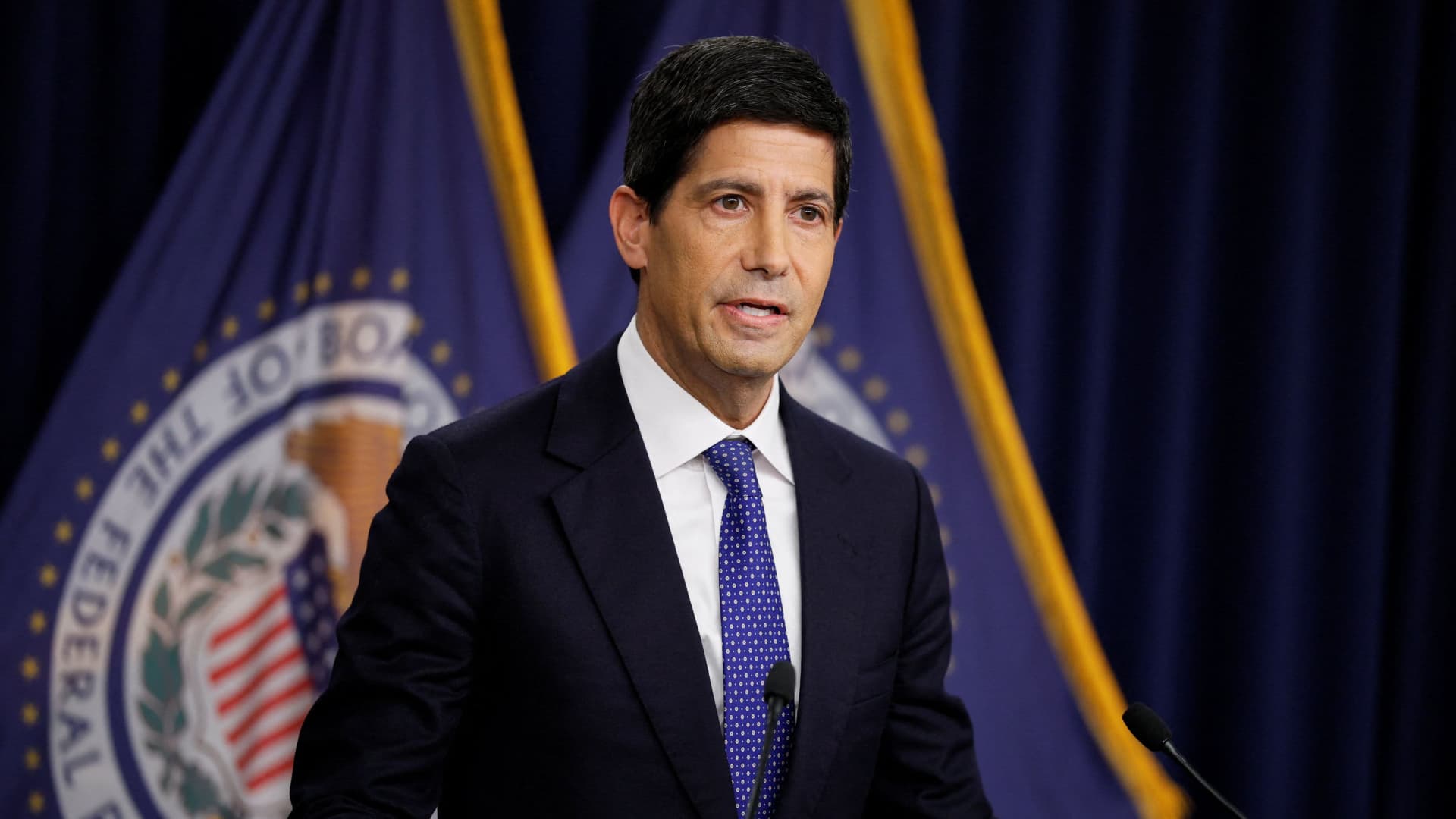
Global markets are on edge as the Federal Reserve’s October meeting approaches, with widespread expectations of a rate hold potentially clashing with Chairman Kevin Warsh’s independent stance. This potential divergence could introduce significant volatility and recalibrate investor sentiment, impacting systemic growth trajectories worldwide.
📊 Macro-Economic Strategic Insights
- Warsh’s Unconventional Approach. Unlike predecessors, Chairman Warsh has rejected pre-meeting market signaling, creating uncertainty around the Fed’s next move on Fed rates.
- Rising Inflationary Pressures. Recent consumer and producer price index data indicate persistent inflation, providing Warsh with a strong argument for a rate hike to meet the Fed’s 2% target.
- Market Complacency Risk. Despite Warsh’s hawkish leanings, the futures market assigns only a 15% probability to an October hike, potentially setting the stage for significant market surprise and volatility.
While traders are overwhelmingly betting on a pause, the prevailing market sentiment regarding Fed rates rests on traditional Fed communication norms that Chairman Kevin Warsh appears to be actively dismantling. His recent remarks, including at an IMF event in Bangkok, have been deliberately ambiguous, leaving ample room for a hawkish pivot without directly signaling it. This contrasts sharply with past practices where senior Fed officials like the Vice Chairman and New York Fed President would often align their public statements to guide market expectations. Vice Chairman Philip Jefferson and New York Fed President John Williams have both recently indicated a lack of urgency for further rate increases, a stance that has been quickly priced into market forecasts, leading to a perceived complacency.
However, Warsh has explicitly disclaimed the importance of the Summary of Economic Projections (SEP) as ‘not my forecasts,’ highlighting his independent economic outlook first detailed in Jackson Hole. His view emphasizes robust economic growth and inflation as a greater concern than the jobs market, supported by what he perceives as still-loose credit conditions, despite a slight tightening reflected in the Chicago Fed’s National Financial Conditions Index. The central question remains whether Warsh believes the market has sufficiently tightened conditions, or if further action is warranted to manage inflation.
The latest inflation figures present a compelling case for a rate hike, a scenario investors might be underestimating. Key data points reinforce the inflationary narrative:
- The Consumer Price Index (CPI) rose 3.7% year-over-year through September, indicating persistent price pressures on consumers.
- The Producer Price Index (PPI) surged 6.3% annually in September, suggesting upstream cost increases that are likely to pass through to consumers.
- These figures imply that the Fed’s preferred inflation gauge, core Personal Consumption Expenditures (PCE), will likely clock in at 3.1% year-over-year, significantly above the Fed’s 2% target.
Warsh has been unequivocal about the Fed’s 2% PCE goal being a ‘firm, fixed target,’ leaving little room for tolerance of elevated inflation. The juxtaposition of market certainty for a pause and Warsh’s hawkish leanings, coupled with the hot inflation data, creates a volatile environment. A surprise hike could undermine the credibility of other Fed officials who have signaled a hold and make future Fed decisions even more opaque, adding uncertainty to the trajectory of global markets and investment analysis.
The economic consequences of a surprise Fed rate hike could be significant, cascading through various sectors:
Unexpected Rate Hike → Increased Borrowing Costs → Reduced Corporate Investment & Consumer Spending → Potential Slowdown in Economic Growth → Moderation of Inflationary Pressures
Market Volatility → Decreased Investor Confidence → Flight to Safe-Haven Assets → Stronger Dollar → Impact on Export Competitiveness
Higher Treasury Yields → Increased Government Debt Servicing Costs → Fiscal Policy Constraints → Broader Financial Market Re-evaluation
“The Federal Reserve’s communication strategy under Chairman Warsh marks a significant departure from previous eras. Traditionally, the Fed aimed for ‘no surprises,’ carefully signaling policy shifts to minimize market disruption. Warsh’s explicit rejection of broadcasting decisions before FOMC meetings means that market participants can no longer solely rely on telegraphing from other committee members, injecting a higher degree of unpredictability into monetary policy decisions and challenging conventional approaches to economic policy analysis.”
| Economic Indicator | September 2026 Reading | Significance for Fed Rates |
|---|---|---|
| Consumer Price Index (CPI) | 3.7% (Year-over-Year) | Measures consumer-level inflation; persistent readings above target strengthen hawkish arguments. |
| Producer Price Index (PPI) | 6.3% (Year-over-Year) | Indicates inflation at the wholesale level; often a leading indicator for future consumer prices. |
| Implied Core PCE | ~3.1% (Year-over-Year) | The Fed’s preferred inflation gauge, excluding volatile components; substantially above the 2% target. |
These metrics collectively paint a picture of inflation that remains elevated and sticky, providing a strong data-driven rationale for a more aggressive monetary policy stance from the Federal Reserve, potentially influencing future educational insights for investors.
U.S. Inflationary Risks: Beyond the Headlines
The latest inflation data, while stark, might not fully capture the underlying inflationary pressures building in the U.S. economy. Beyond headline figures, strong demand for AI-related infrastructure and services, coupled with potential supply chain bottlenecks in critical technology components, could fuel sector-specific price surges. This ‘techflation’ risk, if not managed, could spill over into broader economic inflation, making the Fed’s task of achieving its 2% target significantly more challenging and impacting long-term macro-stability. A deeper dive into sector-specific input costs and wage growth is crucial to anticipate the Fed’s next moves.
Global Financial Conditions Outlook: A Tightening Horizon
While U.S. financial conditions, as measured by the Chicago Fed’s NFCI, suggest some tightening, global financial conditions present a mixed picture. Persistent inflation in major economies like the Eurozone and the UK, coupled with varied growth trajectories, suggests that central banks worldwide are grappling with similar dilemmas. A surprise hawkish move on Reuters’ economic coverage could trigger a reassessment of global risk assets and currency valuations, potentially leading to capital outflows from emerging markets. The interconnectedness of global financial systems means that the Fed’s decision has far-reaching implications beyond U.S. borders, influencing everything from commodity prices to sovereign debt yields, as detailed in global economic analysis.
Fed Rates Decision: Navigating Warsh’s Unpredictable Path
The upcoming Federal Reserve meeting presents a classic monetary policy conundrum, where market expectations for a pause might be dangerously misaligned with the new Chairman’s independent and hawkish disposition. The persistence of elevated inflation data provides a clear technical justification for a hike, regardless of prior market conditioning by other Fed officials.
- Markets are currently underpricing the probability of an October rate hike.
- Chairman Warsh’s communication style suggests a willingness to defy conventional market signaling.
- The continued “hot” inflation readings reinforce the argument for aggressive monetary policy action to safeguard price stability.
“How will Chairman Warsh balance the imperative for price stability against the risk of unexpected market volatility, and what will this mean for the future of stock markets?”
📊 StockXpo Analyst’s View
Market Impact: A surprise rate hike on Fed rates would likely trigger an immediate, sharp reaction in equity and bond markets. We anticipate increased volatility, a potential sell-off in growth stocks sensitive to higher interest rates, and a strengthening of the U.S. dollar as yield differentials widen. Market liquidity could tighten, prompting a reassessment of risk appetite across asset classes.
Sector To Watch: Defensive sectors like utilities and consumer staples, alongside energy (given potential inflation drivers), may show relative resilience. Technology and real estate, particularly those reliant on accessible credit, could face significant headwinds. Investors should also monitor financial institutions for shifting lending dynamics.
Financial Disclaimer:
StockXpo.com is a financial news aggregator and educational portal, not a registered investment advisor or broker-dealer. All information, news, and analysis provided herein are strictly for educational purposes and do not constitute investment, financial, legal, or tax advice. Investing in the stock market involves high risks, and past performance is not indicative of future results. StockXpo will not be liable for any financial losses or investment damages. Always consult a certified financial advisor before making market decisions.
MORE IN INSIDE ECONOMY

UK Economy Registers Unexpected 0.1% Growth Amidst Headwinds
Published: Thursday, October 15, 2026 · 2:54 AM

Godzilla El Niño’s Inflationary Warning for Philippine Stability
Published: Wednesday, October 14, 2026 · 1:04 AM


