Published: Friday, November 6, 2026 · 9:43 AM | Updated: Friday, November 6, 2026 · 9:43 AM
📊 13 views




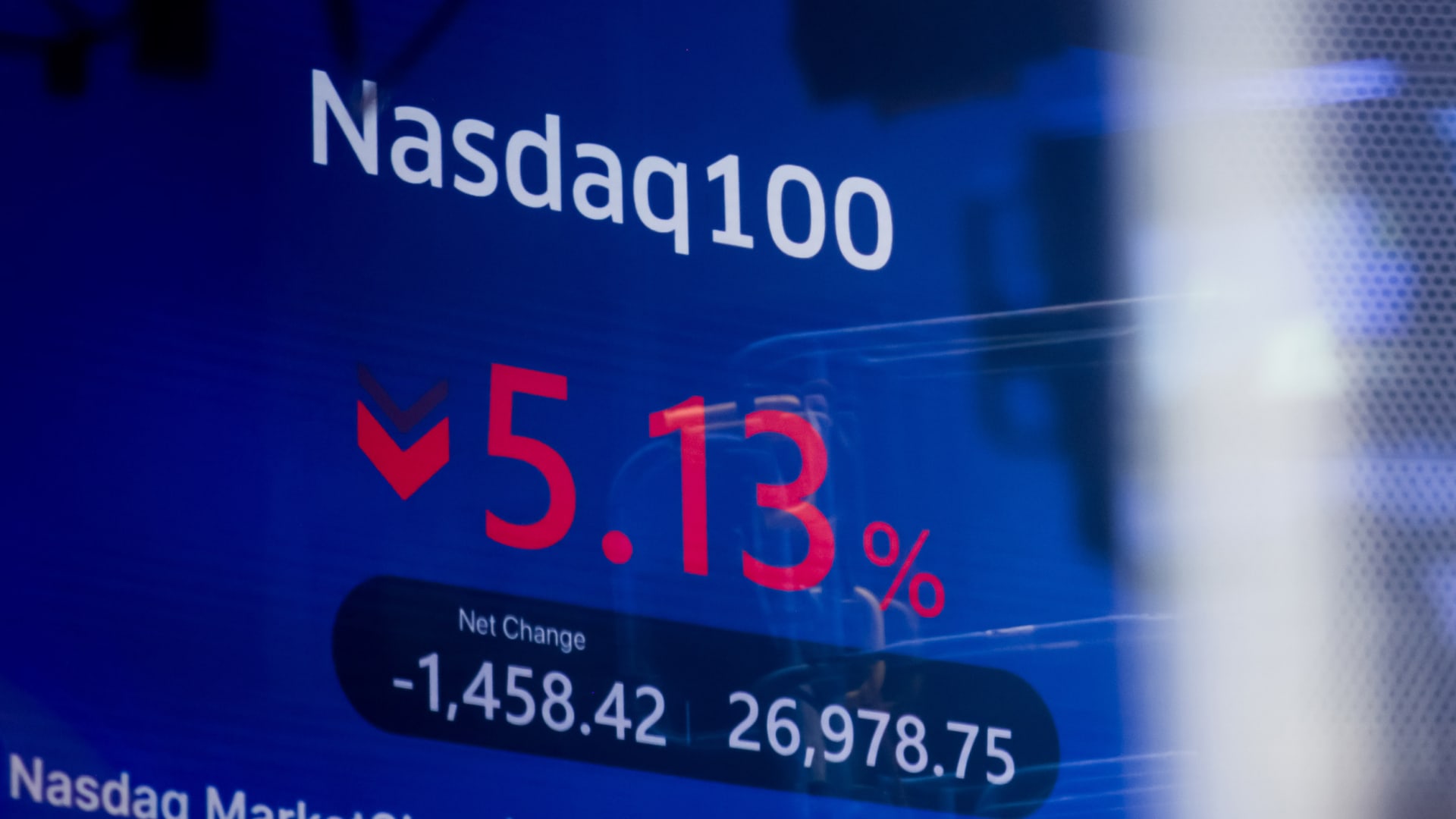
The Nasdaq Composite has officially entered correction territory, sliding more than 11% from its recent peak. This significant downturn, fueled by shifting political landscapes and concerns over the artificial intelligence sector, signals a critical juncture for investors navigating current investment trends and managing tech-heavy portfolios.
💰 Financial Strategy & Market Insights
- Historical Precedent. Past Nasdaq corrections often see further near-term selling, averaging 9.41% recovery in three months, 17.03% in six, except for 2022.
- Political Catalyst. Midterm election outcomes, particularly a proposed data center moratorium in Texas, are pressuring AI-related equities and semiconductor firms.
- Sectoral Impact. Chip stocks, exemplified by the iShares Semiconductor ETF (SOXX), experienced their sharpest single-day decline since March 2020.
The tech-heavy Nasdaq Composite’s recent plunge into a correction, defined by a decline exceeding 10% from its peak, has sent ripples through the market. On Thursday, the index plummeted over 5%, pushing its total decline past the 11% threshold. Historically, such downturns have often been followed by additional selling in the immediate short term. Analysis of ten previous Nasdaq correction episodes over the past decade indicates that while further declines are common in the first month, a recovery typically takes hold within three to six months, a crucial insight for comprehensive market analysis.
The current market dynamic is distinct, with the catalyst for this latest correction appearing to be the recent midterm election results. Democrats secured significant gains, including a new Texas governor campaigning on an immediate moratorium for data center development. This political shift has ignited concerns among investors regarding potential state-level restrictions impacting data center expansion, a critical component for companies reliant on the burgeoning artificial intelligence sector. This uncertainty translates into tangible pressure on asset valuation for numerous tech giants, a trend closely watched by global market observers.
- 2022 Precedent: It is imperative to note the outlier of January 2022, where the Nasdaq not only failed to recover but lost an additional 18.3% over six months and was down 24.3% a year later, highlighting the potential for harsher outcomes under specific circumstances, as detailed in various financial news reports.
The iShares Semiconductor ETF (SOXX), a bellwether for chip stocks, suffered a staggering 12% drop on Thursday, marking its worst trading day since the onset of the COVID-19 pandemic in March 2020. This sharp decline underscores the market’s sensitivity to perceived threats to the AI growth narrative. While the overall market reaction suggests near-term caution, insights from chart analyst Frank Cappelleri of CappThesis indicate that despite initial volatility, the Nasdaq has historically tended to be higher 12 months post-midterm elections in 12 out of 13 cycles since 1974. This suggests a potential longer-term resilience, though the path to recovery may be turbulent, echoing the 2018 scenario where a sharp December sell-off preceded a 15% gain a year later.
Navigating Volatility: The Risk-Reward Landscape for Financial Sector Players
- Upside Potential:
- Historical data suggests an average 9.41% gain from the correction bottom over three months and 17.03% over six months, indicating recovery potential.
- Midterm election cycles, historically, have often preceded positive Nasdaq performance over a 12-month horizon despite initial turbulence.
- Underlying long-term demand for AI and related technologies may provide a floor once immediate regulatory fears subside, as noted in financial sector insights.
- Downside Risks:
- The 2022 correction serves as a stark warning, where the Nasdaq saw substantial further declines of 18.3% over six months and 24.3% over a year.
- Tighter state-level restrictions on data center development could materially impact growth projections and asset valuations for AI-linked companies.
- Continued broad market sell-off, especially in semiconductors, could signal deeper economic concerns beyond just political shifts.
A market correction is officially triggered when an asset or index declines 10% or more from its recent high. This signals a shift in investor sentiment, often driven by economic concerns, geopolitical events, or regulatory changes, compelling a re-evaluation of investment trends and associated capital shifts.
Historical Performance Post-Nasdaq Correction
| Period | Average Nasdaq Gain from Bottom | Notable Exception (2022) |
|---|---|---|
| 3 Months Post-Correction | +9.41% | Not applicable (continued decline) |
| 6 Months Post-Correction | +17.03% | -18.3% |
| 12 Months Post-Correction | Not specified (average) | -24.3% |
What the Nasdaq Composite Historical Benchmarking Reveals
Examining past cycles provides crucial context for the current downturn. The Nasdaq’s resilience after midterm elections, as highlighted by CappThesis, points to a potential for long-term recovery despite initial market jitters. Since 1974, the index has been higher 12 months after the election in all but one of 13 midterm cycles, emphasizing the market’s capacity to digest political changes over time. However, the path taken can be highly volatile, as seen in 2018 where an initial rally was followed by a sharp December sell-off before a year-end gain.
Tracking Tech Sector Market Sentiment Amidst Regulatory Fears
Current market sentiment in the tech sector is clearly skewed towards caution, particularly concerning companies tied to the artificial intelligence trade. The dramatic fall in chip stocks, with the iShares Semiconductor ETF (SOXX) experiencing its worst day since March 2020, reflects a palpable fear of regulatory headwinds. Investors are closely monitoring developments around data center moratoriums, as any tangible restrictions could necessitate significant revisions to growth forecasts and asset valuations within the industry. This environment demands careful risk management and a discerning eye for quality assets amidst broader market analysis.
The Nasdaq Correction: A Turning Point for Tech Valuations?
The recent Nasdaq correction marks a pivotal moment for the technology sector, challenging previous growth narratives and forcing a re-evaluation of investment trends. While historical data suggests potential for recovery in the coming months, the unique confluence of political shifts and specific industry threats demands a nuanced approach.
- Investors must differentiate between short-term political noise and long-term technological fundamentals.
- Risk management strategies focused on portfolio diversification and rebalancing are paramount in this volatile period.
- The performance of AI infrastructure providers and semiconductor firms will be a key indicator for future market direction.
Can the tech sector demonstrate its customary resilience, or will this correction usher in a prolonged period of re-pricing for growth assets?
📊 StockXpo Analyst’s View
Market Impact: The Nasdaq correction indicates a critical shift in market liquidity, with investors rapidly reallocating capital away from high-growth tech following perceived regulatory threats. This creates both challenges and opportunities for those adept at identifying fundamentally strong companies now trading at more reasonable valuations. We anticipate heightened volatility as the market digests the full implications of the midterm election outcomes and their potential effects on the financial sector.
Sector To Watch: The semiconductor and broader AI infrastructure sectors are directly in the crosshairs. While immediate pressure is evident, the long-term trajectory of AI remains robust. We advise careful monitoring of companies with diversified revenue streams or those less exposed to specific regional regulatory risks, alongside a deeper dive into market analysis for potential entry points.
Financial Disclaimer:
StockXpo.com is a financial news aggregator and educational portal, not a registered investment advisor or broker-dealer. All information, news, and analysis provided herein are strictly for educational purposes and do not constitute investment, financial, legal, or tax advice. Investing in the stock market involves high risks, and past performance is not indicative of future results. StockXpo will not be liable for any financial losses or investment damages. Always consult a certified financial advisor before making market decisions.
MORE IN INSIDE FINANCE

U.S.-China Relations Volatility: Midterm Sweep Signals Hardening Stance
Published: Thursday, November 5, 2026 · 2:45 AM
Treasury Yields Plunge: Election Uncertainty Drives Safety Bid
Published: Wednesday, November 4, 2026 · 4:06 AM