Published: Thursday, November 26, 2026 · 5:18 AM | Updated: Thursday, November 26, 2026 · 5:18 AM
📊 8 views




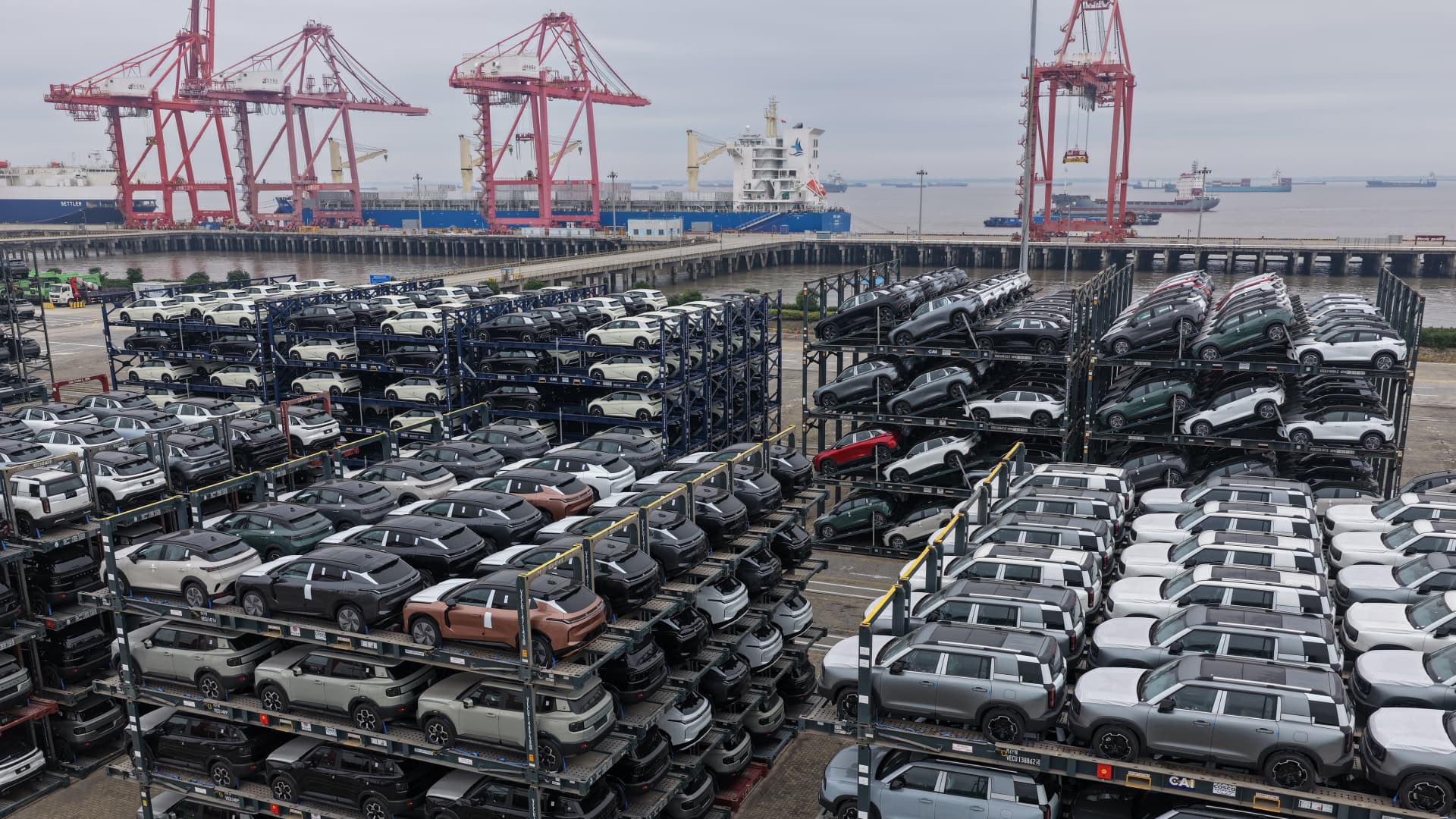
The U.S. has intensified its trade posture, issuing fresh U.S. Tariff Threats against a broad coalition of trading partners, including China, Vietnam, India, and the European Union. These proposed duties, ostensibly aimed at curbing industrial overcapacity, are designed to compel nations into new trade agreements with Washington, sparking concerns about global trade stability and potential economic reverberations.
📊 Macro-Economic Strategic Insights
- Leveraged Negotiations. The U.S. is strategically using tariff increases as a coercive tool to accelerate trade deal conclusions, offering lower rates for cooperating partners.
- Targeting China. Despite a broad approach, the underlying intent appears heavily focused on China, with other nations pressured to restrict Chinese imports and FDI.
- Regional Disparities. Vietnam and India face some of the steepest proposed tariffs, creating significant incentives for them to finalize reciprocal trade agreements with the U.S.
Washington’s latest salvo involves escalating U.S. Tariff Threats, ranging from 15% for the EU, South Korea, Switzerland, and Taiwan, up to a significant 35% for Vietnam. The U.S. Trade Representative’s Office (USTR) has explicitly linked lower tariff rates to the completion of trade agreements or ongoing negotiations, effectively transforming duties into a bargaining chip. While initial economic impact projections by analysts like Mark Williams of Capital Economics suggest a limited overall regional effect, the pressure on targeted countries to expedite trade talks is undeniable. The new policy is anticipated to take effect in the coming months, possibly as early as January, according to U.S. officials.
The primary target of these measures, China, faces a proposed capped rate of 20%, in addition to its existing 25% tariff. This could surge to 40% if a trade truce, established in South Korea last October, is not extended beyond January. Beijing has vehemently rejected claims of excess capacity and vowed protective measures, calling for dialogue and the implementation of agreed-upon reciprocal tariff cuts. Despite recent conciliatory meetings between Presidents Trump and Xi Jinping, these renewed tensions underscore persistent trade friction, with the two leaders expected to meet again at the G20 summit in Miami in December.
For countries like Vietnam and India, the stakes are particularly high. Vietnam faces a potential 35% tariff, which could drop to 20% with a trade deal, while India’s 25% proposed rate could fall to 17%. These wide differentials provide a strong incentive for both nations to conclude agreements with Washington swiftly. Singapore, an established U.S. free trade agreement partner since 2004, has also been drawn into this dynamic, facing a potential 20% tariff that could reduce to 10% upon agreement. Singapore’s Ministry of Energy, Trade and Industry expressed ‘disappointment’ and disagreement with the USTR’s findings, noting the U.S. has consistently run a trade surplus with the city-state. Singapore plans to submit further comments during the public consultation period, urging the USTR to reconsider its position. The broader implication is that the U.S. is not only seeking new deals but also attempting to recalibrate existing trade relationships, even with long-standing partners.
- Strategic Leverage: The USTR’s framework explicitly uses tariff reductions as an incentive, pushing countries like Vietnam and India to finalize trade agreements to avoid higher duties.
- China-Centric Strategy: Analysts, including Mark Williams, suggest that despite the numerous targets, the U.S. policy is largely aimed at China, leveraging other nations to restrict Chinese economic influence.
- Exemptions for Key Sectors: Critical sectors like semiconductors and other electronics are exempted for economies such as South Korea and Taiwan, cushioning the impact on their highly specialized export industries.
The deployment of U.S. Tariff Threats can set off a chain reaction across global markets:
Increased Import Costs → Higher Prices for Consumers/Businesses → Reduced Purchasing Power → Slower Economic Growth
Trade Deal Pressure → Accelerated Negotiations → Potential Market Access Shifts → Realigned Supply Chains
Uncertainty for Exporters → Reduced Investment → Slower Job Creation → Diminished Global Trade Volumes
While not happy, Beijing seems prepared to live with the new rates provided that they don’t exceed 20%. Washington is using tariffs as leverage to secure expected shipments of critical minerals and rare earths, and further purchases of U.S. agricultural goods.Wendy CutlerSenior Vice President, Asia Society Policy Institute
The proposed tariffs highlight significant differentials that create varying levels of pressure on U.S. trading partners:
| Country/Region | Proposed Tariff Rate (without deal) | Potential Tariff Rate (with deal) | Key Economic Sector Impact |
|---|---|---|---|
| China | Up to 20% (on top of existing 25%) | Could rise to 40% if truce not extended | Broad manufacturing, technology (excluding some chips) |
| Vietnam | 35% | 20% | Diversified manufacturing, electronics, textiles |
| India | 25% | 17% | Services, manufacturing, agricultural goods |
| Singapore | 20% | 10% | Advanced manufacturing, trade hub |
| EU, South Korea, Switzerland, Taiwan | 15% | Varies (lower with deal) | Diversified, semiconductors (exempt for SK/Taiwan) |
These figures highlight the U.S. strategy of applying targeted economic pressure to drive specific trade policy outcomes and secure strategic resources, as reported by Reuters Economics.
China’s Strategic Calculus Amidst Renewed Trade Tensions
Beijing’s response to the escalating U.S. Tariff Threats reveals a complex strategic calculus. While publicly condemning the USTR’s Section 301 investigations and proposed duties as ‘wrongdoing’, China’s willingness to ‘live with’ new rates below 20% suggests a pragmatic approach to de-escalation, as noted by Wendy Cutler. The focus remains on managing the existing 25% tariff and preventing further escalation to 40%. This implies a delicate balance between asserting national sovereignty and maintaining vital trade flows, especially given the ongoing negotiations around critical minerals and agricultural purchases. The recurrence of high-level meetings between Trump and Xi, despite trade friction, underscores a mutual interest in preventing a full-blown trade war from derailing global economic recovery and stability. The U.S. strategy, as interpreted by analysts, points to a clear intent to use these tariffs as leverage not just for direct trade balance, but also to influence China’s broader economic relationships and practices, particularly concerning industrial capacity and technology transfer.
Regional Trends: ASEAN and South Asia’s Trade Balancing Act
The latest round of U.S. Tariff Threats has placed ASEAN nations like Vietnam and Singapore, along with India in South Asia, in a precarious position, forcing them to consider expedited trade negotiations. Vietnam’s prompt statement about working with the U.S. to finalize a trade deal ‘as soon as possible’ indicates the immediate impact of the proposed 35% tariff rate. Similarly, India stands to gain a competitive edge by securing lower duties, incentivizing a swift conclusion to its long-pending agreement with Washington. Singapore, despite its robust U.S. FTA and a consistent trade surplus in the U.S.’s favor, faces unexpected pressure, illustrating the broad sweep of the USTR’s strategy. These regional players are now balancing their economic growth ambitions with the imperative to adapt to a shifting global trade landscape. The emphasis on restricting imports and FDI from China, noted in the USTR’s reports on these countries, further complicates their strategic choices, forcing them to navigate allegiances while safeguarding their national economic interests. For additional context on global economic shifts, see analysis from Bloomberg Economics.
Navigating U.S. Tariff Threats: A Path Towards Global Trade Re-alignment
The recent intensification of U.S. Tariff Threats represents a significant recalibration of global trade dynamics, moving beyond simple trade deficits to address broader issues of industrial capacity and strategic leverage. These actions compel trading partners to re-evaluate their bilateral relationships and accelerate negotiations, impacting everything from supply chain resilience to market access for critical goods. The emphasis on securing specific resources and agricultural purchases suggests a more nuanced, outcome-oriented trade policy.
- Accelerated Diplomacy: Nations under pressure, particularly Vietnam and India, are highly incentivized to finalize trade agreements, potentially reshaping regional trade blocs.
- Strategic Commodity Focus: U.S. tariffs are being used as leverage to secure critical minerals, rare earths, and agricultural commitments, underscoring national security and economic resilience priorities.
- Supply Chain Volatility: Businesses operating in affected sectors face increased costs and uncertainty, necessitating diversification and potential re-shoring strategies to mitigate risk.
Will these aggressive trade tactics ultimately foster greater global economic stability, or risk fragmenting the interconnected world economy further?
📊 StockXpo Analyst’s View
Market Impact: The escalating U.S. Tariff Threats introduce an unwelcome layer of volatility to global stock markets, particularly impacting sectors heavily reliant on international trade. Investors are likely to respond to increased uncertainty by seeking safer assets, potentially leading to capital outflows from emerging markets directly targeted by these tariffs. Trade-sensitive indices and currency valuations will remain under close scrutiny, with any signs of deal progression or escalation driving significant shifts in sentiment and liquidity. The pursuit of trade deals offers a potential upside for market stability but the interim period of negotiation is fraught with risk for stock markets globally.
Sector To Watch: Industrial manufacturing, particularly in China and Southeast Asia, along with agriculture and raw materials, will be acutely sensitive to these tariff changes. Companies with diversified supply chains and strong domestic markets may prove more resilient. Additionally, the technology sector, especially those involved in semiconductors, should be monitored closely given the strategic exemptions, indicating targeted U.S. interest in specific high-value industries. Logistical and shipping firms could face immediate operational adjustments and cost pressures due to re-routed trade flows. Keep an eye on companies that can quickly adapt to geopolitical shifts and those with strong local production bases. For further insights, explore our educational insights.
Financial Disclaimer:
StockXpo.com is a financial news aggregator and educational portal, not a registered investment advisor or broker-dealer. All information, news, and analysis provided herein are strictly for educational purposes and do not constitute investment, financial, legal, or tax advice. Investing in the stock market involves high risks, and past performance is not indicative of future results. StockXpo will not be liable for any financial losses or investment damages. Always consult a certified financial advisor before making market decisions.
MORE IN INSIDE ECONOMY

UAE Economy’s Resilient 7-8% Growth Amid Regional Headwinds
Published: Wednesday, November 25, 2026 · 1:33 AM

France Recession Risk: Navigating Economic Headwinds Towards 2027 Stability
Published: Tuesday, November 24, 2026 · 2:50 AM