Published: Friday, November 27, 2026 · 1:26 AM | Updated: Friday, November 27, 2026 · 1:26 AM
📊 5 views




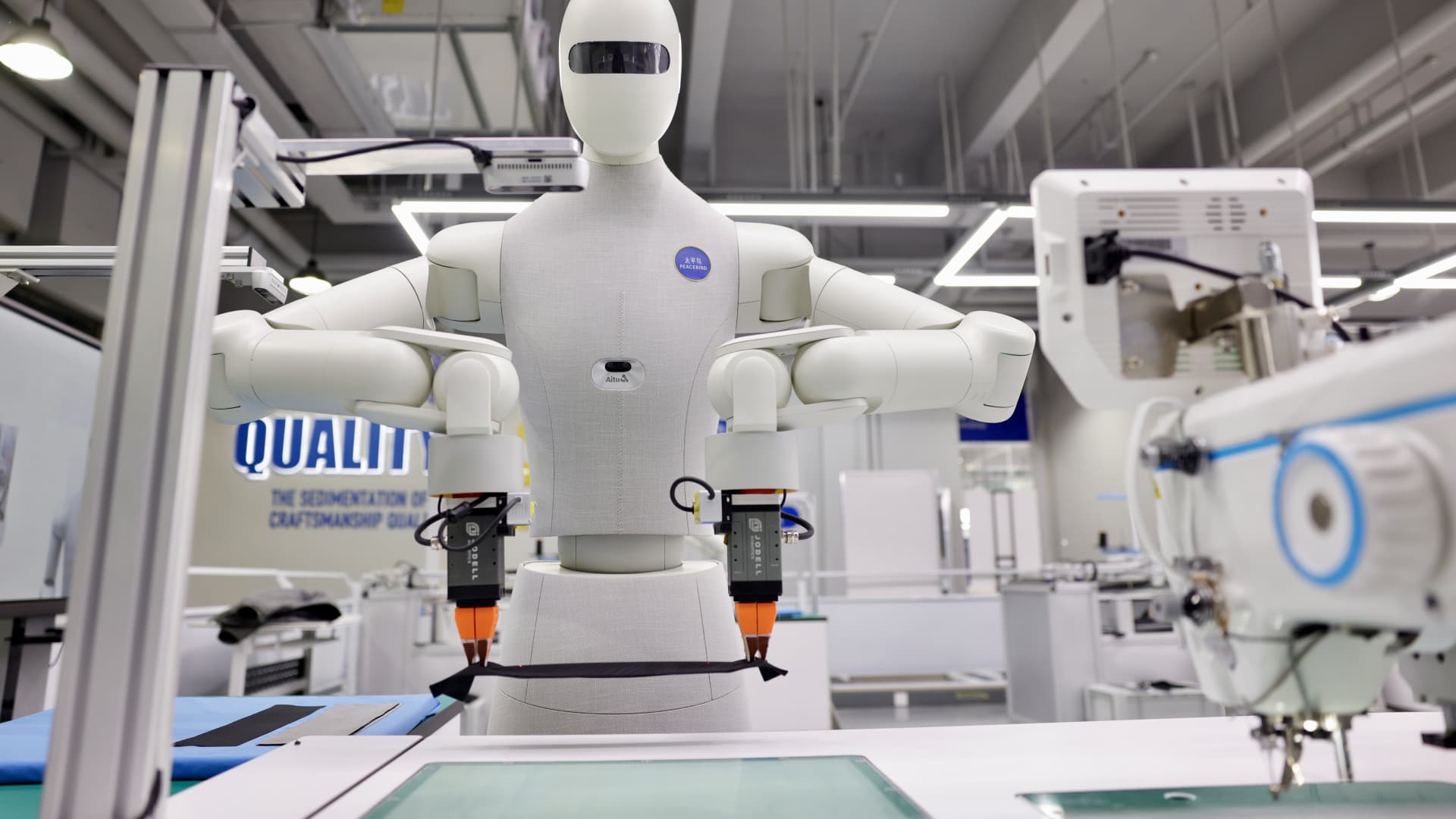
China’s factories are experiencing a significant resurgence in profitability, registering their fastest growth since May, primarily fueled by the global AI-driven electronics boom. This crucial shift underscores a bifurcated economic recovery, where high-tech manufacturing bolsters external demand, contrasting sharply with persistent softness in domestic consumption and the real estate sector, creating complex dynamics for global macroeconomic stability.
📊 Macro-Economic Strategic Insights
- Profit Resurgence Driven by AI. China’s industrial profits saw a 20.1% year-over-year surge in October, marking the fastest pace since May, largely propelled by strong global demand for AI-related electronics and higher energy prices.
- Bifurcated Economic Recovery. The rebound is highly concentrated in upstream and high-tech sectors, creating a ‘two-speed’ economy where export-oriented industries thrive while consumer-facing and construction sectors struggle with weak domestic demand and a prolonged property slump.
- Fiscal Stimulus Limitations. Despite efforts, local government fiscal spending has shown limited efficacy in stimulating domestic consumption and property markets, suggesting inherent challenges in broad-based economic revitalization beyond export-led growth.
**China’s Industrial Profits** demonstrated robust growth in October, expanding by 20.1% year-over-year, the most significant increase since May. This impressive headline figure extends a notable rebound in 2026, putting annual profits on track for their strongest expansion since 2021, following three years of decline and a tepid 0.6% growth last year. However, this recovery is narrowly focused, largely propelled by an AI-driven electronics boom and elevated energy prices, according to data from the National Bureau of Statistics (NBS). The electronics sector, for instance, saw profits double in the first ten months compared to the same period last year, a direct result of surging global demand for AI computing power and memory chips, as stated by NBS chief statistician Yu Weining.
High-tech manufacturing broadly outperformed, with profits jumping 50.9%, significantly outpacing the overall industry. Makers of spacecraft and launch vehicles reported an even more substantial 63.2% rise, underscoring the targeted nature of this growth. Commodity producers also benefited, with strong demand tied to renewable energy and AI driving up prices for metals like copper and aluminum. Petroleum processors, in a significant turnaround, swung from a loss to a combined profit year-over-year. This growth profile paints a picture of an economy running at two speeds, with powerful external demand buffering internal weaknesses. For deeper dives into specific industrial trends, consider reviewing StockXpo’s educational insights on market dynamics.
Conversely, consumer-facing industries and sectors tied to the beleaguered construction market continue to face substantial headwinds. Retail sales grew a smaller-than-expected 0.4% in October, while fixed-asset investment steepened its decline to 8.1% for the first ten months of the year. Automakers recorded a 26% drop in profits over the same period, indicating their struggle to pass on higher input costs to consumers and protect margins amidst competitive pressures.
- Manufacturers of construction materials like cement and glass experienced profit declines of 46.7%, and furniture makers saw a dramatic 52.4% fall. These figures explicitly illustrate the ongoing fallout from a prolonged real estate slump, which continues to depress domestic demand and impact related industries severely. Additionally, rising accounts receivable and finished-goods inventories, growing faster than revenue, highlight the broader strain on corporate liquidity and efficiency across multiple sectors. This imbalance signals that while certain segments of the Chinese economy are thriving, a significant portion is navigating a challenging domestic landscape.
The uneven economic recovery in China carries significant ripple effects for global trade and domestic stability:
Strong AI-driven Exports → Increased Industrial Profits in Tech/Upstream → Bolstered GDP Targets & External Demand → Reduced Immediate Pressure for Broad Fiscal Stimulus.
Weak Domestic Consumption → Lagging Retail Sales & Fixed-Asset Investment → Persistent Property Market Slump → Limited Impact of Local Government Spending → Heightened Risk of Economic Imbalance.
Global AI Investment Slowdown → Potential Waning of Export Growth Prop → Increased Vulnerability for China’s Overall Economic Expansion → Renewed Urgency for Domestic Demand Revival.
“A bifurcated economy, such as China’s currently, refers to a situation where distinct sectors or segments perform vastly differently, often with one experiencing robust growth while others stagnate or decline. In China’s case, the strong performance of AI-related manufacturing and exports provides a crucial buffer, but masks underlying weaknesses in household consumption and real estate, posing challenges for equitable wealth distribution and long-term macro-stability.”
| Metric | Period | Value (YoY Growth) | Significance |
|---|---|---|---|
| Industrial Profits | October | +20.1% | Fastest pace since May, indicating robust recovery in select sectors. |
| Electronics Sector Profits | Jan-Oct | Doubled | Highlights AI-driven demand as a primary growth engine. |
| High-Tech Manufacturing Profits | Jan-Oct | +50.9% | Outperformance showcasing successful industrial upgrading. |
| Retail Sales Growth | October | +0.4% | Weaker-than-expected, reflecting continued softness in consumer demand. |
| Fixed-Asset Investment | Jan-Oct | -8.1% | Steepened decline, signaling ongoing weakness in capital expenditure and property. |
China’s Fiscal Policy Commentary: Efficacy Under Scrutiny
Despite recent efforts to stimulate the economy, the effectiveness of China’s fiscal policy appears to be under considerable scrutiny. Local governments did step up spending for the first time since February in October, yet this had “little impact” on arresting the property slump or reviving broader domestic demand, according to Leah Fahy, a senior China economist at Capital Economics. This suggests a limit to how much fiscal policy alone can support the economy, especially when local governments reportedly struggle to fully utilize allocated funds. The heavy reliance on external demand, now buoyed by the global AI buildout, has ironically reduced the immediate pressure on policymakers to enact more aggressive domestic stimulus measures, which some analysts believe risks exacerbating internal economic disparities. Investors monitoring StockXpo’s economy insights should note these limitations, which are crucial for understanding China’s long-term macro-stability.
Global Benchmarking: Navigating AI’s Supply Chain Complexities
The surge in China’s high-tech manufacturing, particularly in electronics tied to AI, positions it as a critical player in the global technology supply chain. However, this dependence on external demand, coupled with potential trade headwinds, introduces complexities. The U.S. has proposed new tariffs, including a 20% headline rate on Chinese goods and punitive rates on several Asian economies, specifically targeting transshipments. Alicia Garcia Herrero, Chief Economist for APAC at Natixis, notes that Chinese firms exporting intermediate goods through other Asian countries could face higher tariff risks, impacting various global economic sectors. This geopolitical dynamic forces a re-evaluation of supply chain resilience and highlights the potential for shifting trade routes and manufacturing bases, affecting not just China but also its regional trading partners and global corporations. For further analysis on global economic policy, refer to Bloomberg Economics reports.
China’s Industrial Profits: Balancing Export Gains with Domestic Headwinds
The recent surge in China’s Industrial Profits, while impressive on paper, masks a complex and potentially unstable economic reality. The heavy reliance on external AI-driven demand leaves the economy vulnerable to global tech cycles and trade tensions, while domestic consumption and property markets remain in a precarious state. Beijing’s challenge lies in broadening this recovery beyond specific high-tech sectors to ensure more equitable and sustainable growth.
- The economic outlook remains split, with strong external tailwinds contrasted by persistent internal drags.
- Fiscal stimulus efforts are struggling to penetrate the consumer and real estate malaise effectively.
- Future growth hinges on successful pivots towards revitalizing domestic demand as global AI investment inevitably plateaus.
Can China successfully rebalance its economy to achieve broad-based stability amidst escalating global trade uncertainties?
📊 StockXpo Analyst’s View
Market Impact: The current dichotomy in China’s economic data suggests a mixed bag for investors. Export-oriented technology and advanced manufacturing sectors could see continued strong performance, attracting capital, while traditional consumer discretionary and real estate-linked equities may face sustained pressure. Overall investor sentiment towards Chinese markets will remain cautious, balancing potential growth in specific niches against systemic risks from domestic demand weakness and geopolitical trade frictions.
Sector To Watch: Investors should keenly observe the semiconductor, AI hardware, and renewable energy component manufacturing sectors, which are currently benefiting from the global AI buildout and energy transition. Conversely, sectors like real estate, construction materials, and traditional automotive manufacturing face significant headwinds and require careful risk assessment. For broader investment analysis and market insights, visit StockXpo’s investment analysis.
Financial Disclaimer:
StockXpo.com is a financial news aggregator and educational portal, not a registered investment advisor or broker-dealer. All information, news, and analysis provided herein are strictly for educational purposes and do not constitute investment, financial, legal, or tax advice. Investing in the stock market involves high risks, and past performance is not indicative of future results. StockXpo will not be liable for any financial losses or investment damages. Always consult a certified financial advisor before making market decisions.
MORE IN INSIDE ECONOMY

U.S. Tariff Threats Signal Mounting Global Trade Pressure and Instability
Published: Thursday, November 26, 2026 · 5:18 AM

UAE Economy’s Resilient 7-8% Growth Amid Regional Headwinds
Published: Wednesday, November 25, 2026 · 1:33 AM