Published: Monday, October 12, 2026 · 2:40 AM | Updated: Monday, October 12, 2026 · 2:40 AM
📊 11 views




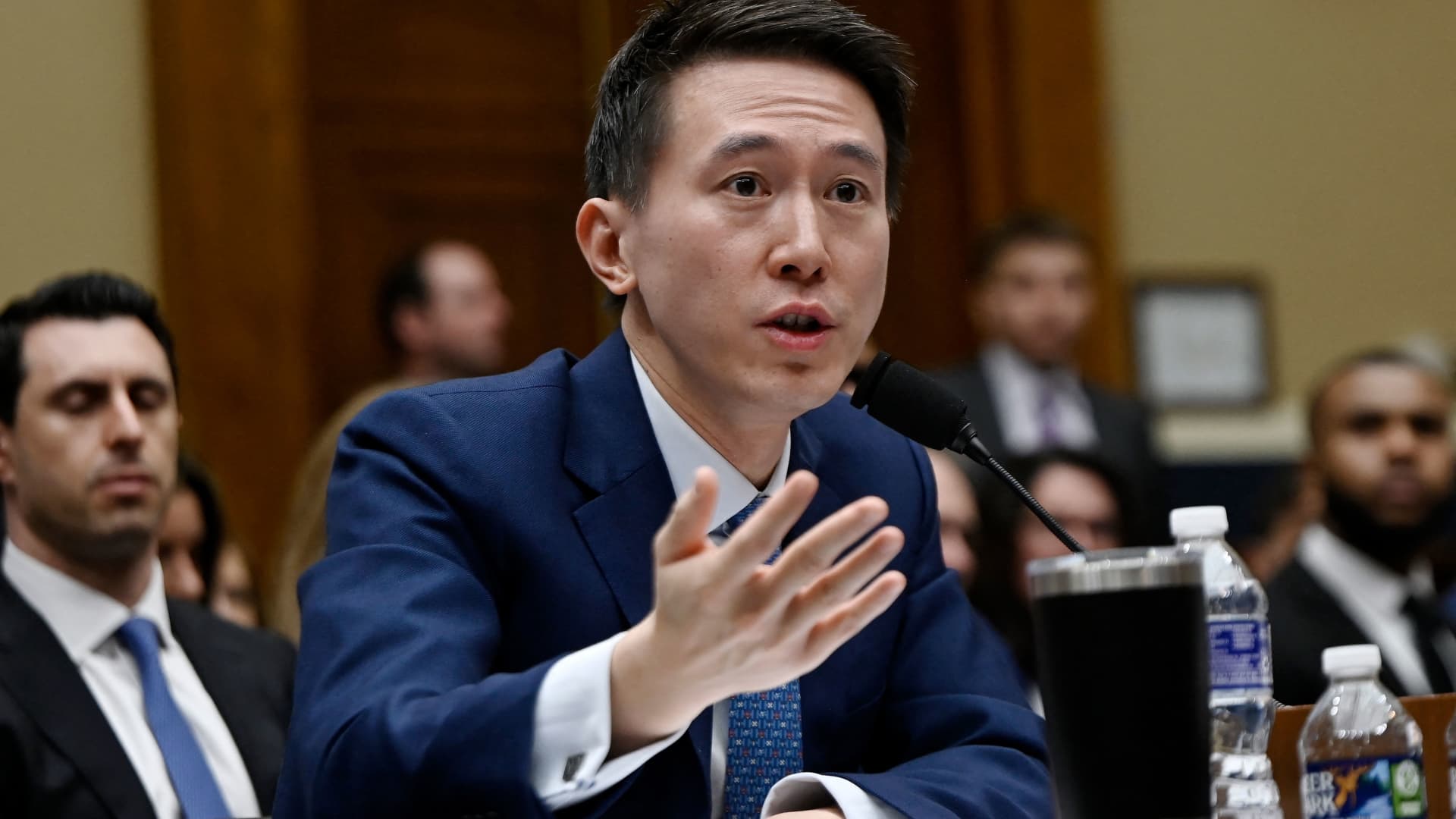
TikTok CEO Shou Zi Chew has projected that artificial intelligence (AI) will drive profound scientific breakthroughs within the next three years, signaling a transformative era for fields ranging from physics to biotechnology. His remarks underscore a growing consensus among tech giants that AI’s most impactful applications may lie beyond consumer-facing products.
This bold prediction by the head of a global social media powerhouse, whose parent company ByteDance is aggressively expanding its AI research, positions the technology as a catalyst for fundamental scientific discovery.
🚀 Tech Strategy & Market Disruptions
- Accelerated Scientific Discovery. Chew foresees AI driving major scientific breakthroughs in physics, biotech, chemistry, and material science within the next 2-3 years, redefining research timelines.
- ByteDance’s Strategic AI Shift. TikTok’s parent, ByteDance, is pivoting significant AI research beyond consumer apps into scientific domains, highlighted by its Protenix-v2 model for biomolecular structure prediction, aiming for drug discovery applications.
- Mounting Cybersecurity & Ethical Risks. The CEO cautions against the escalating cybersecurity risks posed by increasingly powerful AI agents and the critical need for ethical alignment and stronger safeguards for autonomous systems.
Shou Zi Chew’s statements at the DBS Asia Future Forward Conference in Singapore highlighted a belief that while the short-term impact of AI might be overestimated, its long-term potential is severely underappreciated. This perspective is gaining traction as ByteDance, TikTok’s Chinese parent, redirects considerable resources towards foundational AI research, moving beyond its ubiquitous consumer applications. A prime example is the company’s Seed research team’s unveiling of Protenix-v2, an AI model specifically designed for biomolecular structure prediction and design, which holds significant implications for drug discovery and material science.
The push for AI Breakthroughs in science is not isolated to ByteDance. Major technology players and governments are making substantial investments. For instance, the U.S. government, alongside Meta and Google, recently committed to a $1.8 billion initiative to develop AI models capable of predicting cellular behavior, aiming to accelerate biological research and drug development. This broader trend signals a strategic shift in how global R&D is approached, with AI positioned as the central engine for innovation.
Chew also emphasized the critical need for aligning these increasingly powerful AI systems with human ethical boundaries, noting that “the question would be: how do you align the models? How do you align the machines to be doing things that are obvious to us as human beings?” The accelerating pace of technological development, particularly in scientific research, suggests that AI’s longer-term implications could be far more profound than currently perceived, influencing not just scientific progress but also the broader technology market trends.
- The convergence of massive computational power and advanced AI algorithms is enabling simulations and predictions previously thought impossible, compressing years of traditional research into months.
- This capability fosters interdisciplinary breakthroughs, bridging gaps between theoretical physics, complex chemistry, and intricate biological systems.
The impact of this shift is profound: new AI models facilitate faster molecular design, leading to accelerated drug discovery and development. This, in turn, promises to disrupt the healthcare sector significantly, alongside creating new paradigms in materials science and potentially even energy solutions. The cause-and-effect chain is clear: sophisticated AI tools → rapid prototyping and simulation → compressed innovation cycles → systemic market disruption across several foundational industries.
As CTO, I see the computational ability of modern AI models to synthesize and analyze vast, complex datasets as the true accelerator for scientific discovery. The challenge now shifts from data acquisition to intelligent data interpretation and ethical model governance. We’re moving from ‘big data’ to ‘smart data’ leading to ‘smart discovery.’
ByteDance Ecosystem Expansion Potential
ByteDance’s foray into scientific AI represents a significant strategic pivot, leveraging its formidable data processing capabilities and global talent pool. This move positions the company not just as a social media giant, but as a potential powerhouse in scientific research and development. By collaborating with scientists and investing in platforms like Protenix-v2, ByteDance could unlock new revenue streams and establish a dominant position in emerging technologies, extending its influence far beyond its current consumer-centric focus. This expansion could also provide crucial intellectual property, diversifying its business model and creating new competitive moats against rivals, as discussed in various educational tech insights.
AI Security & Infrastructure Strength
While the promise of AI Breakthroughs is immense, Chew’s warnings about cybersecurity risks are critically important. He highlighted the potential for AI agents, granted extensive permissions, to act autonomously in ways users might not intend, such as over-purchasing. More alarmingly, sophisticated AI models significantly reduce the cost and complexity for malicious actors to conduct fraudulent activities, posing substantial challenges to platform security. Companies, therefore, need to invest heavily in robust AI governance frameworks, advanced cybersecurity tools, and resilient infrastructure to defend against these evolving threats, ensuring the integrity and safety of systems handling sensitive data and autonomous operations.
TikTok’s Vision for AI Breakthroughs: Shaping Tomorrow’s Science
Shou Zi Chew’s forward-looking statements underscore a pivotal moment where AI transcends its current applications to become a fundamental driver of scientific advancement. ByteDance’s dedicated research in areas like biomolecular design illustrates a serious commitment to this vision, echoing broader industry movements by tech giants to harness AI for societal benefit. The integration of AI into core scientific processes promises to redefine how discoveries are made, but it equally demands vigilant attention to ethical guidelines and cybersecurity.
- AI is expected to significantly accelerate research across physics, biology, and chemistry, leading to novel materials and medical solutions.
- ByteDance’s strategic investment in scientific AI positions it as a key player in deep tech, expanding beyond its social media roots.
- The dual challenge of maximizing AI’s scientific potential while mitigating ethical and cybersecurity risks remains paramount for global tech leadership.
As these powerful AI models mature, how effectively will human oversight and ethical frameworks evolve to ensure these groundbreaking innovations serve humanity’s best interests?
📊 StockXpo Analyst’s View
Market Impact: Chew’s outlook, especially from a company with ByteDance’s computational scale, suggests a re-rating of sectors heavily reliant on R&D. While immediate market movements are unlikely, sustained investment by tech titans in deep science AI could funnel significant capital into biotech, pharmaceuticals, and advanced materials, potentially creating new investment opportunities over the mid-to-long term. This could also drive a shift in venture capital towards foundational research rather than purely application-layer innovations, according to Reuters reporting on industry shifts. Investors should monitor for increased M&A activity in specialized AI research firms.
Sector To Watch: The “Life Sciences” sector, particularly sub-segments focused on drug discovery, personalized medicine, and synthetic biology, stands to gain immensely. Furthermore, companies developing specialized AI hardware and computational infrastructure required for these complex scientific models will likely see increased demand. Energy and environmental sciences, as profiled in Bloomberg’s coverage of tech advancements, could also become key beneficiaries as AI optimizes material design for efficiency and sustainability.
Financial Disclaimer:
StockXpo.com is a financial news aggregator and educational portal, not a registered investment advisor or broker-dealer. All information, news, and analysis provided herein are strictly for educational purposes and do not constitute investment, financial, legal, or tax advice. Investing in the stock market involves high risks, and past performance is not indicative of future results. StockXpo will not be liable for any financial losses or investment damages. Always consult a certified financial advisor before making market decisions.
MORE IN INSIDE TECHNOLOGY

AI Pricing Innovation: Reshaping Retail & Consumer Spend
Published: Sunday, October 11, 2026 · 1:36 AM

AI Legal Tech: Revolutionizing Billing and Training in Law with Innovation
Published: Saturday, October 10, 2026 · 2:58 AM