Published: Wednesday, September 23, 2026 · 11:47 AM | Updated: Wednesday, September 23, 2026 · 11:47 AM
📊 105 views




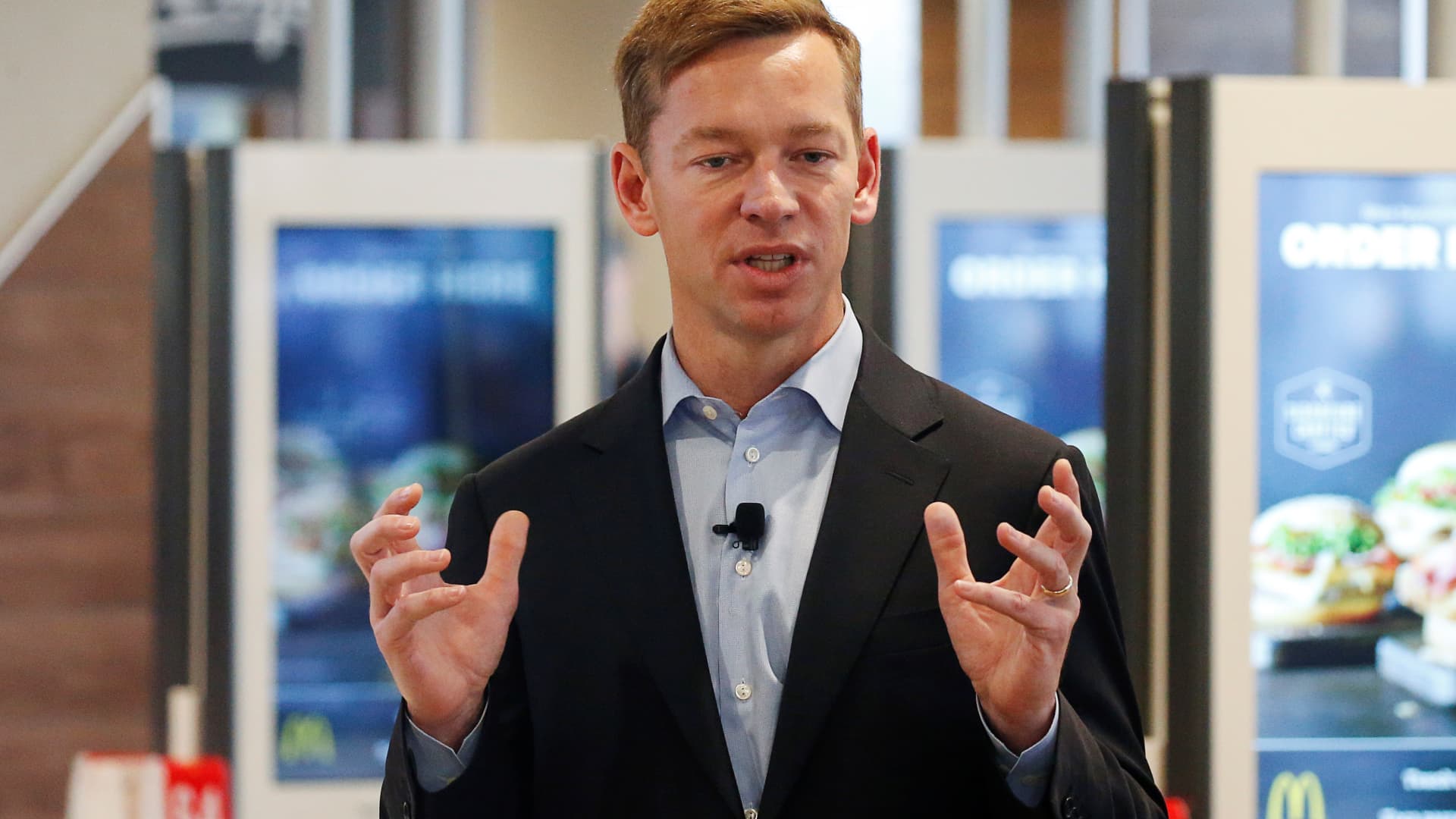
McDonald’s CEO Chris Kempczinski has issued a stark outlook, stating that elevated inflation and stagnant customer traffic are now the ‘environment’ for the restaurant industry, not just a temporary challenge. This recalibration of expectations signals a fundamental shift in market dynamics, forcing quick-service operators to re-evaluate their growth strategies and operational efficiencies. The persistent economic pressures are compelling industry leaders to focus intensely on market share capture rather than broader traffic expansion.
🗝️ Corporate Strategy Insights
- Accepting New Norms. McDonald’s is shifting its strategic mindset from viewing inflation as a temporary obstacle to accepting it as a permanent operating condition, requiring fundamental business model adjustments.
- Market Share Offensive. Faced with flat overall traffic, the company’s primary growth lever will be aggressively capturing market share from competitors, intensifying rivalry within the quick-service restaurant (QSR) sector.
- Pricing Discipline Refinement. Having acknowledged past errors in rapid price increases, McDonald’s will adopt a more cautious and calibrated approach to menu adjustments, balancing revenue needs with customer retention.
McDonald’s, a bellwether for the broader consumer discretionary sector, reported a mere 0.8% U.S. same-store sales growth in its latest quarter, accompanied by declining domestic traffic. This performance underscores the challenges Kempczinski highlighted, as consumers increasingly resist higher menu prices amidst rising costs for essentials like gas and groceries. The National Restaurant Association’s data corroborates this trend, showing a net decline in customer traffic across the industry in nearly every month over the past year. This sustained trend indicates a fundamental shift in consumer dining habits, demanding a more robust and adaptive corporate growth strategy from even market leaders.
Operators, including McDonald’s franchisees, are simultaneously grappling with soaring input costs. Beef prices, a critical component for the burger giant, have reportedly nearly doubled over the past five years in its largest markets. Labor expenses and construction costs have also seen significant upticks, exerting considerable pressure on profit margins globally. This confluence of rising operational expenses and constrained consumer spending creates a challenging environment that analysts on financial news platforms like CNBC have widely discussed. To mitigate these pressures, McDonald’s and its rivals have resorted to strategic discounts, even as they face the dilemma of absorbing higher costs or passing them onto an already price-sensitive customer base.
- Challenges include declining customer traffic, rising beef prices, and increased labor and construction costs.
- The company aims to ‘earn share’ by attracting customers from competitors, a direct competitive approach.
- Future price adjustments will be handled cautiously, learning from previous perceived over-increases post-pandemic.
The declaration that this challenging dynamic is simply ‘the environment’ rather than a temporary phase necessitates a long-term, structural response from the company. It implies a departure from strategies built on assumptions of rapid economic recovery or easing inflationary pressures. Instead, the focus will inherently shift towards sustained operational efficiency, supply chain optimization, and highly targeted marketing efforts to drive perceived value for the consumer. This strategic pivot is expected to be a central theme at McDonald’s upcoming investor day, where executives will unveil more specific plans to navigate this entrenched reality.
Strategic Ripple Effect: Intensifying QSR Competition Ahead
McDonald’s shift to an aggressive market share strategy will undoubtedly intensify competition across the quick-service restaurant (QSR) landscape. This pivot means that growth for one dominant player like McDonald’s will directly translate into a loss for another, creating a zero-sum game for customer traffic. Smaller chains and those with less brand loyalty or operational scale are particularly vulnerable as McDonald’s leverages its immense marketing budget and vast franchisee network. For example, a successful localized value promotion by McDonald’s could immediately draw customers away from a competitor’s lunch rush, leading to direct revenue impacts and potential competitive price wars. This dynamic might force rivals to either match discounts, eroding their own margins, or innovate rapidly in menu or service to retain their customer base. The strategic implications for rivals, as noted in reports on global business trends, are significant, potentially leading to a shake-up in market share distribution.
‘McDonald’s acknowledgement that inflation and flat traffic are the new normal is a critical strategic recalibration. It signals a shift from defensive tactics to an offensive stance focused on seizing market share, demanding superior operational execution and highly targeted value propositions to win over price-sensitive consumers.’
Key Operational Indicators for McDonald’s
Given the qualitative nature of the provided news (expectations, CEO comments), a detailed financial data table is not appropriate. Instead, a summary of key operational indicators and their implications is provided:
- U.S. Same-Store Sales Growth: 0.8% in recent quarter. This anemic growth rate, particularly for a market leader, highlights the difficulty in driving organic top-line expansion amidst current economic conditions and consumer resistance to price hikes.
- Domestic Customer Traffic: Declined in recent quarter. Decreased footfall directly impacts revenue per store and indicates a broader struggle to attract diners, making market share capture crucial for growth.
- Beef Price Increases: Nearly doubled over five years in key markets. This significant input cost surge directly impacts profit margins for McDonald’s and its franchisees, necessitating efficiency gains or strategic pricing.
These indicators collectively demonstrate the dual pressure of softening demand and escalating costs, underpinning the CEO’s revised outlook for the restaurant industry.
Restaurant Industry Inflation: McDonald’s Strategic Analysis
McDonald’s current strategy is characterized by a pragmatic acceptance of enduring economic headwinds. CEO Chris Kempczinski’s assertion that high inflation and flat traffic constitute ‘the environment’ for the corporate growth landscape, rather than a temporary challenge, signifies a pivot towards resilience-focused operations. The company’s immediate focus on ‘earning share’ from competitors indicates a mature market where organic expansion through new customer acquisition is increasingly difficult. This approach will demand intensified local marketing efforts, dynamic pricing strategies that balance profitability with perceived value, and potentially faster menu innovation cycles to differentiate. The prior misstep of raising prices too quickly post-pandemic serves as a critical lesson, guiding a more cautious, data-driven approach to future adjustments. McDonald’s is not merely reacting to market conditions but is actively shaping its strategy to thrive within them.
McDonald’s Competitive Advantages: Scale and Adaptability
Despite the industry-wide challenges, McDonald’s retains significant competitive advantages that position it uniquely to navigate the tough environment. Its unparalleled global scale, extensive supply chain, and massive advertising budget provide economies of scale that smaller rivals cannot match. This allows for greater leverage in negotiating supplier contracts, absorbing some cost increases, and launching broad marketing campaigns to attract price-sensitive consumers. Furthermore, McDonald’s robust franchisee model distributes risk and fosters local market responsiveness, crucial in an era where regional economic conditions can vary widely. The brand’s deep understanding of operational efficiency, honed over decades, will be paramount in squeezing out cost savings and optimizing service delivery to maintain competitive pricing. This formidable foundation, combined with a willingness to learn from past errors in pricing strategy, offers McDonald’s a durable moat as it battles for market share. For investors seeking deeper insights into market dynamics, exploring resources on stock markets can provide valuable context.
McDonald’s Path Forward: Innovation and Market Dominance
McDonald’s is entering a new era where sustained growth will hinge less on an expanding market pie and more on its ability to outmaneuver rivals and optimize its vast operations. The recognition of persistent restaurant industry inflation as a baseline condition sets a realistic, albeit challenging, strategic direction. This requires not just tactical adjustments but a fundamental embedding of cost-efficiency and aggressive market share capture into its corporate DNA.
- The company’s investor day is expected to detail strategies around operational efficiencies and targeted value promotions.
- Future growth will primarily derive from taking market share, intensifying competition across the QSR segment.
- A cautious approach to pricing, informed by past mistakes, will be crucial for maintaining customer loyalty.
How effectively can McDonald’s balance value propositions for consumers with mounting operational costs to secure long-term market dominance?
📊 StockXpo Analyst’s View
Market Impact: McDonald’s frank assessment of enduring inflation and flat traffic could temper investor expectations for the broader restaurant sector. While McDonald’s itself is well-positioned due to scale, the comments signal tighter margins and increased competition, potentially leading to a re-rating of valuations for smaller, less resilient chains. This perspective will likely reinforce a flight to quality among investors, favoring established market leaders with proven operational efficiency.
Sector To Watch: The quick-service restaurant (QSR) sector, particularly fast-casual concepts, will face heightened pressure. Companies that lack McDonald’s pricing power or cost advantages will struggle, forcing further consolidation or innovative operational shifts. Investors should also monitor food commodity markets for any signs of easing inflationary pressures, which could provide some relief to the entire industry. For educational insights into market movements, explore StockXpo’s blog.
Financial Disclaimer:
StockXpo.com is a financial news aggregator and educational portal, not a registered investment advisor or broker-dealer. All information, news, and analysis provided herein are strictly for educational purposes and do not constitute investment, financial, legal, or tax advice. Investing in the stock market involves high risks, and past performance is not indicative of future results. StockXpo will not be liable for any financial losses or investment damages. Always consult a certified financial advisor before making market decisions.
MORE IN INSIDE BUSINESS
UnitedHealth Group’s Q3 Success: Strategic Plays Propel Profit Outlook
Published: Tuesday, October 13, 2026 · 6:55 AM
Delta Delays: Safety Concerns Push Saudi Arabia Service Launch to March
Published: Monday, October 12, 2026 · 10:44 AM