Published: Saturday, August 1, 2026 · 9:39 PM | Updated: Saturday, August 1, 2026 · 9:39 PM
📊 123 views




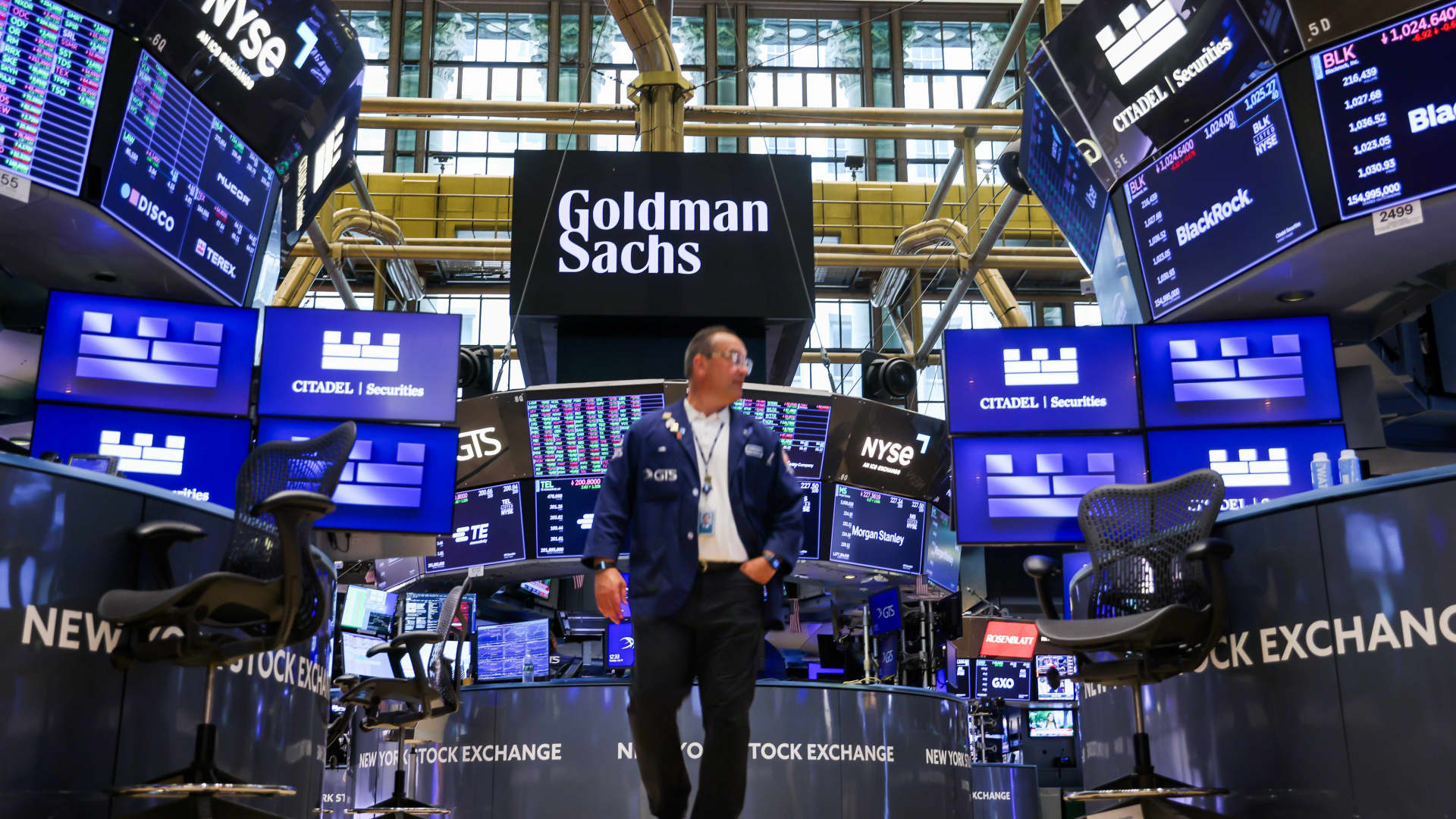
Goldman Sachs has stunned the market with a remarkable surge in its trading division, propelling the firm toward what could be its most profitable year ever. This extraordinary performance, particularly in equities, underscores a strategic shift and significant investments that have positioned the banking giant to capitalize on unprecedented market volatility and evolving client demands.
💰 Financial Strategy & Market Insights
- Equities Lead Growth. Goldman Sachs’ equities business saw a staggering 72% revenue jump to a record $7.42 billion in Q2, significantly outpacing investment banking and fixed income.
- Strategic Client Integration. Years of investment and a ‘One GS’ strategy shift integrated services, driving cross-utilization of equities, investment banking, and wealth management across clients.
- AI Capex & Volatility Fuel Trading. Resilient consumer activity, broad-based AI capital expenditure, and elevated single-name stock volatility created an environment ripe for active client trading and hedging.
The driving force behind Goldman Sachs’ exceptional second-quarter results wasn’t primarily its famed dealmaking, but rather the robust activity within its Global Banking & Markets (GBM) division, particularly from equities trading. This segment alone accounted for over 75% of the bank’s total revenue, reaching an impressive $15.5 billion. The firm’s equities business revenue soared an astonishing 72% to a record $7.42 billion, comfortably beating analyst estimates. This remarkable achievement, as highlighted by Kevin Kelly, global co-head of client coverage for GBM and global co-head of equities, is a culmination of years of strategic investment and a concerted effort to integrate client services across the bank.
Goldman’s equities business encompasses a wide array of services designed to facilitate institutional and wealth clients’ transactions. This includes traditional cash sales and trading, offering content and ideas, providing derivative structures like options and puts, and intermediating risk. Beyond direct trading, the firm operates a substantial equity financing business, offering prime brokerage services to hedge funds, asset managers, and pensions, alongside futures trading and clearing services. A notable addition is Goldman Sachs Custody Solutions, which caters to registered investment advisors, underlining a broad approach to client engagement and risk management.
Market conditions in recent months have been characterized by significant shifts. Earlier in the year, the equity market was largely bifurcated into ‘AI winners’ and ‘AI losers.’ However, the past six to eight weeks have shown increasing dispersion, meaning outcomes for companies within sectors, such as software, are less correlated. This shift has prompted clients to manage risks more actively, taking some exposure down from the heavily concentrated AI thematic while still maintaining an overweight position. The debate in the market now centers not on the existence of earnings power in AI, but on appropriate valuations beyond 2027 and concerns over crowdedness, particularly with institutional, levered ETF, and retail participation.
Several tailwinds have converged to boost Goldman Sachs trading performance. Firstly, the overall equities market growth in the U.S. is incredibly strong, supported by robust earnings revisions and growth. Secondly, consumer resilience remains a key factor, translating into busy corporate activity spanning M&A, ECM, and IPOs. Lastly, the AI capex cycle is adding unprecedented magnitude and breadth to GDP, flowing into every aspect of Goldman’s business. Single-name volatility, a key driver for derivative activity, has reached all-time highs, even surpassing periods like ‘Liberation Day’ in April 2024 when President Donald Trump announced wide-ranging tariffs. This heightened volatility encourages clients to hedge exposures and actively rebalance portfolios, driving increased demand for cash equity sales and trading as they adjust positions to hit price targets faster.
- Asian Market Expansion: A multi-year investment in Goldman’s Asia franchise has paid significant dividends. This region, a hub for AI infrastructure, has seen substantial growth in retail participation and levered ETFs, leading to increased client activity and market share gains for the firm.
- Upside:
- Sustained AI Capex Cycle: Continued enterprise adoption of AI could fuel long-term demand for equity financing, derivatives, and trading services.
- Diversified Client Base: Goldman’s broad client segments, from hedge funds to registered investment advisors, provide resilience against shifts in any single client type.
- Market Leadership: Strong brand and consistent investment in technology and people position Goldman to capture further market share in volatile environments.
- Downside Risks:
- Crowded AI Trades: High concentration in AI-related stocks could lead to sharper corrections if sentiment shifts, impacting client confidence and trading volumes.
- Macroeconomic Headwinds: Persistent inflation, geopolitical instability (e.g., Iran war), or unexpected economic downturns could dampen overall market activity and client risk appetite.
- Regulatory Scrutiny: Increased regulatory oversight on trading practices or capital requirements could impact profitability and operational flexibility.
Expert Insight: Single-Name Volatility
Single-name volatility refers to the price fluctuations of individual stocks, distinct from broader market or index volatility. When single-name volatility is high, as Goldman Sachs reports it to be, it indicates significant price swings in specific equities. This divergence from generally lower index volatility suggests that while the overall market may appear stable, individual stock movements are highly unpredictable, prompting institutional and retail investors to actively hedge or adjust portfolios, thereby generating increased trading volumes and demand for derivative products.
| Goldman Sachs Q2 2024 Revenue Breakdown | Revenue (Billions USD) | Year-over-Year Growth |
|---|---|---|
| Equities Business | $7.42 | +72% |
| Investment Banking | $3.4 | +55% |
| FICC (Fixed Income, Currency, Commodities) | $4.6 | +32% |
| Global Banking & Markets (Total) | $15.5 | N/A |
| Asset & Wealth Management | $4.6 | N/A |
| Platform Solutions | $0.221 | N/A |
Goldman Sachs Equities Liquidity Analysis
The firm’s strategic focus on diversifying its client base—spanning hedge funds, systemic clients, multi-managers, and even retail investors—is crucial for maintaining robust equities liquidity. In periods of high volatility, such as the current market, varied client types often exhibit distinct trading patterns and risk appetites. For instance, while some institutional clients might de-risk, others could be actively seeking opportunities in newly dispersed segments. This broad engagement, supported by substantial technological investments in cross-execution and financing platforms, ensures a consistent flow of capital and efficient intermediation of risk, even when market conditions prompt rapid portfolio adjustments. This strong liquidity position allows Goldman to remain a central player in facilitating large-scale transactions and hedging strategies for global market participants, reinforcing its standing within the broader financial sector.
AI Investment Market Sentiment Tracker
Current market sentiment surrounding Artificial Intelligence (AI) investments reveals a complex interplay of enthusiasm and caution. While the belief in AI’s long-term earnings power and transformative enterprise effects remains strong, concerns over ‘crowdedness’ are increasingly palpable. Goldman Sachs observes a notable reduction in net portfolio exposure to the semiconductor and semi-cap equipment theme, dropping from a high of 24% to approximately 18%. This signals a measured approach from investors who, after significant gains, are selectively taking profits and diversifying, without abandoning the core AI theme. The ongoing debate on appropriate valuations for AI-linked assets, particularly beyond the immediate 3-5 year horizon, suggests that future investment inflows will be highly sensitive to growth catalysts and potential for sustainable long-term returns, as detailed by leading analyses on global market trends.
Goldman Sachs: Navigating Volatility for Sustained Trading Dominance
Goldman Sachs’ recent performance is a testament to its adaptive strategy, leveraging market volatility and structural investments to drive unprecedented trading revenue. The firm’s ability to integrate diverse client needs and capitalize on emerging themes like AI capital expenditure positions it strongly amidst a dynamic global economy.
- The “One GS” approach has fostered client loyalty and deeper engagement across various banking services.
- Investments in technology and its Asia franchise have created new avenues for growth, particularly in high-growth AI infrastructure markets.
- While AI crowdedness poses a near-term risk, the firm’s diversified product and client offerings provide a crucial ballast.
As market dynamics continue to evolve, can Goldman Sachs sustain this trading momentum while mitigating the risks associated with highly concentrated themes and geopolitical uncertainties?
📊 StockXpo Analyst’s View
Market Impact: Goldman Sachs’ robust trading results suggest resilient institutional activity even amid elevated volatility, providing a positive read-through for broader market liquidity. The emphasis on diversification and active risk management by clients, as noted by Kelly, indicates a healthy, albeit cautious, engagement with market opportunities. This performance highlights how leading financial institutions can thrive by providing essential intermediation in complex market environments.
Sector To Watch: The continued strength in AI-driven capital expenditure is a critical theme. While semi-conductors have seen some de-risking, the underlying demand for AI infrastructure spans numerous industries, from cloud computing to specialized software. Investors should monitor companies providing foundational AI hardware and software solutions, as well as those integrating AI across diverse enterprise applications for long-term growth. Insights from educational financial insights often emphasize such long-term secular trends, while keeping an eye on corporate financial news for individual company performance.
Financial Disclaimer:
StockXpo.com is a financial news aggregator and educational portal, not a registered investment advisor or broker-dealer. All information, news, and analysis provided herein are strictly for educational purposes and do not constitute investment, financial, legal, or tax advice. Investing in the stock market involves high risks, and past performance is not indicative of future results. StockXpo will not be liable for any financial losses or investment damages. Always consult a certified financial advisor before making market decisions.
MORE IN INSIDE FINANCE
AI Stock Boom Fuels $67 Billion Equities Growth for Wall Street Giants
Published: Wednesday, October 21, 2026 · 11:03 AM

New Risks Emerge: Global Finance Chiefs Highlight Debt, AI, and Geopolitical Volatility
Published: Tuesday, October 20, 2026 · 2:12 AM