
Published: Wednesday, July 29, 2026 · 12:11 PM | Updated: Wednesday, July 29, 2026 · 12:11 PM
📊 204 views




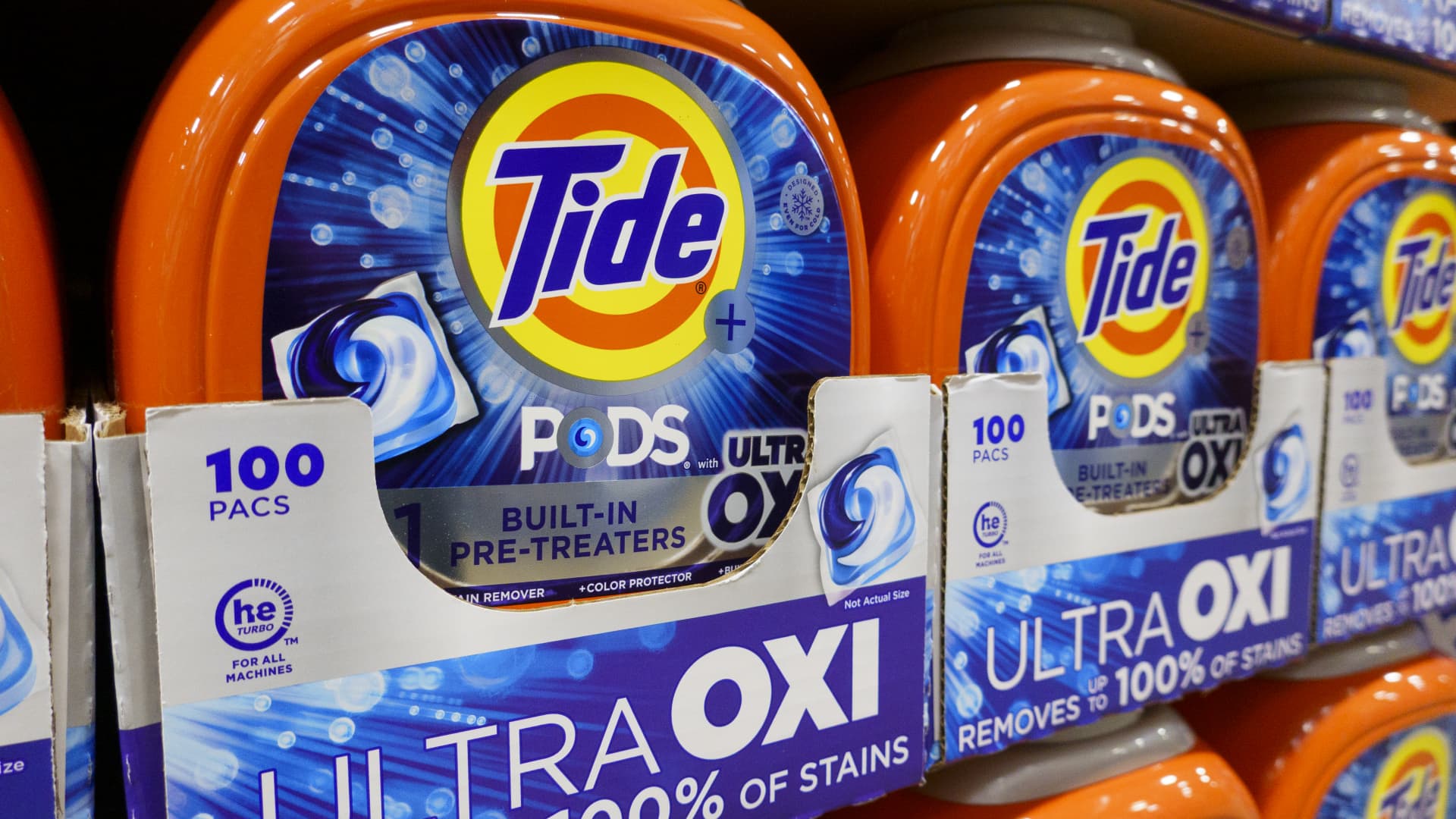
Procter & Gamble (NYSE: PG) recently reported fiscal fourth-quarter results that saw revenue miss analyst estimates, underscoring broader challenges for the consumer staples giant. Despite an earnings per share beat, flat organic volume growth signals a significant shift in consumer purchasing behavior, impacting one of the market’s most stalwart brands.
💎 Strategic Investment & Portfolio Insights
- Volume Concerns for PG. Flat organic volume growth for Procter & Gamble revenue reflects consumer down-trading and reduced consumption amidst inflation, challenging the stability traditionally associated with consumer staples.
- Future Outlook & Headwinds. P&G’s FY2027 forecast, which includes a $1 billion raw material headwind, suggests persistent margin pressure and modest sales growth, demanding cautious investor assessment.
- Defensive Portfolio Reassessment. While PG remains a defensive play, its current struggles with pricing power and demand warrant re-evaluating its allocation within conservative portfolios, favoring agility over sheer stability.
Procter & Gamble’s fiscal fourth-quarter results painted a mixed picture for investors, with the consumer packaged goods behemoth reporting revenue of $21.2 billion against Wall Street’s expectation of $21.38 billion. This miss, though narrow, was primarily driven by underwhelming demand and flat organic volume across its vast portfolio of products, including household names like Tide and Pampers. The company’s shares reacted negatively, shedding over 3% in premarket trading following the announcement, as reported by the latest business news.
While P&G managed an adjusted earnings per share (EPS) of $1.43, slightly surpassing the $1.41 estimate, the core concern lies in its inability to drive volume growth consistently. Throughout fiscal year 2026, the company reported volume expansion in only one quarter, a stark indicator of shifting consumer behavior. Shoppers are increasingly seeking value, either by opting for cheaper private-label alternatives or simply extending the use of their current products, impacting sales of premium brands. This trend aligns with broader global market trends indicating consumer prudence.
- Beauty division (Pantene, Olay) posted a 3% volume increase, signaling strength in personal care segments.
- Fabric and Home Care (Tide, Swiffer) saw a modest 1% rise in volume, showcasing resilience in essential household products.
- Baby, feminine, and family care, along with grooming, each reported a 1% volume drop, reflecting competitive pressure and changing preferences.
- Healthcare (Oral-B, Vicks) was the weakest performer with a 3% volume contraction, primarily due to falling oral care product sales.
Looking ahead, Procter & Gamble’s fiscal 2027 outlook suggests a continued environment of modest growth. The company anticipates core EPS in the range of $6.89 to $7.11 and all-in sales growth between 1% and 3%. This projection factors in an estimated $1 billion headwind from higher raw material, energy, and transportation costs, alongside unfavorable exchange rates and increased net interest expenses, collectively creating an 8% drag on fiscal 2027 EPS. For investors seeking educational market insights on cost management, this illustrates significant operational challenges. The appointment of CEO Shailesh Jejurikar as Chairman of the board, effective August 1, alongside his current role, signifies a leadership consolidation amidst these operational challenges.
The Ripple Effect of P&G’s Volume Stagnation on Portfolios
The sustained pressure on Procter & Gamble revenue and volume growth suggests a broader market trend of consumer deleveraging and increased price sensitivity. This can lead to a Portfolio Reallocation away from traditional, high-multiple consumer staples towards sectors with stronger secular growth drivers or more resilient pricing power. For investors heavily weighted in defensive names, this scenario triggers a Margin Re-evaluation for consumer goods stocks, prompting a careful look at balance sheets and cash flow generation, possibly leading to a Reassessment of Alpha Generation strategies in otherwise stable sectors.
“The flat organic volume for Procter & Gamble underscores a critical shift: even staple giants are not immune to value-seeking consumers. For long-term capital preservation, investors must prioritize companies demonstrating genuine pricing power or innovation that justifies premium positioning, rather than simply relying on brand legacy,” noted a Senior CIO at StockXpo.com, specializing in broader market analysis.
| Metric | Reported (Q4 2026) | Expected (Q4 2026) | Significance |
|---|---|---|---|
| Adjusted EPS | $1.43 | $1.41 | Beat expectations, indicating cost management effectiveness. |
| Revenue | $21.2 billion | $21.38 billion | Missed estimates, reflecting soft demand. |
| Organic Revenue Growth | Unchanged (Flat) | N/A | Indicates zero volume growth, a key concern. |
| FY2027 Core EPS Outlook | $6.89 – $7.11 | $7.04 | Guidance range encompasses, but also slightly below, analyst consensus. |
| FY2027 Sales Growth Outlook | 1% – 3% | 2.7% | Modest growth forecast amidst challenging environment. |
Unpacking the Procter & Gamble Risk-Reward Matrix
Evaluating Procter & Gamble (PG) within a risk-reward framework reveals a complex picture. On the risk side, the primary concerns stem from the persistent lack of organic volume growth and the company’s vulnerability to inflation in raw materials and logistics, projected to be a $1 billion headwind in FY2027. Consumer downtrading, increased competition from private labels, and the potential for prolonged economic uncertainty continue to pressure its top-line expansion. Additionally, a strong dollar could further erode international earnings. From a reward perspective, P&G offers stability through its diversified portfolio of essential goods, robust cash flow generation, and a consistent dividend history, attractive for income-focused investors. Its global reach and extensive brand recognition provide a durable, if slower, growth engine. The company’s ability to implement productivity savings, as highlighted by its CFO, could partially mitigate cost pressures and protect margins. The appointment of Shailesh Jejurikar as both CEO and Chairman streamlines leadership, potentially accelerating strategic decisions for long-term portfolio strategy.
Procter & Gamble Competitive Benchmarking
Procter & Gamble operates in a fiercely competitive consumer staples landscape, vying with peers like Unilever, Kimberly-Clark, and Colgate-Palmolive. While P&G boasts a premium brand portfolio and market leadership in many categories, its recent flat organic volume growth contrasts with some competitors who have managed to eke out marginal volume expansion or demonstrate stronger pricing power. For instance, companies with a more concentrated focus on health and wellness trends or those rapidly innovating in sustainable products might be capturing a larger share of evolving consumer preferences. P&G’s reliance on price increases to drive revenue, rather than volume, indicates a potential erosion of its competitive moat in certain segments, forcing a deeper look into the relative valuation metrics, such as P/E ratios and dividend yields, against its closest rivals. The industry continues to grapple with supply chain volatility and evolving retail channels, necessitating agile strategic responses across the board, affecting competitive positioning and long-term portfolio strategy.
Procter & Gamble’s Flat Volume: A New Era for Consumer Staples?
Procter & Gamble’s latest results signal a challenging period for even the most entrenched consumer brands, as flat volume growth reflects a significant shift in consumer spending habits. While the company’s EPS beat showcases effective cost management, the inability to drive organic volume growth raises questions about its long-term pricing power and market share in a value-conscious environment. Investors should consider these dynamics carefully when assessing its placement within a diversified portfolio.
- Consumer Resilience Test: P&G’s performance is a bellwether for how essential consumer goods companies navigate inflation and changing affordability perceptions.
- Margin Pressure Ahead: The projected $1 billion headwind from rising costs will continue to squeeze profitability, demanding sustained productivity gains.
- Innovation Imperative: Future growth hinges on P&G’s ability to innovate and differentiate its offerings to justify premium pricing over private labels.
Will P&G’s brand strength be enough to re-ignite volume growth in a sustainably evolving consumer market?
📊 StockXpo Analyst’s View
Market Impact: Procter & Gamble’s revenue miss and flat volume are likely to weigh on investor sentiment for the broader consumer staples sector. It highlights that even defensive stocks are not entirely immune to economic pressures and changing consumer behavior, potentially leading to a cautious re-evaluation of valuations and growth prospects across the industry. This could temper liquidity for similar mature, dividend-paying stocks in the near term.
Sector To Watch: While consumer staples face headwinds, sectors demonstrating strong pricing power or significant innovation, particularly in technology-driven consumer discretionary areas or specialized healthcare, may gain favor. Investors might also look towards value-oriented retailers or discount brands that directly benefit from the current trend of consumer downtrading and increased price sensitivity, challenging established premium brands like P&G’s offerings.
Financial Disclaimer:
StockXpo.com is a financial news aggregator and educational portal, not a registered investment advisor or broker-dealer. All information, news, and analysis provided herein are strictly for educational purposes and do not constitute investment, financial, legal, or tax advice. Investing in the stock market involves high risks, and past performance is not indicative of future results. StockXpo will not be liable for any financial losses or investment damages. Always consult a certified financial advisor before making market decisions.
MORE IN INSIDE INVESTMENT NEWS

Delta Air Lines Forecast: Warning Signals on 2026 Outlook Amid Fuel Volatility
Published: Friday, October 9, 2026 · 8:54 AM
PepsiCo Earnings Forecast Cut: Alpha Generation Amid North American Lag
Published: Thursday, October 8, 2026 · 6:41 AM


