Published: Tuesday, July 28, 2026 · 6:26 PM | Updated: Tuesday, July 28, 2026 · 6:26 PM
📊 261 views




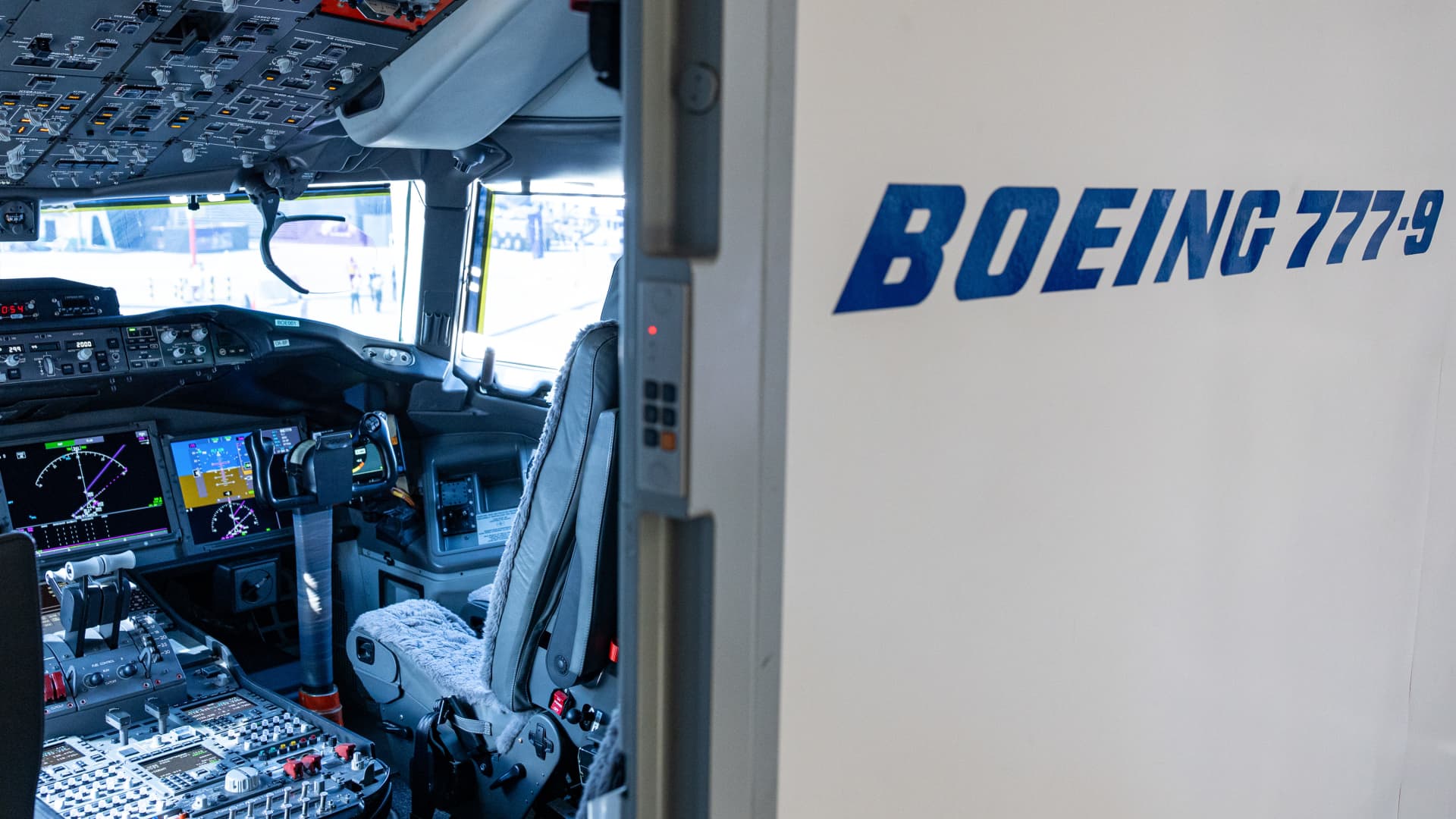
Boeing delivered a pivotal second-quarter performance, reinforcing conviction in CEO Kelly Ortberg’s strategic turnaround and the significant upside runway for the stock. Despite an earnings per share miss, robust free cash flow generation and accelerating production rates indicate a fundamental shift towards long-term capital preservation and alpha generation.
💎 Strategic Investment & Portfolio Insights
- Free Cash Flow Outperformance. Boeing’s Q2 FCF of $631 million significantly beat estimates, signaling improving operational efficiency and laying a strong foundation for future earnings growth, crucial for valuing the company at this stage.
- Production Ramp-Up & Certifications. Increased 737 Max production rates (now at 47/month, targeting 52) and anticipated certifications for Max 7, Max 10, and 777X will unlock substantial revenue from its $597 billion backlog.
- Strategic Portfolio Placement. An upgraded rating to ‘buy-equivalent 1’ and an unchanged price target of $275 reflect growing confidence, positioning Boeing as a key aerospace holding for cyclical recovery and long-term appreciation within diversified portfolios.
Boeing’s second-quarter results provided tangible evidence that CEO Kelly Ortberg’s revitalization efforts are beginning to yield fruit, particularly in its commercial aircraft division. The planemaker reported an 8% increase in revenue year-over-year, reaching $24.56 billion, surpassing LSEG’s consensus estimate of $24.25 billion. Crucially, free cash flow (FCF) came in at a strong $631 million, a stark contrast to analysts’ expectations of a $177 million cash burn, according to FactSet data. This FCF outperformance is paramount for Boeing, as Jim Cramer highlighted on Tuesday’s Morning Meeting, underscoring its importance in the company’s current turnaround phase. Shares responded positively, rising more than 4% in late morning trading.
While adjusted earnings per share (EPS) reported a steeper-than-expected loss of 76 cents against an anticipated 30-cent loss, this was largely attributed to a $280 million charge within the defense and space segment related to the VC-25B (Air Force One) program. Ortberg acknowledged the disappointment but stressed that these investments are critical to mitigate risks and ensure delivery by 2028, aligning with long-term shareholder interests to move past such legacy fixed-price contract challenges. Investors appear willing to absorb these defense segment hits as long as the commercial business continues its trajectory.
The core of Boeing’s recovery hinges on improving production quality and increasing output, especially for its best-selling 737 Max family, following regulatory restrictions imposed after the January 2024 Alaska Airlines incident. The Federal Aviation Administration has progressively lifted production caps, moving from 38 to 42, and most recently to 47 aircraft per month. Ortberg confirmed the ramp-up to 47 is underway, with factory rollouts expected to reach this rate by summer, driven by fundamental improvements in factory health. Boeing aims for further increases to 52, 57, and eventually 63 units monthly, projecting substantial future cash flow as deliveries accelerate. This production cadence, combined with forthcoming certifications for the 737 Max 7, Max 10, and the wide-body 777X, is set to unlock significant value from its massive commercial backlog of over 6,200 airplanes, worth approximately $597 billion. Despite geopolitical fluidity stemming from the Iran war and its impact on oil prices and Middle East carrier concerns, Ortberg maintains that order delays are not materializing. Furthermore, labor negotiations with the SPEEA union are described as respectful and productive, mitigating a potential near-term operational risk.
- **Operational De-risking:** Ortberg’s focus on production quality and meeting regulatory milestones is systematically de-risking Boeing’s commercial aircraft business, shifting investor focus from past crises to future delivery execution.
The Cascade Effect on Portfolio Construction
Boeing’s improving financial performance and operational stability are creating a palpable portfolio positioning effect. The clear trajectory from enhanced production rates to robust free cash flow generation directly translates into a re-evaluation of its intrinsic value. As the company executes on its delivery targets for the 737 Max and secures certifications for new variants, the market is repricing Boeing’s future earnings power, leading to a strategic rebalancing within aerospace portfolios. This positive operational shift enhances its appeal for investors seeking exposure to the cyclical recovery in global aerospace markets, potentially offering significant alpha relative to broader market analysis as discussed on StockXpo’s market analysis. The upgrade of Boeing’s rating reflects a renewed confidence in its long-term potential, making it a compelling candidate for those adjusting their sector allocations towards industries with strong secular tailwinds and demonstrable operational improvements, driving long-term portfolio growth.
“Boeing’s Q2 FCF is the clearest signal yet of Ortberg’s commercial recovery taking hold. For long-term capital allocators, this means Boeing is transitioning from a ‘fix-it’ story to a ‘growth-and-cash-generation’ story, justifying its increased weighting in our diversified portfolios.”
Boeing’s Q2 2026 Financial Highlights
To understand the magnitude of Boeing’s progress, examining key financial metrics provides clarity on its operational trajectory.
| Metric | Q2 2026 Result | Consensus / Prior Context | Why it Matters for Investors |
|---|---|---|---|
| Revenue | $24.56 billion (+8% YoY) | $24.25 billion (LSEG estimate) | Outperformance indicates strong demand and successful delivery of existing orders, bolstering top-line growth. |
| Adjusted EPS | -$0.76 (loss) | -$0.30 (LSEG estimate) | Missed consensus due to defense charges, highlighting persistent but contained risks outside commercial recovery. |
| Free Cash Flow (FCF) | $631 million | -$177 million cash burn (FactSet estimate) | Significant beat; most crucial metric for Boeing’s turnaround, signaling robust operational health and liquidity generation. |
| Commercial Backlog | $597 billion (6,200+ planes) | Record backlog | Provides long-term revenue visibility and confirms strong customer demand, contingent on production & certifications. |
| 737 Max Production Rate | Ramping to 47/month | Previously 38/month (capped) | Directly impacts delivery volumes and FCF generation, signaling regulatory confidence and operational improvement. |
Boeing Risk-Reward Matrix: Navigating Volatility
Assessing Boeing’s investment profile requires a balanced view of its inherent risks against the potential for reward. The recent Q2 results have shifted this matrix, but critical factors remain. On the reward side, the operational turnaround under CEO Ortberg, particularly the robust FCF generation and the increasing 737 Max production rates, represents significant upside. The vast commercial backlog, coupled with impending certifications for new Max variants and the 777X, provides substantial revenue visibility for years to come. Furthermore, the stock’s current valuation, approximately 16% below its January high and nearly 10% off its early July close following geopolitical dips, presents an attractive entry point for investors believing in the long-term recovery narrative.
However, risks persist. The defense segment remains a source of charges, as exemplified by the VC-25B program, impacting near-term earnings. While the KC-46A program is improving, fixed-price contracts historically have been problematic. Geopolitical instability, particularly the Iran war’s potential impact on oil prices and airline demand, introduces an external layer of uncertainty. Supply chain constraints, though not currently a major concern for Ortberg at 47 units/month, could become a factor as production targets climb to 52, 57, and 63. Lastly, successful labor negotiations with the SPEEA union are essential to maintain production momentum. The upgraded rating to a ‘buy-equivalent 1’ with an unchanged price target of $275 implies a favorable risk-reward balance, yet continuous vigilance on these factors is warranted.
Boeing Competitive Benchmarking: Outpacing Airbus?
In the duopolistic commercial aerospace market, Boeing’s performance is inevitably benchmarked against its primary rival, Airbus. While both companies benefit from strong demand for new aircraft, Boeing’s current narrative is dominated by its operational recovery and turnaround story, a different dynamic than Airbus which has largely maintained production stability. Airbus has generally capitalized on Boeing’s past production and safety issues, expanding its market share, particularly in the single-aisle segment. However, Boeing’s recent progress in ramping up 737 Max production and moving closer to certifying its Max 7, Max 10, and 777X models suggests it is poised to reclaim lost ground and accelerate deliveries from its substantial backlog.
Boeing’s ability to drive strong free cash flow, even with a reported EPS loss, demonstrates a renewed focus on core operational efficiency, a key area where it lagged for years. While Airbus has also faced supply chain challenges and production ramp-up issues, Boeing’s progress under Ortberg signals a more aggressive reassertion of its market position. The successful integration of Honeywell Aerospace, a key supplier to both Boeing and Airbus, into the investment portfolio further diversifies exposure within the aerospace ecosystem and provides deeper insights into broader industry trends, often highlighted in business news. The market will closely watch how Boeing’s improved production cadence translates into competitive delivery numbers against Airbus in the coming quarters, particularly as global air travel demand continues to rebound.
Boeing’s Commercial Ascent: A New Trajectory
Boeing’s second-quarter results mark a significant inflection point, showcasing the tangible benefits of CEO Kelly Ortberg’s strategic leadership and operational focus. The standout free cash flow performance, coupled with a steady increase in 737 Max production rates and the imminent certification of new variants, firmly anchors the company’s path to sustained commercial recovery.
- **Operational Momentum:** Boeing is successfully executing its plan to increase production and de-risk new aircraft programs, building confidence in its long-term delivery capabilities.
- **Financial Resilience:** Strong free cash flow signals improved internal financial health, providing the necessary liquidity to navigate remaining challenges and invest in future growth.
- **Investment Opportunity:** The stock’s upgraded rating and existing price target suggest a favorable risk-reward profile, positioning it for potential alpha generation within a diversified portfolio.
Will Boeing’s revitalized commercial segment consistently deliver against its ambitious production and cash flow targets, further solidifying its market dominance and rewarding patient investors?
📊 StockXpo Analyst’s View
Market Impact: Boeing’s encouraging Q2 results, especially the robust free cash flow, will likely bolster investor sentiment across the industrial and aerospace sectors. This demonstrates that even large, complex turnarounds can gain traction, potentially drawing more capital into undervalued industrial giants. Market liquidity may improve as confidence in cyclical recovery plays out, with a focus on companies exhibiting strong operational execution.
Sector To Watch: The aerospace manufacturing and defense sector remains ripe for re-evaluation. While Boeing’s commercial strength is key, the performance of its suppliers, such as Honeywell Aerospace, also stands to gain significantly from increased production rates. Investors should monitor the entire aerospace supply chain, as positive momentum for planemakers tends to ripple through component manufacturers, avionics providers, and maintenance services, creating broader investment opportunities.
Financial Disclaimer:
StockXpo.com is a financial news aggregator and educational portal, not a registered investment advisor or broker-dealer. All information, news, and analysis provided herein are strictly for educational purposes and do not constitute investment, financial, legal, or tax advice. Investing in the stock market involves high risks, and past performance is not indicative of future results. StockXpo will not be liable for any financial losses or investment damages. Always consult a certified financial advisor before making market decisions.
MORE IN INSIDE INVESTMENT NEWS

AI Funding Fears Rattle Wall Street: Adjusting for Alpha and Preservation
Published: Saturday, October 24, 2026 · 12:28 PM

Volvo Cars Plunge: Alpha Warning as China Sales Slump Hits Earnings
Published: Friday, October 23, 2026 · 6:18 AM