Published: Monday, July 27, 2026 · 5:52 PM | Updated: Monday, July 27, 2026 · 5:52 PM
📊 154 views




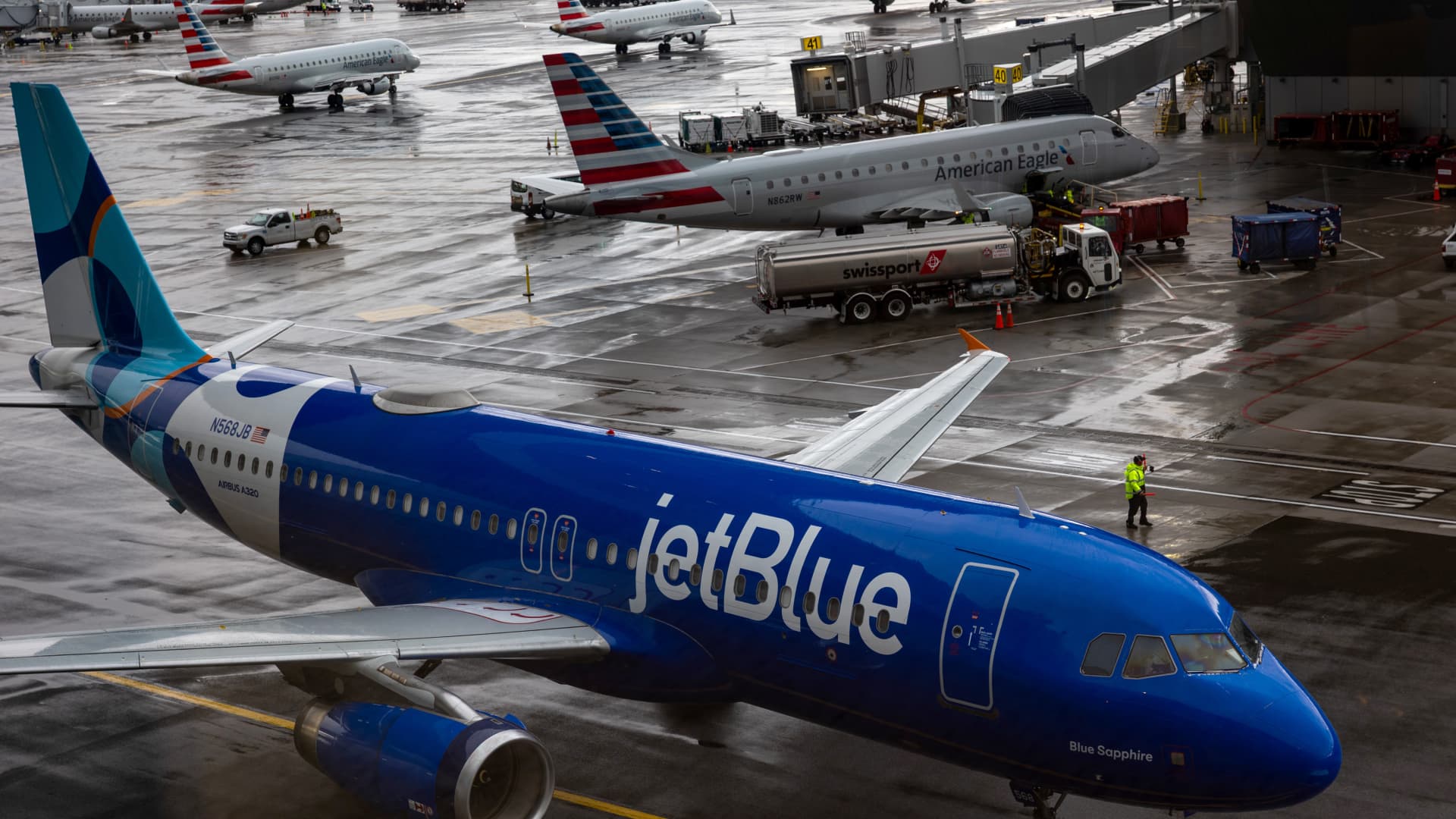
JetBlue Airways is rolling out a comprehensive restructuring of its corporate growth strategies, significantly overhauling its existing fare structure. This move marks a pivotal moment for the airline, signaling an intensified focus on revenue optimization and customer segmentation across its flight offerings, from basic economy to its forthcoming domestic first-class product.
The adjustment is poised to reshape customer expectations and competitive dynamics within the U.S. airline industry, as carriers increasingly vie for premium passenger spend while maintaining appeal for budget-conscious travelers.
🗝️ Corporate Strategy Insights
- Revenue Maximization Through Tiered Pricing. JetBlue’s new structure—Base, Standard, Flex—across different cabin experiences aims to capture a wider range of price points, allowing for granular revenue management and increased average fares.
- Premium Market Penetration with BlueFirst. The introduction of ‘BlueFirst’ domestic first-class seats, alongside its acclaimed ‘Mint’ business class, positions JetBlue to compete more directly for high-value business and leisure travelers in key markets.
- Competitive Alignment and Differentiation. While mirroring competitors like United and Delta in offering tiered premium options, JetBlue avoids a ‘basic lie-flat business’ fare, maintaining a distinct positioning for its Mint product and potentially simplifying its premium offering.
JetBlue’s strategic revamp of its investment analysis model, particularly its broader business landscape, introduces a new hierarchy for its fare options, moving away from its ‘Core’ offerings to a ‘Main’ economy category. This segmentation begins with passenger choice around legroom and seat premiumness, extending through ‘Even More’ (extra legroom with perks like earlier boarding) and the soon-to-debut ‘BlueFirst’ domestic first class.
Within each of these cabin experiences, customers will select from three distinct fare types:
- Base: The most restrictive and lowest-priced option, including a carry-on but no seat selection. Changes or cancellations incur fees, and refunds are issued as travel credits. Earns 1 TrueBlue loyalty point per $1 spent.
- Standard: Includes seat selection, no change or cancel fees (though fare difference applies), and offers 3 TrueBlue points per $1 spent.
- Flex: Provides all Standard benefits, with the key differentiator of refunds returned to the original form of payment.
Notably, JetBlue’s acclaimed ‘Mint’ lie-flat business class, utilized for longer-haul and international routes, will exclusively feature the Standard and Flex options. This decision to forgo a ‘basic’ lie-flat business class, unlike rivals United Airlines and Delta Air Lines who have recently introduced such offerings, indicates a deliberate strategy to preserve the perceived value and exclusivity of its premium ‘Mint’ experience.
JetBlue’s Strategic Analysis: Expanding its Value Proposition
The airline industry is currently witnessing a significant race among carriers to capture the lucrative demand for premium seats, driven by consumers’ willingness to pay more for comfort and enhanced services. JetBlue’s introduction of BlueFirst directly addresses this trend, expanding its addressable market within the domestic first-class segment where it previously lacked a dedicated product. This move is not merely about adding a new seat, but about optimizing the entire cabin configuration to extract maximum value from every passenger, a critical factor for airline profitability.
By segmenting its economy and extra-legroom cabins with Base, Standard, and Flex tiers, JetBlue is deploying a sophisticated yield management strategy. This allows the airline to cater to diverse customer needs, from ultra-budget travelers willing to sacrifice flexibility for price, to premium leisure and business travelers demanding full flexibility and amenities. The careful layering of these educational insights and offerings demonstrates a nuanced understanding of passenger preferences and price elasticity across different segments.
JetBlue’s Competitive Landscape: Navigating Premium Demand
JetBlue’s strategic shift places it in more direct competition with legacy carriers in the domestic premium market. While United and Delta have experimented with ‘basic business’ fares and even charging for blocked middle seats, JetBlue’s approach seems to focus on a clearer value proposition within each defined cabin. This differentiation, particularly in its Mint product, could allow JetBlue to maintain its brand appeal for a certain segment of premium travelers who appreciate a consistent, high-quality experience without the added complexities of ‘basic’ premium options. The success of this overhaul will depend on seamless execution and effective communication of the new value propositions to customers, especially as the airline prepares to report its latest results.
Strategic Ripple Effect: How New Fare Options Impact the Market
JetBlue’s overhaul of its JetBlue fare options will create a multi-faceted ripple effect across the airline industry. The primary impact is on **Revenue Potential**, as the granular fare tiers (Base, Standard, Flex) combined with distinct cabin experiences (Main, Even More, BlueFirst, Mint) enable superior yield management. This sophisticated pricing model allows JetBlue to better match demand fluctuations with optimized pricing, potentially leading to higher average fares and improved profitability per seat mile. This improved financial flexibility could then translate into **Enhanced Capital Allocation**, freeing up resources for fleet modernization or network expansion.
For **Competitors** like United and Delta, JetBlue’s move signifies a further tightening of the competitive environment, particularly in the premium domestic segment. While these larger carriers have also innovated with tiered premium products, JetBlue’s renewed focus on its premium offerings, including the new BlueFirst, means increased pressure on their pricing and product differentiation. This could lead to a **Market Share Shift** as passengers re-evaluate their preferred carriers based on the new value propositions. Smaller, budget-focused airlines might also feel pressure to innovate their basic offerings to remain competitive against JetBlue’s new ‘Base’ fare.
The most critical strategic takeaway from JetBlue’s fare overhaul is its aggressive pursuit of optimized revenue per passenger through sophisticated segmentation, directly challenging larger rivals in the lucrative premium domestic travel market while simultaneously refining its budget-friendly entry points.
Operational Efficiency & Market Leadership Indicators
- Yield Optimization: Tracking average revenue per passenger segment, reflecting the success of tiered pricing.
- Premium Cabin Load Factors: Monitoring BlueFirst and Mint occupancy rates to gauge demand for high-value services.
- Customer Acquisition & Retention: Observing TrueBlue loyalty program enrollment and repeat bookings across new fare types.
- Competitive Response Index: Analyzing how rival airlines adapt their fare structures and premium offerings in response to JetBlue’s changes, signaling market leadership.
JetBlue’s Fare Options: Charting a New Course for Profitability
The revised JetBlue fare options represent a calculated effort to enhance profitability and solidify the airline’s market position amidst intense competition and evolving consumer preferences. By strategically segmenting its offerings from ultra-basic to full-flex first class, JetBlue aims to capture value from every passenger type, ensuring its cost structure supports varied service levels. This comprehensive approach reflects a mature understanding of airline economics and a commitment to maximizing revenue streams in a demanding industry.
- The introduction of ‘BlueFirst’ marks JetBlue’s direct entry into the domestic premium cabin market, diversifying its revenue streams beyond Mint.
- The Base, Standard, and Flex tiers across economy and extra-legroom cabins enable precise revenue management, optimizing pricing strategies for different demand scenarios.
- By avoiding a ‘basic’ lie-flat option for Mint, JetBlue seeks to maintain the premium integrity and higher yield of its flagship business class product.
Will these new global markets and fare options provide JetBlue with the competitive edge needed to consistently outperform its rivals and achieve sustainable long-term growth?
📊 StockXpo Analyst’s View
Market Impact: This strategic overhaul by JetBlue is likely to be viewed positively by investors seeking airlines with robust revenue management capabilities. The focus on premium segmentation and flexible options suggests a move towards higher average revenue per passenger, which could boost financial performance. While the immediate impact on stock price will hinge on execution and demand, the long-term outlook for JBLU may improve as the market appreciates these operational efficiencies.
Sector To Watch: The airline sector, particularly low-cost and hybrid carriers, will be closely watching JetBlue’s performance with these new fare options. Success could prompt similar moves from competitors looking to optimize their own revenue streams and enhance their offerings in a post-pandemic travel landscape defined by strong premium demand.
Financial Disclaimer:
StockXpo.com is a financial news aggregator and educational portal, not a registered investment advisor or broker-dealer. All information, news, and analysis provided herein are strictly for educational purposes and do not constitute investment, financial, legal, or tax advice. Investing in the stock market involves high risks, and past performance is not indicative of future results. StockXpo will not be liable for any financial losses or investment damages. Always consult a certified financial advisor before making market decisions.
MORE IN INSIDE BUSINESS

LA Rams Australia Push: A Bold Global Growth Strategy
Published: Wednesday, September 9, 2026 · 12:43 PM

Rental Demand’s Surge: A Leading Indicator for Future Home Sales Trends
Published: Tuesday, September 8, 2026 · 9:18 AM