Published: Thursday, July 23, 2026 · 6:14 PM | Updated: Thursday, July 23, 2026 · 6:14 PM
📊 144 views




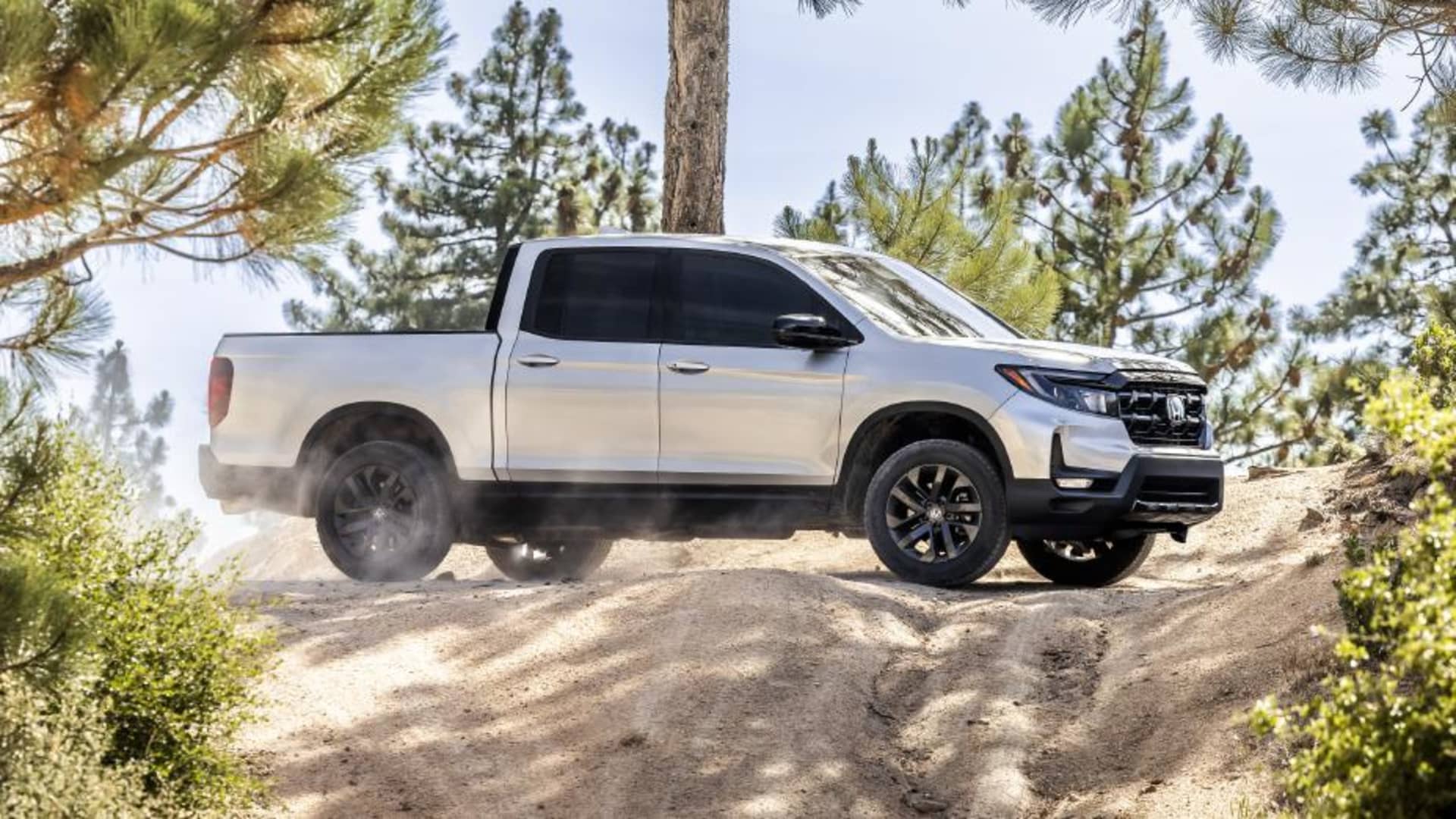
Honda Motor is embarking on a significant strategic overhaul of its midsize pickup truck segment, confirming a next-generation Ridgeline built in the U.S. This move signals Honda’s intent to capture a larger share of the fiercely competitive American truck market, aligning its product strategy with surging demand for rugged, capable vehicles while leveraging its domestic manufacturing capabilities.
🗝️ Corporate Strategy Insights
- Re-entering a key segment. Honda is pausing Ridgeline production to re-engineer a more competitive American-built model, indicating a renewed focus on the lucrative midsize pickup category.
- Addressing market demand. The strategic shift towards ‘increased ruggedness’ and ‘more capability’ aims to align the Ridgeline with consumer preferences that currently favor traditional body-on-frame trucks.
- Leveraging U.S. production. Confirming production at its Alabama plant after a temporary stoppage reinforces Honda’s commitment to American manufacturing and supply chain stability for key models.
Honda Motor (HMC) has officially announced a temporary production halt for its Ridgeline pickup truck at its Alabama plant, paving the way for a next-generation model built entirely in the U.S. The current Ridgeline, known for its car-based unibody construction, has seen declining sales, down approximately 3% in the first half of the year, significantly lagging behind market leaders like the Toyota Tacoma, which sold over 270,000 units in 2025 compared to Ridgeline’s 41,000-52,000 annual sales since 2021. This strategic pause, lasting until a likely 2028 return, follows reports of the vehicle not meeting California emissions regulations, suggesting a fundamental re-engineering is underway to comply with stricter environmental standards while enhancing market appeal. Lance Woelfer, vice president of auto sales at American Honda Motor, emphasized the goal to serve loyal Ridgeline customers while introducing ‘increased ruggedness’ and ‘even more capability’ in the forthcoming model. While Woelfer remained tight-lipped on whether this entails a transition to a body-on-frame platform, the industry widely anticipates such a shift to compete directly with segment titans. This critical decision comes as Honda celebrates a major win: its CR-V compact crossover led U.S. auto sales through the first half of the year, a first for the model, boosted by robust 6% growth and production bottlenecks faced by rivals like Ford F-Series and Toyota Rav4. This divergent performance highlights Honda’s challenge in translating its passenger vehicle success into the highly specialized and brand-loyal truck market. The company’s broader corporate growth strategy continues to adapt to evolving consumer preferences and regulatory landscapes. For more insights into how major automotive players are navigating these shifts, exploring current investment analysis can provide valuable context.
The decision to retool the Honda pickup truck production for a more rugged, capable model will send significant ripples through the midsize truck segment. The strategic pause, while potentially impacting short-term market presence, is designed for a long-term gain. This move is a direct response to a market dominated by trucks built for heavy-duty work and off-road prowess, areas where the current Ridgeline’s unibody design has struggled to gain traction. A successful re-launch could lead to:
- Increased Market Share: A more competitive Ridgeline could chip away at the dominance of rivals like Toyota Tacoma and Ford Ranger.
- Enhanced Brand Perception: A rugged truck offering would broaden Honda’s image beyond reliable passenger vehicles, attracting a new demographic.
- Manufacturing Optimization: Upgrading the Alabama plant for a new truck platform could streamline production processes and improve operational efficiency for future American-built models.
Competitors, particularly Toyota and General Motors, will likely monitor Honda’s engineering choices closely. If Honda opts for a body-on-frame design, it represents a direct challenge to the established order, potentially forcing others to accelerate their own innovation cycles or expand their product lines to maintain their competitive edge.
The strategic reinvention of the Honda Ridgeline signifies a crucial acknowledgment by Honda that success in the U.S. truck market demands a product fundamentally aligned with traditional ruggedness, rather than just versatility. This is a high-stakes play to redefine its footprint in a segment where loyalty and capability are paramount.
Despite the success of the CR-V, Honda’s performance in the midsize pickup segment indicates a clear need for strategic intervention:
- CR-V Sales (H1 Year): Up approximately 6% year-over-year, leading U.S. auto sales for the first time. This highlights Honda’s strength in the crossover segment.
- Ridgeline Sales (H1 Year): Down approximately 3% year-over-year, indicating declining consumer interest in its current form.
- Toyota Tacoma Sales (2025): Over 270,000 units, showcasing the vast market potential Honda is targeting with its updated model. The disparity underscores the current competitive gap.
These figures underscore the strategic imperative for Honda to revamp its Honda pickup truck offering, aligning it more closely with market leaders’ capabilities to capture significant market share.
Honda Motor Strategic Analysis: Shifting Gears in North America
Honda’s strategic decision to redesign and relaunch the Ridgeline is a calculated risk aimed at correcting a market misalignment. Historically, Honda has excelled in optimizing compact and mid-sized passenger vehicles for efficiency and reliability. However, the U.S. truck market operates on a different set of consumer values, prioritizing towing capacity, off-road capability, and sheer ruggedness. By acknowledging the need for ‘increased ruggedness’ and a potentially new platform, Honda is indicating a pivot in its North American product strategy. This isn’t just about a single model; it’s about how Honda perceives its role and competitive landscape in the lucrative American truck segment, which is vital for sustained revenue and brand strength. The move highlights the automaker’s commitment to adapting its core engineering strengths to diverse market demands, a fundamental aspect of effective company strategy.
Honda Motor Competitive Advantages: Beyond Passenger Cars
While the Ridgeline has struggled against traditional body-on-frame trucks, Honda does possess inherent competitive advantages that could be leveraged in its next-generation Honda pickup truck. Its reputation for engineering quality, reliability, and fuel efficiency – hallmarks of its CR-V and Civic lines – can be powerful differentiators if successfully integrated into a more capable truck platform. The temporary production halt also allows Honda to implement advanced manufacturing techniques and incorporate newer technologies, potentially leading to a highly refined and technologically competitive vehicle. This contrasts with competitors who might iterate more incrementally. The success of the CR-V, even amidst competitor production issues, underscores Honda’s robust supply chain and operational efficiency, traits that will be critical for a smooth Ridgeline relaunch. For deeper analysis on how market leaders build and maintain these edges, see reports from financial markets and business news.
Honda’s Pickup Truck Resurgence: What Lies Ahead?
Honda’s commitment to a next-generation, American-built Honda pickup truck represents a pivotal moment for the automaker’s U.S. market strategy. By taking a temporary hiatus to re-engineer the Ridgeline, Honda is betting on a future where its truck offering is more closely aligned with consumer expectations for ruggedness and capability. This proactive approach, while involving short-term disruption, is essential for long-term growth in a segment vital to the U.S. automotive landscape.
- The re-engineered Ridgeline will likely target a broader customer base, moving beyond its niche of car-like pickup buyers.
- Successful execution could significantly boost Honda’s overall U.S. sales and improve its brand perception in the truck segment.
- The move underlines Honda’s flexibility and willingness to adapt core product offerings to market realities, even for established models.
Will this bold strategic pivot enable Honda to finally become a formidable player in the competitive U.S. midsize pickup truck market?
📊 StockXpo Analyst’s View
Market Impact: This strategic pause and re-launch could initially create a vacuum for Honda in the midsize truck segment, but if the new Honda pickup truck is truly competitive, it could lead to a significant re-rating of Honda’s long-term growth prospects in North America. Investors will be closely watching the specifications and capabilities of the new model, as well as the eventual production ramp-up at the Alabama plant. The market may react positively to evidence of Honda’s decisive action to address a underperforming product line.
Sector To Watch: The entire automotive OEM sector, particularly those with strong truck portfolios like Ford, General Motors, and Toyota, should be watched. Honda’s move might trigger increased R&D and product refresh cycles across the board as companies seek to defend or expand their market share. Additionally, the automotive parts and component suppliers catering to truck manufacturing could see increased activity in the coming years. Keep an eye on reports from Reuters business news for updates and more educational insights.
Financial Disclaimer:
StockXpo.com is a financial news aggregator and educational portal, not a registered investment advisor or broker-dealer. All information, news, and analysis provided herein are strictly for educational purposes and do not constitute investment, financial, legal, or tax advice. Investing in the stock market involves high risks, and past performance is not indicative of future results. StockXpo will not be liable for any financial losses or investment damages. Always consult a certified financial advisor before making market decisions.
MORE IN INSIDE BUSINESS

Rental Demand’s Surge: A Leading Indicator for Future Home Sales Trends
Published: Tuesday, September 8, 2026 · 9:18 AM
GM Ford Strategy: New Battlegrounds Emerge in Defense and Energy
Published: Saturday, September 5, 2026 · 10:22 AM