Published: Thursday, July 23, 2026 · 11:56 AM | Updated: Thursday, July 23, 2026 · 11:56 AM
📊 270 views




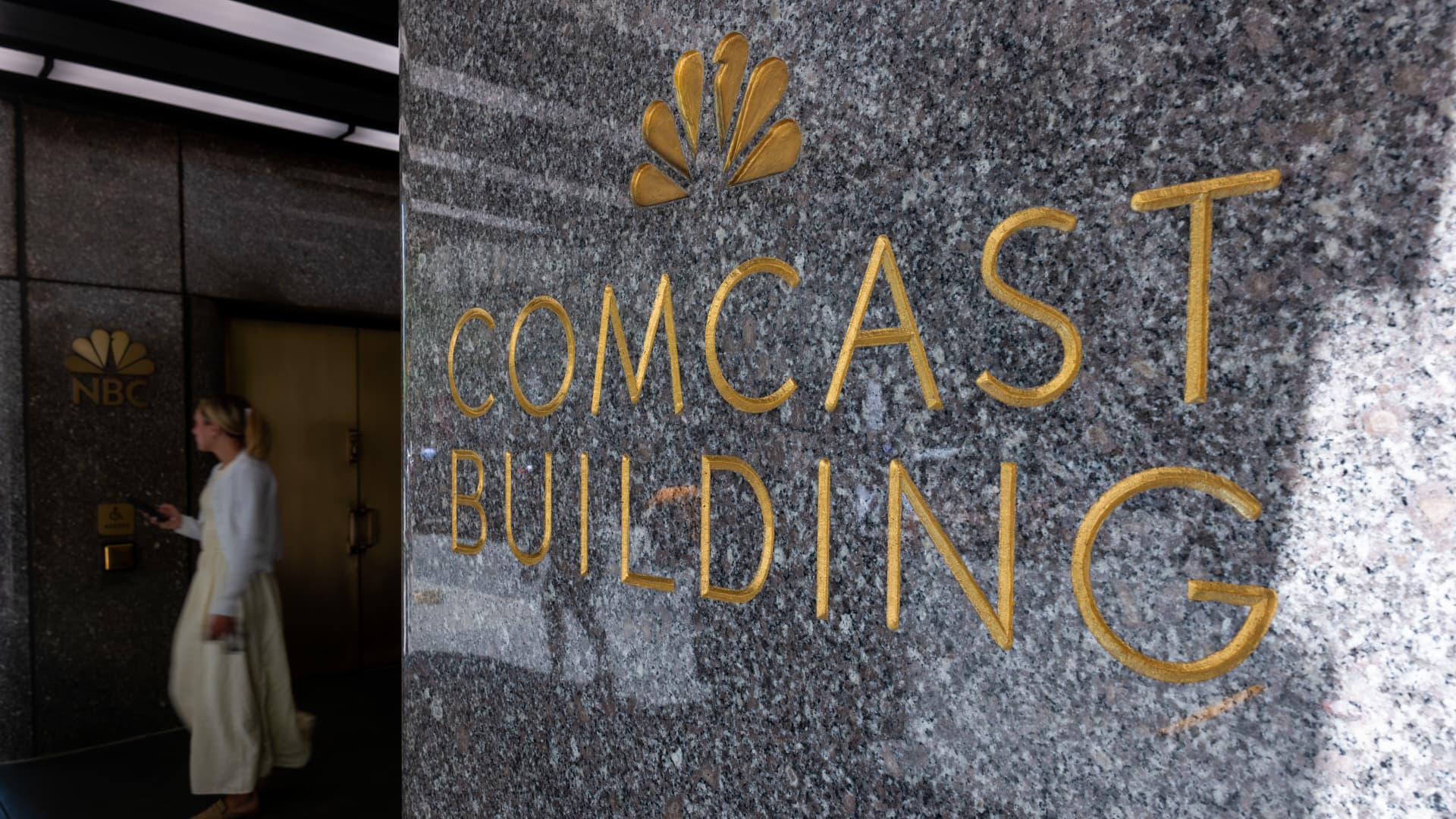
Comcast’s recent second-quarter results provided a clear delineation between its thriving media segment, NBCUniversal, and its embattled broadband division, underscoring the strategic rationale behind its impending business split. This divergence, notably strengthened by Peacock’s inaugural profitability, signals a pivotal moment for the company’s future valuation and strategic direction for investors closely monitoring our latest market analysis.
💎 Strategic Investment & Portfolio Insights
- Media Strength Emerges. NBCUniversal’s content and experiences division revenue climbed nearly 23% year-over-year, driven by Peacock’s first-time profitability and strong performance from TV and film units.
- Broadband Challenges Persist. The connectivity and platforms segment faced a 3% revenue drop and reported significant broadband customer losses, indicating ongoing competitive pressures despite mobile gains.
- Strategic Separation Ahead. The planned split of media and broadband assets aims to create two focused, public companies, potentially unlocking distinct growth pathways and allowing for more targeted capital allocation.
The latest Comcast earnings report reveals a compelling narrative of transformation. While the traditional cable and connectivity business continued to shed broadband residential customers, losing 167,000, and 280,000 cable TV subscribers, its mobile segment proved a significant counterweight, adding a record number of lines to reach 10.2 million. This mobile growth has become a cornerstone of Comcast’s strategy to bolster its connectivity offerings against increasing competition from 5G providers.
Conversely, NBCUniversal’s content and experiences division showcased remarkable resilience and growth. Revenue for this segment, which includes TV media, film studios, and theme parks, soared by almost 23% year-over-year to $10.73 billion. This was largely attributed to the streaming service Peacock achieving profitability for the first time, benefiting from major live sports events such as the FIFA World Cup and the NBA postseason, and attracting new subscribers. Film studio revenue also saw a robust 25% increase, demonstrating the underlying strength within Comcast’s media assets, as reported by CNBC.
Overall, Comcast reported adjusted earnings per share of $1.04, surpassing Wall Street’s consensus estimate of 97 cents. However, total revenue for the second quarter declined 1.2% to $29.94 billion. On a pro-forma basis, adjusting for the Versant spinoff earlier in the year, quarterly revenue was 4.7% higher, suggesting that strategic divestitures are already impacting the financial landscape.
Portfolio Positioning in a Shifting Landscape
The impending split of Comcast’s media and broadband businesses presents a significant re-rating opportunity for investors seeking long-term investment strategies. This strategic unbundling allows for a clearer valuation of each entity based on its specific growth drivers and market dynamics, reducing the ‘conglomerate discount’ often applied to diversified holdings. For portfolios, this means a potential rebalancing act where investors can choose pure-play exposure to either the high-growth, content-centric media industry or the more mature, but critical, connectivity sector. This cause-and-effect relationship—corporate restructuring leading to asset revaluation—underscores the need for nimble portfolio adjustments.
“The Comcast split is a classic example of unlocking embedded value. By separating these distinct businesses, management is creating optionality for investors to align their capital with specific market themes, whether it’s the future of streaming or the resilient demand for high-speed internet. This move provides clarity that should attract specialized capital, potentially leading to multiple expansion for both entities.”
Key Financial & Operational Metrics (Q2 2026)
Below are key metrics from Comcast’s recent earnings, providing insight into the performance drivers of its business segments.
| Metric | Value (Q2 2026) | Significance |
|---|---|---|
| Content & Experiences Revenue | $10.73 billion (+23% YOY) | Highlights strong growth in media, driven by Peacock and film. |
| Connectivity & Platforms Revenue | $19.8 billion (-3% YOY) | Reflects challenges in broadband, offset by mobile. |
| Broadband Residential Customer Losses | 167,000 | Indicates intensifying competition from alternative providers. |
| Mobile Line Additions (Net) | Record quarter, total 10.2 million | A bright spot and key strategic driver for future growth. |
| Adjusted EPS | $1.04 (vs. $0.97 estimate) | Outperformance against analyst expectations. |
Comcast Risk-Reward Matrix
Investing in Comcast post-split will present a refined risk-reward profile. On the reward side, a standalone NBCUniversal could command a higher valuation multiple as a pure-play content and streaming powerhouse, free from the drag of a declining legacy business. The sustained growth in film and theme parks, coupled with Peacock’s newfound profitability and strong live sports programming, provides a clear pathway for media-centric alpha generation. Furthermore, the connectivity business, even with broadband losses, offers stability through its large subscriber base and the significant upside potential of its growing mobile segment. On the risk side, execution risk associated with the spin-off process itself, including potential operational disruptions or mis-estimations of dis-synergies, remains a factor. The broadband segment faces relentless competition from fixed wireless access and fiber providers, necessitating continuous investment and innovative strategies to halt customer churn. Additionally, the streaming wars are far from over, and maintaining Peacock’s profitability will require sustained content investment and effective subscriber acquisition tactics. For a broader view, follow business news from reputable sources.
Comcast Competitive Benchmarking
The performance of Comcast’s segments can be benchmarked against industry peers to gauge its competitive standing. NBCUniversal’s streaming success with Peacock reaching profitability places it in a different league than many early-stage streamers, though it still trails established giants like Netflix or Disney+ in terms of global scale. Its ability to leverage live sports (FIFA World Cup, NBA) and established linear TV assets (Telemundo) provides a unique content differentiation strategy. In the broadband sector, Comcast’s customer losses underscore the intense competitive pressure from rivals like T-Mobile 5G Home Internet and Verizon Fios, which offer compelling alternatives. While its mobile business continues to excel, drawing comparisons to MVNO successes, the core broadband business needs a renewed strategy beyond promotional pricing to stem losses and protect market share against these formidable challengers, impacting the broader market trends.
Comcast’s Strategic Pivot: Unlocking Latent Value?
Comcast’s latest earnings report and its commitment to splitting its media and broadband businesses mark a significant turning point, potentially unlocking substantial shareholder value by allowing each segment to thrive independently. The strong performance of NBCUniversal’s content and experiences division, spearheaded by Peacock’s profitability, stands in stark contrast to the persistent challenges in the traditional connectivity business, highlighting the necessity of this strategic separation.
- The unbundling could lead to a clearer valuation for both the media and broadband entities, potentially eliminating conglomerate discounts.
- NBCUniversal’s strong content pipeline and streaming growth provide a robust foundation for a pure-play media company.
- The broadband business, despite subscriber losses, retains a massive customer base and a rapidly expanding mobile segment to build upon.
Will this strategic maneuver pave the way for sustained alpha generation and a higher overall market capitalization for the combined entities?
📊 StockXpo Analyst’s View
Market Impact: The planned Comcast split is likely to generate increased investor interest in both the pure-play media and connectivity sectors, potentially driving re-ratings. This strategic clarity could lead to enhanced liquidity for each new entity, as investors can more precisely align capital with their specific thematic preferences. The market will closely watch the execution of this complex separation for any unforeseen operational hurdles, but the initial sentiment appears cautiously optimistic for value creation. For more detailed insights, explore our educational market insights.
Sector To Watch: The Media & Entertainment sector, particularly streaming and live content, stands to benefit significantly from a focused NBCUniversal. Its demonstrated ability to monetize live sports and achieve Peacock profitability positions it well against competitors. Simultaneously, the Telecommunications Services sector will be keenly observing how a standalone Comcast connectivity business innovates to counter 5G and fiber competition, with its mobile segment serving as a crucial growth engine.
Financial Disclaimer:
StockXpo.com is a financial news aggregator and educational portal, not a registered investment advisor or broker-dealer. All information, news, and analysis provided herein are strictly for educational purposes and do not constitute investment, financial, legal, or tax advice. Investing in the stock market involves high risks, and past performance is not indicative of future results. StockXpo will not be liable for any financial losses or investment damages. Always consult a certified financial advisor before making market decisions.
MORE IN INSIDE INVESTMENT NEWS

Procter & Gamble Earnings: Alpha Generation from Consumer Staples Resilience
Published: Thursday, October 22, 2026 · 7:39 AM

Carrefour Shares Plunge 14%: Navigating European Retail Volatility
Published: Wednesday, October 21, 2026 · 6:29 AM