Published: Thursday, July 23, 2026 · 11:57 AM | Updated: Thursday, July 23, 2026 · 11:57 AM
📊 217 views




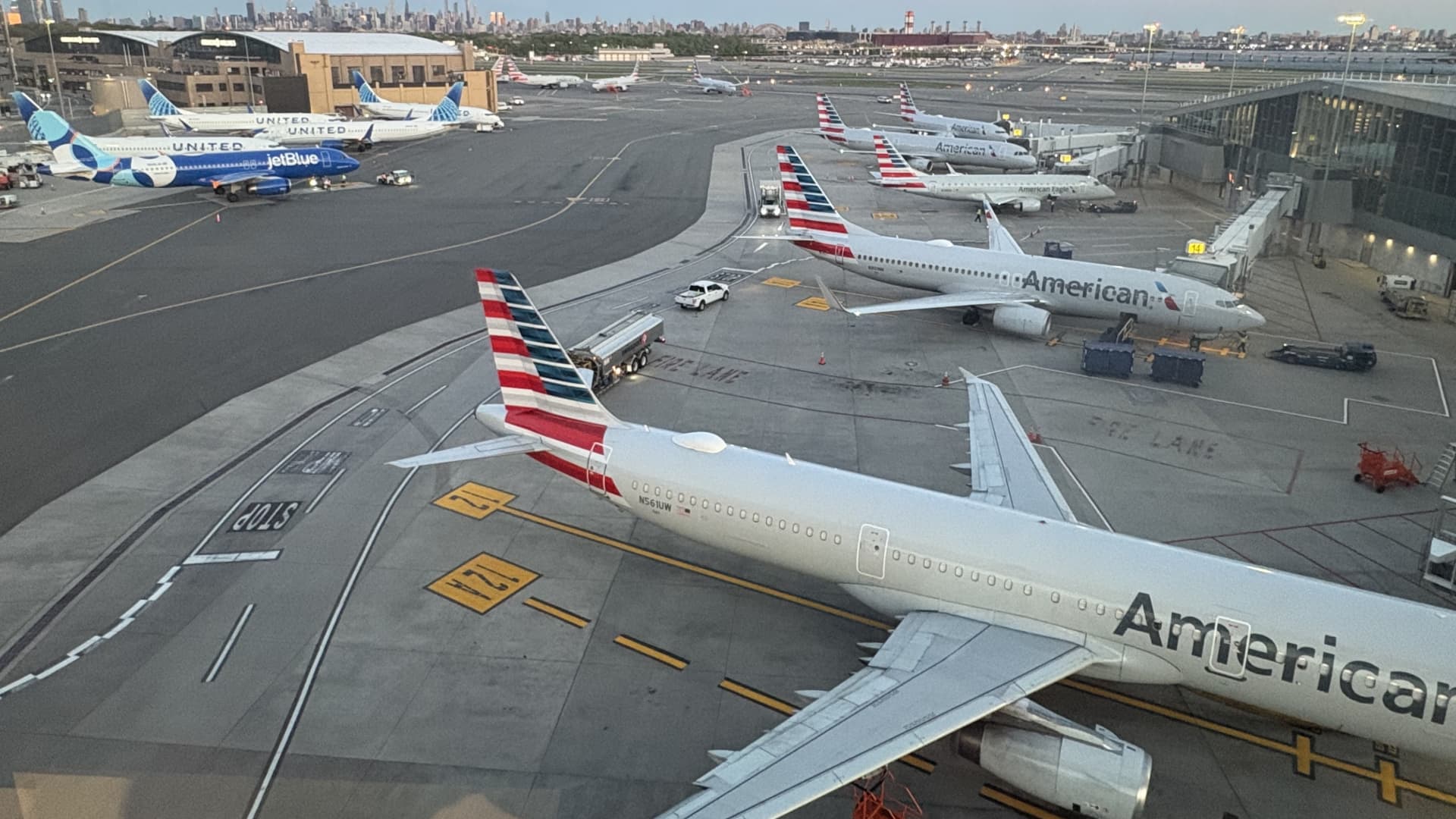
American Airlines (AAL) has significantly revised its 2026 earnings outlook downward, a direct consequence of persistently high fuel costs that are eroding profitability despite robust travel demand. This recalibration signals a challenging environment for the airline sector, prompting a reassessment of valuation models and strategic portfolio positioning for discerning investors seeking comprehensive market analysis.
💎 Strategic Investment & Portfolio Insights
- Reduced Profitability Guidance. American Airlines (AAL) lowered its 2026 adjusted EPS guidance from a range of -$0.40 to $1.10 to -$0.65 to $0.65, reflecting severe margin compression from surging fuel prices.
- Fuel Cost Headwinds Persist. Despite strong passenger demand and rising fares, the airline cannot fully offset the spike in fuel expenses, its second-largest operational cost after labor, highlighting commodity price sensitivity.
- Strategic Response and Competitive Gap. AAL plans fleet expansion and premium seating additions to close the profitability margin gap with rivals like Delta and United, indicating a long-term strategic pivot amidst immediate cost pressures.
American Airlines has cut its 2026 adjusted earnings per share (EPS) outlook for the second time this year, a clear indicator that soaring fuel costs are outpacing the benefits of strong consumer travel demand and rising airfares. The revised guidance now projects an adjusted loss per share of as much as 65 cents up to earnings of 65 cents this year, a significant reduction from April’s estimate of a loss of 40 cents to earnings of $1.10 per share, as reported by CNBC. This downgrade underscores the sector’s acute vulnerability to volatile energy markets, with fuel being a predominant operational expense.
For the current third quarter, American also anticipates an adjusted loss ranging from 70 cents to 10 cents per share, falling short of Wall Street’s expectation of 28 cents in earnings. This contrasts with a brighter revenue picture, where the airline expects a 16% to 19% increase, surpassing analyst projections of 16.6%. While this revenue growth confirms robust demand, it simultaneously highlights the industry’s challenge in translating top-line gains into bottom-line profitability when faced with escalating input costs. CEO Robert Isom acknowledged in an interview last month that the carrier’s long-range plan includes narrowing the margin gap with more profitable rivals such as Delta Air Lines and United Airlines, a strategic imperative that is becoming increasingly urgent.
- Fuel price volatility introduces significant uncertainty into future financial projections, complicating investment thesis development for airline stocks.
- American’s plan to expand flying by up to 5% in the third quarter suggests a dual strategy of capturing market share while simultaneously navigating cost pressures.
- The company’s focus on ordering new wide-body aircraft and adding premium seats aims to enhance revenue per available seat mile, a critical metric for airline profitability.
The Cascade: Fuel Costs and Portfolio Revaluation
The persistent rise in fuel costs represents a critical input shock, directly compressing airline operating margins. This external factor necessitates a re-evaluation of the entire airline sector’s intrinsic value, particularly for carriers like American Airlines with significant exposure to these commodity price fluctuations. For portfolio strategists, this translates into a potential rebalancing act. Assets highly sensitive to energy prices may experience downward pressure, leading to a shift towards more resilient sectors or companies with stronger hedging strategies or greater pricing power. This dynamic underscores the importance of assessing macro-economic factors when positioning for diversified portfolio growth.
CIO Insight: ‘In an environment of fluctuating commodity prices, investors must rigorously stress-test airline valuations against various fuel cost scenarios. Diversification away from energy-intensive sectors, or into carriers with proven cost efficiencies and superior balance sheets, becomes paramount for long-term capital preservation and alpha generation.’
American Airlines’ Financial Snapshot & Projections
| Metric | Value (Q2 2026 / Guidance) | Significance for Investors |
|---|---|---|
| Q2 2026 Adjusted EPS | 15 cents (vs. 3 cents expected) | Beat analyst expectations, showing operational outperformance in the short-term. |
| Q2 2026 Revenue | $16.74 billion (vs. $16.71 billion expected) | Slightly surpassed estimates, reflecting strong passenger demand. |
| Q2 2026 Net Profit (YoY) | $71 million (down 88% from $599 million) | Highlights severe profit erosion despite revenue growth, primarily due to costs. |
| Q3 2026 Adjusted EPS Guidance | -$0.70 to -$0.10 (vs. $0.28 expected) | Revised outlook indicates continued near-term profitability challenges. |
| 2026 Adjusted EPS Guidance | -$0.65 to $0.65 (vs. prior -$0.40 to $1.10) | Significant downward revision, indicating systemic cost pressures on full-year profitability. |
Navigating Volatility: American Airlines’ Competitive Benchmarking
American Airlines’ struggle to fully offset fuel cost spikes contrasts with its ambition to close the margin gap with industry leaders like Delta Air Lines and United Airlines. Both Delta and United have demonstrated stronger pricing power and operational efficiencies, enabling them to better navigate cost pressures while maintaining healthier profit margins. American’s strategy to invest in new wide-body aircraft and enhance premium seating aims to elevate its revenue mix, aligning with the playbook used by its more profitable peers. However, the execution risk remains significant, especially against a backdrop of volatile fuel prices and a highly competitive domestic and international market. The ability to generate superior passenger revenue per available seat mile (PRASM) will be critical for American to genuinely compete on profitability, not just capacity, as detailed in various global financial markets reports.
Assessing the Trajectory: American Airlines’ Risk-Reward Matrix
From a risk-reward perspective, American Airlines presents a mixed bag. The upside potential is tied to sustained strong travel demand, successful implementation of its premiumization strategy, and a eventual normalization or decline in fuel prices. Should these factors align, American could see a significant re-rating as its profitability improves and the margin gap with competitors narrows. However, the immediate downside risks are substantial: continued elevated fuel costs, potential economic slowdowns impacting leisure and business travel, labor cost pressures, and the inherent capital intensity of fleet upgrades. Furthermore, the company’s reliance on domestic travel could expose it to regional economic sensitivities. Investors must weigh the potential for a cyclical rebound against the structural cost challenges and competitive pressures that define the airline industry.
American Airlines’ Future Flight Path: Navigating Macro Headwinds
American Airlines’ latest guidance cut highlights the precarious balance airlines must maintain between robust demand and escalating operational costs. Despite strong revenue performance, the company’s struggle to deliver consistent profitability due to fuel price volatility warrants careful consideration. The strategic moves toward fleet modernization and premium offerings are prudent long-term initiatives, but their impact will be gradual and subject to market conditions and successful execution.
- The revised earnings outlook places AAL under increased pressure to demonstrate effective cost management and revenue optimization strategies.
- Sustained high fuel prices could force further operational adjustments or fare increases, potentially dampening consumer demand.
- The gap between American and its more profitable rivals like Delta and United underscores the need for strategic differentiation beyond mere capacity growth.
Given the persistent macroeconomic headwinds, how will American Airlines effectively differentiate its service and cost structure to achieve its long-range profitability goals?
📊 StockXpo Analyst’s View
Market Impact: The reiterated negative sentiment regarding American Airlines’ earnings outlook suggests that the broader airline sector, while enjoying strong demand, remains highly susceptible to commodity price shocks. This news could temper investor enthusiasm for cyclical stocks and shift focus towards companies with greater pricing power or stronger cost controls. We’ve seen similar patterns in timely business news, where external shocks create short-term market turbulence but also long-term strategic adjustments.
Sector To Watch: Investors should closely monitor the crude oil market and refine product crack spreads, as these directly influence airline profitability. Additionally, companies within the travel technology and logistics sectors that offer operational efficiencies or cost-saving solutions to airlines might see increased interest as carriers seek to mitigate fuel-related expenses. For further insights, explore actionable market intelligence.
Financial Disclaimer:
StockXpo.com is a financial news aggregator and educational portal, not a registered investment advisor or broker-dealer. All information, news, and analysis provided herein are strictly for educational purposes and do not constitute investment, financial, legal, or tax advice. Investing in the stock market involves high risks, and past performance is not indicative of future results. StockXpo will not be liable for any financial losses or investment damages. Always consult a certified financial advisor before making market decisions.
MORE IN INSIDE INVESTMENT NEWS

Nvidia Micron Jobs Report: Alpha Generation Amidst Market Volatility
Published: Saturday, October 3, 2026 · 12:03 PM

Accenture Stock: Alpha Potential After Earnings Beat
Published: Friday, October 2, 2026 · 6:04 AM