
Published: Wednesday, July 22, 2026 · 8:59 PM | Updated: Wednesday, July 22, 2026 · 8:59 PM
📊 273 views




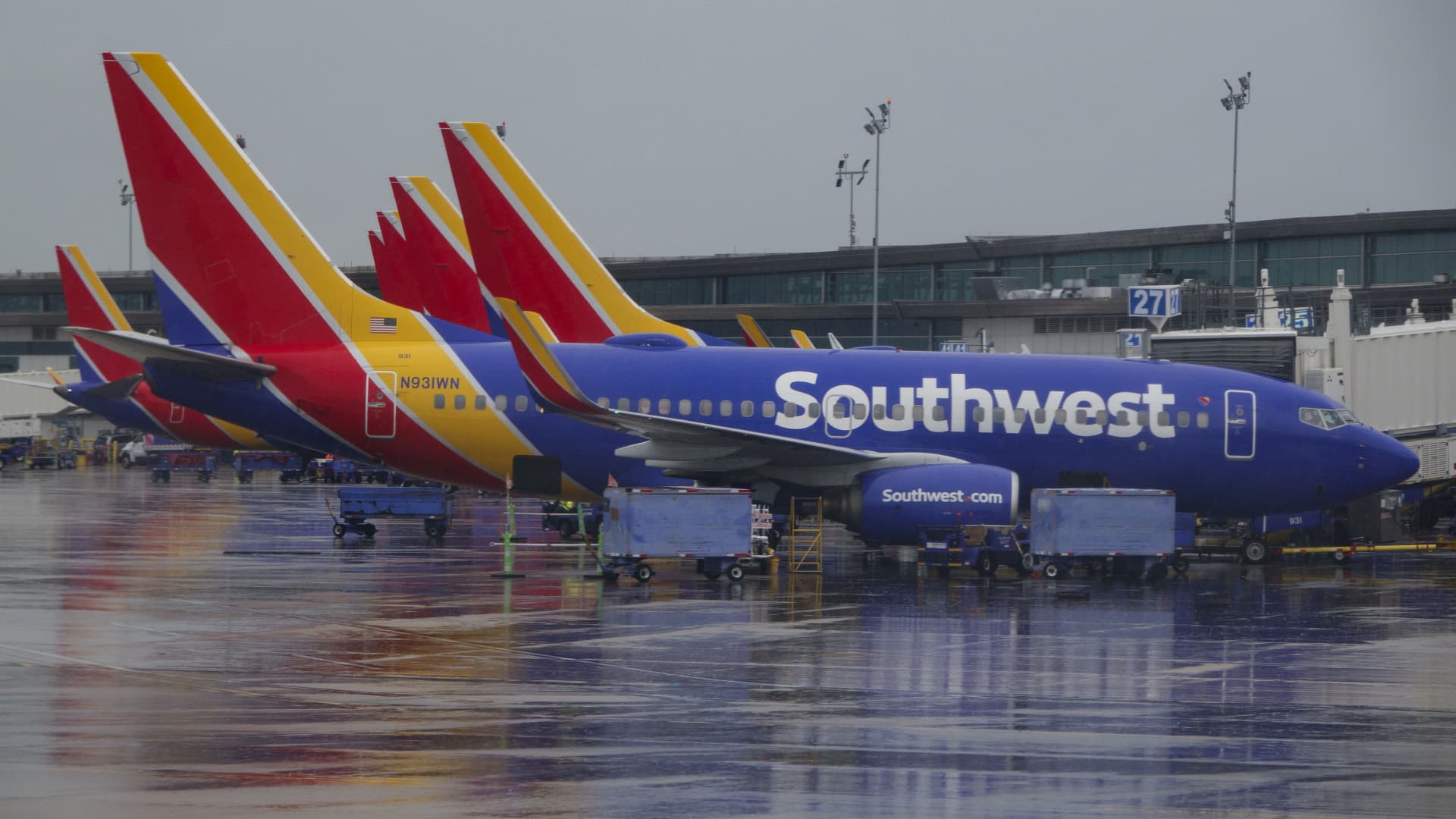
Southwest Airlines has issued a muted third-quarter outlook, signaling challenges ahead despite a robust second quarter. The airline’s profitability is being squeezed by escalating fuel expenses, overshadowing strong fare increases and robust demand.
💎 Strategic Investment & Portfolio Insights
- Fuel Cost Headwinds. A 67% surge in Q2 fuel bills highlights persistent inflationary pressures impacting airline operating margins.
- Softened Q3 Outlook. Southwest Airlines’ earnings guidance fell below analyst consensus, suggesting potential headwinds for short-term earnings visibility.
- Revenue Growth vs. Profitability. Despite strong top-line growth from higher fares, the challenge remains converting this into sustainable bottom-line expansion due to escalating costs.
Dallas-based Southwest Airlines delivered mixed results in its latest report, with second-quarter profit showing a respectable 9.4% year-over-year increase to $233 million, or 47 cents per share. This was largely propelled by a significant 16.4% revenue jump to $8.4 billion, reflecting a nearly 21% surge in average passenger fares to $225.61. However, this positive momentum was severely tempered by a substantial 67% increase in the airline’s fuel bill, reaching $2.22 billion for the quarter. This disproportionate rise in operating costs underscores the precarious balance airlines face in the current inflationary environment.
Looking ahead, the airline’s third-quarter forecast paints a more cautious picture. Management projected adjusted earnings between 50 cents and 75 cents per share, which fell notably short of analysts’ expectations of 82 cents. This outlook, despite an anticipated 17.5% to 19.5% increase in third-quarter sales year-over-year, suggests that cost pressures will likely continue to weigh heavily on profitability. Capacity for Q3 2026 is expected to remain flat or contract by up to 1% compared to Q3 2025, indicating a conservative approach to expansion given the current economic climate.
- Adjusted earnings per share reached 94 cents, significantly surpassing the 51 cents anticipated by analysts.
- Total revenue of $8.43 billion narrowly missed the $8.58 billion consensus estimate.
- The airline’s new policy regarding flight credit expiration dates, effective for tickets sold from mid-2025, contributed to the adjusted EPS. Further details on airline policy shifts and their financial implications can often be found in expert market insights.
What This Means for Long-Term Portfolios
The significant rise in fuel costs, coupled with a conservative third-quarter outlook, directly impacts the portfolio positioning for airline stocks. Higher Operating Expenses → Reduced Profit Margins → Potential Devaluation of Equity. This scenario could lead investors to re-evaluate exposure to the cyclical airline industry, potentially triggering a rebalancing towards sectors with more predictable cost structures or stronger pricing power. Furthermore, the news could fuel broader market analysis regarding inflation’s sustained impact on transportation and logistics, influencing overall market sentiment and investment in related supply chain assets. Investors might seek greater diversification by exploring investment opportunities that offer more resilient growth.
As a CIO, I view this Southwest Airlines report as a clear indicator of macro headwinds persisting for airlines. While demand remains strong, the battle against elevated input costs is fierce. Prudent portfolio management now demands a sharper focus on airlines with superior hedging strategies, robust balance sheets, or unique route networks that offer pricing leverage to mitigate these pressures.
Southwest Airlines Q2 2026 Financial Highlights
Examining Southwest Airlines’ second-quarter performance reveals a company navigating strong demand alongside significant cost pressures. Here’s a snapshot of key metrics:
| Metric | Q2 2026 Value | Year-over-Year Change | Significance |
|---|---|---|---|
| Total Revenue | $8.4 Billion | +16.4% | Strong top-line growth driven by higher passenger fares. |
| Net Income | $233 Million | +9.4% | Profitability increased despite cost pressures, albeit slower than revenue. |
| Adjusted EPS | $0.94 | N/A (vs. 51 cents expected) | Exceeded analyst estimates, partly due to flight credit adjustments. |
| Fuel Bill | $2.22 Billion | +67% | The primary drag on profit margins, highlighting operational challenges. |
| Average Passenger Fare | $225.61 | +21% | Reflects robust demand and the airline’s ability to pass on costs. |
Understanding Southwest Airlines’ Risk-Reward Matrix
Investing in Southwest Airlines (LUV) at this juncture involves weighing several factors. The reward potential lies in its strong brand loyalty, efficient point-to-point network, and recovering travel demand. If fuel prices stabilize or decrease, and the airline successfully manages its capacity, there’s upside potential for margin expansion and stock appreciation. The downside risks, however, are significant: continued fuel price volatility, potential economic slowdowns impacting discretionary travel, and intense competition from other carriers. The updated Q3 forecast clearly shifts the immediate risk-reward balance towards caution.
Southwest Airlines Competitive Benchmarking in a Shifting Market
Compared to peers like Delta Air Lines (DAL) and United Airlines (UAL), Southwest operates primarily on a point-to-point model with a standardized Boeing 737 fleet, which historically offered cost advantages. However, the recent surge in fuel expenses impacts all carriers, though those with greater international exposure might benefit from stronger international travel trends as reported by Reuters Business News and Forbes financial analyses. Southwest’s focus on domestic leisure travel makes it particularly sensitive to U.S. consumer spending patterns and fuel price movements. Its capacity contraction plan also contrasts with some competitors who are expanding to capture global demand, raising questions about its strategic agility in the current landscape.
Southwest Airlines: Navigating Turbulence Amidst Strong Demand
Despite robust passenger demand driving strong revenue growth, Southwest Airlines faces significant headwinds from escalating operating costs, primarily fuel. The airline’s conservative third-quarter guidance reflects these challenges, impacting investor sentiment and near-term profitability expectations.
- The airline’s ability to raise fares significantly highlights strong consumer willingness to pay for travel.
- Capacity discipline in Q3 suggests a focus on profitability over aggressive growth in a high-cost environment.
- Management of fuel expenses will be critical for Southwest’s performance in the coming quarters.
Will Southwest’s operational efficiencies and brand loyalty be enough to offset persistent cost pressures in the long run?
📊 StockXpo Analyst’s View
Market Impact: This update on Southwest Airlines signals a broader challenge for the airline sector, where robust post-pandemic demand is being offset by inflationary pressures, particularly in energy costs. Investor sentiment may turn cautious on carriers with less diversified revenue streams or weaker fuel hedging strategies, potentially leading to sector-wide revaluations. Market liquidity might shift towards defensive sectors or companies with stronger cost controls.
Sector To Watch: While airlines face headwinds, the energy sector, particularly oil and gas producers, stands to benefit from sustained high fuel prices. Additionally, companies providing alternative fuel technologies or efficient fleet management solutions could see increased interest as airlines seek ways to mitigate these costs. Investors should also closely monitor the tourism and hospitality sectors, as sustained high airfares could eventually temper discretionary travel spending.
Financial Disclaimer:
StockXpo.com is a financial news aggregator and educational portal, not a registered investment advisor or broker-dealer. All information, news, and analysis provided herein are strictly for educational purposes and do not constitute investment, financial, legal, or tax advice. Investing in the stock market involves high risks, and past performance is not indicative of future results. StockXpo will not be liable for any financial losses or investment damages. Always consult a certified financial advisor before making market decisions.
MORE IN INSIDE INVESTMENT NEWS
Carrefour Shares Plunge 14%: Navigating European Retail Volatility
Published: Wednesday, October 21, 2026 · 6:29 AM

Netflix Earnings: Alpha Bet on Streaming’s Rebound?
Published: Tuesday, October 20, 2026 · 12:45 PM


