Published: Tuesday, July 21, 2026 · 3:17 PM | Updated: Tuesday, July 21, 2026 · 3:17 PM
📊 213 views




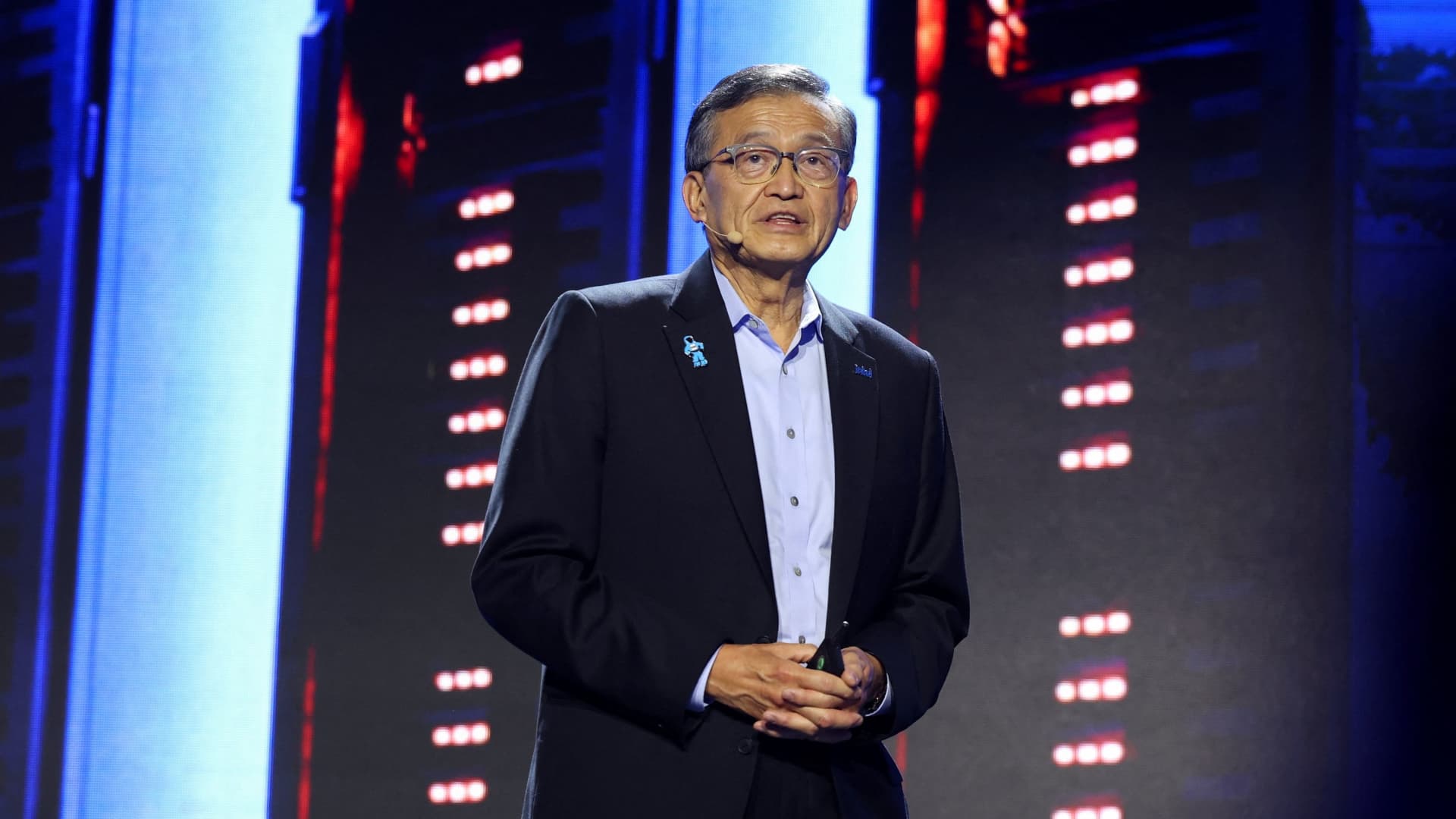
Intel’s strategic pivot into the contract chip manufacturing business has achieved a critical milestone with cybersecurity firm Fortinet becoming its first publicly named external customer under CEO Lip-Bu Tan. This agreement, announced Tuesday, marks a significant validation for Intel’s ambitious foundry services, as Fortinet plans to utilize Intel’s fabs for its next-generation SP6 security chips. The deal underscores a broader industry trend towards specialized silicon and a potential revitalization of domestic chip production.
🚀 Tech Strategy & Market Disruptions
- Foundry Validation: Intel’s ability to secure Fortinet validates its ongoing investment in foundry capabilities, offering a credible alternative in the global semiconductor supply chain.
- Specialized Silicon Demand: Fortinet’s decision to produce custom ASICs with Intel highlights the increasing need for tailored hardware to meet the escalating demands of advanced cybersecurity.
- Competitive Resurgence: This deal positions Intel more firmly against established pure-play foundries, aiming to diversify its revenue streams and reduce reliance on internal CPU manufacturing.
The decision by Fortinet to engage Intel’s foundry marks a pivotal moment in Intel’s mission to regain its footing in chip manufacturing. Fortinet’s upcoming SP6 security chip will be manufactured using the Intel 4 process, an established technology tailored for Application-Specific Integrated Circuits (ASICs) primarily used in networking infrastructure. This contrasts with Intel’s more advanced 14A and 18A processes, which are earmarked for high-performance computer processors and are still awaiting a ‘significant’ marquee customer, as Intel disclosed in an April filing. While Intel CEO Lip-Bu Tan had previously hinted at multiple undisclosed clients, Fortinet’s public announcement provides concrete evidence of growing external confidence in Intel’s manufacturing capabilities, according to a CNBC report.
Intel’s foundry division, Intel Foundry Services (IFS), has been aggressively seeking to attract external clients, moving beyond its long-standing practice of producing primarily for its own product lines. Prior collaborations included Microsoft manufacturing an unspecified processor in 2024, Amazon developing a custom artificial intelligence chip the same year, and an ongoing partnership with Google for an infrastructure processing unit (IPU) ASIC. Even high-profile ventures like Elon Musk’s Tesla and SpaceX are involved in building a Terafab chip factory with Intel’s assistance. Despite these efforts, securing a named, high-volume customer has been a top priority to justify the extensive capital expenditures on new fabs in the U.S. and overseas.
Fortinet’s choice of the Intel foundry is particularly noteworthy given the heightened global demand for advanced cybersecurity solutions. Fortinet, a leader in network security, has seen its stock price double this year, partly due to its continuous investment in ASIC technology. This strategic focus on custom silicon allows Fortinet to optimize performance and efficiency for its security appliances, delivering superior threat detection and prevention capabilities. The increasing sophistication of cyber threats, especially those leveraged by AI, necessitates specialized hardware that can process security functions at line speed, a domain where custom ASICs excel.
Intel’s commitment to external foundry services, coupled with Fortinet’s pursuit of next-generation custom security chips, creates a potent disruption flow in the semiconductor and cybersecurity markets. This synergy enables rapid iteration and specialization of security hardware, leading to significantly enhanced performance and reduced latency in threat detection. The result is a more resilient digital infrastructure, potentially lowering operational costs for enterprises and driving competitive pressures among cybersecurity vendors to integrate deeper hardware-level security, thereby redefining the benchmarks for network protection.
‘This collaboration between Intel and Fortinet epitomizes the growing demand for silicon-level security integration. As cyber threats become more sophisticated, off-the-shelf components often fall short, necessitating custom ASIC development to embed security deep within the hardware layer, thereby fortifying the digital perimeter from the ground up.’
Key Foundry Process & Customer Engagements
- Intel 4 Process: Utilized by Fortinet for its SP6 next-generation security chip, designed for networking ASICs.
- Intel 14A & 18A Processes: Intel’s most advanced manufacturing technologies, targeting high-performance computer processors, still seeking a major external customer.
- Microsoft Partnership (2024): Agreement to manufacture an unspecified processor, indicating early external client engagement.
- Amazon Custom AI Chip (2024): Collaboration to build a custom artificial intelligence chip for cloud infrastructure.
- Google IPU ASIC: Partnership announced in April to design an Infrastructure Processing Unit for AI infrastructure.
- U.S. Government: Engaged with Intel’s foundry for defense-related chip manufacturing, highlighting national security interests.
- Apple Rumors: President Donald Trump mentioned Apple would use Intel for U.S. chip manufacturing in June, though unconfirmed by both companies.
Fortinet Security & Infrastructure Strength
Fortinet’s enduring market position is heavily reliant on its proprietary ASIC technology, which powers its FortiGate firewalls and other security appliances. Unlike competitors who often rely on general-purpose CPUs, Fortinet’s custom ASICs, such as the SP6, are engineered specifically for high-speed packet processing and security acceleration. This architectural choice provides a significant performance advantage, enabling deep inspection of network traffic at wire speeds without compromising throughput. In an era where data volumes are exploding and attack surfaces are expanding due to distributed workforces and cloud adoption, this dedicated hardware acceleration becomes a critical differentiator for maintaining robust security postures. The decision to deepen its ASIC investment with Intel indicates Fortinet’s commitment to extending this performance lead.
Intel Foundry Market Adoption Challenges
Despite securing Fortinet and other significant, albeit non-marquee, customers, Intel’s journey to becoming a dominant foundry player faces substantial headwinds. The primary challenge lies in attracting a ‘significant’ customer for its leading-edge 14A and 18A processes, which are crucial for recouping the massive capital expenditures in new fabs. Competitors like TSMC and Samsung Foundry have well-established ecosystems, advanced process nodes, and decades of experience catering to diverse client needs. Intel must not only prove its technological prowess but also demonstrate consistent execution, competitive pricing, and a commitment to customer intellectual property protection—areas where it has historically operated differently as an integrated device manufacturer. Building trust and a robust client pipeline for emerging technologies will be key to long-term success, especially as global demand for diverse chip architectures continues to surge, as highlighted in various reports on educational tech insights.
Intel Foundry’s Trajectory: Beyond the Fortinet Milestone
The Fortinet agreement represents a tangible, albeit initial, success for Intel’s ambitious foundry strategy under Lip-Bu Tan. While the Intel 4 process is not leading-edge, securing a prominent cybersecurity firm for custom silicon validates the operational capabilities of Intel Foundry Services. This deal is crucial for building momentum and confidence as Intel continues its quest for higher-volume, advanced node customers.
- Operational Validation: The Fortinet deal provides a concrete example of Intel’s ability to execute on external foundry contracts.
- Market Signal: It sends a positive signal to other potential clients, demonstrating Intel’s commitment and capability beyond internal needs.
- Stepping Stone: This win, while not on the most advanced node, is a vital stepping stone toward securing the ‘significant’ customers needed for Intel’s 14A and 18A processes.
Will this initial success pave the way for Intel to truly rival established foundry giants and reshape the global semiconductor landscape?
📊 StockXpo Analyst’s View
Market Impact: The news injects cautious optimism into Intel’s long-term outlook, reflecting improved execution in its foundry segment. While not a game-changer on its own, Fortinet’s public endorsement can subtly shift investor sentiment, potentially leading to increased speculative interest in INTC as a diversified semiconductor player. For Fortinet, leveraging custom silicon via Intel strengthens its competitive edge, enhancing its appeal in a rapidly expanding cybersecurity market.
Sector To Watch: The semiconductor manufacturing sector will remain under intense scrutiny, particularly how Intel’s IFS progresses in attracting advanced node customers. Additionally, the cybersecurity hardware market, driven by the need for high-performance, specialized processing, is ripe for innovation and further investment, making companies like Fortinet key indicators of emerging technology market trends.
Financial Disclaimer:
StockXpo.com is a financial news aggregator and educational portal, not a registered investment advisor or broker-dealer. All information, news, and analysis provided herein are strictly for educational purposes and do not constitute investment, financial, legal, or tax advice. Investing in the stock market involves high risks, and past performance is not indicative of future results. StockXpo will not be liable for any financial losses or investment damages. Always consult a certified financial advisor before making market decisions.
MORE IN INSIDE TECHNOLOGY

Data Centers Face Global Headwinds: A $119 Billion Investment at Risk
Published: Saturday, October 3, 2026 · 2:48 AM

AI Cyberattacks: Interpol Warns of Escalating Speed and Risk
Published: Friday, October 2, 2026 · 1:18 AM